Category | Quality Management
Last Updated On 29/12/2025
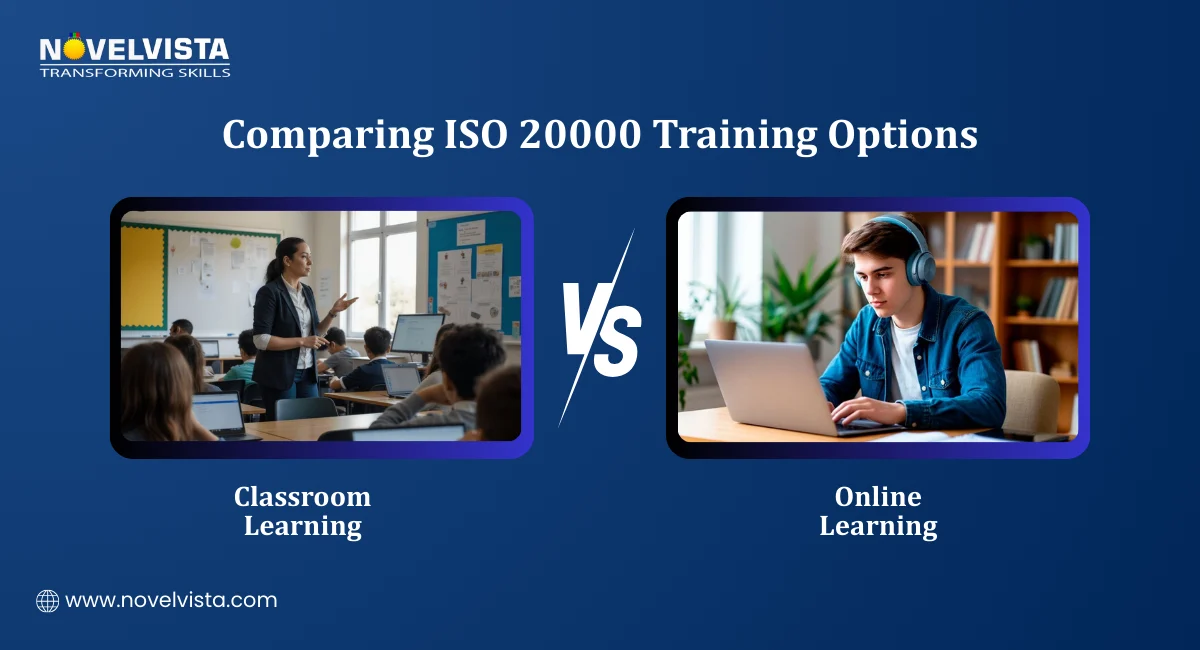
Training is no longer “one size fits all.” Professionals today juggle work, deadlines, personal life, and career goals. That’s why choosing the right Online vs Classroom ISO 20000 Training format is not a small decision. It directly affects how deeply you understand ISO 20000 concepts, how confident you feel during certification, and how well you apply ITSM in real life.
Over the years of training professionals across industries in ISO 20000, we’ve seen that the right training mode isn’t about popularity; it’s about suitability. Some learners excel in flexible online environments, while others perform far better in structured classroom settings. Real learning outcomes always improve when the format genuinely matches how a person learns.
This guide helps you clearly compare Online vs Classroom ISO 20000 Training, understand what each format offers, its pros, its drawbacks, and how to choose the best one for your learning style and career journey.
Before comparing formats, let’s get one thing clear. ISO 20000 training is not just about passing an exam. It is about understanding:
Now, when we talk about ISO 20000 Classroom vs Online Training, the main difference is how you learn:
There is no “universally better” format. The right choice depends on your learning nature, schedule, growth plans, and how you prefer to engage with concepts.

Online learning has become a serious and trusted training mode today. Many professionals prefer it because it fits smoothly into their routine while still delivering strong learning outcomes.
ISO 20000 online training gives you complete flexibility. You can learn from anywhere, pause when needed, revisit topics, and continue at your comfort level. It works amazingly well for working professionals, remote teams, and international learners.
When you choose online learning, you cut down travel, accommodation, and physical training costs. Many programs even provide lifetime or long-term access to recordings, helping you revise before exams or implementation projects.
Online programs often come with learning portals, downloadable resources, simulations, quizzes, and digital case studies. These help learners understand ISO 20000 concepts practically, not just theoretically.
Online works best when:
This is where ISO 20000 Online vs Classroom Training strongly supports flexibility and accessibility.
Based on multiple ISO 20000 training batches we’ve delivered, online programs have helped thousands of working professionals continue learning without disrupting their schedules. Structured modules, guided learning support, and access to recorded sessions have proven highly effective, especially for learners balancing roles, projects, and certification preparation.
Even though online training brings many advantages, it is fair to acknowledge the other side too.
When it comes to engagement, collaboration, and human connection, online learning sometimes falls behind classroom learning. That’s why many learners still prefer in-person environments.
Also Read: Top ISO 20000 lead auditor skills professionals must master
Classroom learning has its own strong advantages, especially for professionals who love structured, face-to-face learning and deeper discussions.

One of the biggest strengths of classroom ISO 20000 training is live discussions. You can talk to the trainer directly, ask questions instantly, and learn through real conversations and group activities.
Some ISO 20000 topics are layered and practical. Classroom sessions allow trainers to explain concepts in detail, use real examples, conduct workshops, and help you understand how ISO 20000 applies in real workplaces.
A classroom removes distractions like emails, office calls, and interruptions. You stay in a focused training zone, learn continuously, and pick up knowledge faster.
Classroom formats are great when:
While classroom learning is powerful, it does come with certain challenges that many professionals struggle with.
Not everyone wants fully online learning, and not everyone can commit to physical classrooms. This is where hybrid training becomes a great option.
Hybrid formats have grown popular in our training experience because they deliver the best of both approaches, live instructor-led interaction, along with the flexibility of digital learning access. This model supports professionals who want real engagement without losing the convenience of remote learning.
Understand the real career and business returns of ISO 20000
Lead Auditor certification. Evaluate cost, growth potential,
and long-term value—before you commit.
Here’s a quick comparison to help you see the difference more clearly:
Aspect |
Online Training |
Classroom Training |
Flexibility |
High – self-paced and remote-friendly |
Low – fixed schedule and location |
Cost |
Lower and budget-friendly |
Higher due to logistics |
Interaction |
Limited but available digitally |
Strong face-to-face engagement |
Networking |
Minimal |
Excellent professional networking |
Best For |
Busy professionals, global learners, beginners |
Teams, serious learners, deep engagement |
This makes Online vs Classroom ISO 20000 Training easier to understand when deciding which style supports your learning journey better.
Choosing the right training mode is not about which is superior; it is about which supports your goals and lifestyle.
So, what’s the final answer? The truth is, both Online vs Classroom ISO 20000 Training formats work well when chosen correctly. Online training gives flexibility, savings, and comfort. Classroom training offers high engagement, deeper focus, and live learning energy. ISO 20000 Online vs Classroom Training is not a battle of better or worse; it’s about finding the right fit for your lifestyle, learning style, and career direction. If chosen wisely, either path can help you build real ISO 20000 skills and move confidently toward certification success.
Everything shared in this comparison comes from real training delivery experience, learner feedback, industry expectations, and the way professionals actually prepare for ISO 20000 certification today. The goal is to help you choose a format that genuinely supports your learning journey and career growth, not just theoretically but in practical application as well.

If you’re serious about growing in ITSM and want to move beyond theory into real auditing confidence, NovelVista’s ISO 20000 Lead Auditor Certification Training is the right move. You’ll learn audit planning, evidence evaluation, compliance assessment, and real-world implementation insight from experienced industry trainers. Build authority, boost your career value, and get ready to lead successful ISO 20000 audits with clarity and confidence.
Author Details

Course Related To This blog
ISO 20000:2018 Lead Auditor
Confused About Certification?
Get Free Consultation Call
Stay ahead of the curve by tapping into the latest emerging trends and transforming your subscription into a powerful resource. Maximize every feature, unlock exclusive benefits, and ensure you're always one step ahead in your journey to success.