Category | Quality Management
Last Updated On 12/12/2025
Let’s start with a quick thought that might hit you straight — the IT world is not slowing down for anyone, yet most teams are still stuck with skills that belonged to yesterday. That’s where ISO 20000 skills suddenly feel less like “good-to-have” and more like “why didn’t we learn this earlier?”
Right now, companies want people who can handle cloud, automation, AI-based support, and modern ITSM workflows without freezing when something breaks. That’s exactly what this blog offers: a clear and friendly breakdown of the ISO 20000 skills you’ll need in 2026, why they matter, and how you can build them without feeling lost.
With that set, let’s move into the skills that shape strong ITSM teams.
Before talking about deeper frameworks or certifications, it helps to know the ITSM basics that support every strong Service Management System. These ITSM skills for ISO 20000 give you the stability you need when services get messy or when teams depend on you to keep things running.
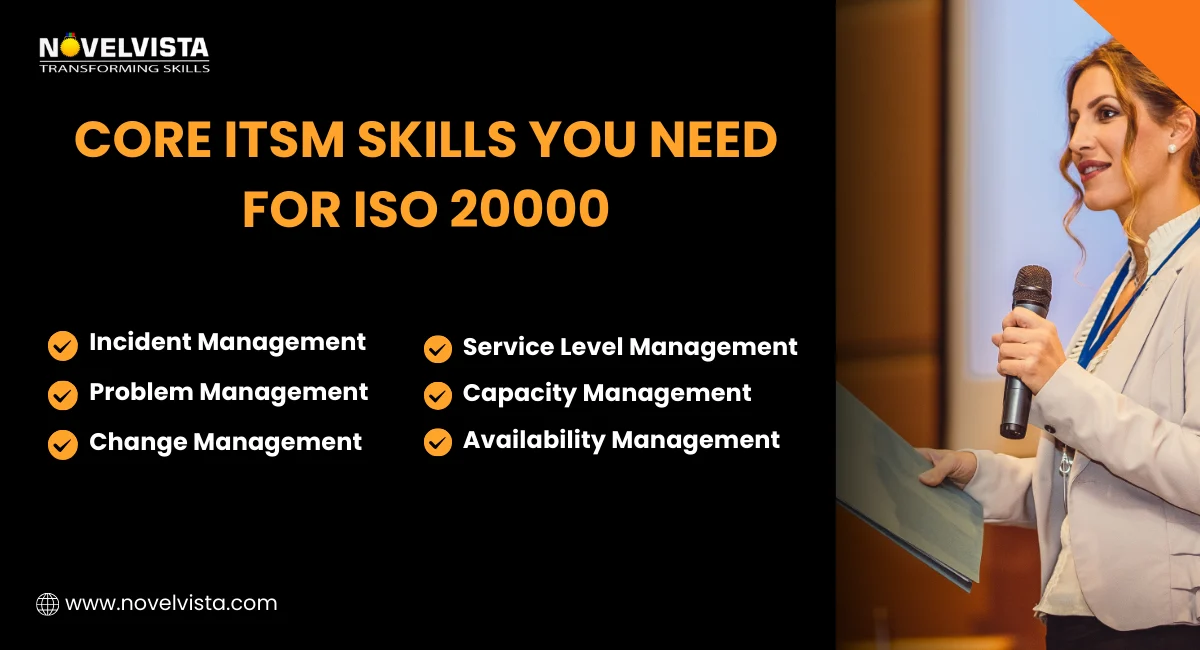
Here’s a simple and clear look at the core skills:
Knowing how to control service interruptions, restore operations quickly, and communicate clearly during chaos is one of the strongest ITSM skills for ISO 20000. Teams with this skill can reduce downtime, protect customer trust, and manage high-pressure situations with confidence.
This is about finding the actual cause behind issues, preventing repeats, and documenting fixes in a structured way. Professionals who handle root-cause analysis well make life easier for the whole organization.
Stability is impossible without controlled changes. Understanding how to plan, evaluate, review, and release changes with minimal risk is one of the core ISO 20000 skills every team depends on.
This helps you build clear agreements, set expectations, and track performance. When SLAs and OLAs are handled well, no one is confused about commitments, timelines, or service outcomes.
These two work together to make sure the service supports the expected load and stays reliable. Teams with strong availability and capacity skills manage demand, monitor usage trends, and stop performance issues before they grow.
These core processes are the same foundations we teach in our ISO 20000 training programs, based on real scenarios teams face during service disruptions, change cycles, and SLA management.
Now let’s talk about the ISO 20000 professional requirements in a way that feels simple and not overly technical.
These requirements help teams:
Professionals must understand how services support business goals. Decisions about processes, tools, and improvements should always tie back to what the organization actually needs.
A good Service Management System needs clear roles, communication paths, documented procedures, and managed risks. You don’t need complicated terminology — you just need clarity.
Teams must be comfortable identifying risks, tracking them, and updating processes. Continual improvement is also a major part of the ISO 20000 professional requirements, because an SMS goes out of date very fast if no one is improving it.
Professionals must know how to prepare service reports, track trends, and show how services are performing. This helps leadership trust the IT team and make informed decisions.
When these requirements are clear, the SMS becomes easier to run and much easier to audit.
Understand how ISO 20000 and ITIL complement each other.
Get clear on their roles so you stay aligned with best
practices, compliance needs, and real ITSM maturity.
Some people focus only on ISO 20000. Others focus only on ITIL. But the real strength comes when you understand how both work together.
Here’s why:
Together, they make your service management more mature and predictable.
Professionals in 2026 will be expected to know supporting standards such as:
This does not mean you must be an expert in all of them, but knowing how they connect helps you design and manage smarter processes.
When you combine ITIL, ISO 20000, governance models, and security standards, implementing an SMS becomes smoother. This helps you coordinate controls, align processes, and avoid rework.
This combined view comes from our experience guiding learners through multi-framework training, ensuring they understand how ITIL, ISO 20000, and supporting standards work together in real IT setups.
This is where 2026 skills start to look very different from what teams used a few years ago. Modern IT setups demand a mix of process knowledge and technical awareness.
These are the skills needed for ISO 20000 implementation that matter the most today:
Working With Cloud-Based Service Models: Most services now run on AWS, Azure, GCP, or hybrid setups. Understanding shared responsibility, backup approaches, and cloud service mapping is becoming a basic requirement.
Understanding DevOps and Agile Workflows: Modern IT supports fast releases, automation pipelines, continuous testing, and quick feedback loops. ISO 20000 professionals must know how to align service processes with DevOps teams without slowing them down.
ITSM Automation Tools: Tools like ServiceNow, Jira Service Management, and Ivanti are now used everywhere. Knowing how to configure workflows, dashboards, approvals, and service catalogs gives you a major advantage.
Performance Dashboards and Reporting: Teams rely on real-time data. Professionals who can build clear dashboards, track KPIs, and read trends are always one step ahead.
Internal Audits and Nonconformity Handling: You don’t need to be an auditor to support internal audits, but understanding audit trails, evidence, records, and corrections helps you survive audits with less stress.
All of these shape the skills needed for ISO 20000 implementation in a real-world setup.
Want a clear roadmap for getting ISO 20000 up and running? Dive into our detailed implementation guide to see the exact steps, phases, and best practices that make the process smoother.
A good career in ISO 20000 grows step by step, and each level builds a different set of strengths.
| Level | ISO 20000 Skills Focus |
| Foundation | ITSM basics, SMS concepts |
| Practitioner/Implementer | SMS planning, process deployment |
| Lead Auditor | Compliance assessment, audit execution |
The certification path explained here follows the structured learning progression we deliver in our programs, helping learners grow from fundamentals to audit-ready capability.
ISO 20000 Lead Auditors are becoming the backbone of strong IT governance. Their responsibilities go far beyond checking documents or ticking boxes.
Here are the auditor-level skills that will matter most:
Lead auditors should know how each process works, what evidence must exist, and how audit trails reflect real operational maturity. This deeper view helps them see gaps that most teams miss.
Companies want auditors who can look at trends, data, and patterns and understand what the results mean. This helps leaders make smarter decisions about improvements, automation, or process redesign.
Audits depend on good conversations. Lead auditors need to make teams comfortable, ask the right questions, and encourage honest answers. These people-focused ISO 20000 skills make audits smoother and far more reliable.
Many companies want a single auditor who can assess both ITSM and security. This demand is growing fast, and professionals with these combined skills often get better opportunities in consulting, tech, and cloud-driven companies.
Even with strong technical knowledge, ISO 20000 professionals need human-focused skills to succeed. These soft skills make you dependable, calm, and effective in real ITSM environments.
ITSM touches everyone. Teams depend on your ability to explain processes, define actions, and align departments so projects move smoothly without confusion.
Service management improves only when teams work together. Professionals must support operations, cloud teams, security teams, development teams, and business owners without friction.
When services break or fail, people look toward the ITSM team. Strong ISO 20000 skills help you analyze the situation and guide teams toward safe and practical solutions.
These soft skills are developed through role-play exercises and team-based activities in our training sessions, helping professionals improve communication, coordination, and decision-making.
Companies are shifting quickly into automation, cloud, analytics, and predictive systems. And this shift is creating a few new ISO 20000 skills that professionals will need to stay ahead.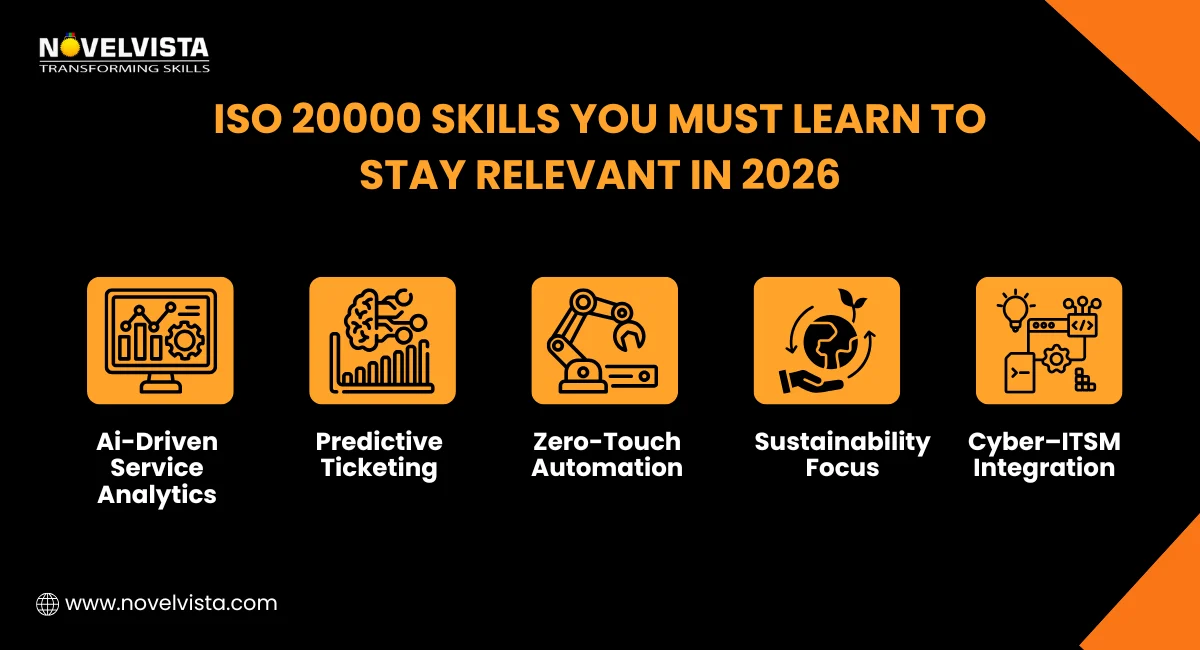
AI-powered analytics and predictive ticketing: AI tools can now predict incidents, flag capacity issues, and show patterns that humans often miss. Professionals with these skills become strong assets for ITSM teams.
Zero-touch IT operations: Automation is taking over repetitive tasks. ISO 20000 experts need to understand how these systems work and how to include them in SMS documentation and reports.
Sustainability and green IT practices: More companies are adding environmental goals to their service management plans. Knowing how to include sustainability in capacity, availability, and operations is becoming a useful ISO 20000 skill.
Cybersecurity and ITSM integration: Security and ITSM are no longer separate. Professionals who know how to connect processes, share controls, and create joint improvement plans will stand out in 2026.
ISO 20000 offers a clear growth path for anyone who wants to build a stable, rewarding, and future-ready ITSM career.
This path helps you build ISO 20000 skills step-by-step and improves your confidence for bigger responsibilities.
Professionals grow faster when they practice what they learn. Real cases, guided exercises, and simulations help you understand how an SMS works in real projects.
Learners can choose global certification bodies and training institutes that offer practical guidance, mock audits, and expert-led sessions to speed up their growth.
If you follow a structured skill-building plan, ISO 20000 can open doors to leadership, consulting, and high-impact service management roles.
Curious about where ISO 20000 can take your career? Check out our quick guide that breaks down roles, growth paths, and opportunities for professionals aiming to move up in ITSM.
The journey to becoming an ISO 20000 expert is straightforward: build strong ITSM process knowledge, understand how to implement the SMS, and learn the newer skills that cloud, AI, and automation now demand. The more real experience you collect, the faster these ISO 20000 skills will turn into career growth and leadership opportunities.
These recommendations come from years of working with ITSM teams, auditors, and leaders who rely on structured training to build stronger ISO 20000 capabilities.
If you want to build real confidence and upgrade your ISO 20000 skills with expert guidance, NovelVista’s ISO 20000 Lead Auditor Certification is a great place to start. The program helps you understand audits, implementation, evidence collection, documentation, and practical SMS improvement techniques. With hands-on exercises and real examples, you learn how to apply these skills in real IT environments and grow into stronger ITSM roles.
Author Details

Course Related To This blog
ISO 20000:2018 Lead Auditor
Confused About Certification?
Get Free Consultation Call
Stay ahead of the curve by tapping into the latest emerging trends and transforming your subscription into a powerful resource. Maximize every feature, unlock exclusive benefits, and ensure you're always one step ahead in your journey to success.