Category | Quality Management
Last Updated On 02/06/2026
Every IT change carries a decision: controlled progress or unexpected disruption.
A simple patch, a configuration tweak, or a quick deployment these are often seen as routine. Yet, in high-dependency digital environments, even the smallest ungoverned change can trigger cascading failures across systems, teams, and customer experiences.
The numbers are hard to ignore. Industry data shows that a majority of service disruptions trace back to poorly managed changes, not complex cyberattacks or hardware failures. What does this reveal? The real risk isn’t change itself it’s the lack of structured control around it.
This is exactly where ISO 20000 Change Management proves its value.
Rather than slowing innovation, it brings discipline, visibility, and risk intelligence into how changes are planned and executed. With well-defined Change Management Controls ISO 20000, organizations can move fast without breaking things.
But questions still remain:
If you're aiming to build resilient IT services while enabling continuous change, this guide will walk you through everything you need to know clearly and practically.
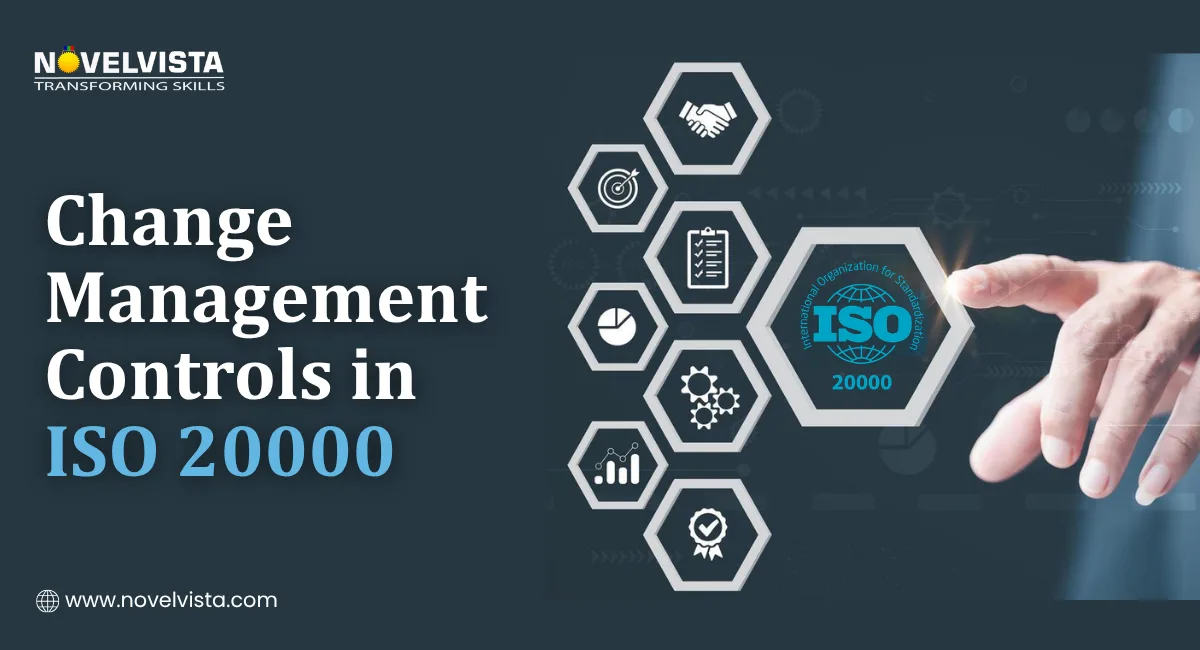
ISO 20000 Change Management is a structured approach to managing changes in IT services to ensure minimal disruption and maximum efficiency. It is a core component of IT Service Management (ITSM) that focuses on controlling the lifecycle of all changes.
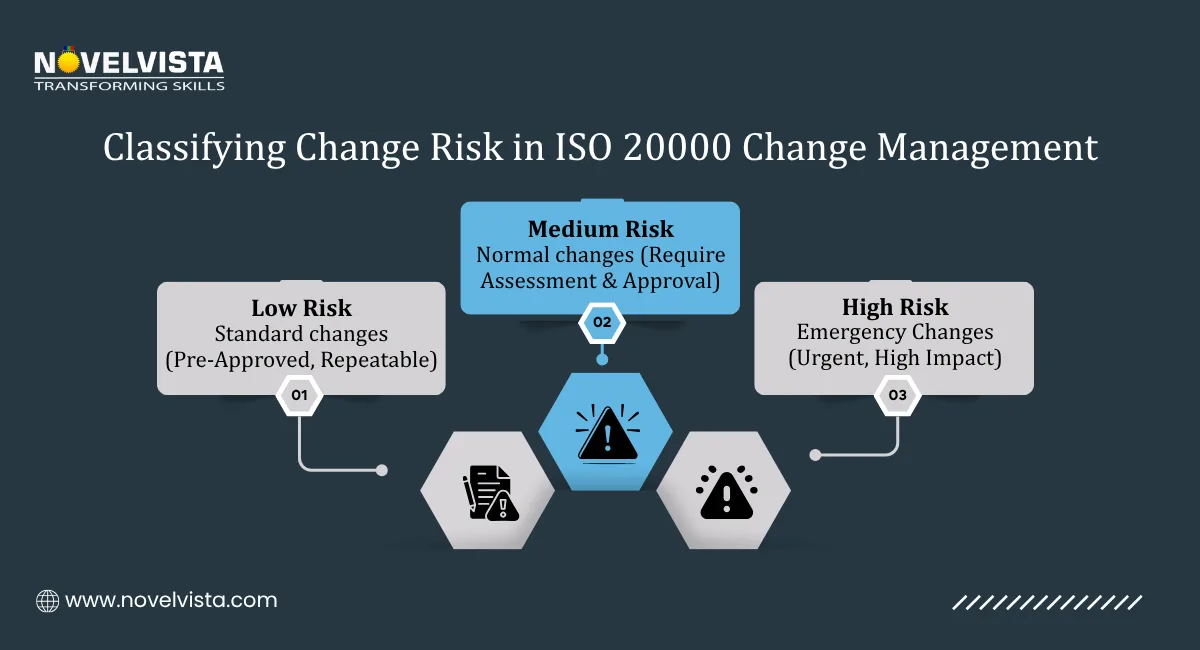
Within ITSM Change Management ISO 20000, every change whether minor or major is tracked, evaluated, approved, implemented, and reviewed. This ensures that risks are minimized while maintaining service quality.
Unlike ad-hoc or reactive change handling, ISO 20000 enforces:
In short, it transforms change from a risky activity into a controlled and predictable process.
At the heart of ISO 20000 Change Management are the controls that govern how changes are handled. These Change Management Controls ISO 20000 ensure that every modification to IT services is evaluated before implementation.
Change management controls are policies, procedures, and mechanisms designed to:
These controls are essential to maintaining stability in IT environments and are a cornerstone of Change Management Controls ISO 20000.
A well-defined ISO 20000 Change Control Process ensures that changes are handled systematically from start to finish.
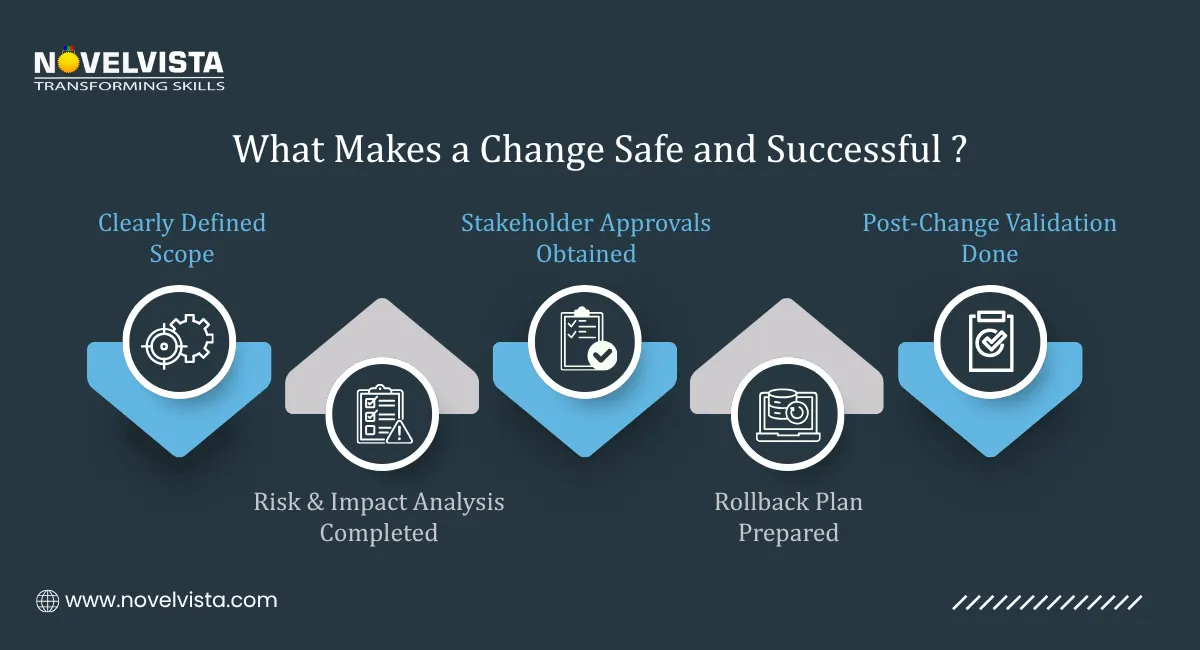
1. Change Request Initiation
Every change begins with a formal request that includes details such as scope, purpose, and expected impact.
2. Impact and Risk Assessment
The change is evaluated for:
3. Approval Workflow
Changes are reviewed by stakeholders or a Change Advisory Board (CAB) before approval.
4. Implementation
Once approved, the change is implemented in a controlled environment, often during scheduled windows.
5. Post-Implementation Review
After execution, the change is reviewed to:
This structured ISO 20000 Change Control Process ensures consistency, reduces failures, and improves service reliability. Understanding the ISO 20000 Cost is essential for organizations planning to implement IT service management standards effectively while balancing investment and long-term value.
To comply with the standard, organizations must meet specific ISO 20000 Change Management Requirements.
These ISO 20000 Change Management Requirements ensure that organizations are audit-ready and capable of delivering consistent IT services.
Adopting ISO 20000 Change Management offers significant advantages:
Structured controls prevent unexpected disruptions.
Every change is evaluated before execution, minimizing failures.
Clear processes improve accountability and compliance.
Standardized workflows enable efficient change execution.
Reliable services lead to higher trust and satisfaction.
While ITSM Change Management ISO 20000 provides a strong framework, organizations often face challenges:
Teams may resist structured processes due to habit or perceived complexity.
Lack of proper records leads to compliance issues.
Skipping impact analysis increases failure rates.
Delays in approvals can slow down operations.
Addressing these challenges is critical for successful implementation of ISO 20000 Change Management. Clearly defined Leadership Roles and Responsibilities are essential for ensuring accountability, effective decision-making, and successful execution of organizational strategies.
To maximize the benefits of Change Management Controls ISO 20000, consider these best practices:
Create repeatable processes for different types of changes.
Use tools to streamline approvals and tracking.
Ensure complete documentation for audits and analysis.
Evaluate change performance and identify improvements.
Ensure everyone understands ISO 20000 Change Management Requirements and processes.
Consider two scenarios:
An untested update is deployed directly to production. It causes system failure, leading to downtime and customer complaints.
The same update undergoes risk assessment, testing, and approval. A rollback plan is prepared. The deployment is successful with no disruption.
This highlights the value of Change Management Controls ISO 20000 in real-world situations.
Change is no longer occasional it’s continuous, rapid, and business-critical. But without structure, every change becomes a potential point of failure. The difference between high-performing IT teams and constantly firefighting ones often comes down to one thing: how well change is controlled.
This is where ISO 20000 Change Management stands out not as a compliance checkbox, but as a strategic capability. It enables organizations to introduce change with confidence, backed by clearly defined Change Management Controls ISO 20000 that minimize uncertainty and risk.
When you align your operations with the ISO 20000 Change Control Process, you don’t just implement changes you govern them intelligently. And by meeting the ISO 20000 Change Management Requirements, you create a system that is not only efficient but also audit-ready and resilient.
In a world where downtime impacts revenue, reputation, and customer trust, relying on reactive fixes is no longer sustainable. ITSM Change Management ISO 20000 empowers organizations to shift from reactive firefighting to proactive control where every change is planned, measured, and optimized.
Because in modern IT, success isn’t about avoiding change it’s about mastering it.

If you’re serious about mastering ISO 20000 Change Management and leading IT service excellence, it’s time to go beyond theory.
Join NovelVista’s ISO/IEC 20000:2018 Lead Auditor Certification Training and build the skills to implement effective Change Management Controls ISO 20000, audit ITSM processes, and ensure compliance with global standards. Gain hands-on experience with the ISO 20000 Change Control Process and learn how to meet ISO 20000 Change Management Requirements with confidence.
Start your journey toward becoming a certified ISO 20000 Lead Auditor today!
Author Details

Course Related To This blog
ISO 20000:2018 Lead Auditor
Confused About Certification?
Get Free Consultation Call
Stay ahead of the curve by tapping into the latest emerging trends and transforming your subscription into a powerful resource. Maximize every feature, unlock exclusive benefits, and ensure you're always one step ahead in your journey to success.