Category | AI And ML
Last Updated On 27/03/2026
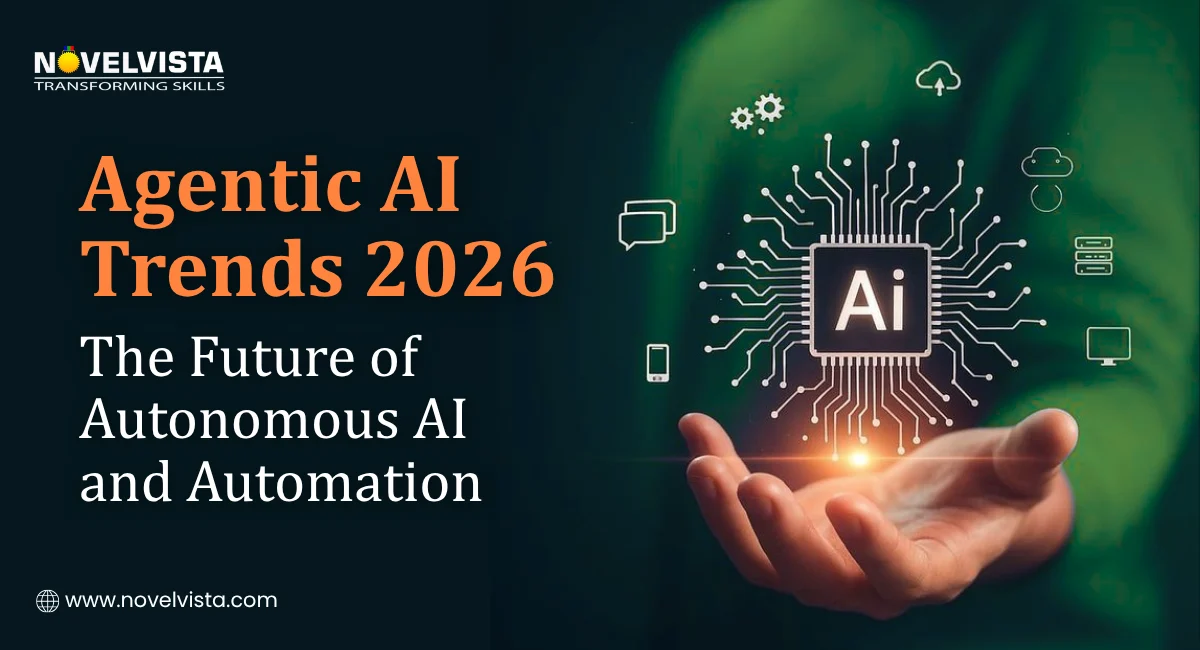
Artificial Intelligence is evolving faster than ever, and 2026 is shaping up to be a turning point. According to Gartner, by the end of 2026, 40% of enterprise applications will feature task-specific AI agents (up from less than 5% in 2025), and a significant portion of that shift is powered by agentic AI.
But here’s the real question:
What exactly are agentic AI trends 2026, and why should you care?
Whether you're an IT professional, business leader, automation enthusiast, or someone exploring the future of AI, this blog is for you. If you’ve ever wondered:
Then you’re in the right place.
Let’s break down how agentic AI trends 2026 are shaping the next era of autonomous systems and why this is more than just another tech buzzword.
Before diving into the latest trends in agentic AI, let’s understand the basics.
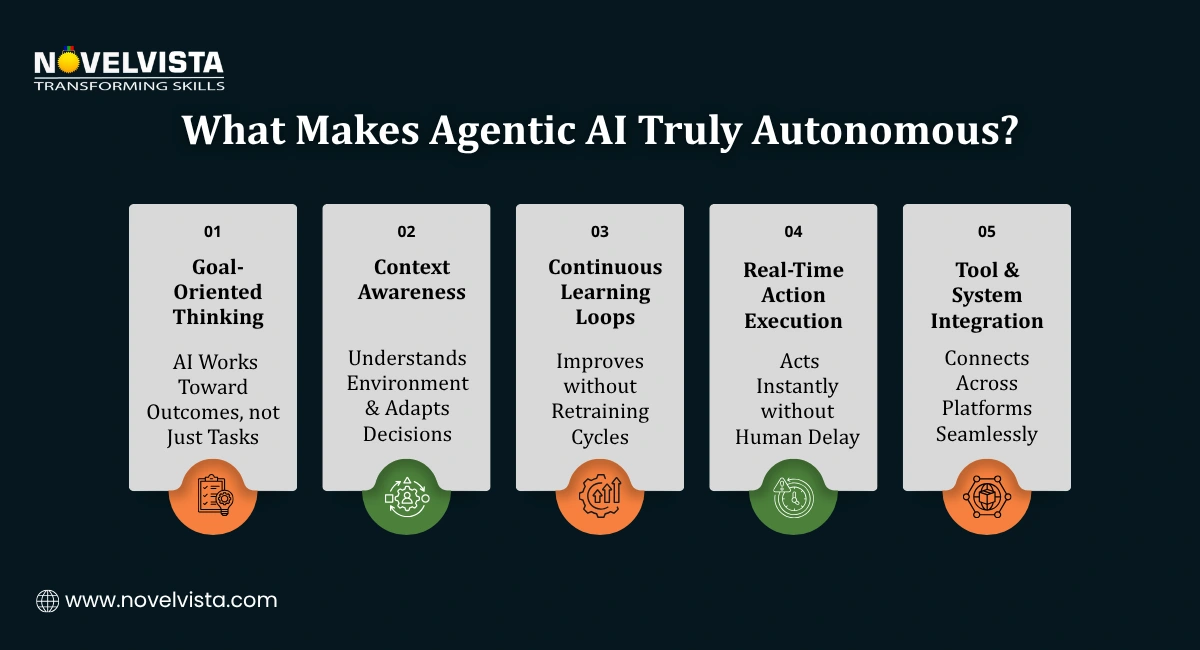
Agentic AI refers to AI systems that can act autonomously, make decisions, and execute tasks without constant human intervention. Unlike traditional AI models that respond to prompts, agentic AI behaves more like an “intelligent agent” with goals and the ability to act independently.
| Traditional AI | Agentic AI |
| Reactive | Proactive |
| Task-based | Goal-driven |
| Requires input | Operates autonomously |
| Limited or no context retention | Maintains context and memory over time |
This shift is why experts are saying agentic AI is the future of automation.
The rise of agentic AI trends 2026 isn’t happening by chance, it’s driven by real business needs.
In fact, studies suggest that companies adopting agentic AI could see 30–40% improvements in operational efficiency.
This is why agentic AI adoption trends are accelerating across industries.
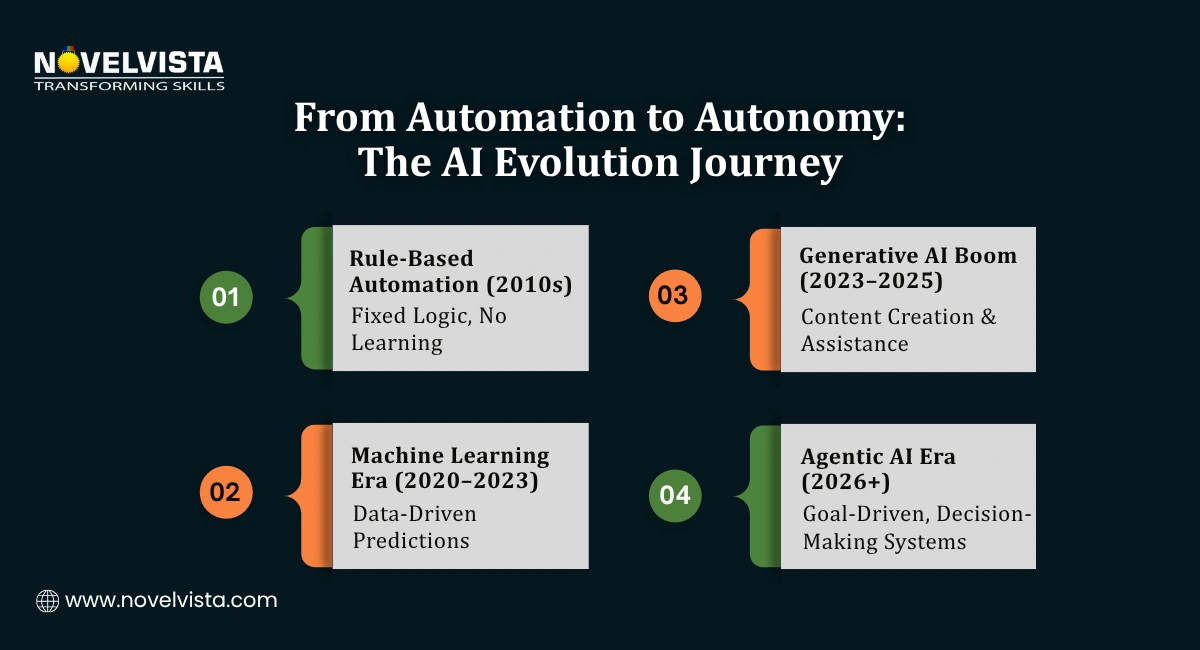
Let’s explore the most important agentic AI future trends shaping the landscape.
AI systems are no longer just recommending actions, they’re taking them. From IT incident resolution to financial trading, AI agents are becoming decision-makers.
Instead of one AI doing everything, multiple AI agents collaborate to solve complex problems. This is a major highlight of future trends in agentic AI applications.
Traditional automation is rule-based. Agentic AI introduces dynamic workflows that adapt in real time, making future of agentic AI automation far more powerful.
AI agents continuously improve based on outcomes, leading to smarter and more efficient systems.
Agentic AI is being embedded into enterprise tools like CRM, ERP, and DevOps platforms, making it a core part of business operations.
One of the most significant additions to agentic AI trends 2026 is the emergence of the Model Context Protocol (MCP). Think of MCP as a “universal USB port” for AI systems—a standardized, open-source framework that allows AI agents to seamlessly connect with tools, data sources, and enterprise applications. Backed by major players like Anthropic, Google, and Microsoft, MCP is rapidly becoming the foundation for interoperability in autonomous AI ecosystems.
What makes this even more impactful is adoption: by late 2026, nearly 30% of enterprise application vendors are expected to launch their own MCP servers, enabling smoother integration, faster deployment, and more scalable AI-driven workflows. This development is set to accelerate the future trends in agentic AI applications, making AI agents more connected, context-aware, and operationally powerful than ever before.
These latest trends in agentic AI clearly show a shift toward autonomy and intelligence.
The agentic AI adoption trends vary across industries, but the impact is universal.
A critical aspect of agentic AI adoption trends in 2026 is the rise of Human-in-the-Loop (HITL) governance. While agentic systems are designed for autonomy, autonomy does not mean unsupervised execution. Instead, the emerging model is “Human-on-the-Loop,” where AI agents can independently analyze situations and propose actions but high-stakes decisions, such as financial transactions or medical interventions, require approval from a designated human gatekeeper before execution.
This approach ensures a balance between automation and accountability, enabling organizations to leverage the future of agentic AI automation while maintaining control, compliance, and trust in critical decision-making processes.
Across all these sectors, the future of agentic AI is transforming how decisions are made.
Understand how agentic AI works
Learn practical real-world applications
Stay ahead in the future of AI and work
The future of work with agentic AI is one of collaboration, not replacement.
AI agents handle repetitive and complex tasks, allowing humans to focus on strategy and creativity.
Organizations leveraging agentic AI future trends are expected to achieve unprecedented efficiency levels.
This is why many experts believe that agentic AI is the future of work.
Looking ahead, the future trends in agentic AI applications are even more exciting.
From chatbots to autonomous assistants that manage schedules, decisions, and workflows.
Entire business processes run by AI agents with minimal human intervention.
AI agents tailored to individuals, adapting to preferences and behavior.
These innovations highlight the future of AI after agentic AI, where systems are deeply integrated into everyday life.
While the agentic AI future projections are promising, challenges remain.
Autonomous systems can be vulnerable to attacks if not properly secured.
Organizations must implement frameworks to manage AI responsibly.
Addressing these issues is critical to unlocking the future of agentic AI safely. Master the future of intelligent automation by understanding how an Agentic AI Framework enables autonomous decision-making, adaptive learning, and seamless task execution.
So, what is the future of agentic AI?
These agentic AI future projections reinforce one thing:
The future of agentic AI is deeply connected to the future of automation itself.
The rise of agentic AI trends 2026 represents far more than a technological upgrade—it signals a fundamental transformation in how businesses operate, innovate, and compete. With autonomous decision-making, intelligent agents, and adaptive workflows becoming standard, the future of agentic AI is already unfolding in real time, reshaping industries across the globe. Organizations that embrace these agentic AI future trends early will not only boost efficiency but also gain a powerful edge in agility, scalability, and strategic growth, while those that delay risk being left behind in an increasingly automated landscape. Ultimately, the future of agentic AI is about creating systems that go beyond assistance to independently drive outcomes, redefining productivity and collaboration. In this new era, the future of work with agentic AI will be built on seamless human-AI partnership at scale—making one thing clear: agentic AI is the future, and the transformation is already well underway.
Ready to stay ahead in the era of agentic AI trends 2026 and build real-world autonomous AI solutions?
Join NovelVista’s Agentic AI Certification Training and gain hands-on experience in designing, deploying, and managing intelligent AI agents that can reason, plan, and act independently. This industry-recognized program is designed for professionals looking to master the future of agentic AI, offering practical learning through real-world simulations, expert-led sessions, and implementation-focused frameworks. Whether you're an AI professional, business leader, or automation enthusiast, this course equips you with the skills needed to drive innovation and lead in the future of agentic AI automation. Start your journey into the world of autonomous AI and become a part of the next wave of intelligent transformation today!
Author Details

Course Related To This blog
Agentic AI Certification
Confused About Certification?
Get Free Consultation Call
Stay ahead of the curve by tapping into the latest emerging trends and transforming your subscription into a powerful resource. Maximize every feature, unlock exclusive benefits, and ensure you're always one step ahead in your journey to success.