Category | AI And ML
Last Updated On 05/06/2026
The technology landscape is shifting faster than ever, and at the center of this transformation is Generative AI AWS. From intelligent chatbots and automated coding assistants to AI-driven analytics systems, organizations are rapidly embedding generative AI into their core operations.
According to recent industry reports, the global AI market is expected to cross hundreds of billions of dollars within this decade, with cloud platforms like AWS powering a significant share of AI workloads. AWS has become the backbone for enterprises building scalable AI systems due to its robust infrastructure, managed machine learning services, and growing suite of generative AI tools.
This raises important questions:
Who is this transformation really for?
Is it only for data scientists and researchers?
Or can a cloud engineer also step into this high-growth field?
And most importantly, how to transition into AI career without starting from scratch?
The answer is encouraging. Cloud engineers are among the best-positioned professionals to move into AI roles, especially in the Generative AI AWS ecosystem. This blog will walk you through the complete transition path, including skills, roadmap, tools, and career opportunities.
Generative AI AWS refers to the use of Amazon Web Services infrastructure and tools to build, deploy, and scale generative AI applications. These applications can create text, images, code, and even business insights using foundation models.
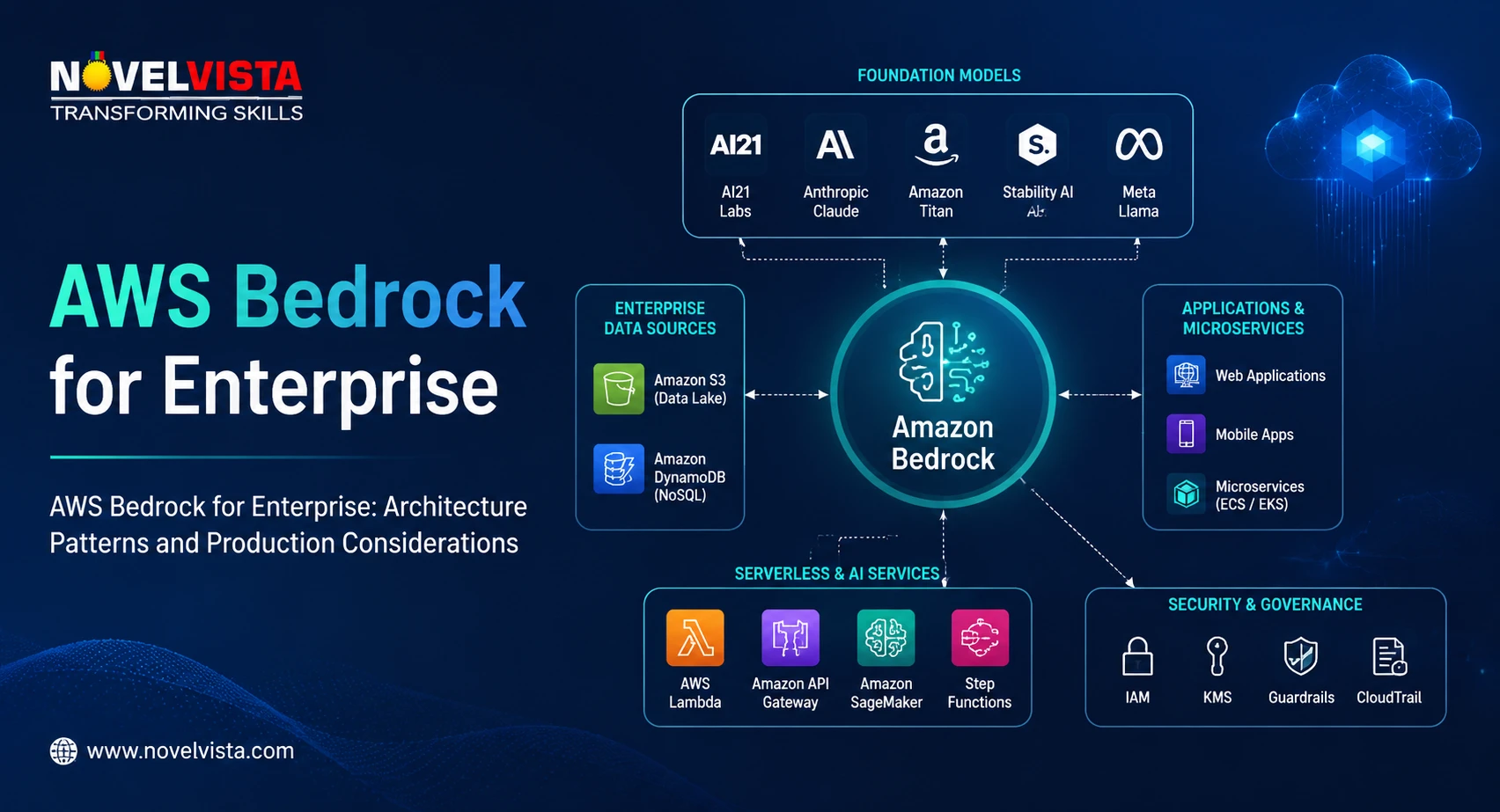
Unlike traditional cloud systems that focus primarily on hosting, storage, and compute, generative AI introduces intelligence directly into applications. AWS enables this shift through services like Amazon Bedrock, SageMaker, and AI-optimized infrastructure.
This evolution represents a broader change in cloud computing itself. We are moving from infrastructure-centric systems to intelligence-driven ecosystems powered by machine learning models and large language models.
For anyone following an AI engineer roadmap, understanding this shift is critical. It is not just about deploying applications anymore; it is about enabling systems that can learn, adapt, and generate value autonomously.
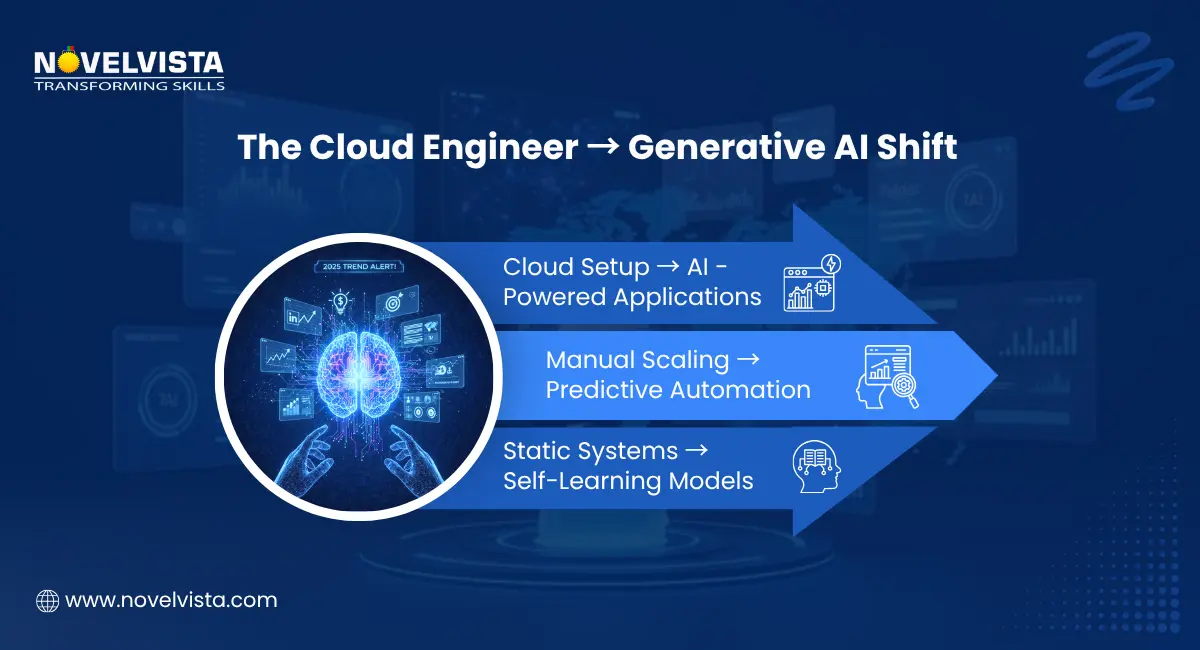
A cloud engineer already possesses many of the foundational skills required for AI adoption. This gives them a natural head start compared to beginners entering directly from non-technical backgrounds.
Here’s why cloud engineers transition more effectively:
These skills align closely with the infrastructure needs of AI systems. While data scientists focus on building models, cloud engineers understand how to deploy and scale them efficiently.
This is why companies increasingly prefer hybrid professionals who understand both cloud architecture and AI systems, especially in Generative AI AWS environments.
To successfully transition into AI roles, cloud engineers must expand their skillset beyond infrastructure and into data and intelligence systems.
Key skills include:
This combination forms the foundation of the machine learning engineer roadmap, which bridges cloud expertise with AI capabilities.
At this stage, it is important not to rush into advanced models. Instead, focus on understanding how data flows through AI systems and how models are trained, deployed, and monitored in production environments.
This roadmap ensures a smooth transition from infrastructure-focused roles to intelligence-driven engineering roles.
The AI engineer roadmap is a broader career path that includes both machine learning and system integration skills.
Stage 1: Foundation
Stage 2: Intermediate
Stage 3: Advanced Generative AI AWS specialization
This structured path ensures that a cloud engineer evolves into a full-fledged AI engineer capable of handling enterprise-grade AI systems. For a structured path forward, explore an AWS Generative AI Course Guide to navigate the essential skills, tools, and real-world applications needed to successfully transition into AI.
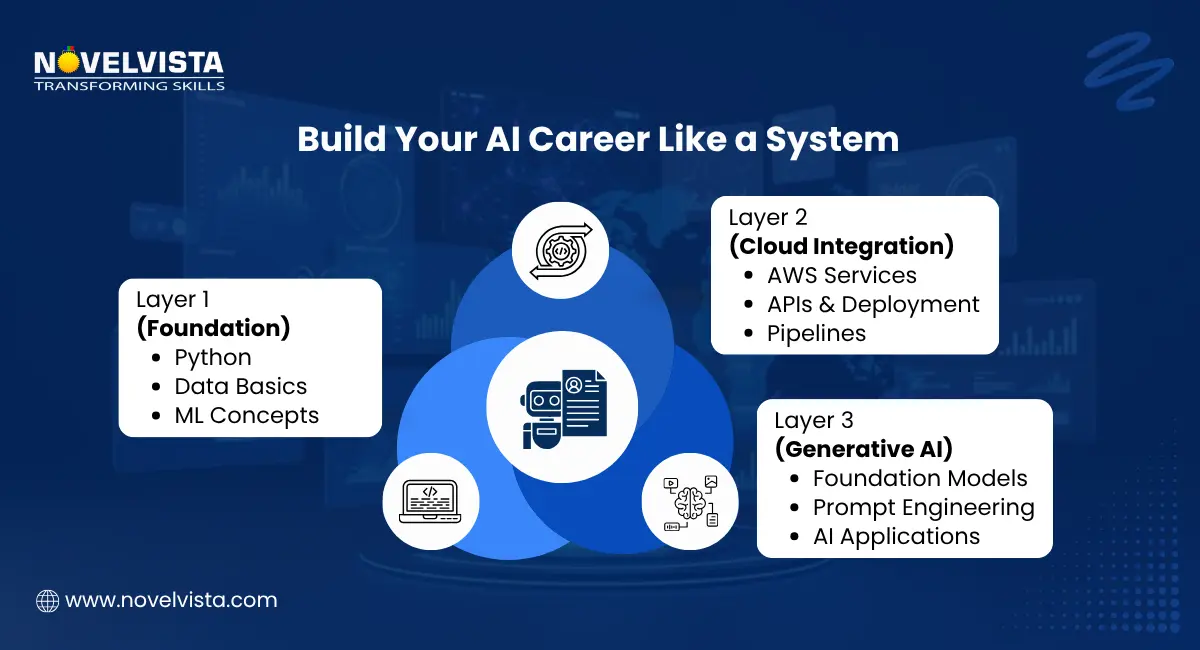
Key Insight: This structured approach makes your transition into Generative AI AWS both practical and sustainable.
AWS provides a powerful ecosystem for building AI applications.
Amazon SageMaker allows you to build and deploy machine learning models without worrying about infrastructure complexity.
Amazon Bedrock enables access to foundation models that power generative AI applications like content generation, summarization, and intelligent search.
AWS Lambda helps integrate AI models into serverless workflows, enabling real-time automation.
Together, these services form the backbone of Generative AI AWS development, making it easier for cloud engineers to transition into AI roles.
Theory alone is not enough. Practical experience is essential for building confidence and employability.
You can start with:
These projects not only strengthen your technical skills but also build a strong portfolio that aligns with the AI engineer roadmap.
Employers value real-world implementation more than theoretical knowledge, especially in generative AI roles.
Key Insight: Avoiding these mistakes will make your journey into Generative AI AWS smoother and more effective.
Once you complete your transition, multiple career paths open up:
These roles are in high demand as organizations continue integrating AI into their cloud ecosystems.
The combination of cloud and AI expertise is one of the most valuable skill sets in today’s job market.

The rise of Generative AI AWS marks a defining shift in how modern technology systems are designed, built, and scaled. This is not a passing trend it is the new foundation of intelligent, automated, and adaptive digital ecosystems.
For every cloud engineer, this moment presents a powerful opportunity to move beyond infrastructure and step into high-impact AI roles. By following a structured AI engineer roadmap, strengthening your machine learning fundamentals, and gaining hands-on experience with real-world applications, you position yourself at the center of this transformation. The path forward is clear for those willing to adapt. Organizations are actively seeking professionals who can bridge the gap between cloud and AI, making this one of the most valuable and future-proof career moves today.
If you are serious about long-term growth, now is the time to act, learn, and build. The demand for talent in Generative AI AWS will only accelerate and those who start today will lead tomorrow.
Ready to accelerate your journey into Generative AI AWS?
Join NovelVista’s AWS Generative AI Training Course and gain hands-on experience with real-world AI applications, practical cloud-based model deployment, and industry-relevant skills aligned with the AI engineer roadmap. Designed for every cloud engineer looking to transition into AI, this program equips you with the knowledge and confidence to build, deploy, and scale intelligent solutions using AWS.
Start your AI career transformation today!
Author Details

Confused About Certification?
Get Free Consultation Call
Stay ahead of the curve by tapping into the latest emerging trends and transforming your subscription into a powerful resource. Maximize every feature, unlock exclusive benefits, and ensure you're always one step ahead in your journey to success.