Category | AI And ML
Last Updated On 02/07/2026
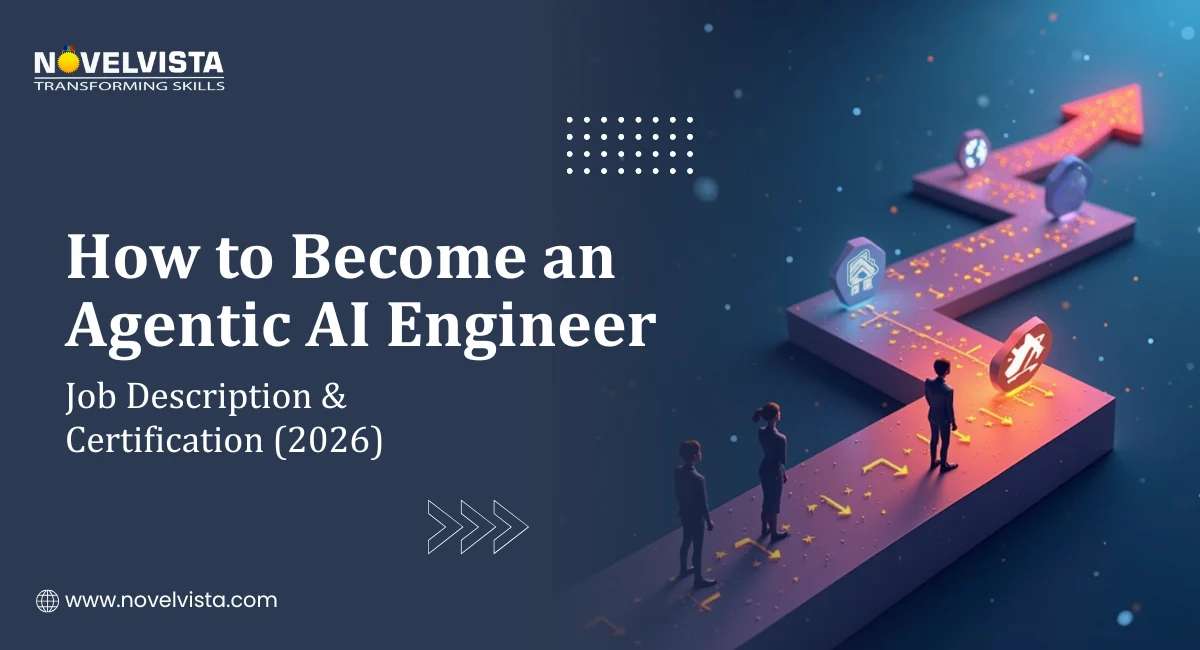
| Synopsis: Wondering how to become an Agentic AI Engineer? This guide explains the Agentic AI Engineer job description, career opportunities, certification options, and a quick salary snapshot for 2026. You'll also find links to dedicated guides covering skills, tools, salaries, and a step-by-step learning roadmap. |
Artificial Intelligence is entering a new era where systems don’t just analyze data, they can reason, make decisions, and take action autonomously. As organizations increasingly adopt agentic AI to automate workflows and improve decision-making, the demand for skilled Agentic AI Engineers is growing rapidly across industries.
An Agentic AI Engineer designs and develops intelligent AI systems that can plan, execute tasks, and interact with tools with minimal human intervention. This emerging role combines software engineering, artificial intelligence, automation, and large language models (LLMs) to build enterprise-ready autonomous solutions.
If you're exploring how to become an Agentic AI Engineer, this guide covers everything you need to get started, from understanding the job description and career opportunities to learning about industry-recognized certifications that can help validate your skills. You'll also find a concise salary snapshot, with links to dedicated guides for detailed information on salaries, skills, tools, and learning paths.
TL;DR:
| Agentic AI Engineer | Quick Overview |
|---|---|
| Role | Builds autonomous AI systems that can reason, plan, and act independently. |
| Core Skills | Python, LLMs, AI agents, APIs, cloud, and AI governance. |
| Salary (India) | ₹8–15 LPA (Entry), ₹15–30 LPA (Mid), ₹30–60+ LPA (Senior). |
| Top Job Titles | Agentic AI Engineer, Agentic AI Developer, AI Automation Engineer. |
| Who Should Learn? | Developers, AI professionals, IT engineers, and students. |
| Best Next Step | Build hands-on projects and earn an Agentic AI certification. |
An Agentic AI Engineer is a professional who designs, builds, and deploys autonomous AI systems capable of reasoning, planning, making decisions, and executing tasks with minimal human intervention.
Unlike traditional AI applications that primarily generate predictions or content, agentic AI systems actively pursue goals by interacting with tools, APIs, databases, and external environments. Agentic AI Engineers combine software engineering, large language models, workflow orchestration, automation, and AI governance to create intelligent systems that solve complex business problems independently. Their work spans enterprise automation, AI copilots, multi-agent collaboration, and decision-support systems.
Agentic AI Engineer vs Traditional AI Engineer: A traditional AI Engineer builds predictive models, while an Agentic AI Engineer builds autonomous systems that can plan, act, and continuously adapt.
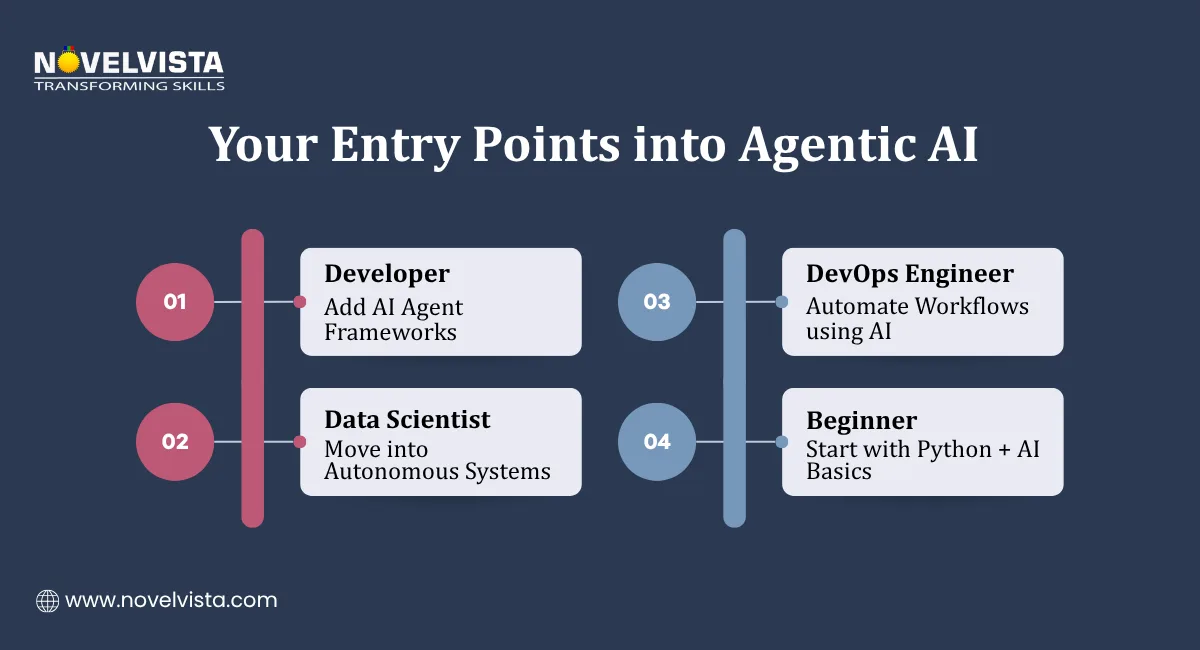
Although salaries vary by experience, location, industry, and technical expertise, professionals with hands-on experience in autonomous AI systems and enterprise AI deployments generally command higher compensation.
For a full salary breakdown by experience level, location, and role type, read our Agentic AI Jobs Salary Guide.
Role Summary:
An Agentic AI Engineer designs, develops, deploys, and maintains autonomous AI systems that can reason, plan, make decisions, and execute tasks with minimal human intervention. The role combines software engineering, artificial intelligence, large language models (LLMs), workflow orchestration, and enterprise automation to build production-ready AI agents.
Key Responsibilities:
Reporting Structure:
Agentic AI Engineers typically report to an AI Engineering Manager, Machine Learning Lead, Principal AI Architect, or Director of Artificial Intelligence. They work closely with software developers, MLOps engineers, cloud architects, data scientists, cybersecurity teams, and business stakeholders to ensure AI agents align with technical, operational, and compliance requirements. In enterprise organizations, the role often bridges research teams and production engineering by transforming AI prototypes into scalable business solutions.
Common Job Titles:
The demand for agentic AI engineer jobs is skyrocketing and for good reason.
Organizations today want AI systems that don’t just analyze data but also:
From healthcare to finance and e-commerce, companies are adopting agentic AI to:
This growing adoption is creating a surge in agentic AI engineer jobs, making it one of the most lucrative career paths in AI.
Understand how to move from coding to decision-driven AI systems
Explore practical steps to build and deploy intelligent agents
Gain a structured path to grow in high-demand AI roles
To become a successful Agentic AI Engineer, you need a balanced mix of AI expertise, software engineering knowledge, and problem-solving abilities. Rather than mastering every tool individually, focus on building a strong foundation in the core competencies that employers value.
The most important skills include:
These foundational skills prepare you to design, build, and deploy autonomous AI systems across a wide range of industries.
Looking for a detailed breakdown of the technical skills, tools, frameworks, and learning resources? Read our guide on agentic AI skills required for engineers.
If you're planning to become an Agentic AI Engineer, following a structured learning journey is essential. Building expertise in autonomous AI systems requires progressing from core AI concepts to practical implementation and enterprise-ready skills.
Rather than covering every stage in detail here, this guide focuses on helping you understand the role, career opportunities, and the value of certification. For a comprehensive learning plan, we've created a dedicated roadmap that walks you through each stage of becoming an Agentic AI Engineer.
Our step-by-step agentic AI roadmap covers:
Whether you're a student, software developer, or IT professional transitioning into AI, following a structured roadmap can help you develop the right skills in the right sequence while avoiding common learning gaps.
Ready to start your learning journey? Explore our step-by-step agentic AI roadmap for a detailed, phase-by-phase guide to becoming an Agentic AI Engineer.
The right tools play a critical role in building, deploying, and managing autonomous AI systems. As an Agentic AI Engineer, you'll work with AI frameworks, orchestration platforms, cloud services, and evaluation tools to create intelligent agents that can reason, plan, and execute tasks efficiently.
Some of the most widely used tools in the industry include:
Choosing the right tool depends on your project requirements, deployment environment, and the complexity of the AI agents you want to build. As the agentic AI ecosystem evolves, staying up to date with emerging frameworks and enterprise platforms is essential for long-term career growth.
Want a detailed comparison of the latest frameworks, platforms, and enterprise solutions? Explore our guide to the best Agentic AI tools to learn when and how each tool is used in real-world AI projects.
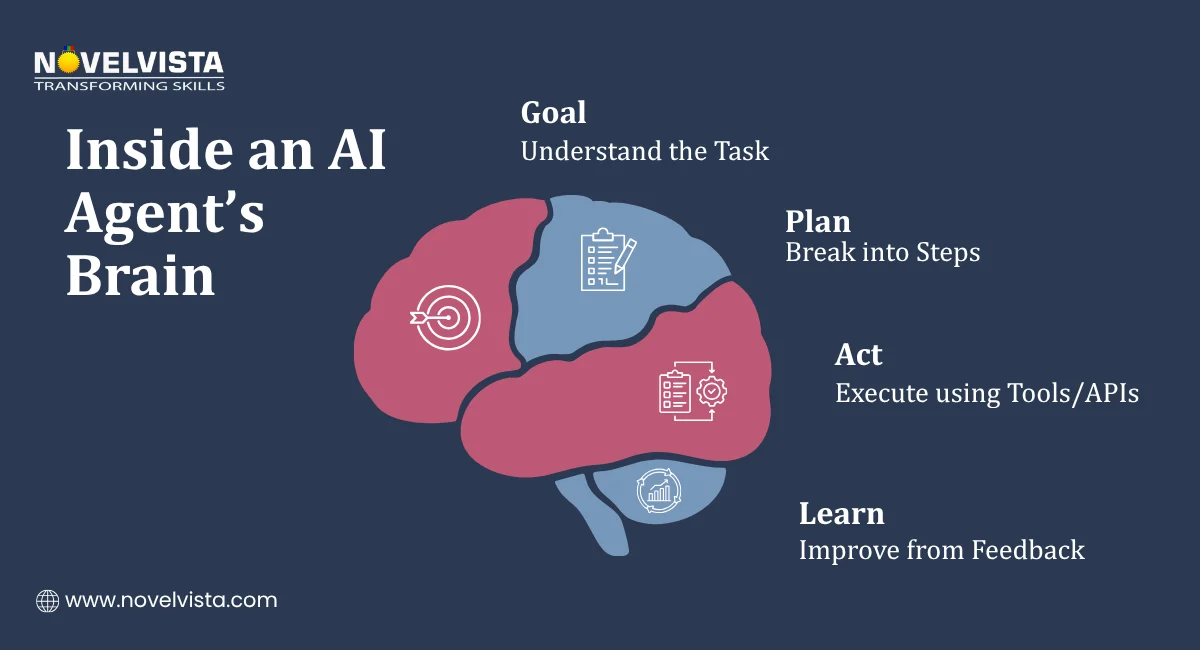
As organizations rapidly adopt autonomous AI systems, employers increasingly look for professionals who can demonstrate practical expertise rather than theoretical knowledge alone. A structured Agentic AI certification validates your ability to build production-ready AI agents, work with enterprise AI frameworks, and understand responsible AI implementation.
When evaluating an Agentic AI certification, look for programs that include:
A strong certification should also emphasize practical implementation rather than tool memorization. Since AI frameworks evolve rapidly, employers value professionals who understand architectural principles, system design, evaluation methodologies, and production deployment over familiarity with a single platform.
Criteria | Self-Learning | Structured Certification |
| Time | Flexible but often longer | Structured learning path with defined milestones |
| Depth | Depends on individual research | Comprehensive curriculum covering industry practices |
| Industry Recognition | Limited | Employer-recognized credential |
| Practical Projects | Self-created | Guided real-world capstone projects |
| Cost | Lower upfront cost | Higher investment with structured outcomes |
If you want to accelerate your transition into an Agentic AI Engineering role, NovelVista's Agentic AI Certification program provides guided learning, hands-on projects, expert mentorship, and industry-focused training designed to prepare professionals for real enterprise AI environments. Whether you are a software developer, AI engineer, or technology professional looking to specialize in autonomous AI systems, the program helps bridge the gap between theoretical learning and production-ready implementation while strengthening your credibility with employers.
The rise of autonomous AI systems is creating exciting opportunities for professionals who can design, build, and manage intelligent agents. As organizations increasingly adopt agentic AI to automate workflows, improve decision-making, and drive innovation, the demand for skilled Agentic AI Engineers continues to grow across industries.
An Agentic AI Engineer is more than a traditional AI practitioner. The role combines artificial intelligence, software engineering, automation, and system orchestration to create AI systems that can reason, plan, and act with minimal human intervention. Professionals who develop these capabilities are well-positioned for some of the most promising career opportunities in the AI industry.
Whether you're a student exploring AI careers, a developer looking to specialize in autonomous systems, or an IT professional transitioning into next-generation AI roles, now is an ideal time to build expertise in this rapidly evolving field.
The most effective way to accelerate your career is to combine foundational AI knowledge with hands-on projects, practical experience, and industry-recognized credentials.
Ready to become an Agentic AI Engineer?
Join NovelVista's Agentic AI Certification Training to gain hands-on experience with autonomous AI systems, learn industry-relevant practices, work on real-world projects, and build the skills employers are actively seeking in 2026 and beyond.
Entry-level Agentic AI Engineers in India earn approximately ₹8–15 LPA in 2026, while experienced professionals can earn ₹30–60+ LPA. In the United States, salaries commonly range from USD $110,000 to over $250,000 annually, depending on experience, industry, and enterprise AI expertise.
An Agentic AI Engineer designs, develops, deploys, and manages autonomous AI systems capable of reasoning, planning, and executing tasks independently. The role involves integrating LLMs, APIs, enterprise software, automation workflows, and AI governance practices while collaborating with engineering and product teams to build production-ready AI solutions.
Agentic AI Developers in India typically earn ₹8–15 LPA at the entry level, ₹15–30 LPA with several years of experience, and ₹30 LPA or more in senior enterprise AI roles. Compensation increases significantly with expertise in autonomous AI systems and enterprise deployment.
Start with programming fundamentals, artificial intelligence, and machine learning before gaining hands-on experience with autonomous AI systems and enterprise projects. Completing a structured certification and building 3–5 practical AI projects significantly improves job readiness for Agentic AI Engineering roles.
An AI Developer typically builds AI-powered applications or integrates machine learning models into software products. An Agentic AI Engineer designs autonomous systems capable of reasoning, planning, tool usage, and independent decision-making across complex enterprise workflows using advanced orchestration architectures.
Author Details

Course Related To This blog
Agentic AI Certification
Confused About Certification?
Get Free Consultation Call
Stay ahead of the curve by tapping into the latest emerging trends and transforming your subscription into a powerful resource. Maximize every feature, unlock exclusive benefits, and ensure you're always one step ahead in your journey to success.