Category | Security
Last Updated On 12/05/2026
Artificial intelligence powers everyday decisions from approving loans and diagnosing illnesses to screening resumes and shaping policies yet few grasp its unchecked reach. Recent data paints a dire picture of governance gaps and talent shortages driving AI risks. Yet a troubling question looms over boardrooms and regulatory agencies alike: who is actually auditing the algorithms? The Stanford 2025 AI Index reports AI incidents hit a record 233 in 2024 a 56% jump amid uneven responsible AI progress, with new benchmarks emerging but corporate mitigation trailing risks like inaccuracy (64%) and compliance (63%). That is a staggering gap, and it represents one of the most urgent skill shortages in the global technology landscape today.
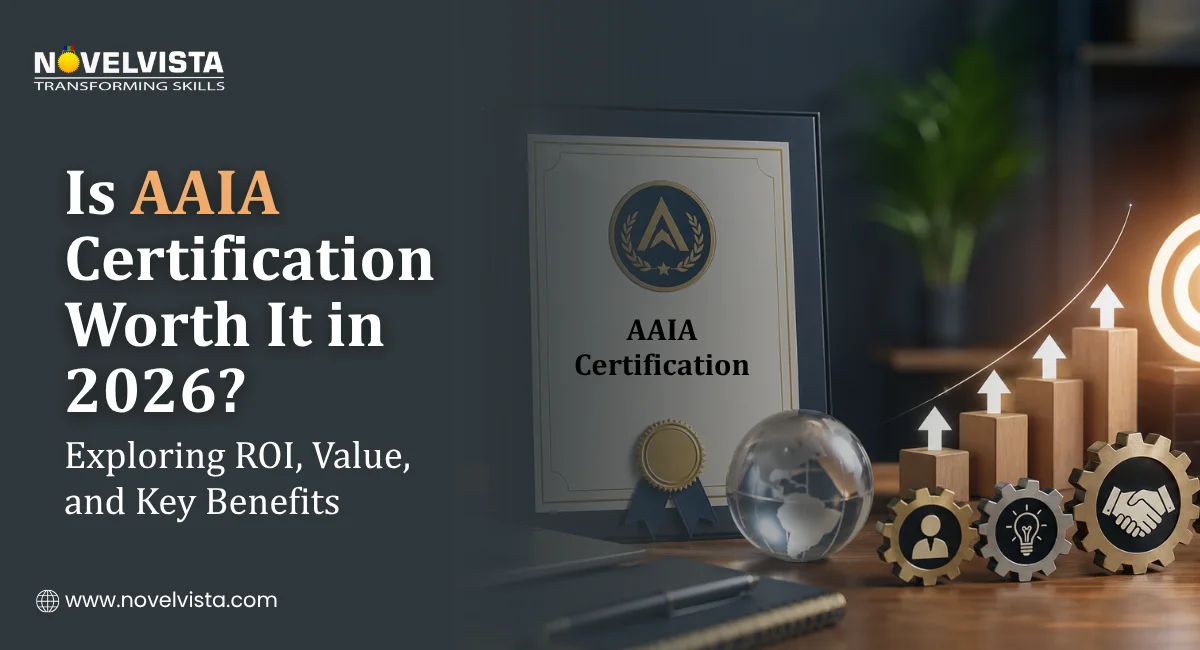
So here is the question every experienced auditor, risk manager, or compliance professional should be sitting with right now: is AAIA certification worth it in 2026? Will it open new career doors? Does the curriculum actually prepare you to audit AI systems in meaningful, practical ways? And perhaps most importantly, what can you do after earning it that your peers simply cannot? The short answers are yes, yes, yes, and quite a lot. But the longer answers reveal the nuances that make this certification genuinely compelling for the right candidates.
The Advanced in AI Audit (AAIA) certification is a specialty credential built for experienced audit and risk professionals who want to develop structured, validated expertise in auditing artificial intelligence systems. It is not an introductory course on AI. It is not a technology certificate for developers or data scientists. It is an advanced-level qualification designed specifically for those who already understand audit methodology and want to apply that expertise to AI environments.
This distinction matters greatly. If you are early in your audit career with no prior experience in IT audit, internal audit, or risk management, the AAIA credential will feel overwhelming and premature. However, if you hold credentials like CISA, CIA, or CPA and work within organizations that are actively adopting AI, this certification is precisely calibrated to your experience level and professional trajectory.
| Candidate Profile | Suitable for AAIA? | Reason |
| Experienced IT auditor (CISA/CIA holder) | Yes | Has the baseline audit knowledge required |
| Internal auditor in AI-adopting organization | Yes | Immediate role relevance and organizational value |
| Risk and compliance manager | Yes | AI governance aligns directly with risk oversight |
| Beginner with no audit background | No | Credential is advanced-level; foundation required first |
| Developer or data scientist | No | Focus is on audit governance, not AI development |
This is where the AAIA certification worth it conversation gets genuinely interesting. Most audit professionals, even highly experienced ones, have a meaningful blind spot when it comes to AI systems. Traditional audit training simply was not designed to account for probabilistic decision-making, model drift, training data bias, or the opacity of machine learning outputs. The AAIA certification closes that gap in ways that are concrete and immediately applicable.
Here is a direct comparison of what AAIA-certified professionals can do versus what most non-certified auditors currently bring to the table:
| Skill Area | Non-Certified Auditor | AAIA-Certified Auditor |
| Evaluating AI model risk | Applies generic IT risk frameworks | Assesses model-specific risks including drift, overfitting, and bias |
| Algorithm bias assessment | Limited or no structured approach | Conducts structured fairness evaluations across demographic variables |
| Data lifecycle auditing | Reviews data storage and access controls | Evaluates training data provenance, labeling quality, and pipeline integrity |
| AI regulatory compliance | General awareness of data privacy laws | Maps AI systems against EU AI Act, sector-specific AI regulations |
| Auditing AI decision outputs | Checks outputs against business rules | Evaluates explainability, reproducibility, and confidence thresholds |
| AI vendor and third-party risk | Standard vendor due diligence | Assesses AI-specific vendor risks including model ownership and update governance |
Each row in that table represents a capability gap that exists right now inside most audit teams. Organizations deploying AI in credit scoring, patient triage, fraud detection, or hiring cannot adequately govern those systems using traditional audit lenses alone. The AAIA certification gives you the specific vocabulary, methodology, and evaluative tools to fill that gap, which is precisely why the credential commands a salary premium and growing employer demand.
Beyond the technical dimension, AAIA-certified professionals also develop a fluency in communicating AI risk to non-technical stakeholders. Translating the audit findings from an AI system into language that a board member, a regulator, or a general counsel can act on is a skill that most auditors have never needed before. The certification builds that bridge deliberately, which adds a layer of leadership value that goes well beyond technical competence.
The AAIA certification benefits are organized across three core knowledge domains, each targeting a dimension of AI audit that traditional credentials leave largely untouched.
| Domain | Exam Weight | Key Focus Areas |
| AI Governance and Risk | 33% | Regulatory frameworks, AI ethics, algorithm bias, data privacy |
| AI Operations | 46% | AI system lifecycle, model validation, operational risk management |
| AI Auditing Tools and Techniques | 21% | Audit methodologies, sampling techniques, AI-specific threat assessment |
The heaviest weight falls on AI Operations, which reflects a deliberate design choice. ISACA recognizes that auditing AI is not merely a theoretical exercise. Certified professionals must understand how AI systems are built, trained, deployed, and monitored before they can evaluate them with any credibility. This operational fluency is what separates AAIA-certified auditors from generalists who simply apply traditional audit checklists to AI contexts without meaningful adaptation.
The governance and risk domain equips candidates to assess AI ethics frameworks, evaluate algorithmic fairness, and review compliance with emerging legislation such as the EU AI Act. As regulatory scrutiny of AI systems intensifies across jurisdictions, the ability to speak credibly to regulators, executives, and board members about where AI risk lives and how it is being managed becomes a distinct professional asset.
The third domain, covering AI auditing tools and techniques, ensures that certification holders are not just theoretically competent but practically equipped. Skills in evaluating AI risk profiles, managing data lifecycle audits, and assessing AI-specific threats give certified professionals immediate application value from day one in a new role.
Pro Tip: Looking for a structured preparation plan? Explore The Ultimate AAIA Study Guide to understand exam domains, preparation strategies, and key concepts required to pass the AAIA certification exam confidently.
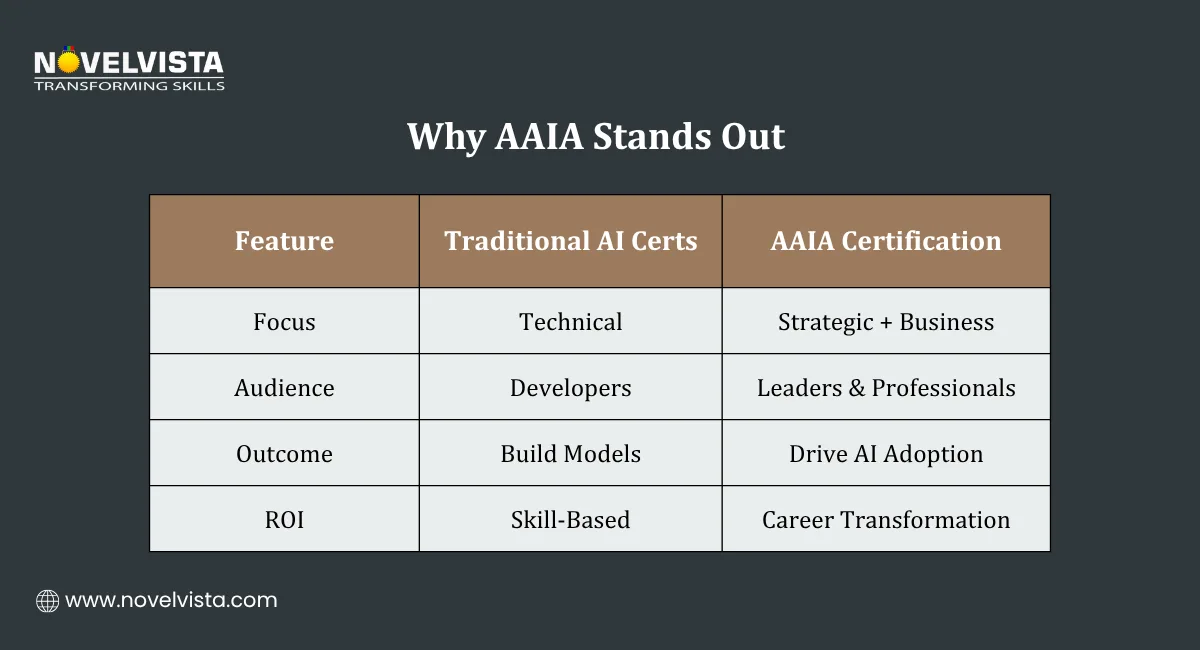
A fair evaluation of AAIA certification value must include a comparison with alternative credentials. Several certifications exist in adjacent spaces, including various vendor-specific AI certifications from Google and Microsoft, and broader governance credentials like CGEIT. The comparison reveals a clear gap.
Vendor-specific AI certifications are valuable for technical practitioners but carry little weight in audit and governance contexts. They demonstrate product fluency, not audit methodology. Broader governance credentials cover AI only incidentally, as part of a wider enterprise governance curriculum. The AAIA certification, by contrast, is laser-focused on AI audit as a discipline, backed by ISACA's global reputation, and recognized by regulators and enterprise audit functions in high-stakes industries including finance, healthcare, and manufacturing.
The timing of your certification matters as much as the certification itself. Pursuing an AI audit credential in 2026 places you at the leading edge of a demand curve that is only accelerating. The EU AI Act, which began phased enforcement in 2024, requires organizations operating in Europe to conduct systematic risk assessments and audits of high-risk AI systems. Similar regulatory frameworks are advancing in the United Kingdom, Singapore, Canada, and the United States. Organizations scrambling to meet these obligations urgently need professionals who can execute AI-specific audit engagements with competence and credibility.
According to ISACA's State of Cybersecurity 2024 report, AI-related audit and governance skills rank among the top five most in-demand capabilities globally. The supply of qualified professionals has not kept pace, creating a genuine talent gap that AAIA-certified individuals are positioned to fill.
Industries with the highest current demand for AI audit expertise include financial services, where algorithmic decision-making in lending and trading is under intense regulatory scrutiny; healthcare, where AI-assisted diagnostics must meet rigorous safety and bias standards; and manufacturing, where AI-driven quality control systems are being assessed for reliability and governance compliance. In each of these sectors, the AAIA certification signals the exact blend of technical literacy and audit discipline that organizations need most. Want to practice before the exam? Check out AAIA Questions and Answers for sample questions, practical explanations, and insights into the type of scenarios covered in the AAIA certification exam.
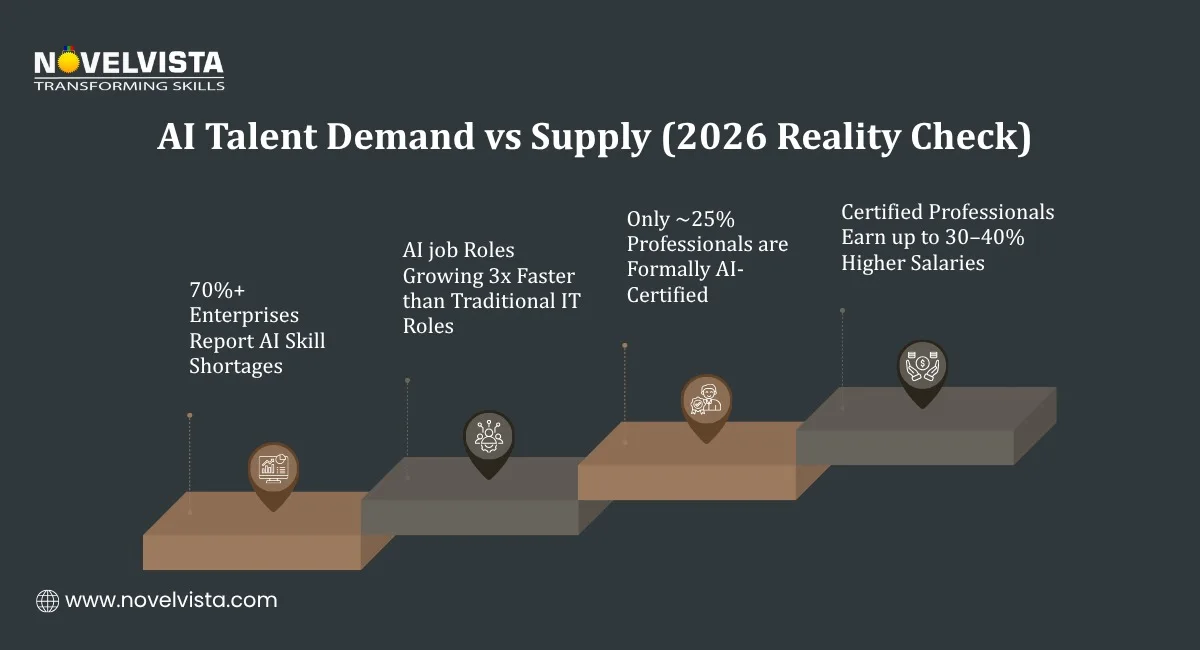
One of the biggest reasons professionals are pursuing the AAIA certification in 2026 is the rising demand for AI governance and AI audit expertise. As organizations adopt AI rapidly, professionals who can assess AI risk, audit algorithms, and support regulatory compliance are becoming highly valuable.
Recent salary trends show that AI audit and governance roles are paying significantly more than traditional IT audit positions.
| Role / Market | Average Salary |
| US AI Audit & Governance Roles | $130,000–$188,000 annually |
| Senior AI Governance Professionals | Up to $273,032 |
| India IT Auditor Average Salary | ₹9.45 Lakhs annually |
| Pune Risk Management Roles | ₹36 Lakhs |
Industry hiring trends also suggest that professionals with AI-focused certifications can earn 10–40% higher salaries compared to non-certified peers. Demand is growing, especially across finance, healthcare, telecom, consulting, and manufacturing sectors, where AI governance is becoming a regulatory priority.
The AAIA certification offers strong long-term ROI for experienced auditors and risk professionals.
| Expense | Estimated Cost |
| ISACA Member Exam Fee | $459 |
| Non-Member Exam Fee | $599 |
| Application Fee | $50 |
Even a modest 10–20% salary increase can help professionals recover certification costs within the first year. Beyond salary growth, AAIA also strengthens career credibility, improves eligibility for AI governance leadership roles, and helps professionals stay relevant as AI regulations continue expanding globally.
The honest answer depends on where you are in your career and what your organization is doing with AI.
Yes, absolutely, if you are an experienced auditor holding CISA, CIA, or CPA credentials and your organization is adopting AI systems. The AAIA certification is a high-value investment that aligns your expertise with the most pressing governance challenge of the current decade.
Yes, for regulatory environments, if you work in a regulated industry such as finance, healthcare, or energy and your employer is subject to AI-specific regulations. The certification gives you a credible professional framework to lead audit engagements that others in your organization cannot handle.
Not yet, for beginners. If you are a new auditor with fewer than three years of experience or have no background in IT audit or risk management, the AAIA certification is not designed for your current stage. Foundational credentials come first. However, if you are a beginner, you can start with the CISA Certification Training and Course and then march forward with AAIA.
The AAIA certification value is concentrated where audit experience meets AI governance demand. For professionals at that intersection, it is one of the most strategically sound credential investments available in 2026.
The evidence is clear. Is AAIA certification worth it in 2026? For any experienced audit or risk professional serious about leading in the AI governance space, the answer is yes. With globally recognized credentialing from ISACA, a curriculum built for immediate practical application, and a skill set that the vast majority of your peers simply do not yet possess, the AAIA certification delivers differentiation that is both measurable and durable.
As AI regulation tightens across every major economy and organizations rush to demonstrate responsible AI governance, the professionals who hold AAIA certification will be the ones sitting at the table where critical decisions get made. If you are an experienced auditor ready to bridge the gap between technical AI operations and regulatory accountability, 2026 is the right year to make that move. The demand is real, the credential is credible, and the opportunity is here now.
Join NovelVista’s AAIA Certification Training and gain practical AI auditing skills, real-world governance insights, and globally recognized expertise in auditing AI-enabled systems. Designed for IT auditors, risk professionals, compliance leaders, and governance teams, this course helps you confidently assess AI risks, strengthen AI governance, and prepare for the globally respected AAIA certification.
With expert-led sessions, practical case studies, and ISACA-aligned training, you’ll develop the skills needed to audit modern AI environments with confidence and credibility.
Start your AI audit journey today!
Author Details

Course Related To This blog
Advanced in AI Audit (AAIA) Training
Confused About Certification?
Get Free Consultation Call
Stay ahead of the curve by tapping into the latest emerging trends and transforming your subscription into a powerful resource. Maximize every feature, unlock exclusive benefits, and ensure you're always one step ahead in your journey to success.