Category | Security
Last Updated On 05/05/2026
Artificial Intelligence is transforming industries at an unprecedented pace. Studies show that over 75% of enterprises are investing in AI, and the demand for certified AI professionals is growing year after year. From finance and healthcare to cybersecurity and IT operations, organizations are increasingly relying on AI systems—and more importantly, professionals who can audit, govern, and ensure these systems are trustworthy.
This is where AAIA certification becomes a powerful career differentiator.
But preparing for certification raises important questions:
Are AAIA Questions enough to crack the exam?
How should you approach AAIA Exam Questions effectively? What’s the best way to practice using AAIA Practice Questions without feeling overwhelmed?
Many candidates struggle not because the concepts are too difficult, but because they lack a structured preparation strategy. Simply reading theory is not enough—you need to apply your knowledge in an exam-like environment. That’s exactly where well-designed AAIA Questions play a crucial role in bridging the gap between learning and performance.
Whether you are an aspiring AI auditor, an IT professional transitioning into AI governance, or someone looking to validate your expertise, this guide is designed to give you clarity and direction.
Let’s dive into a structured approach using AAIA Questions that will boost your preparation.
Using structured AAIA Questions gives you a clear advantage.
Regular practice with AAIA Practice Questions ensures you are exam-ready.
1. What is Artificial Intelligence?
A. Human intelligence
B. Machine simulation of human intelligence
C. Data storage
D. Networking system
Answer: B – AI enables machines to perform human-like tasks.
2. What is Narrow AI?
A. Multi-purpose AI
B. Human-like AI
C. Task-specific AI
D. General intelligence
Answer: C – Designed for specific tasks only.
3. What is Machine Learning?
A. Manual programming
B. Learning from data
C. Hardware system
D. Database tool
Answer: B – Systems improve using data.
4. What is Deep Learning?
A. Basic AI
B. Rule-based AI
C. Neural network-based learning
D. Data storage
Answer: C – Uses layered neural networks.
5. What is NLP?
A. Data mining
B. Language processing
C. Networking
D. Storage
Answer: B – Helps machines understand language.
6. What is Computer Vision?
A. Audio processing
B. Image interpretation
C. Data storage
D. Networking
Answer: B – Machines analyze visual data.
7. What is Training Data?
A. Final output
B. Input data for learning
C. Code
D. Hardware
Answer: B – Used to train models.
8. What is Supervised Learning?
A. Unlabeled data
B. Labeled data
C. Random data
D. No data
Answer: B – Uses labeled datasets.
9. What is Unsupervised Learning?
A. Labeled data
B. Pattern finding
C. Manual learning
D. Coding
Answer: B – Finds hidden patterns.
10. What is Reinforcement Learning?
A. Static learning
B. Reward-based learning
C. No learning
D. Manual input
Answer: B – Learns via rewards.
11. What is an Algorithm?
A. Hardware
B. Instruction set
C. Data
D. Output
Answer: B – Rules to solve problems.
12. What is Data Preprocessing?
A. Cleaning data
B. Storing data
C. Deleting data
D. Coding
Answer: A – Prepares data for models.
13. What is Feature Engineering?
A. Data removal
B. Input creation
C. Output generation
D. Testing
Answer: B – Creates useful inputs.
14. What is Model Evaluation?
A. Training
B. Testing performance
C. Coding
D. Storage
Answer: B – Measures effectiveness.
15. What is AI System?
A. Hardware
B. Intelligent system
C. Data
D. Network
Answer: B – Performs AI tasks.
Pro Tip: A well-structured AAIA Study Guide can significantly enhance your preparation by organizing key concepts, simplifying complex topics, and aligning your practice with real exam expectations.
16. What is Overfitting?
A. Poor learning
B. Memorizing data
C. No learning
D. Data loss
Answer: B – Model fits training data too closely.
17. What is Underfitting?
A. Perfect model
B. Poor model
C. Over model
D. Good fit
Answer: B – Fails to capture patterns.
18. What is Accuracy?
A. Error rate
B. Correct predictions
C. Data size
D. Speed
Answer: B – Measures correctness.
19. What is Precision?
A. Accuracy
B. Correct positives
C. Data
D. Speed
Answer: B – Focuses on positive predictions.
20. What is Recall?
A. Memory
B. Finding positives
C. Accuracy
D. Error
Answer: B – Identifies relevant cases.
21. What is F1 Score?
A. Average
B. Balance metric
C. Error
D. Speed
Answer: B – Combines precision and recall.
22. What is Regression?
A. Classification
B. Continuous prediction
C. Clustering
D. Sorting
Answer: B – Predicts numeric values.
23. What is Classification?
A. Sorting data
B. Category prediction
C. Regression
D. Clustering
Answer: B – Assigns labels.
24. What is Clustering?
A. Labeling
B. Grouping data
C. Sorting
D. Coding
Answer: B – Groups similar data.
25. What is Decision Tree?
A. Graph
B. Tree model
C. Table
D. Code
Answer: B – Uses branching decisions.
26. What is Random Forest?
A. Single model
B. Multiple trees
C. Data
D. Network
Answer: B – Ensemble method.
27. What is SVM?
A. Network
B. Classification model
C. Storage
D. Data
Answer: B – Separates data points.
28. What is Gradient Descent?
A. Optimization
B. Storage
C. Coding
D. Data
Answer: A – Minimizes error.
29. What is Loss Function?
A. Output
B. Error measure
C. Input
D. Code
Answer: B – Measures prediction error.
30. What is Cross Validation?
A. Training
B. Testing
C. Validation method
D. Coding
Answer: C – Ensures model reliability.
31. What is AI Bias?
A. Fairness
B. Error in predictions
C. Accuracy
D. Speed
Answer: B – Causes unfair results.
32. What is Ethical AI?
A. Fast AI
B. Responsible AI
C. Cheap AI
D. Basic AI
Answer: B – Focuses on fairness.
33. What is Data Privacy?
A. Sharing data
B. Protecting data
C. Deleting data
D. Storing data
Answer: B – Ensures security.
34. What is Explainable AI?
A. Complex AI
B. Understandable AI
C. Fast AI
D. Basic AI
Answer: B – Decisions are interpretable.
35. What is AI Governance?
A. Coding
B. Rules for AI
C. Data
D. Hardware
Answer: B – Controls AI usage.
36. What is AI Risk?
A. Benefit
B. Potential harm
C. Speed
D. Accuracy
Answer: B – Negative impact.
37. What is Transparency?
A. Hidden system
B. Clear system
C. Fast system
D. Cheap system
Answer: B – Open processes.
38. What is Accountability?
A. Responsibility
B. Speed
C. Cost
D. Data
Answer: A – Ownership of outcomes.
39. What is Fairness?
A. Bias
B. Equality
C. Speed
D. Accuracy
Answer: B – No discrimination.
40. What is Compliance?
A. Ignoring rules
B. Following rules
C. Coding
D. Data
Answer: B – Adhering to regulations.
41. What is Neural Network?
A. Brain-inspired model
B. Data
C. Code
D. Network
Answer: A – Mimics human brain.
42, What is Backpropagation?
A. Training method
B. Storage
C. Data
D. Code
Answer: A – Updates weights.
43. What is Hyperparameter Tuning?
A. Data cleaning
B. Model optimization
C. Storage
D. Coding
Answer: B – Improves performance.
44. What is Transfer Learning?
A. New learning
B. Reusing models
C. Data
D. Code
Answer: B – Uses pre-trained models.
45. What is Generative AI?
A. Analysis
B. Content creation
C. Storage
D. Data
Answer: B – Creates new outputs.
46. What is LLM?
A. Small model
B. Language model
C. Data
D. Code
Answer: B – Processes language.
47. What is AI Deployment?
A. Training
B. Production use
C. Coding
D. Data
Answer: B – Real-world use.
48. What is Edge AI?
A. Cloud AI
B. Local AI
C. Data
D. Code
Answer: B – Runs on devices.
49. What is AI Lifecycle?
A. Single step
B. End-to-end process
C. Data
D. Code
Answer: B – Full development cycle.
50. What is Model Drift?
A. Improvement
B. Performance drop
C. Data
D. Code
Answer: B – Accuracy decreases over time.
Identify topics where you consistently struggle and dedicate extra time to them. Targeted practice using AAIA Questions ensures balanced preparation and stronger overall performance.
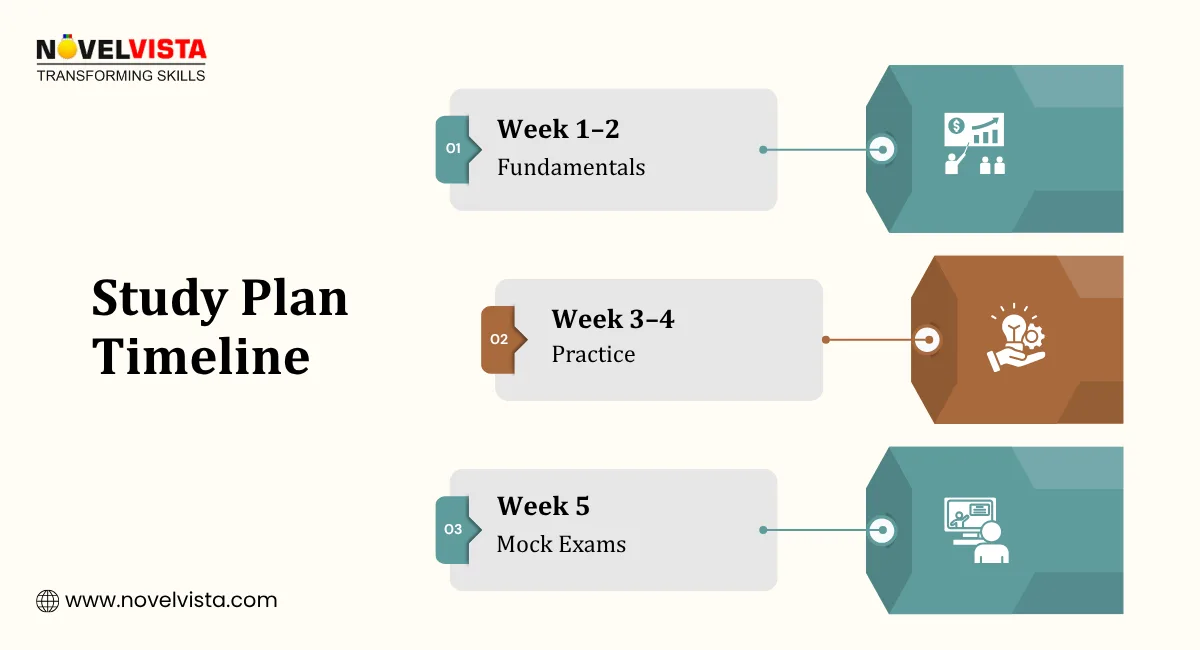
Cracking the AAIA certification is not about last-minute preparation, it’s about building confidence through consistent and smart practice. When you regularly engage with AAIA Questions, challenge yourself with real AAIA Exam Questions, and reinforce your learning through structured AAIA Practice Questions, you move beyond memorization and start developing true conceptual clarity. Understanding the AAIA Exam Cost Breakdown helps you plan your certification journey effectively, ensuring you budget for training, exam fees, and additional preparation resources without surprises.
Think of your preparation as a continuous cycle: learn, practice, analyze, and improve. Each question you solve sharpens your understanding, exposes gaps, and strengthens your exam readiness. Over time, this disciplined approach not only boosts your performance but also equips you with practical insights that extend beyond the exam into real-world AI auditing scenarios.
Stay consistent, stay focused, and trust the process because the more strategically you practice today, the more confidently you will perform on exam day.
Ready to take your AI auditing skills to the next level?
Join NovelVista’s AAIA Certification Training and gain hands-on expertise in AI governance, risk management, and auditing practices. Designed for professionals aiming to build real-world AI assurance capabilities, this course equips you with practical insights, industry-relevant knowledge, and globally recognized credentials.
Start your AAIA certification journey today!

Author Details

Course Related To This blog
Advanced in AI Audit (AAIA) Training
Confused About Certification?
Get Free Consultation Call
Stay ahead of the curve by tapping into the latest emerging trends and transforming your subscription into a powerful resource. Maximize every feature, unlock exclusive benefits, and ensure you're always one step ahead in your journey to success.