Category | Security
Last Updated On 10/04/2026
Imagine an AI system rejecting a highly qualified job candidate not because they lacked skills, but because the algorithm silently learned bias from past data. Or a healthcare model recommending the wrong treatment due to flawed training inputs.
Now ask yourself:
Who is responsible when AI gets it wrong?
And more importantly, who checks if it’s right in the first place?
This is where the AAIA Meaning becomes impossible to ignore.
As artificial intelligence moves from experimentation to critical decision-making, understanding the AAIA Full Form and its role in auditing AI systems is no longer optional; it’s a necessity for anyone working with or around AI.
Let’s start with the basics but from the right perspective.
AAIA Full Form is not just a generic expansion. It stands for Advanced in AI Audit™, a professional certification issued by ISACA, a globally recognized authority in IT governance, risk, and auditing.
In the world of IT certifications, the “who” matters just as much as the “what.” And with ISACA behind it, AAIA carries strong credibility and industry relevance.
So, rather than viewing it as a simple definition, the AAIA Full Form represents a structured certification framework designed to validate your ability to audit, assess, and assure AI systems in real-world environments.
At its core, the AAIA Meaning is about equipping professionals to ensure that AI systems are:
In simple terms, AAIA isn’t just about understanding AI it’s about ensuring AI can be trusted, governed, and audited at scale.
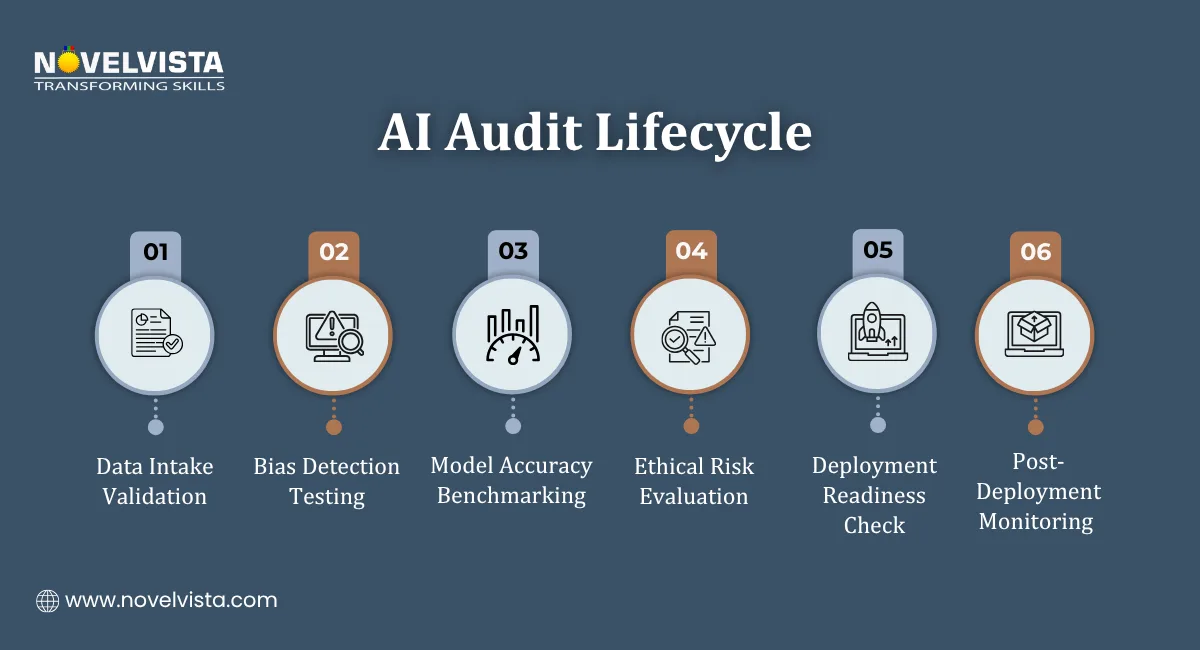
Understanding the AAIA Meaning goes far beyond its expansion it represents a structured, control-driven approach to evaluating AI systems across their entire lifecycle.
At a technical level, AAIA Meaning refers to the application of audit methodologies, validation techniques, and assurance frameworks to assess whether AI models operate within defined thresholds of accuracy, fairness, robustness, and compliance.
Rather than treating AI as a black box, AAIA introduces measurable checkpoints at each stage of the pipeline:
However, auditing doesn’t happen in isolation.
An auditor doesn’t just “check” AI they evaluate it against established standards and frameworks that define what “good” looks like.
In 2026, two of the most critical frameworks shaping AI auditing are:
These frameworks give practical meaning to the AAIA Meaning they transform AI auditing from a checklist activity into a standards-driven, evidence-based discipline.
The real AAIA Meaning lies in transforming AI systems from opaque, probabilistic engines into auditable, explainable, and governable assets.
For instance, an AAIA-driven audit would not just ask:
It would go deeper:
This is where AAIA Meaning becomes critical it ensures that AI systems are not only performant but also defensible, transparent, and production-ready in high-stakes environments.
AI systems are powerful but they are not perfect.
Without proper auditing, they can introduce serious risks such as:
What makes this even more critical today is the enforcement of global AI laws.
The EU AI Act has become a turning point. As of August 2, 2026, several of its strict enforcement rules for “High-Risk” AI systems have officially come into effect.
This means organizations deploying AI in areas like:
…are now legally required to demonstrate:
✔ Risk assessments
✔ Transparency and explainability
✔ Human oversight
✔ Continuous monitoring and auditability
Failure to comply can result in significant penalties and operational restrictions.
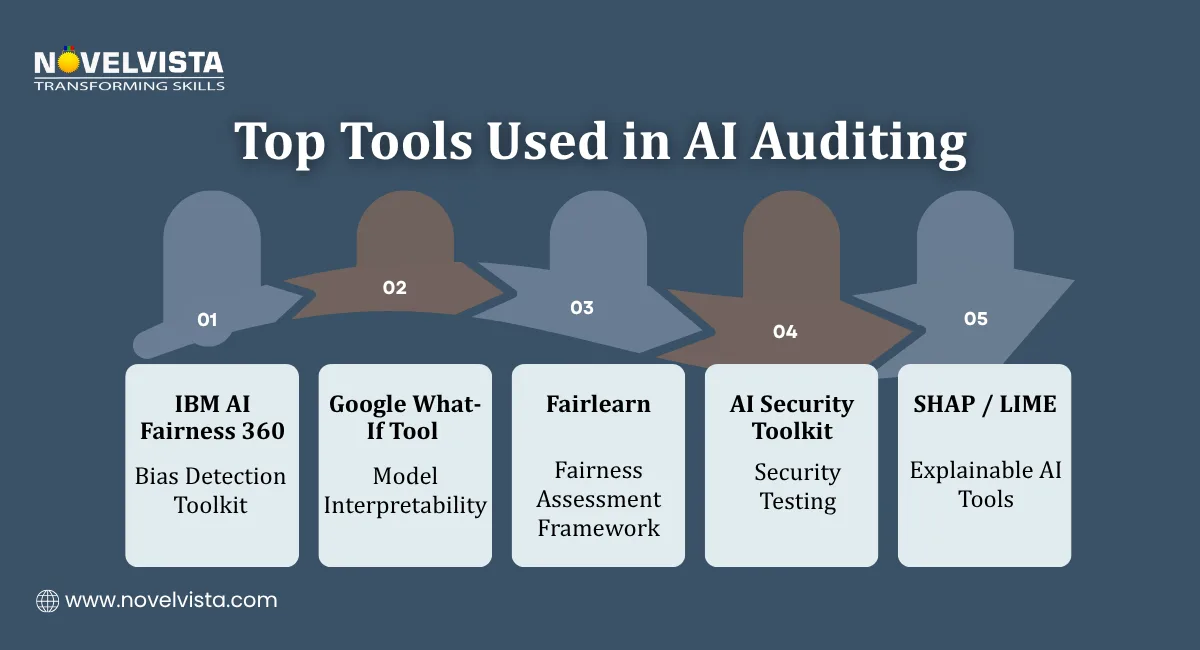
The AAIA Full Form is backed by a strong framework that focuses on multiple pillars:
Establishing policies and standards for AI usage.
Identifying and mitigating risks associated with AI systems.
Ensuring adherence to laws such as GDPR and emerging AI regulations.
Making AI decisions understandable to stakeholders.
Tracking AI performance over time to detect anomalies.
Each of these components reinforces the true AAIA Meaning ensuring responsible AI deployment.
You might be wondering Is AAIA relevant to me?
The answer is yes, if you fall into any of these categories:
Want to expand into AI auditing roles.
Need to build ethical and compliant AI systems.
Responsible for governance and regulatory adherence.
This is not an entry-level certification. The AAIA credential is designed for experienced professionals looking to specialize in AI auditing and assurance.
To be eligible, candidates must hold an active CISA or an equivalent advanced auditing qualification such as:
This ensures that professionals pursuing AAIA already have a strong foundation in auditing, risk, and compliance making it a true advanced-level credential aligned with the evolving demands of AI governance.
Understanding the AAIA Full Form can open doors to specialized roles in AI governance and auditing. Use an AAIA exam cost guide to plan your certification budget and avoid unexpected expenses.
Learning the AAIA Meaning is more than just theoretical knowledge it’s a career accelerator.
AI auditing is an emerging and highly sought-after domain.
Roles like:
As AI adoption grows, so will the need for AAIA professionals.
Organizations worldwide are adopting AI governance frameworks.
Clearly, mastering the AAIA Full Form gives you a competitive edge.
Let’s understand how AAIA differs from traditional auditing:
Aspect | Traditional IT Auditing | AAIA |
Focus | IT systems & processes | AI models & algorithms |
Complexity | Moderate | High |
Transparency | Mostly clear | Often black-box |
Risk Type | Security & compliance | Bias, ethics, explainability |
Tools | Standard audit tools | AI-specific frameworks |
The AAIA Meaning introduces a deeper, more complex layer of auditing compared to traditional methods.
If you're interested in this field, here’s a simple roadmap:
Understand machine learning, data models, and AI concepts.
To truly understand AAIA, focus on building expertise across three critical domains:
This structured approach aligns closely with the practical expectations behind the AAIA Meaning and real-world AI auditing scenarios.
Dive deeper into auditing methodologies specific to AI.
Instead of just “getting certified,” focus on preparing the right way.
Leverage the ISACA QAE Database the official Questions, Answers & Explanations resource designed specifically for exam readiness.
This is the primary study tool used by successful candidates to translate the AAIA Meaning into practical, exam-ready knowledge.
Work on real-world AI auditing scenarios.
By following this path, you can fully grasp the AAIA Meaning and apply it in real-world scenarios.
Pro Tip: The Ultimate AAIA Study Guide is your go-to resource for mastering AI auditing concepts, exam strategies, and real-world assurance practices.
Every AI system makes decisions.
But not every decision can be explained, justified, or defended.
That gap is where the AAIA Meaning truly matters.
The AAIA Full Form represents a shift from blind trust in algorithms to structured accountability. As organizations scale AI, they don’t just need developers they need professionals who can question, test, and validate these systems at a deeper level.
In the near future, the real differentiator won’t be who builds AI faster but who can prove it works responsibly.
Ready to build expertise in AI auditing and assurance?
Join NovelVista’s AAIA Certification Training and gain hands-on knowledge in AI governance, risk assessment, and model auditing techniques. Designed for IT professionals, auditors, and AI practitioners, this course equips you with practical skills to evaluate AI systems, ensure compliance, and drive responsible AI adoption in real-world environments.
Start your AAIA certification journey today!
Author Details

Course Related To This blog
Advanced in AI Audit (AAIA) Training
Confused About Certification?
Get Free Consultation Call
Stay ahead of the curve by tapping into the latest emerging trends and transforming your subscription into a powerful resource. Maximize every feature, unlock exclusive benefits, and ensure you're always one step ahead in your journey to success.