Category | Quality Management
Last Updated On 18/12/2025
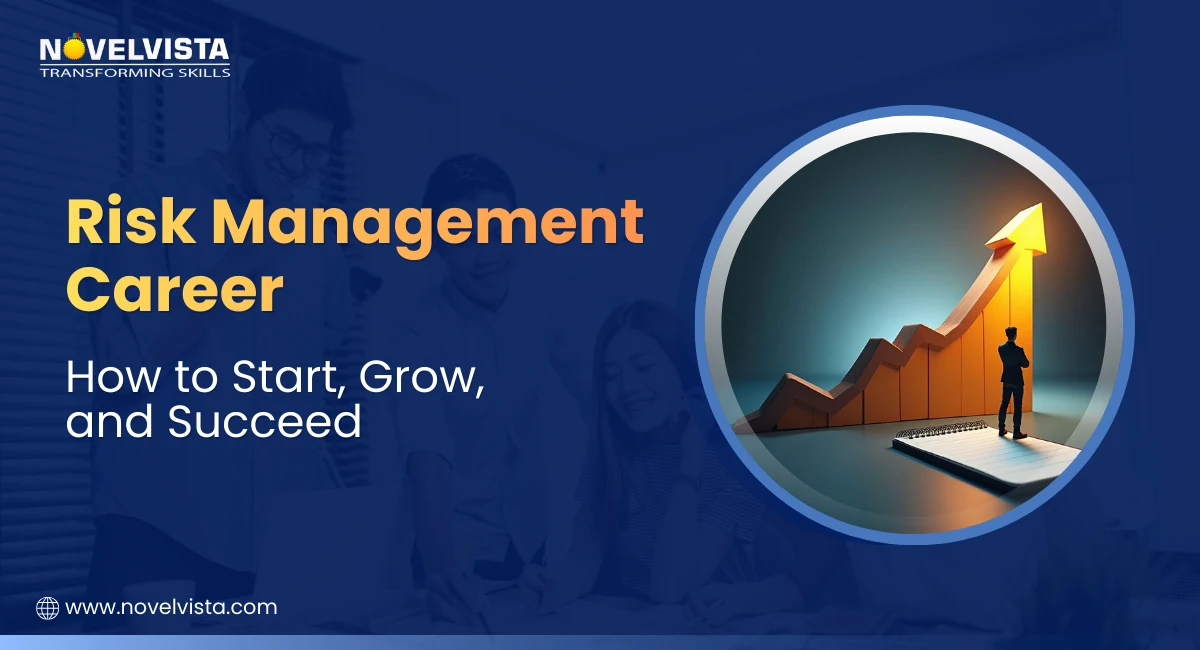
In the last decade, organizations have faced more disruption than in the previous fifty years combined. Cyber incidents, regulatory penalties, supply chain failures, climate risks, AI-driven decisions, and geopolitical uncertainty have reshaped how businesses operate. According to global workforce reports, risk-related roles have grown by over 30% across regulated and high-growth industries, and many organizations now treat risk capability as a board-level priority rather than a back-office function.
This shift has quietly transformed the risk management career from a niche specialization into a strategic profession. What was once limited to compliance checklists is now closely tied to leadership decisions, organizational resilience, and long-term sustainability. At the center of this evolution sits ISO 31000, the international guideline that defines how modern risk management should be designed, implemented, and continuously improved.
If you are exploring a career in risk management, understanding ISO 31000 is no longer optional. It shapes how risk professionals think, communicate, and add value across industries.
Risk management, in its simplest form, is about making informed decisions under uncertainty. However, in practice, it involves far more than identifying threats. ISO 31000 defines risk as the effect of uncertainty on objectives, which immediately broadens the scope beyond loss prevention to opportunity management.
ISO 31000 provides a structured approach built on three core elements:
principles, a framework, and a risk management process. Together, they ensure that risk management is not isolated but embedded into governance, strategy, and daily operations.
For anyone building a risk management career, this framework becomes a professional mindset. Instead of reacting to incidents, risk professionals trained in ISO 31000 focus on anticipating uncertainty, assessing impacts, and supporting leadership with evidence-based insights. This shift is one reason why organizations increasingly look for ISO-aligned risk professionals rather than purely compliance-focused roles.
ISO 31000 is not a certifiable standard like ISO 9001 or ISO 27001, but its influence is arguably broader. It acts as a foundation that integrates seamlessly with quality management, information security, business continuity, and enterprise governance systems.
From a risk management career path perspective, ISO 31000 does three important things. First, it standardizes language. Risk professionals can communicate consistently with auditors, executives, regulators, and operational teams. Second, it elevates risk discussions from tactical issues to strategic objectives. Third, it allows professionals to move across industries without relearning the fundamentals of risk governance.
This flexibility is what makes ISO 31000 particularly valuable for professionals transitioning from quality, audit, or IT backgrounds. It provides continuity while expanding career scope, strengthening long-term risk management career opportunities.
A risk management career path is rarely linear, and that is part of its appeal. Many professionals enter the field through adjacent roles such as quality management, internal audit, compliance, project management, or information security. Over time, responsibilities expand from documentation and reporting to analysis, advisory, and leadership engagement.
Early stages of a career in risk management often involve supporting risk assessments, maintaining risk registers, and assisting with audits or reviews. As experience grows, professionals take ownership of enterprise risk assessments, facilitate workshops, and advise senior stakeholders. At advanced levels, roles evolve into enterprise risk leadership, governance advisory, or chief risk positions.
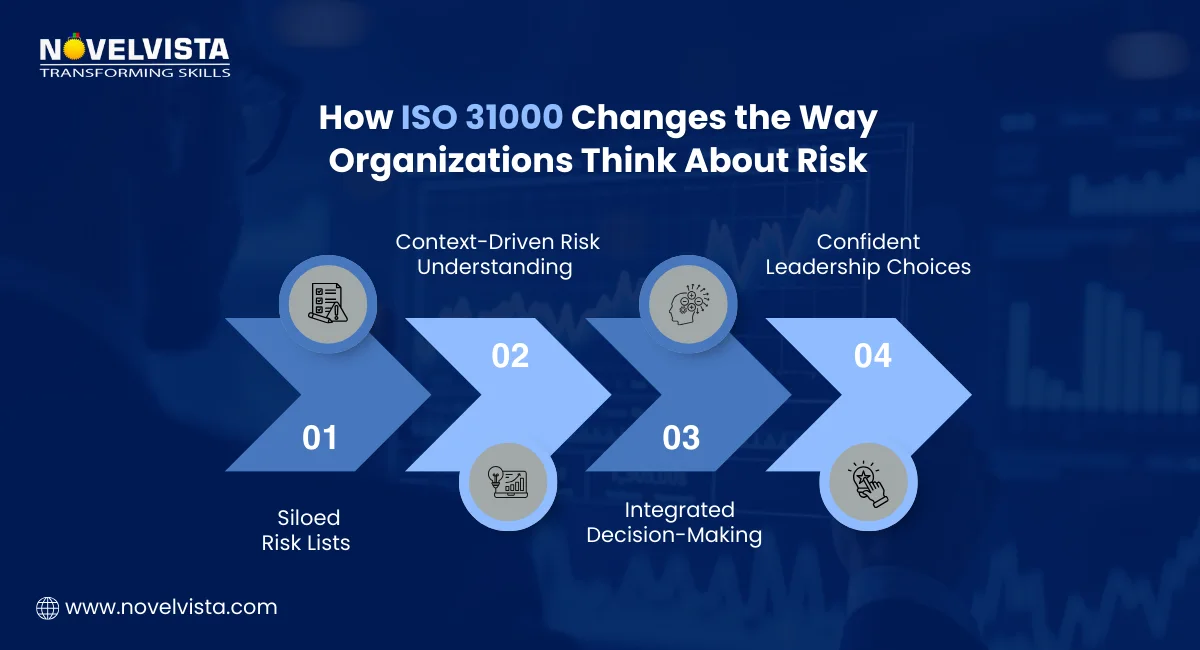
ISO 31000 supports this progression by emphasizing continuous improvement and integration. Rather than locking professionals into a single function, it enables horizontal and vertical growth across organizational structures. ISO 31000 Principles help shift risk conversations from compliance to value creation, strengthening the role of risk professionals in leadership discussions.
Technical Foundations Are Essential, But Not Enough
Strong knowledge of risk methodologies is important, but ISO 31000 emphasizes communication, context, and decision support to succeed in a risk management career.
Translating Uncertainty Into Business Insight
Effective professionals turn complex risk information into business-relevant insights by understanding objectives, risk appetite, and stakeholder expectations.
Analytical Thinking With Practical Judgment
Scenario analysis and structured judgment support informed decisions, while respectful challenge strengthens credibility along the risk management career path.
There is no single qualification that defines a successful risk professional, but ISO 31000-based learning is increasingly seen as foundational. Many professionals begin with ISO 31000 foundation or practitioner training to understand the principles and practical application of risk frameworks.
Complementary certifications in internal auditing, enterprise risk management, quality management, or information security can strengthen credibility. However, employers often value applied experience just as much as formal credentials.
For those serious about a long-term risk management career, continuous learning is essential. Regulations evolve, technologies change, and organizational risk profiles shift constantly. ISO 31000’s emphasis on monitoring and review aligns well with this need for professional adaptability.
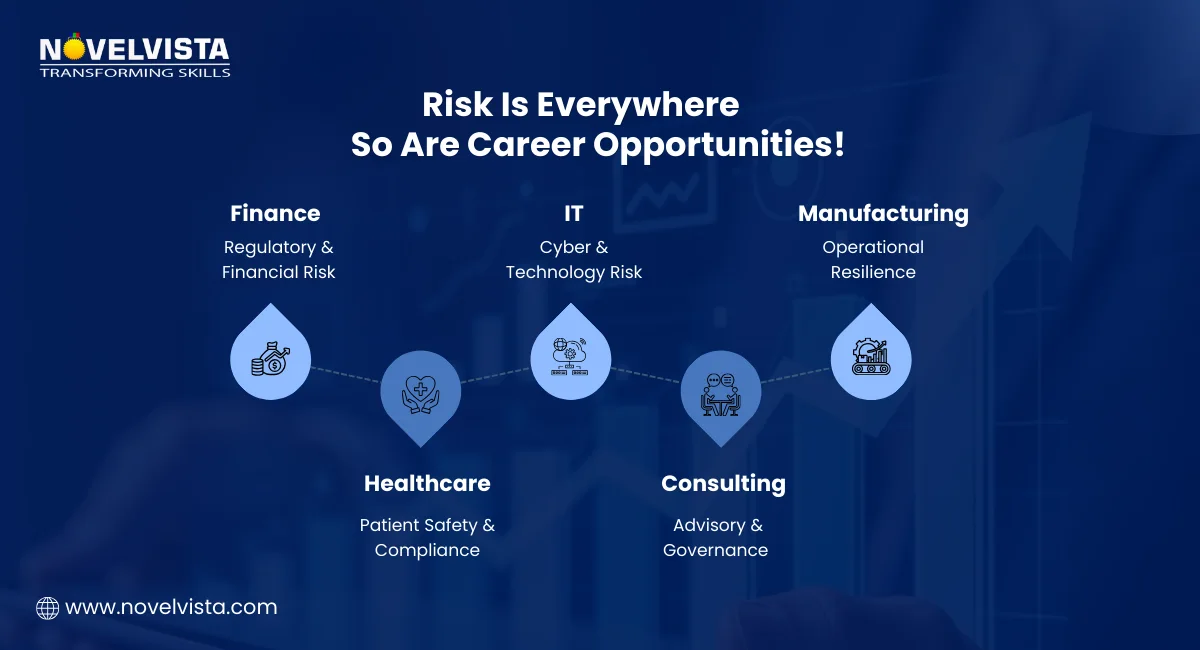 One of the strongest advantages of a risk management career is its cross-industry relevance. Financial services rely heavily on structured risk governance due to regulatory oversight. Technology and cybersecurity teams depend on risk assessments to manage data protection and system resilience. Manufacturing and supply chain organizations use risk frameworks to address operational disruptions and safety concerns.
Healthcare, energy, infrastructure, and the public sector also depend on ISO 31000-aligned approaches to manage complex stakeholder environments. Consulting firms and advisory practices offer additional risk management career opportunities for professionals who enjoy working across multiple organizations and industries. At the core of effective risk practices are the ISO 31000 Risk Management Guidelines, which explain how organizations can manage uncertainty in a practical and integrated way.
This broad applicability contributes to a stable and positive risk management career outlook, even during economic uncertainty.
Managing Resistance to Risk Insights
Risk professionals often encounter resistance when insights challenge assumptions or priorities, especially in fast-moving business environments.
Working With Uncertainty and Incomplete Data
A career in risk management requires supporting decisions even when data is uncertain, fragmented, or evolving.
Structured Yet Flexible Risk Approach
ISO 31000 provides a transparent and inclusive framework that encourages continual improvement and builds organizational trust.
Apply ISO 31000 in real-world decisions.
Explore career paths and growth strategies.
Move confidently toward leadership roles.
Starting a risk management career does not require a perfect background. What matters most is developing a risk-based way of thinking. Gaining exposure to risk assessments, audits, project reviews, or management systems can provide a strong foundation.
ISO 31000 offers a practical roadmap for growth. By understanding organizational context, defining risk criteria, and applying consistent processes, professionals can demonstrate value early in their careers. Over time, building experience across different risk domains supports advancement and diversification.
Those who succeed long term tend to view risk management not as a function, but as a professional discipline that evolves alongside organizational strategy.
A risk management career today is defined by relevance, adaptability, and strategic impact. As organizations face increasing uncertainty, the demand for professionals who can guide informed decision-making continues to grow. ISO 31000 plays a critical role in shaping how these professionals think, act, and add value.
For anyone considering a career in risk management, ISO 31000 offers more than a framework. It provides a professional foundation that supports growth across roles, industries, and leadership levels. With a strong risk management career outlook and expanding opportunities, the field offers both stability and long-term progression for those willing to develop the necessary skills and perspective.
 For professionals ready to apply ISO 31000 in real-world scenarios, NovelVista’s ISO 31000 Risk Manager Certification Training offers practical, structured learning aligned with modern risk practices. The course helps build risk-based thinking, strengthen decision-support skills, and support long-term growth in a risk management career.
Start your ISO 31000 risk manager journey today
Author Details

Course Related To This blog
Certified ISO 31000:2018 Risk Manager
Confused About Certification?
Get Free Consultation Call
Stay ahead of the curve by tapping into the latest emerging trends and transforming your subscription into a powerful resource. Maximize every feature, unlock exclusive benefits, and ensure you're always one step ahead in your journey to success.