Category | Quality Management
Last Updated On 01/12/2025
Ever felt like ISO paperwork turns into a never-ending checklist? You’re not alone. Many teams spend hours creating files they don’t even need, while missing the ones that actually matter during audits. That’s exactly why a clear understanding of ISO 20000 Documents can save so much frustration. This blog walks you through what you must have, what you may choose to add, and how to keep your Service Management System smooth without drowning your team in documents. By the end, you’ll know exactly where to focus.
When people talk about Mandatory vs Optional ISO 20000 Documents, it sounds more confusing than it really is. ISO 20000-1:2018 has a defined set of documents that every certified organization must maintain. These form the backbone of an effective SMS (Service Management System) and cannot be skipped.
At the same time, the standard allows space for flexibility. The depth and detail of your documentation depend largely on:
This is where Optional ISO 20000 Documents come in. They are not demanded by the standard, but they make implementation easier by improving clarity, oversight, and audit readiness. Understanding the difference helps teams save time, avoid unnecessary paperwork, and prepare confidently for certification.
Some documents sit right at the heart of your Service Management System. These Mandatory ISO 20000 Documents ensure your direction, commitments, and rules are clear.
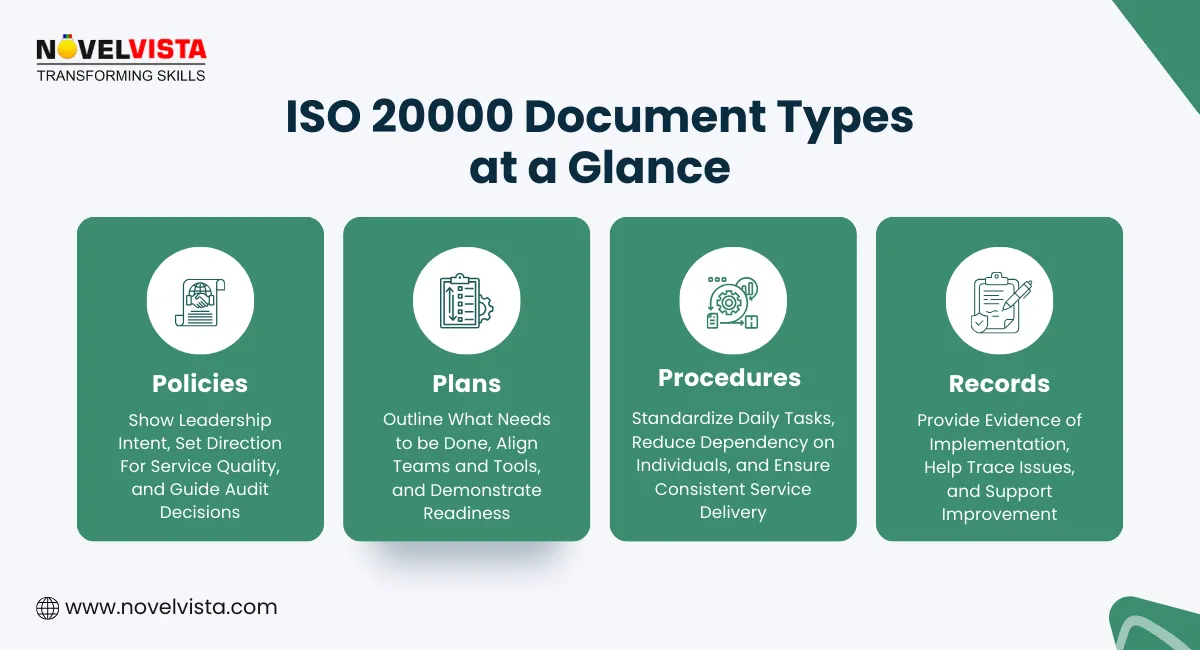
The core policies include:
These policies act as the foundation for compliance. Without them, it becomes hard to show what your SMS stands for or how your team maintains control over services. They also help auditors understand your structure and leadership intentions right away.
Policies offer direction, but plans show execution. ISO requires a set of operational plans that support reliable and consistent service delivery. These Mandatory ISO 20000 Documents include:
These plans keep day-to-day operations aligned with ISO 20000 expectations. They show how your company prepares for risks, maintains uptime, and ensures people stay trained for the job.
See exactly which ISO documents you must have and which
are optional. Cut the confusion and help your team stay
audit-ready in minutes.
Procedures bring structure to your service processes. Records provide proof that the system works. Together, they form the evidence every auditor looks for.
Key procedures required as part of Mandatory ISO 20000 Documents include:
During our ISO 20000 auditor coaching sessions, many professionals admit that records are where most non-conformities appear. Missing incident logs, outdated audit reports, and incomplete change records are among the top findings globally, as also highlighted by certification bodies such as GSDC. This is why maintaining clean, current records is essential; they serve as your strongest evidence during audits.
While not demanded by the standard, optional documents play a helpful role in keeping your SMS organized and predictable. Many organizations choose to create them because they make life easier for service owners and auditors.
Common Optional ISO 20000 Documents include:
These optional elements improve transparency, communication, and decision-making. They give teams quick reference points and help reduce confusion during daily operations. Even though ISO doesn’t require them, they often become valuable tools for shaping a stable and structured service environment.
Building your ISO documentation from scratch can drain time, especially if your team is already managing daily operations. That’s why many organizations rely on implementation toolkits. They offer ready-to-use templates for policies, procedures, logs, and reports, making it easier to set up your entire SMS.
Well-structured toolkits include:
Using these tools cuts down effort, keeps your format consistent, and helps avoid missing any of the ISO 20000 Documents required during audits.
For a step-by-step breakdown of how organizations actually put these principles into action, check out our full ISO 20000 implementation blog.
A good SMS does not depend on the number of documents you create. It depends on how relevant, updated, and easy-to-use they are. Balancing Mandatory vs Optional ISO 20000 Documents is key to keeping things simple while staying compliant.
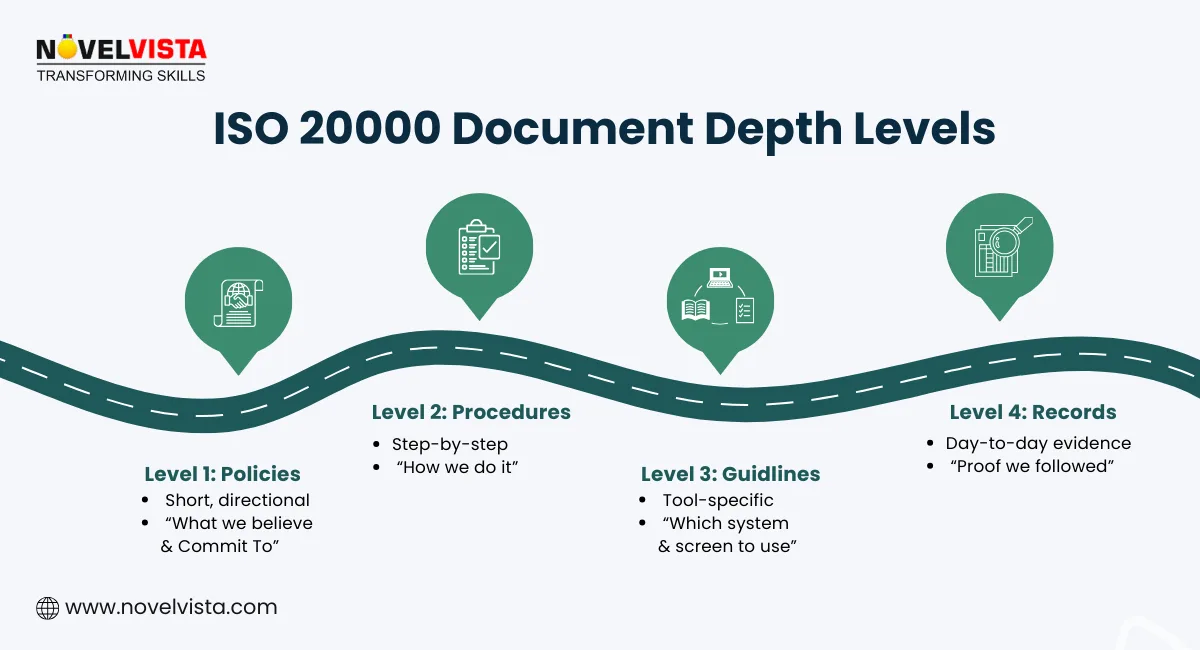
Helpful practices include:
International bodies like ISO itself consistently highlight that well-structured templates reduce implementation errors by keeping documentation aligned with the standard. Our training programs follow the same approach by mapping every policy, procedure, and record to ISO 20000-1:2018 clauses. This ensures teams aren’t just compliant; they follow globally accepted documentation practices that auditors recognize.
Implementing ISO 20000 becomes far more effective when you approach it with an auditor’s mindset. Understanding how auditors think, verify evidence, and evaluate process maturity helps implementers build a stronger and more audit-ready Service Management System (SMS). Many ISO 20000 professionals benefit from developing auditor-level skills because they improve how they design processes, assess risks, and prepare documentation.
This enhanced perspective strengthens your ability to handle:
These capabilities help implementers navigate internal and external audits with much more confidence and deliver a smoother certification journey.
Auditor-level skills play a major role in improving ISO 20000 project outcomes. Some of the most valuable competencies include:
These competencies ensure your ISO 20000 documentation reflects real operational maturity and your service management processes stand strong during audits, without last-minute fixes or uncertainty.
Building a strong SMS doesn’t mean creating endless files. When you focus on the essential ISO 20000 Documents and choose optional ones wisely, your system becomes clean, practical, and audit-friendly. Policies set direction, plans keep operations steady, procedures bring structure, and records offer proof. Optional documents add clarity and make management easier. With the right balance, documentation becomes a strength rather than a struggle.
All recommendations shared here are built on real implementation experiences of our candidates, auditor insights, and global standards such as ISO 20000-1 practices. Our training approach blends practical case studies with internationally accepted guidance, so professionals can apply these methods confidently in their own organizations.

If you want to improve how you design, audit, and refine documentation, the ISO 20000 Lead Auditor Certification from NovelVista is a great next move. The training gives you a hands-on understanding of process auditing, evidence checking, and risk-based thinking. These skills help you handle ISO 20000 projects with more confidence. If you’re planning to manage or audit service management systems, this certification can speed up your growth.
Author Details

Course Related To This blog
ISO 20000:2018 Lead Auditor
Confused About Certification?
Get Free Consultation Call
Stay ahead of the curve by tapping into the latest emerging trends and transforming your subscription into a powerful resource. Maximize every feature, unlock exclusive benefits, and ensure you're always one step ahead in your journey to success.