Category | Quality Management
Last Updated On 15/01/2026
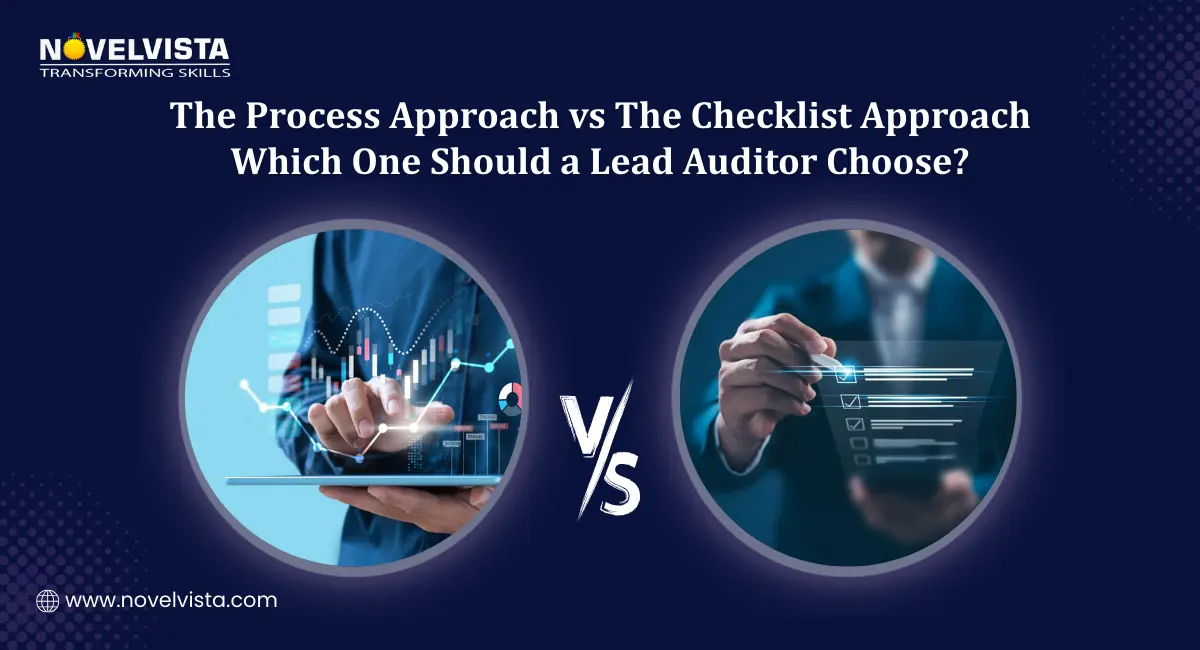
Two auditors. Same standard. Same organization. Very different audit results.
This is more common than most professionals admit.
The difference usually isn’t knowledge or intent. It’s the audit methodology. Some auditors rely heavily on checklists. Others follow how work actually flows through the business. That choice alone changes audit depth, findings, and trust.
In lead auditor training sessions, this contrast appears repeatedly. When the same case study is audited using a checklist versus a process flow, findings, confidence levels, and audit depth change immediately, even among experienced auditors.
This is where the ISO 9001 process approach enters the conversation. It pushes auditors to look beyond clause-by-clause ticking and understand how systems really perform. This blog breaks down the checklist approach versus the process approach, explains why outcomes differ, and helps lead auditors to choose the method that improves credibility and audit efficiency.
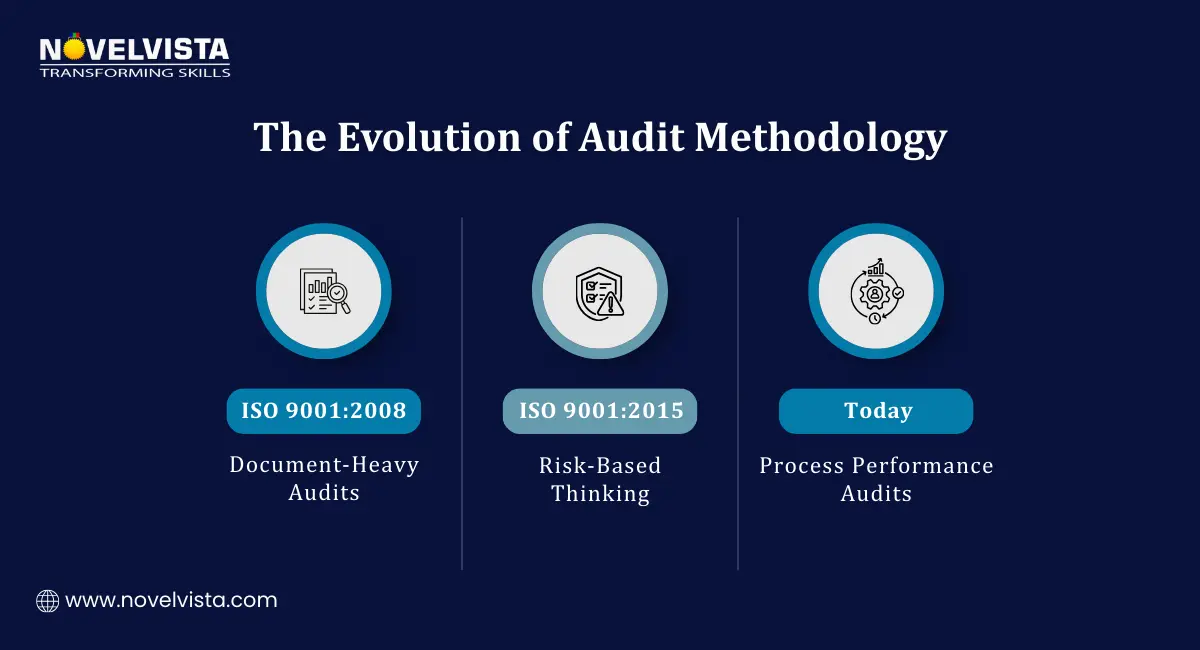
Early quality audits were simple by design. Organizations had fewer processes, limited integration, and smaller scopes. Auditors could verify compliance by checking documents clause by clause, and it worked.
This checklist-style audit methodology made sense at the time:
As management systems grew more complex, this approach started showing cracks. Organizations had integrated processes, shared resources, and cross-functional workflows. Audits that focused only on clauses began missing how failures actually happened.
ISO 9001:2015 responded to this reality. It introduced risk-based thinking, performance focus, and stronger system integration. The ISO 9001 process approach didn’t replace compliance checks; it evolved auditing to reflect how organizations truly operate.
The ISO 9001 process approach is about auditing how work flows, not how documents are filed.
Instead of asking, “Is this clause addressed?”, the auditor asks:
This approach aligns closely with PDCA and risk-based thinking. It encourages auditors to follow real audit trails across departments, systems, and responsibilities.
In practical audit simulations, auditors who follow process triggers and outputs identify systemic risks faster than those reviewing documents in isolation. This confirms why the ISO 9001 process approach improves both audit insight and efficiency.
The foundation for this is ISO 9001:2015 Clause 4.4, which requires organizations to determine, manage, and improve processes as an interconnected system. When auditors apply the ISO 9001 process approach, they are doing exactly what the standard expects, verifying effectiveness, not just existence.
The checklist approach audits requirements one clause at a time. Auditors confirm whether documented evidence exists for each requirement.
It still exists because:
Checklist-based audit methodology can be useful for confirming baseline compliance. It helps auditors ensure no clause is missed and supports consistency in reporting.
However, it has a limitation. A checklist confirms that something is documented. It doesn’t always confirm that it works. This is where audit findings often feel disconnected from real business problems and why audit efficiency can suffer due to repeated nonconformities.
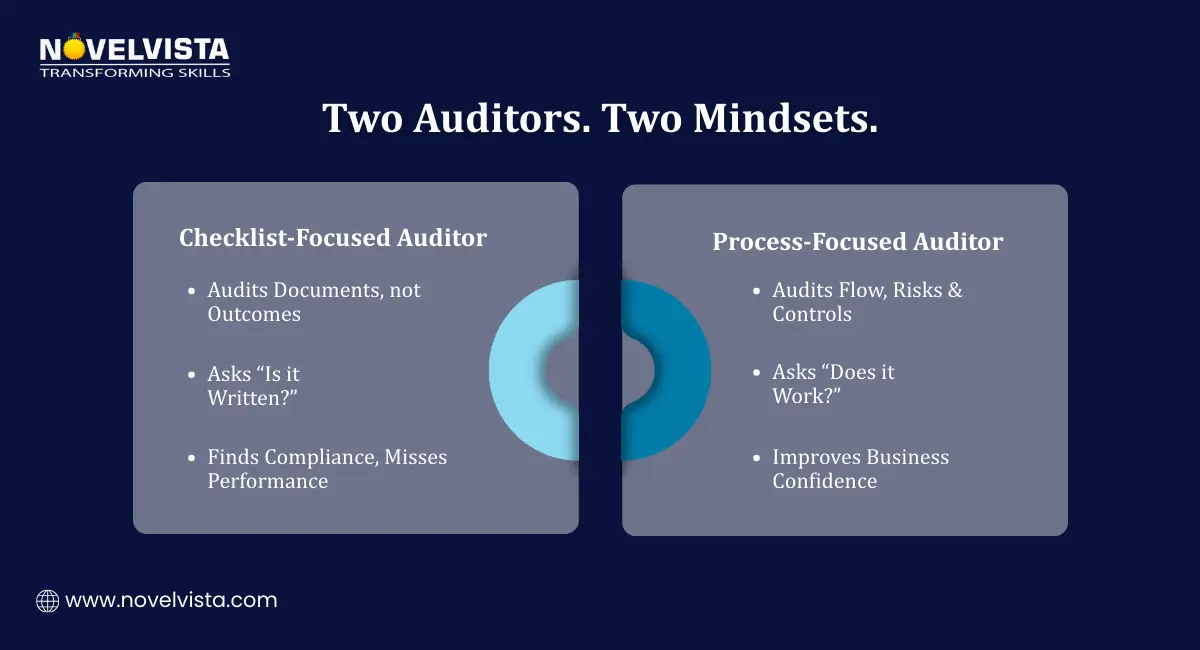
The difference becomes clear when audits move beyond documents.
Checklist-based audits often:
Process-based audits using the ISO 9001 process approach:
From an audit outcome perspective, checklist audits tend to answer “Are requirements present?” Process audits answer “Is the system working?”
This distinction matters when audit conclusions influence leadership decisions. Across multiple certification-prep audits, organizations audited using a process approach consistently show fewer repeat nonconformities in subsequent surveillance audits, directly improving long-term audit efficiency.
ISO 9001:2015 Clause 4.4 changes how auditors must think.
Auditors are expected to verify:
A checklist alone cannot validate this. Clause 4.4 forces auditors to assess system behavior. That’s why certification bodies increasingly expect the ISO 9001 process approach to be the primary audit methodology, not an optional technique.
Ignoring this leads to shallow audits and weak conclusions.
Experienced lead auditors rarely audit in straight lines.
They start with a core process, order fulfillment, service delivery, or production, and follow it end-to-end. Along the way, they:
During lead auditor role-play exercises, auditors who trace one end-to-end process often uncover risks missed by broader document sampling. This reinforces trust in audit conclusions during closing meetings.
This is how the ISO 9001 process approach works in real audits, not in theory.
This debate is not about completely rejecting checklists. Even the most experienced auditors still use them, but as support tools, not as the audit itself.
A checklist-based audit methodology still makes sense in certain situations:
This distinction matters deeply for anyone aiming to become a credible lead auditor.
Certification audits today expect auditors to:
Professionals who rely only on clause-by-clause auditing struggle in complex audits. Those who master the ISO 9001 process approach are able to explain findings clearly, defend conclusions confidently, and add value beyond compliance.
From a career perspective, adopting a strong process-based audit methodology builds:
This is why modern lead auditor training places heavy emphasis on process thinking and ISO 9001:2015 Clause 4.4 interpretation.
Stop auditing documents, start auditing how work actually happens. Learn to audit Clause 4.4 by following real processes, interactions, and outcomes, not paperwork.
For ISO 9001 audits, the answer is clear.
The ISO 9001 process approach should be the primary audit method. It aligns with the intent of the standard, reflects how organizations operate, and produces findings that actually improve systems.
Checklists still have value, but only as reference tools. They should support audits, not define them.
Audits driven by process thinking deliver:
Modern ISO 9001 audits are evaluated not only on compliance, but on the auditor’s ability to justify conclusions logically. Process-based evidence trails strengthen credibility during certification, surveillance, and witness audits.
This balance is what separates average auditors from trusted lead auditors.
Auditing has moved far beyond ticking boxes.
The shift from checklist compliance to system-level evaluation reflects how organizations really work today. The ISO 9001 process approach allows auditors to see connections, understand risks, and assess effectiveness with confidence.
Checklists confirm presence. Process audits confirm performance.
Lead auditors who adopt process thinking don’t just produce audit reports; they deliver insight, clarity, and value. And that is exactly what modern organizations expect from professional audits.
If you want to audit with confidence using the ISO 9001 process approach, structured training makes a real difference. NovelVista’s ISO 9001 Lead Auditor Certification Training focuses on process-based auditing, risk-based thinking, and practical application of ISO 9001:2015 Clause 4.4. It’s designed for professionals who want stronger audit judgment, higher audit efficiency, and real-world credibility as lead auditors.

Author Details

Course Related To This blog
ISO 9001:2015 Lead Auditor Training and Certification
Confused About Certification?
Get Free Consultation Call
Stay ahead of the curve by tapping into the latest emerging trends and transforming your subscription into a powerful resource. Maximize every feature, unlock exclusive benefits, and ensure you're always one step ahead in your journey to success.