NovelVista logo

ISO 22301 Lead Auditor vs Lead Implementer: Key Differences Explained

Category | Quality Management

Last Updated On 14/02/2026

ISO 22301 Lead Auditor vs Lead Implementer: Key Differences Explained | Novelvista

A single unexpected incident can undo years of growth. One supply chain failure. One ransomware attack. One critical system outage. And suddenly, operations stall, customers panic, and leadership scrambles for answers.

The real question is no longer “Will disruption happen?”
It’s “How prepared is your organization when it does?”

In today’s interconnected business environment, resilience is not just an operational concern — it’s a leadership responsibility. Organizations that survive crises aren’t lucky; they are structured, tested, and strategically prepared. This is where ISO 22301 Business Continuity Management (BCM) becomes more than a framework. It becomes a competitive advantage. And at the heart of that resilience are two critical professionals, the ones who build the system and the ones who validate it.

If you're trying to understand the difference between an ISO 22301 Lead Implementer and a Lead Auditor, you’re already thinking like a future resilience leader.

But here’s the big question:

  • Are you planning to build and implement a Business Continuity Management System?

  • Or do you want to audit and assess whether it complies with ISO standards?

  • Are you confused about choosing between implementation and auditing?

In this article, we’ll break down the Lead Auditor vs Lead Implementer differences, career scope, responsibilities, and help you decide which certification aligns with your professional goals.

What is ISO 22301 and Why Does It Matters?

ISO 22301 is the international standard for Business Continuity Management Systems (BCMS). It provides a structured framework to help organizations prepare for, respond to, and recover from disruptions effectively.

From IT companies and banks to healthcare and manufacturing, organizations rely on ISO 22301 to:

  • Protect critical operations

  • Minimize downtime

  • Ensure regulatory compliance

  • Maintain customer trust

With rising compliance requirements, the demand for certified professionals in ISO 22301 Lead Auditor vs Lead Implementer roles has grown significantly.

Now, let’s understand each role separately.

Who is an ISO 22301 Lead Auditor?

An ISO 22301 Lead Auditor evaluates whether an organization’s BCMS complies with ISO 22301 requirements.

Key Responsibilities:

  • Plan and conduct audits

  • Review documentation and records

  • Identify non-conformities

  • Prepare audit reports

  • Recommend corrective actions

Simply put, the Lead Auditor assesses and verifies the system.

They can work as:

  • Internal auditors

  • Third-party certification auditors

  • Independent consultants

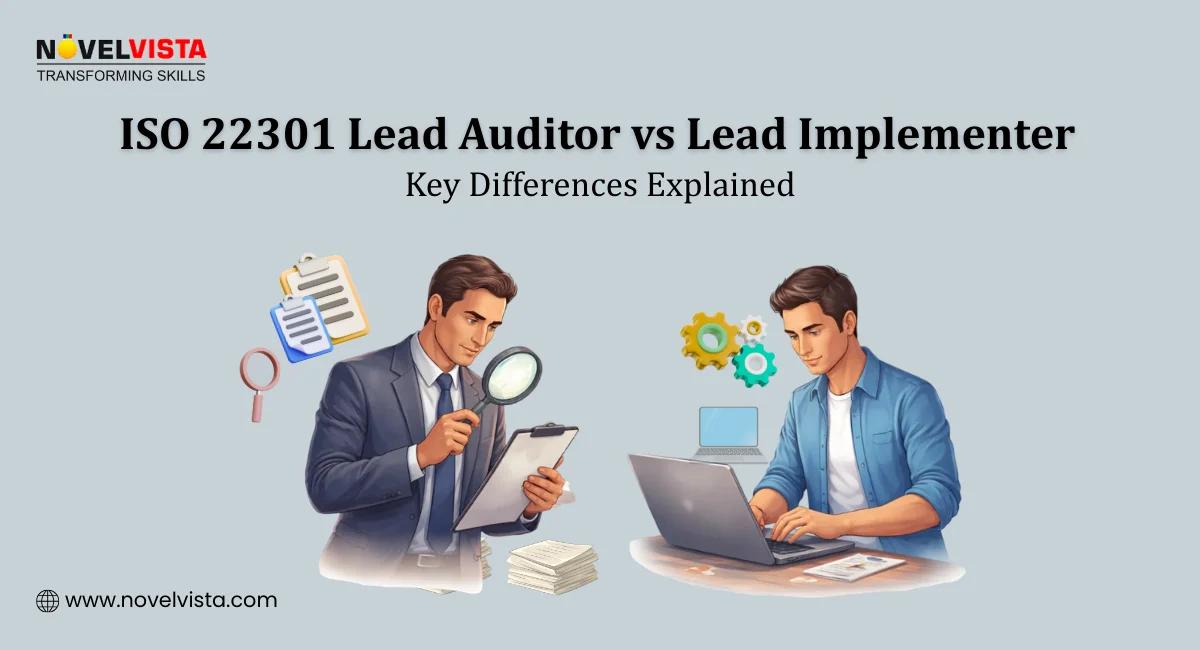
In the debate of Lead Implementer vs ISO 22301 Lead Auditor, the auditor's role is more investigative and analytical.

Skills Required:

  • Strong analytical ability

  • Knowledge of ISO auditing principles

  • Attention to detail

  • Interview and reporting skills

Confused Between ISO 22301 Lead Auditor or Implementer? Download Your Career Blueprint Today

Clear comparison of roles, skills, and career growth paths Practical decision framework to choose the right certification

Who is an ISO 22301 Lead Implementer?

An ISO 22301 Lead Implementer is responsible for building, implementing, and maintaining a Business Continuity Management System within an organization.

Key Responsibilities:

  • Conduct Business Impact Analysis (BIA)

  • Identify risks and mitigation strategies

  • Develop business continuity policies and procedures

  • Train teams on continuity plans

  • Prepare organization for certification audit

In simple terms, the Lead Implementer creates the system.

They work internally with management and departments to ensure the BCMS framework aligns with ISO 22301 requirements.

Skills Required:

  • Risk assessment knowledge

  • Project management skills

  • Documentation and policy drafting

  • Leadership and coordination abilities

When comparing ISO 22301 Lead Auditor vs Lead Implementer, the implementer focuses on execution and system setup.

Are You a Strategist or an Evaluator?

ISO 22301 Lead Auditor vs Lead Implementer: Core Differences

Now, let’s clearly break down the Lead Auditor vs Lead Implementer differences in a structured way.


Criteria

Iso 22301 Lead Implementer

Iso 22301 Lead Auditor

Primary Role

Builds And Implements Bcms

Audits And Evaluates Bcms

Focus

System Creation

System Assessment

Work Type

Internal Project Role

Independent Evaluation

Objective

Ensure Compliance Readiness

Verify Compliance

Interaction

Works With Management & Teams

Interviews & Reports Findings

Certification Goal

Prepare For Audit

Conduct Audit

In simple terms:

  • Implementer = Builder

  • Auditor = Inspector

This summarizes the practical difference in iso 22301 lead auditor vs implementer career paths. The ISO 22301 Exam Strategy Guide helps understand the exam pattern, prioritize key topics, and approach the certification with clarity and confidence.

Lead Implementer vs ISO 22301 Lead Auditor: Which Should You Choose?

Choosing between ISO 22301 Lead Auditor vs Lead Implementer ultimately depends on your long-term career goals and professional interests. If you enjoy building systems from the ground up and want to play a direct role in shaping organizational resilience, the Lead Implementer path may be right for you. This role suits professionals who prefer working within organizations, collaborating with leadership teams, and driving structured Business Continuity Management initiatives. If you have project management experience and want to lead BCM implementation projects, develop policies, and ensure operational readiness, then choosing the Lead Implementer track makes strategic sense.

Choose the Lead Auditor path if you naturally gravitate toward evaluation and analytical thinking. When considering ISO 22301 Lead Auditor vs Lead Implementer, this role is ideal for professionals who prefer independent responsibilities and objective assessments rather than system design. If you aspire to work with certification bodies, conduct structured audits, and assess organizational compliance, the Lead Auditor track aligns well with your goals. It is especially suitable for those who enjoy compliance frameworks, regulatory standards, and identifying gaps that strengthen overall business continuity performance.

If you’re still confused about Lead Implementer vs ISO 22301 Lead Auditor, ask yourself:

Do I want to create the system or verify it?

That clarity will guide your decision.
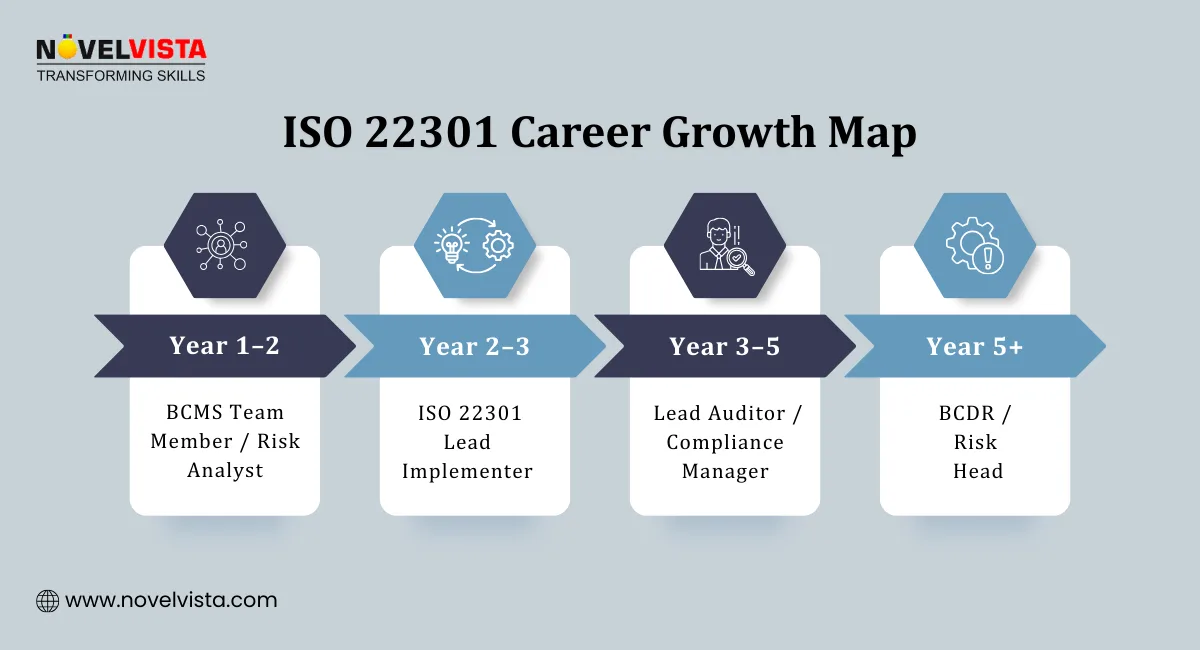
ISO 22301 Career Growth Map

Salary & Career Opportunities

Both roles are in strong demand as organizations face increasing compliance requirements, regulatory scrutiny, and growing awareness around operational risk. As businesses prioritize resilience and structured Business Continuity Management practices, certified professionals are becoming essential across multiple sectors. Industries actively hiring include Banking & Finance, where regulatory compliance is critical; IT & Software, where uptime and data protection are top priorities; Telecom, which depends on uninterrupted services; Healthcare, where service disruption can directly impact lives; Government agencies, which require structured continuity frameworks; and Manufacturing, where supply chain continuity is vital for business stability.

Salary Overview (India)

  • Lead Auditor: ₹8L – ₹19.0L per year

  • Lead Implementer: ₹6.9L – ₹10.1L per year

Salary ranges vary based on experience, industry, organization size, and geographic location. Professionals with hands-on audit exposure, multi-standard expertise, or consulting experience often command higher compensation packages.

Professionals certified in ISO 22301 Lead Auditor and Lead Implementer often move into roles such as:

  • Business Continuity Manager

  • Risk & Compliance Manager

  • Internal Auditor

  • Governance Consultant

Globally, experienced professionals in either track command competitive salaries due to specialized expertise. Understanding the ISO 22301 Benefits helps organizations strengthen resilience, ensure compliance, and build long-term operational stability.

Can You Become Both?

Yes — and many professionals do.

A common career path is:

  1. Start as ISO 22301 Lead Implementer

  2. Gain implementation experience

  3. Move into auditing

Understanding implementation makes auditing stronger.

That’s why many experts suggest learning both aspects of iso 22301 lead auditor vs implementer roles over time.

Lead Business Continuity with Confidence — Become an ISO 22301 Lead Auditor

Conclusion: ISO 22301 Lead Auditor vs Lead Implementer

The debate around ISO 22301 Lead Auditor vs Lead Implementer is not about which is better it’s about which is right for you.

Both roles play critical parts in strengthening Business Continuity Management Systems.

To summarize the Lead Auditor vs Lead Implementer differences:

  • Implementers design and deploy BCMS frameworks.
     
  • Auditors evaluate compliance and performance.
     
  • Implementers focus on creation.
     
  • Auditors focus on validation.

If you enjoy strategic planning and system building, choose Lead Implementer.

If you prefer assessment, compliance checks, and reporting, choose Lead Auditor.

Ultimately, understanding the distinction between Lead Implementer vs ISO 22301 Lead Auditor empowers you to make a confident career decision in the business continuity field.

Ready to step into a leadership role in business continuity and compliance?
Join NovelVista’s ISO 22301 Lead Auditor Certification Training and gain practical auditing expertise, real-world Business Continuity Management insights, and globally recognized credentials. Designed for risk professionals, compliance managers, consultants, and aspiring auditors, this course equips you with the skills to confidently conduct audits, identify compliance gaps, and strengthen organizational resilience.

Take the next step in your ISO 22301 Lead Auditor journey today.

Frequently Asked Questions

The main difference in ISO 22301 Lead Auditor vs Lead Implementer is that the implementer builds the BCMS, while the auditor evaluates and verifies compliance.

Neither is better. In Lead Implementer vs ISO 22301 Lead Auditor, the right choice depends on whether you prefer implementation or auditing roles.

Yes, many professionals pursue both to fully understand iso 22301 lead auditor and implementer responsibilities.

Yes, certified professionals in ISO 22301 Lead Auditor vs Lead Implementer tracks are highly valued in risk and compliance roles.

Professionals interested in building Business Continuity Management Systems should choose Lead Implementer in the ISO 22301 Lead Auditor vs Lead Implementer comparison.

Author Details

Mr.Vikas Sharma

Mr.Vikas Sharma

Principal Consultant

I am an Accredited ITIL, ITIL 4, ITIL 4 DITS, ITIL® 4 Strategic Leader, Certified SAFe Practice Consultant , SIAM Professional, PRINCE2 AGILE, Six Sigma Black Belt Trainer with more than 20 years of Industry experience. Working as SIAM consultant managing end-to-end accountability for the performance and delivery of IT services to the users and coordinating delivery, integration, and interoperability across multiple services and suppliers. Trained more than 10000+ participants under various ITSM, Agile & Project Management frameworks like ITIL, SAFe, SIAM, VeriSM, and PRINCE2, Scrum, DevOps, Cloud, etc.

Confused About Certification?

Get Free Consultation Call

Sign Up To Get Latest Updates on Our Blogs

Stay ahead of the curve by tapping into the latest emerging trends and transforming your subscription into a powerful resource. Maximize every feature, unlock exclusive benefits, and ensure you're always one step ahead in your journey to success.

Topic Related Blogs