Category | Quality Management
Last Updated On 26/08/2026
Artificial intelligence has moved from experimentation to execution.
Businesses are no longer asking only, “Can we use AI?”
They are increasingly asking:
These questions are creating a new business priority: AI governance.
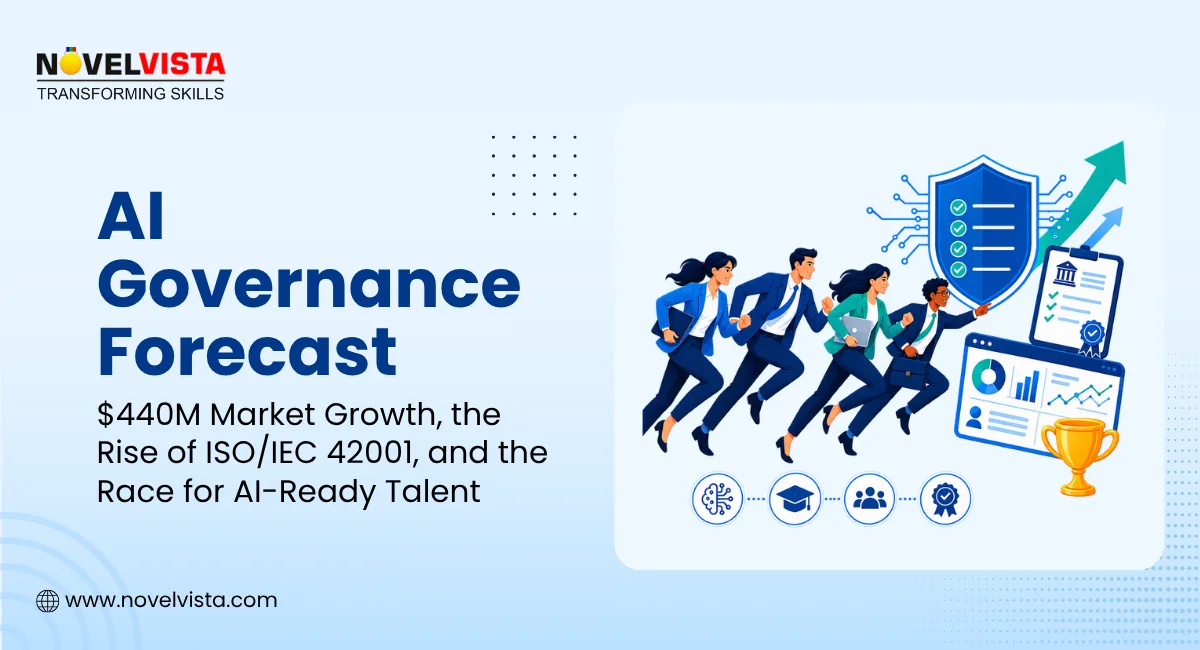
The numbers show how quickly this space is developing. Mordor Intelligence estimates the global AI governance market at US$440 million in 2026, growing to US$1.51 billion by 2031 at a 28.15% CAGR. It also identifies Asia-Pacific as the fastest-growing regional market, with a projected 34.7% CAGR through 2031.
At the same time, ISO/IEC 42001 is emerging as an important framework for organizations looking to establish a structured AI management system. Industry compilations estimate that roughly 350 organizations worldwide had achieved ISO/IEC 42001 certification by mid-2026, although there is no official consolidated global certificate register.
And regulation is accelerating the urgency. From 2 August 2026, Article 50 transparency obligations under the EU AI Act began applying, with certain violations carrying fines of up to €15 million or 3% of worldwide annual turnover.
So, what is driving this growth?
Why is ISO/IEC 42001 gaining attention?
And what does this mean for professionals building careers around AI, risk, compliance and technology?
AI adoption has created a governance problem that traditional IT controls were not designed to solve.
An organization may have strong information-security policies and still struggle to answer basic AI questions.
For example, imagine an organization using generative AI for recruitment.
Who checks whether the system produces biased recommendations?
Who approves the use case?
Where is the risk assessment documented?
How is personal data handled?
What happens if the model changes?
Who investigates an AI-related incident?
Without defined ownership and controls, AI adoption can move faster than organizational accountability.
That is why AI governance is becoming a business capability rather than simply a compliance exercise.
The numbers tell the story
| Indicator | 2026 figure |
| Global AI governance market | US$440 million |
| Projected market by 2031 | US$1.51 billion |
| Market CAGR, 2026–2031 | 28.15% |
| Estimated ISO/IEC 42001-certified organizations | ~350 |
| EU AI Act Article 50 applicability | 2 August 2026 |
| Certain EU AI Act maximum fines | €15 million or 3% of worldwide turnover |
The AI governance market estimate comes from Mordor Intelligence, while the ISO/IEC 42001 certification figure is an industry estimate rather than an official ISO total. EU AI Act dates and penalties are based on European Commission information.
The commercial opportunity around AI governance is becoming difficult to ignore.
Mordor Intelligence estimates that the market will grow from US$440 million in 2026 to US$1.51 billion by 2031, representing a 28.15% CAGR.
This growth is being supported by several factors:
The market is therefore expanding beyond traditional compliance.
Organizations increasingly need technology and processes that can identify AI systems, classify risks, document controls, monitor performance and produce evidence for audits.
Interestingly, Mordor Intelligence identifies Asia-Pacific as the fastest-growing regional market, with a projected 34.7% CAGR through 2031.
For countries such as India, this creates an important opportunity.
Indian IT services companies, global capability centers, software companies and technology service providers increasingly work with international customers. As those customers introduce AI governance requirements, suppliers may also need stronger AI risk and compliance capabilities.
One of the biggest developments in AI governance is the rise of ISO/IEC 42001.
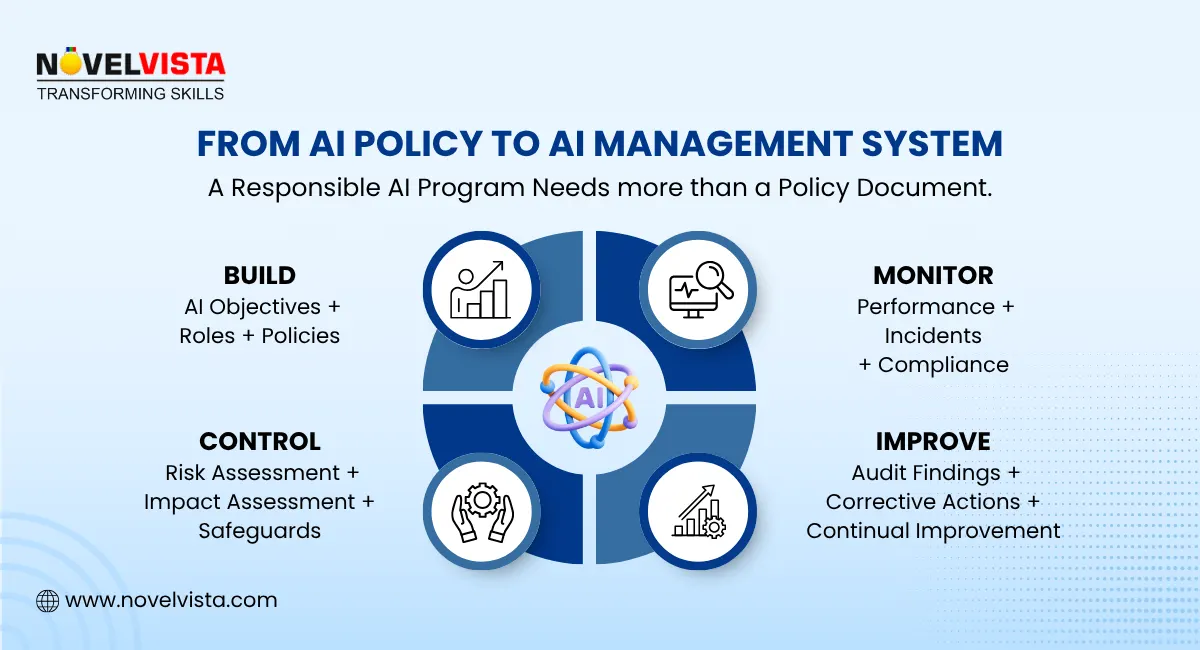
Published in December 2023, ISO/IEC 42001 specifies requirements for establishing, implementing, maintaining and continually improving an Artificial Intelligence Management System (AIMS).
In practical terms, it gives organizations a structured management-system approach to AI.
Instead of treating responsible AI as a collection of disconnected initiatives, organizations can establish:
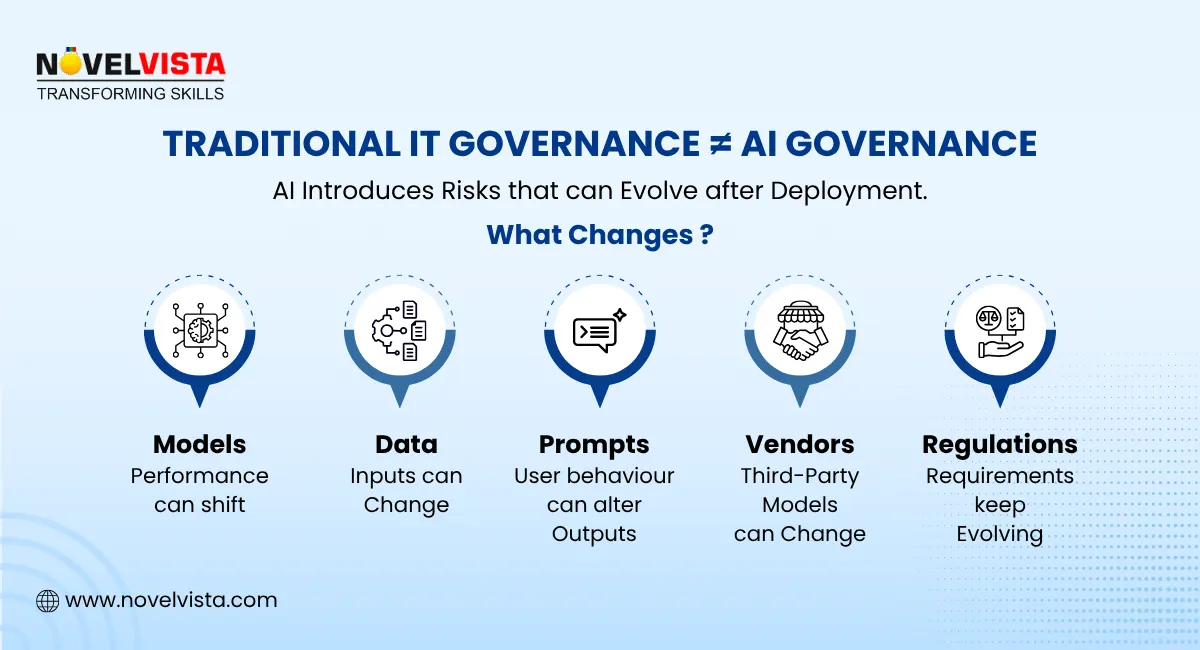
This is important because AI systems are not static.
Models can change.
Data can change.
Use cases can expand.
Vendors can change.
Regulatory expectations can change.
A management system provides a mechanism for managing these changes continuously.
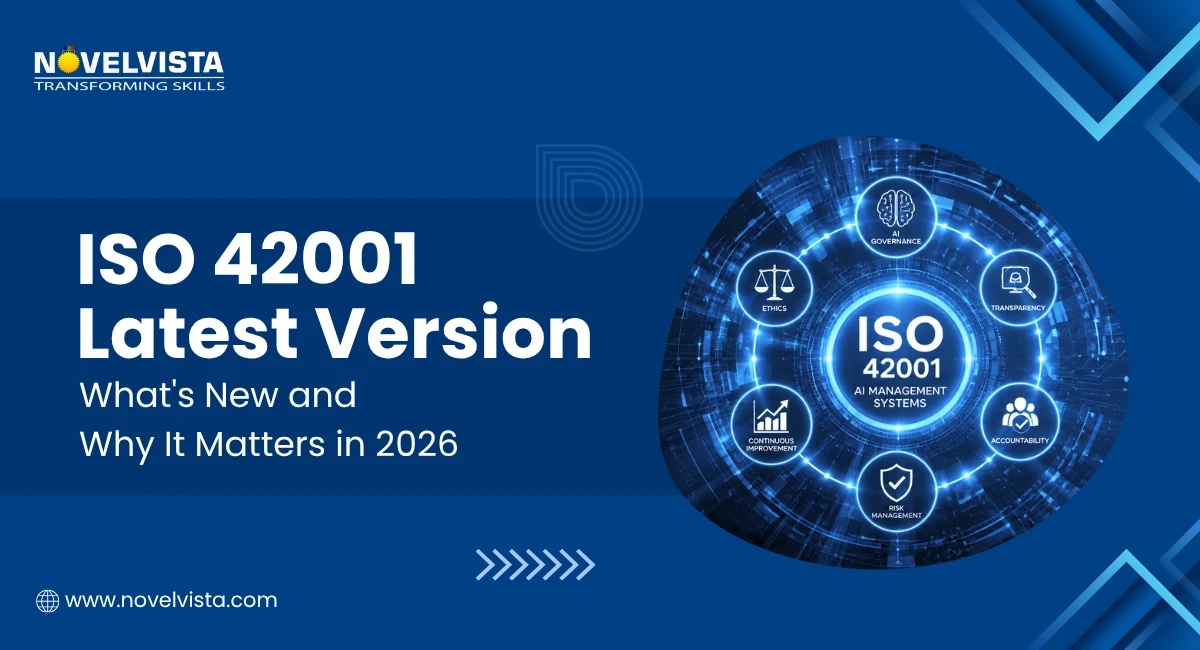
As the standard continues to gain attention, it is also important for organizations and professionals to understand the ISO 42001 Latest Version, including its current requirements and what they mean for AI management systems.
Industry compilations estimate that approximately 350 organizations worldwide had ISO/IEC 42001 certificates by mid-2026.
However, this number needs an important qualification.
ISO does not maintain an official consolidated global count of ISO/IEC 42001 certificates. ISO explains that certification is performed by independent certification bodies, rather than ISO itself.
Therefore, the approximately 350 figure should be presented as an industry estimate, not an official ISO statistic.
Still, the number is significant because ISO/IEC 42001 is a relatively new standard.
It indicates that organizations are already moving beyond AI experimentation toward formalized AI management systems.
For businesses, certification can also become a trust signal when customers, partners and procurement teams want evidence that AI risks are being systematically managed.
The regulatory environment is another major reason AI governance is becoming a board-level issue.
The EU AI Act entered into force in 2024, with different requirements becoming applicable at different stages. As of 2 August 2026, Article 50 transparency obligations apply.
These requirements address areas including transparency around certain AI interactions and AI-generated or manipulated content.
The European Commission states that certain violations can result in fines of up to €15 million or 3% of total worldwide turnover, depending on the applicable requirement and organization.
The highest penalty tier under the AI Act can reach €35 million or 7% of worldwide annual turnover for certain prohibited AI practices.
This changes the conversation.
AI governance is no longer only about answering:
“Are we using AI responsibly?”
It is also about:
“Can we demonstrate that we are meeting the requirements that apply to our AI systems?”
That distinction is crucial for enterprises operating across multiple markets.
A practical AI governance program can be viewed across the AI lifecycle.
Governance area | What organizations need to manage |
AI inventory | Identify and document AI systems and use cases |
Risk assessment | Identify potential operational, legal, ethical and security risks |
Data governance | Manage data quality, privacy, lineage and usage |
Model governance | Monitor model performance, changes and limitations |
Human oversight | Define when human review or intervention is required |
Security | Address AI-specific cybersecurity threats |
Transparency | Document how AI is used and communicate relevant information |
Incident management | Detect, investigate and respond to AI-related incidents |
Compliance | Map controls to applicable regulations and standards |
Monitoring | Continuously review AI performance and risk |
This is where AI governance connects with existing disciplines such as information security, enterprise risk management, privacy, internal audit and IT governance.
Organizations do not necessarily need to build an entirely separate governance universe.
Instead, they can integrate AI controls into existing management systems and risk processes.
Technology alone will not solve the AI governance challenge.
Organizations need people who understand both AI and governance.
This creates an emerging skills intersection between technical professionals, auditors, risk specialists, compliance teams and business leaders.
Potential roles include:
The strongest professionals will increasingly combine multiple skill areas.
For example:
ISO/IEC 42001 + AI risk management + cybersecurity + cloud + data privacy
can create a much stronger professional profile than knowledge of any one area alone.
The emerging standard also recognizes the need for professional competence around AI management systems. ISO/IEC AWI 42003 is being developed to provide implementation guidance for ISO/IEC 42001, including competencies for AIMS professionals.
For professionals planning to validate their expertise through certification, an ISO 42001 Exam Strategy Guide can also help structure preparation around the key concepts, requirements and exam areas that matter most.
Companies do not need to wait until they are ready for certification to begin building AI governance.
A practical starting point can involve five steps.
Identify where AI is being developed, purchased or used.
Include internal models, SaaS applications, generative AI tools, APIs and AI-enabled business processes.
Not every AI use case carries the same level of risk.
A marketing-content assistant and an AI system supporting a high-impact business decision should not necessarily receive identical governance controls.
Define who owns each AI system and who is responsible for risk decisions, monitoring and incident response.
Organizations can assess how frameworks such as ISO/IEC 42001, NIST AI RMF, ISO/IEC 27001, privacy requirements and the EU AI Act relate to their environment.
Governance is easier to demonstrate when documentation, assessments, approvals, monitoring records and corrective actions are maintained throughout the AI lifecycle.
This approach also makes future audits and certification readiness significantly more manageable.
The most important change is not simply that the AI governance market is growing.
It is that governance is becoming part of how organizations operationalize AI.
The market is estimated at US$440 million in 2026, with a projected 28.15% CAGR through 2031. ISO/IEC 42001 adoption is expanding from a small early-adopter base, with industry estimates placing certification at roughly 350 organizations globally by mid-2026. Meanwhile, the EU AI Act is moving into additional enforcement and transparency requirements.
Together, these signals point in one direction:
AI governance is becoming an organizational capability, not a future compliance project.
For businesses, the opportunity is to build governance before AI risk becomes an incident.
For professionals, the opportunity is to develop skills before demand outpaces the talent supply.
And for organizations in India, particularly those serving global customers, the combination of AI governance, ISO/IEC 42001, cybersecurity, privacy and AI risk management could become an increasingly valuable capability.
The next phase of AI adoption will not be defined only by who builds the most powerful models. It will also be defined by who can govern AI responsibly at scale.
With the global AI governance market estimated at US$440 million in 2026 and projected to reach US$1.51 billion by 2031, the commercial opportunity is already taking shape. ISO/IEC 42001 provides organizations with a structured approach to AI management, while regulations such as the EU AI Act are turning transparency, accountability and risk management into concrete business requirements.
This is creating a growing need for professionals who can connect AI technology with governance, risk, compliance and business strategy. For professionals looking to build this capability, developing practical expertise through an NovelVista’s ISO/IEC 42001 Lead Auditor course can be a valuable step toward an AI governance-focused career.
In 2026, becoming AI-ready increasingly means becoming AI-governance-ready.
AI governance is the framework of policies, processes, roles and controls used to manage AI risks and ensure responsible AI development, deployment and use.
The global AI governance market is estimated at US$440 million in 2026 and is projected to reach US$1.51 billion by 2031, growing at a 28.15% CAGR.
ISO/IEC 42001 is an international standard for establishing, implementing, maintaining and continually improving an Artificial Intelligence Management System (AIMS).
Industry estimates suggest approximately 350 organizations held ISO/IEC 42001 certificates globally by mid-2026. There is currently no official consolidated ISO global certificate count.
As AI adoption, regulation and certification requirements increase, organizations need professionals who understand AI risk, ISO/IEC 42001, compliance, cybersecurity, privacy and responsible AI.
Author Details

Confused About Certification?
Get Free Consultation Call
Stay ahead of the curve by tapping into the latest emerging trends and transforming your subscription into a powerful resource. Maximize every feature, unlock exclusive benefits, and ensure you're always one step ahead in your journey to success.