Category | Quality Management
Last Updated On 31/08/2026
Business disruptions are no longer rare events. According to industry data, unplanned downtime costs organizations thousands of dollars per minute, while prolonged disruptions can threaten survival itself. This reality has made ISO 22301 a critical standard and has significantly raised the bar for those auditing Business Continuity Management Systems (BCMS).
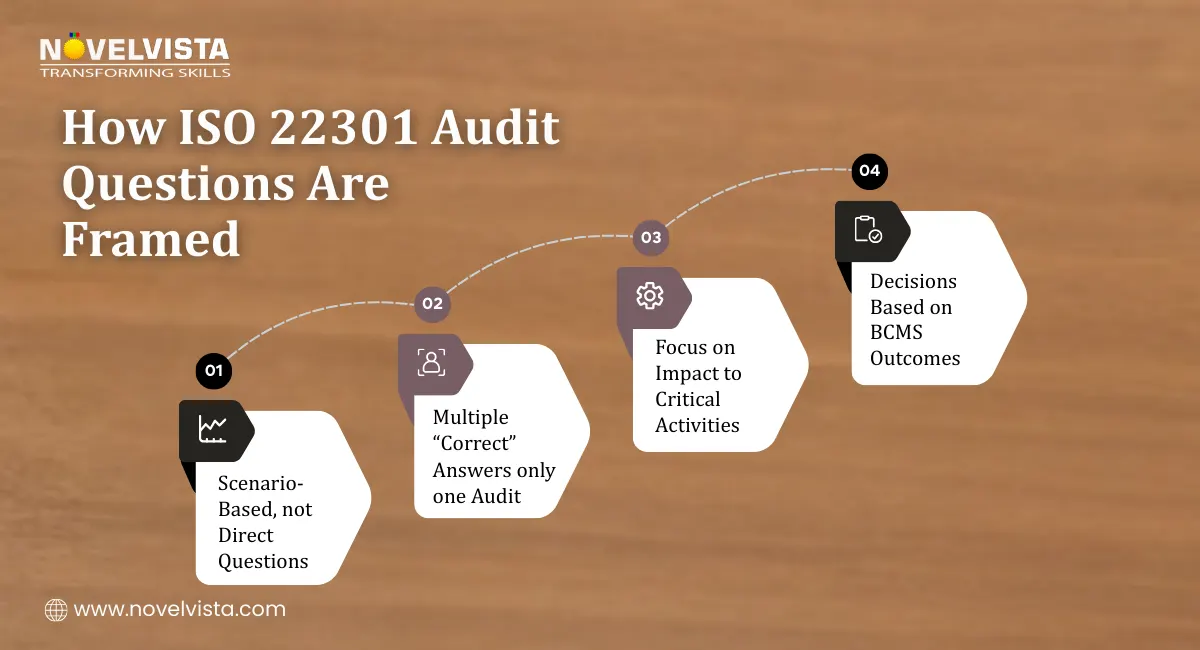
For candidates preparing for certification, ISO 22301 lead auditor questions are often the most challenging part of the journey. Unlike implementation exams, the lead auditor exam does not reward memorization. Instead, it tests how well you can evaluate evidence, identify nonconformities, and judge whether a BCMS will actually work under pressure.
Many professionals ask the same questions while preparing:
What type of questions will appear in the exam?
How detailed should answers be?
How do auditors decide the “best” answer when multiple options seem correct?
This practice guide is designed specifically to address those concerns. It presents realistic ISO 22301 audit questions and answers, framed the way they appear in exams. A solid understanding of audit-style questions, combined with an ISO 22301 Certification Cost Guide, ensures you’re prepared both academically and practically. Each question reflects real audit situations and focuses on auditor judgment rather than theory. If you want focused practice with BCMS lead auditor questions, this guide is meant for you.
Below are exam-style ISO 22301 questions with concise, audit-focused answers. These reflect how questions are typically structured in certification exams.
Q.1 : During an audit, you find that the organization has excluded its outsourced IT operations from the BCMS scope. These services support critical business activities. How should this be evaluated?
A: This should be raised as a nonconformity. Excluding outsourced services that support critical activities undermines the effectiveness of the BCMS and conflicts with ISO 22301 requirements for defining scope based on continuity needs.
Q.2 : The organization has identified internal issues but has not considered external factors such as supply chain disruptions. Is this acceptable?
A: No. ISO 22301 audit questions often test the completeness of context analysis. Failure to identify relevant external issues weakens the BCMS and should be raised as a finding.
Q.3 : Top management approved the BCMS policy but does not participate in reviews or decision-making. How should a lead auditor respond?
A: This indicates ineffective leadership involvement. BCMS audit questions in exams expect auditors to assess leadership effectiveness, not just policy approval. This may result in a nonconformity.
Q.4 : A BIA exists but was last updated four years ago, despite changes in operations. Is the BCMS conforming?
A: No. ISO 22301 questions emphasize relevance. An outdated BIA cannot support effective continuity planning and should be raised as a nonconformity.
Q.5 : The organization uses its risk assessment to prioritize recovery activities instead of the BIA. Is this acceptable?
A: No. ISO 22301 audit questions and answers distinguish between risk assessment and BIA. Recovery priorities must be based on BIA outputs, not risk registers alone.
Q.6 : Continuity strategies are documented, but required resources are not available during disruptions. How should this be evaluated?
A: This is a nonconformity. BCMS lead auditor questions focus on feasibility. Strategies that cannot be executed do not meet ISO 22301 requirements.
Q.7 : The organization has not identified dependencies on third-party suppliers for critical activities. Is this acceptable?
A: No. BCMS audit questions require auditors to assess dependencies. Failure to identify supplier dependencies weakens continuity capability.
Q.8 : Emergency response roles are defined, but BCMS response roles are unclear. How should this be treated?
A: This should be raised as a finding. ISO 22301 audit questions test understanding that emergency response and BCMS response are different and must both be defined.
Q.9 : Communication plans exist but have never been tested. Is this compliant?
A: Not fully. ISO 22301 lead auditor questions often test testing effectiveness. Untested communication plans reduce confidence in BCMS performance.
Q.10 : The organization conducts exercises annually but does not document lessons learned. How should an auditor respond?
A: This is a nonconformity. Exercises without improvement do not meet ISO 22301 continual improvement requirements.
Q.11 : Internal audits are conducted, but auditors lack BCMS competence. Is this acceptable?
A: No. ISO 22301 audit questions emphasize auditor competence. Lack of competence undermines audit effectiveness.
Q.12 : Management reviews are conducted, but BCMS performance data is not discussed. What is the audit conclusion?
A: This is a nonconformity. Management review must evaluate BCMS effectiveness using relevant inputs.
Q.13 : A continuity plan exists but does not cover a critical process identified in the BIA. Is this major or minor?
A: This is a major nonconformity. BCMS lead auditor questions often test impact-based classification.
Q.14 : Corrective actions are implemented, but root causes are not identified. Is this compliant?
A: No. ISO 22301 audit questions and answers require auditors to verify that root causes are addressed.
Q.15 : The BCMS meets all documented requirements but shows no evidence of improvement over time. Is this acceptable?
A: No. ISO 22301 requires continual improvement. Lack of improvement should be raised as a concern or nonconformity based on evidence.
Q.16 : An organization has identified regulators as interested parties but has not considered customers who rely on uninterrupted service. Is this acceptable?
A: No. ISO 22301 audit questions require all relevant interested parties affecting business continuity to be identified. Excluding customers weakens BCMS effectiveness.
Q.17 : Significant organizational changes occurred, but the BCMS documentation was not updated. How should this be treated?
A: This is a nonconformity. BCMS lead auditor questions often test change management, and failure to update the BCMS after changes impacts continuity reliability.
Q.18 : Employees have assigned BCMS roles but are unaware of their responsibilities during a disruption. Is this compliant?
A: No. ISO 22301 audit questions emphasize competence and awareness. Assigned roles without awareness indicate ineffective BCMS implementation.
Q.19 : Business continuity plans exist, but controlled versions are not available during an incident. How should this be evaluated?
A: This is a nonconformity. ISO 22301 audit questions assess accessibility and control of documented information during disruptions.
Q.20 : The organization relies on critical suppliers but has not evaluated their continuity capability. Is this acceptable?
A: No. BCMS audit questions require auditors to assess supplier continuity risks when dependencies affect critical activities.
Q.21 : The organization has not defined BCMS performance indicators. Is this acceptable under ISO 22301?
A: No. ISO 22301 audit questions and answers require monitoring and measurement to evaluate BCMS effectiveness and improvement.
Explore practical, exam-focused audit questions Strengthen your scenario-based answering approach Prepare with confidence for ISO 22301 Lead Auditor exams
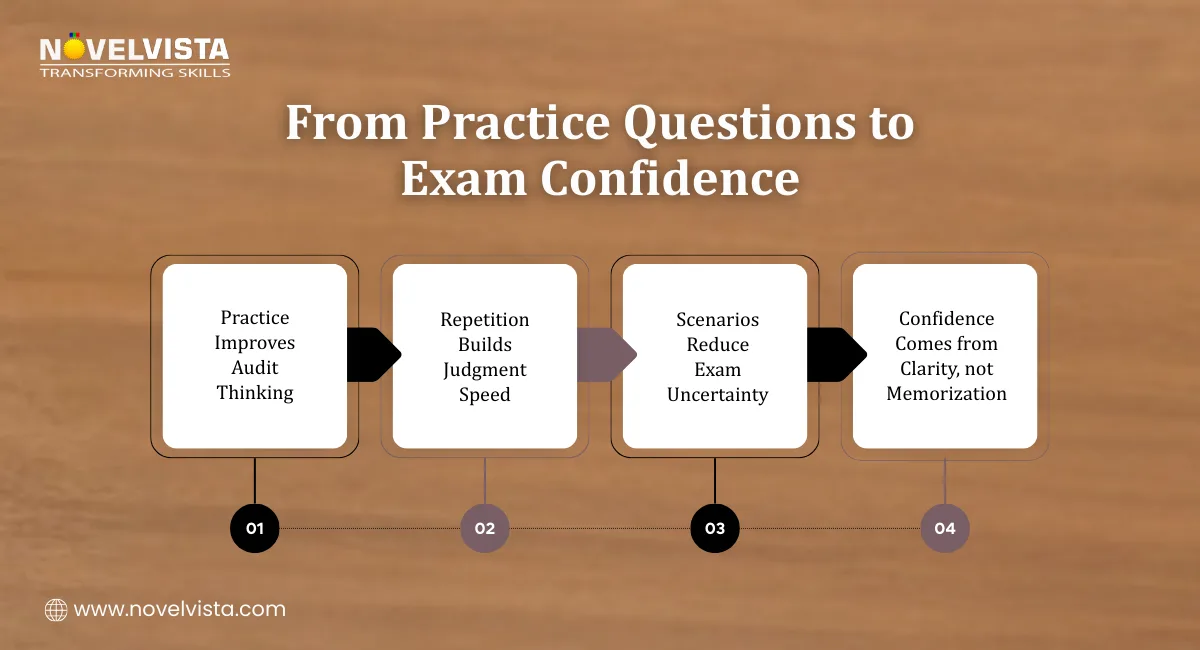
These practice-based insights form a practical foundation for any ISO 22301 Exam Strategy Guide aimed at mastering scenario-based audit questions. Success in the ISO 22301 Lead Auditor exam depends on how well you interpret and respond to ISO 22301 audit questions, not how much of the standard you can recall. The exam is designed to test your ability to think like an auditor evaluating evidence, judging effectiveness, and identifying real risks to business continuity.

By practicing realistic ISO 22301 audit questions and answers like the ones in this guide, you develop the mindset required to pass the exam confidently. Focus on intent, impact, and effectiveness, and approach every question as if you were auditing a live BCMS.
Mastering BCMS lead auditor questions is not just about passing an exam it is about becoming a competent auditor who can assess continuity when it matters most.
Ready to take your ISO 22301 preparation beyond practice questions and into real audit confidence?
NovelVista’s ISO 22301 Lead Auditor Certification Training is designed to help you apply audit judgment, evaluate BCMS effectiveness, and handle real-world audit scenarios with clarity. The course blends practical auditing techniques, exam-focused insights, and hands-on BCMS evaluation to help you confidently lead business continuity audits. If your goal is not just to pass the exam but to audit with competence and credibility, this program provides the structured learning and expert guidance to get you there.
Start your ISO 22301 journey today.
ISO 22301 questions are based on real audit situations where candidates must assess evidence, judge BCMS effectiveness, and decide conformity rather than recall clauses.
Author Details

Course Related To This blog
ISO 22301:2019 Lead Auditor
Confused About Certification?
Get Free Consultation Call
Stay ahead of the curve by tapping into the latest emerging trends and transforming your subscription into a powerful resource. Maximize every feature, unlock exclusive benefits, and ensure you're always one step ahead in your journey to success.