Category | Quality Management
Last Updated On 03/06/2026

Artificial Intelligence is no longer on the horizon, it’s already embedded in how we hire, lend, diagnose, recommend, and decide. In fact, studies show that more than 80% of organizations are actively investing in AI, making it one of the fastest-adopted technologies in history. But beneath this rapid growth lies a critical vulnerability AI doesn’t think, it learns. And what it learns depends entirely on its data.
So, what happens when that data is flawed or biased?
The consequences aren’t minor they’re systemic. From biased hiring algorithms filtering out qualified candidates to financial models discriminating in lending, even small data imbalances can lead to large-scale unfair outcomes. This isn’t just a technical issue anymore, it’s a business risk, a compliance challenge, and an ethical responsibility.
This brings us to a pressing and practical question: how does ISO 42001 manage training data bias?
Whether you're an AI developer striving for model accuracy, a data scientist focused on fairness, or a business leader concerned about compliance and trust, this topic directly impacts you. Understanding how ISO 42001 embeds AI data governance, ensures training data integrity, and drives bias mitigation in AI systems is key to building AI that is not only intelligent, but also responsible.
Let’s break it down step by step.
Training data bias occurs when the data used to train AI models is unbalanced, incomplete, or skewed toward certain outcomes.
For example:
This isn’t just a technical flaw-it’s a systemic issue that directly impacts fairness and trust.
Training data integrity plays a critical role here. If your data lacks diversity or accuracy, your AI outputs will reflect those flaws.
Bias in AI systems is more than just an inconvenience, it’s a serious risk.
Here’s why organizations must prioritize bias mitigation in AI systems:
AI decisions can affect real lives. Biased systems can lead to discrimination and inequality. When algorithms reflect unfair patterns, they can unintentionally reinforce social biases at scale. This makes ethical AI not just a technical goal, but a fundamental responsibility for organizations deploying AI systems.
Governments are introducing stricter regulations around AI data governance. Non-compliance can lead to penalties. Frameworks and laws are evolving rapidly, requiring organizations to demonstrate transparency, fairness, and accountability. Strong AI data governance practices help businesses stay compliant and avoid legal and financial risks.
A biased AI system can damage brand trust overnight. Customers and stakeholders are becoming more aware of AI ethics, and even a single incident can lead to public backlash. Maintaining fairness in AI systems is essential to protect brand credibility and long-term customer loyalty.
Bias reduces the reliability of AI outputs, leading to poor decision-making. When training data lacks diversity or balance, AI models produce skewed results that impact business outcomes. Ensuring training data integrity improves accuracy, consistency, and overall system performance.
This is where structured frameworks like ISO 42001 step in.
ISO 42001 is an international standard designed specifically for Artificial Intelligence Management Systems (AIMS). It provides a structured approach to managing AI risks, including bias.
At its core, ISO 42001 emphasizes:
But the key question remains: how does ISO 42001 manage training data bias?
Let’s dive deeper.
ISO 42001 addresses bias through a comprehensive, lifecycle-based approach. Instead of treating bias as a one-time issue, it embeds controls throughout the AI system lifecycle.
ISO 42001 requires organizations to identify and assess risks related to training data bias early in the development process.
This includes:
By proactively addressing risks, organizations can reduce bias before it affects the system.
Another way how does ISO 42001 manage training data bias is through strict data lifecycle management.
This involves:
These controls ensure that training data integrity is maintained at every stage.
ISO 42001 encourages the use of tools and techniques to detect bias in datasets and models.
Examples include:
This is a critical component of bias mitigation in AI systems, ensuring that bias is identified and corrected.
Transparency is a key pillar of AI data governance.
Organizations must:
This makes it easier to identify where bias originates and how it can be addressed. An ISO 42001 Toolkit equips you with templates, checklists, and frameworks to implement effective AI governance, ensure training data integrity, and streamline compliance.
To fully understand how does ISO 42001 manage training data bias, it’s important to look at its core mechanisms.
ISO 42001 requires organizations to use diverse and representative datasets.
This helps:
Maintaining training data integrity ensures that:
This is a foundational aspect of AI data governance.
Bias isn’t static, it evolves over time.
ISO 42001 mandates:
This ensures that bias mitigation in AI systems remains effective.
Clear roles and responsibilities are defined to manage AI risks.
This includes:
Strong governance ensures that bias is actively managed, not ignored.
Understanding how does ISO 42001 manage training data bias is one thing, implementing it is another.
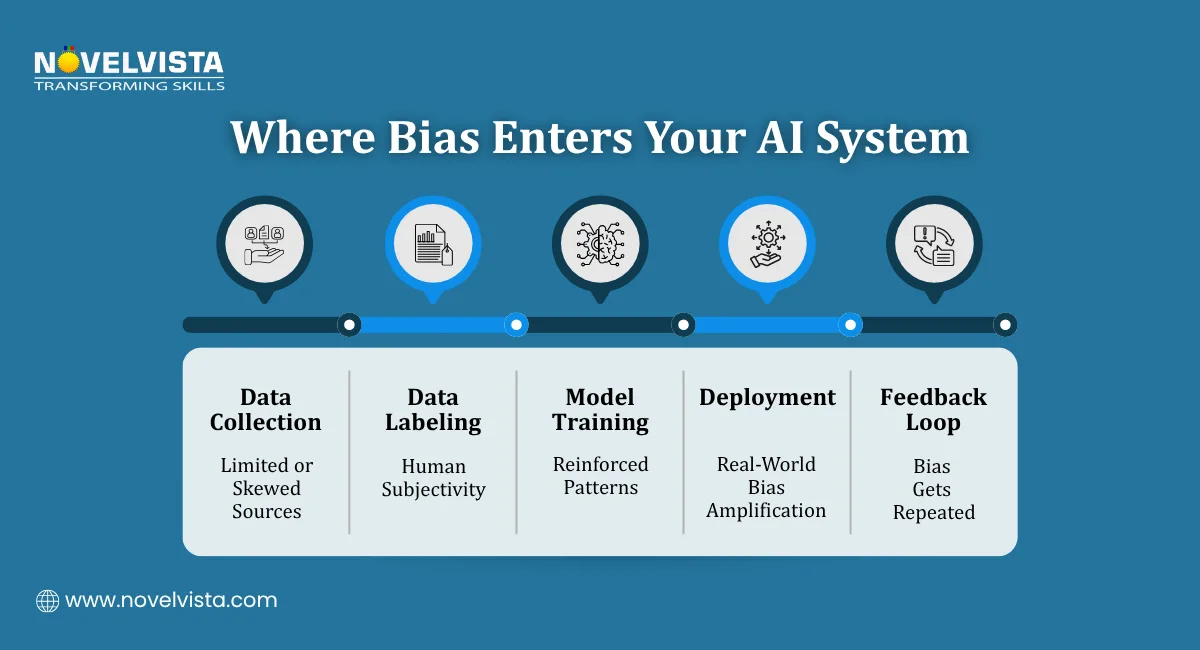
Here’s a practical roadmap:
Identify potential bias in your datasets and models.
Define rules for data collection, usage, and validation.
Use high-quality, diverse datasets.
Leverage analytics and fairness metrics.
Regularly audit AI systems and update models.
Pro Tip: Practice with ISO 42001 Exam Questions to strengthen your understanding of AI governance, audit principles, and real-world implementation scenarios.
Organizations that understand how does ISO 42001 manage training data bias gain significant advantages.
Users are more likely to trust fair and transparent AI systems. When organizations prioritize fairness, it builds confidence among customers, stakeholders, and regulators. Transparent AI processes also make it easier to explain decisions, strengthening long-term credibility and user adoption.
Stay ahead of evolving AI regulations. As global standards and laws around AI continue to evolve, organizations must be prepared to demonstrate compliance. Strong AI data governance practices help businesses align with regulations, reduce risks, and avoid costly penalties or legal challenges.
Accurate, unbiased data leads to better outcomes. When training data integrity is maintained, AI systems produce more reliable and consistent insights. This enables organizations to make informed decisions with greater confidence, improving both operational efficiency and strategic planning.
Ethical AI is becoming a key differentiator. Companies that implement bias mitigation in AI systems stand out in a crowded market. By demonstrating responsible AI practices, organizations can attract more customers, partners, and investors who value trust and ethical innovation.
Despite its benefits, implementing ISO 42001 isn’t without challenges.
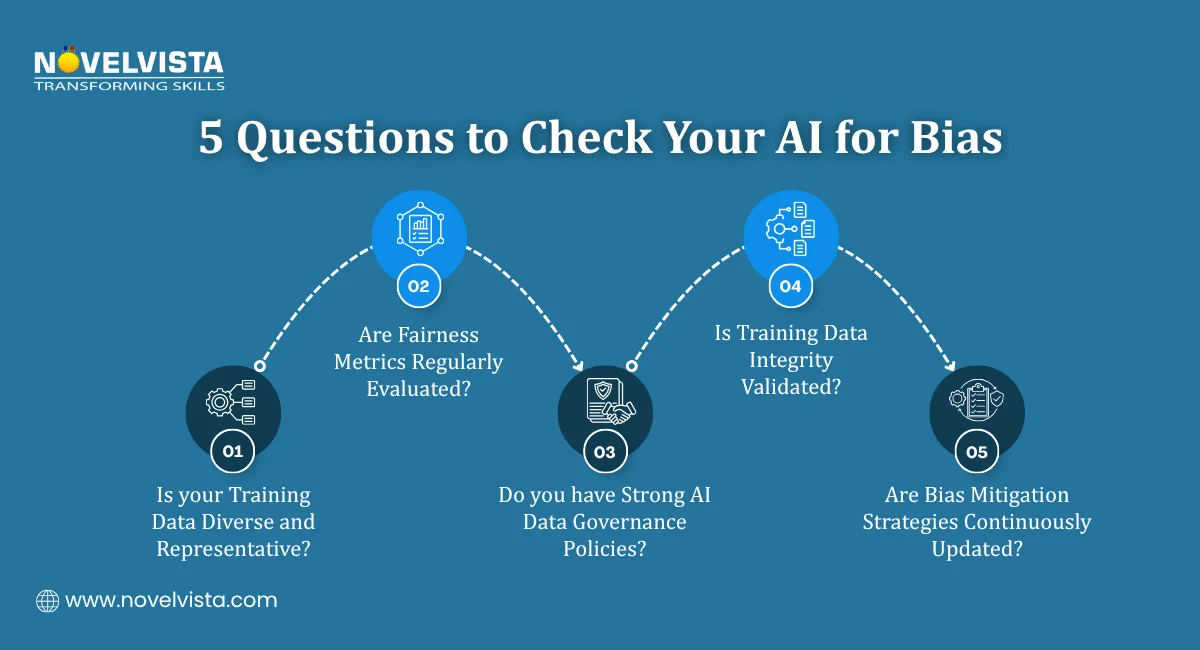
Solution: Expand data sources and ensure inclusivity.
Solution: Invest in training and certifications.
Solution: Start small and scale gradually.
So, how does ISO 42001 manage training data bias?
It goes beyond surface-level fixes and embeds bias control deep into the AI lifecycle. Through a structured, risk-based approach, ISO 42001 integrates strong AI data governance, enforces strict controls to maintain training data integrity, and systematically drives bias mitigation in AI systems, from data collection to continuous monitoring in production.
This means organizations don’t just detect bias, they prevent it, measure it, and continuously improve against it.
In a world where AI decisions influence hiring, finance, healthcare, and beyond, managing bias is no longer a technical checkbox—it’s a business-critical priority.
Organizations that adopt ISO 42001 aren’t just meeting compliance requirements, they’re building AI systems that are fair, transparent, and resilient. The result? Greater trust, stronger accountability, and a clear competitive edge in an AI-driven future.

Ready to take the next step in mastering AI governance and auditing?
Join NovelVista’s ISO/IEC 42001 Lead Auditor Certification Training and gain hands-on expertise in AI data governance, training data integrity, and bias mitigation in AI systems. Designed for AI professionals, auditors, and compliance leaders, this course equips you with practical auditing skills, real-world insights, and globally recognized credentials to confidently assess and manage AI systems.
Start your ISO 42001 auditor journey today!
Author Details

Course Related To This blog
ISO 42001 Lead Auditor
Confused About Certification?
Get Free Consultation Call
Stay ahead of the curve by tapping into the latest emerging trends and transforming your subscription into a powerful resource. Maximize every feature, unlock exclusive benefits, and ensure you're always one step ahead in your journey to success.