Category | Quality Management
Last Updated On 06/06/2026
Artificial intelligence has moved from experimental labs into everyday business operations faster than most governance models could keep up. According to recent global surveys, more than 75% of organizations now use AI in at least one business function, yet fewer than 30% have formal governance mechanisms in place to manage how those systems are designed, deployed, and monitored. As AI systems influence decisions related to hiring, credit scoring, medical diagnosis, and customer engagement, questions around accountability, transparency, and risk are becoming impossible to ignore.
Who owns the risk when an AI system makes a flawed decision?
How do organizations demonstrate that AI is being used responsibly?
And how can leadership teams ensure trust in AI without slowing innovation?
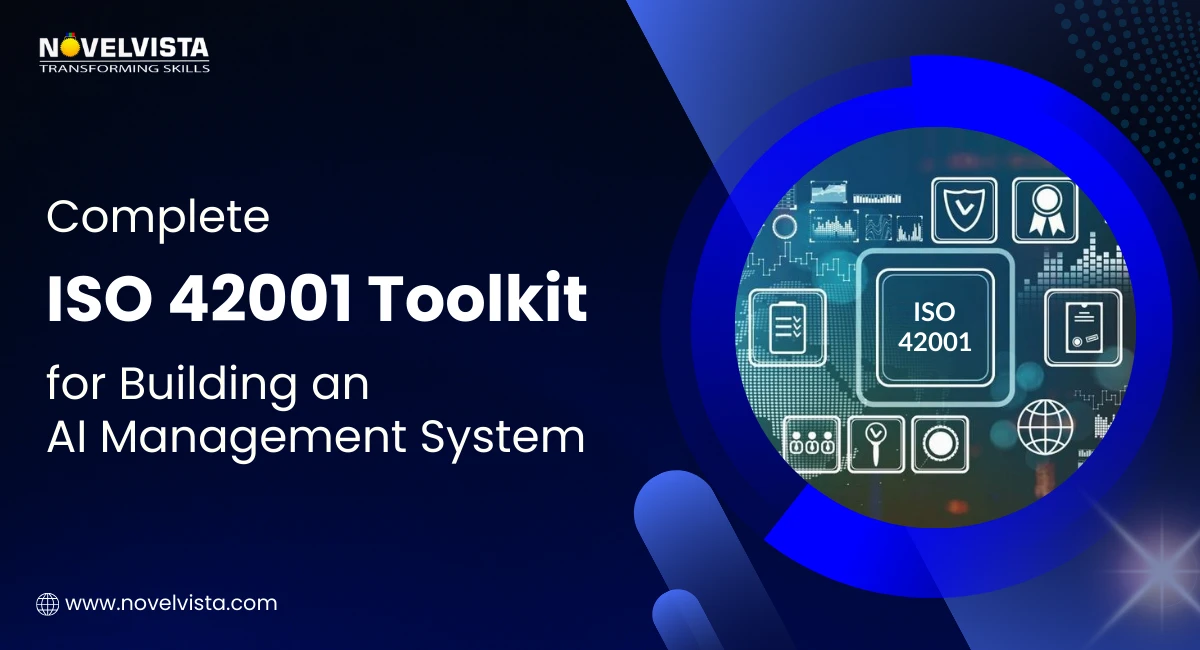
These are no longer theoretical concerns. Regulators, customers, and internal stakeholders are actively asking for evidence of control. This is where ISO 42001 enters the conversation—and more importantly, where a structured iso 42001 toolkit becomes essential. Rather than treating AI governance as an abstract principle, ISO 42001 provides a practical framework for building an AI Management System that aligns people, processes, and technology in a measurable way.
ISO 42001 is the world’s first international standard specifically focused on artificial intelligence management systems. Its purpose is not to restrict innovation, but to ensure AI is developed and used in a way that is accountable, ethical, transparent, and aligned with organizational objectives. Much like ISO 9001 introduced discipline into quality management, ISO 42001 brings structure to AI governance.
At its core, ISO 42001 requires organizations to understand how AI systems impact people, processes, and decision-making. It emphasizes risk-based thinking, leadership responsibility, lifecycle controls, and continuous improvement. An AI Management System under ISO 42001 is not a single document or tool—it is an integrated approach that spans design, deployment, monitoring, and oversight.
This is precisely why organizations struggle when approaching the standard without guidance. The iso 42001 toolkit acts as a bridge between the standard’s requirements and real-world implementation, translating clauses into usable policies, templates, and operational controls.A simple, practical approach to AI governance
Tools to assess risk, monitor performance, and improve continuously
Designed for teams preparing for ISO 42001 audits
Purpose of an ISO 42001 Audit
An ISO 42001 audit evaluates whether an organization’s AI Management System complies with the standard and is effectively implemented. The focus is on how AI governance operates in practice, not just how it is documented.
What Auditors Actually Examine
Auditors look beyond policies to assess consistency between documented intent and operational reality. This includes how AI risks are identified, how AI-driven decisions are reviewed, and how accountability is assigned across teams.
Why Lack of Preparation Leads to Findings
Without adequate preparation, audits often reveal gaps such as unclear AI ownership, inconsistent risk assessments, or missing monitoring evidence. These issues usually stem from fragmented AI governance rather than a lack of intent.
How an ISO 42001 Toolkit Supports Audit Readiness
A structured iso 42001 toolkit helps bring governance elements together into a single, auditable system. It aligns policies, risk assessments, controls, and records in a way that supports consistent implementation.
Role of Internal Audits in ISO 42001
Internal audits are a core requirement of ISO 42001 and help organizations periodically review AI systems, identify weaknesses, and initiate corrective actions before external audits occur.
Making Reviews Repeatable and Defensible
Toolkits provide standardized formats for internal audits and reviews, ensuring evaluations are consistent, traceable, and defensible during certification and surveillance audits. Reviewing the ISO 42001 Syllabus helps align governance practices with the structured audit knowledge expected from ISO 42001 professionals.
Policies form the backbone of any management system, and ISO 42001 is no exception. An AI governance policy establishes leadership commitment and defines how AI aligns with strategic objectives. Ethical AI policies address fairness, transparency, and human oversight, ensuring that systems do not operate in isolation from human judgment.
Data governance policies also play a critical role. AI systems are only as reliable as the data they consume. The iso 42001 toolkit integrates data quality, access control, and data lifecycle considerations into the broader AI framework, reducing the risk of biased or misleading outcomes.
Clear policies reduce ambiguity, particularly when multiple teams interact with AI systems across departments. For professionals evaluating the career potential of AI governance roles, the ISO 42001 Salary Guide offers useful insight into how these skills are valued across industries.
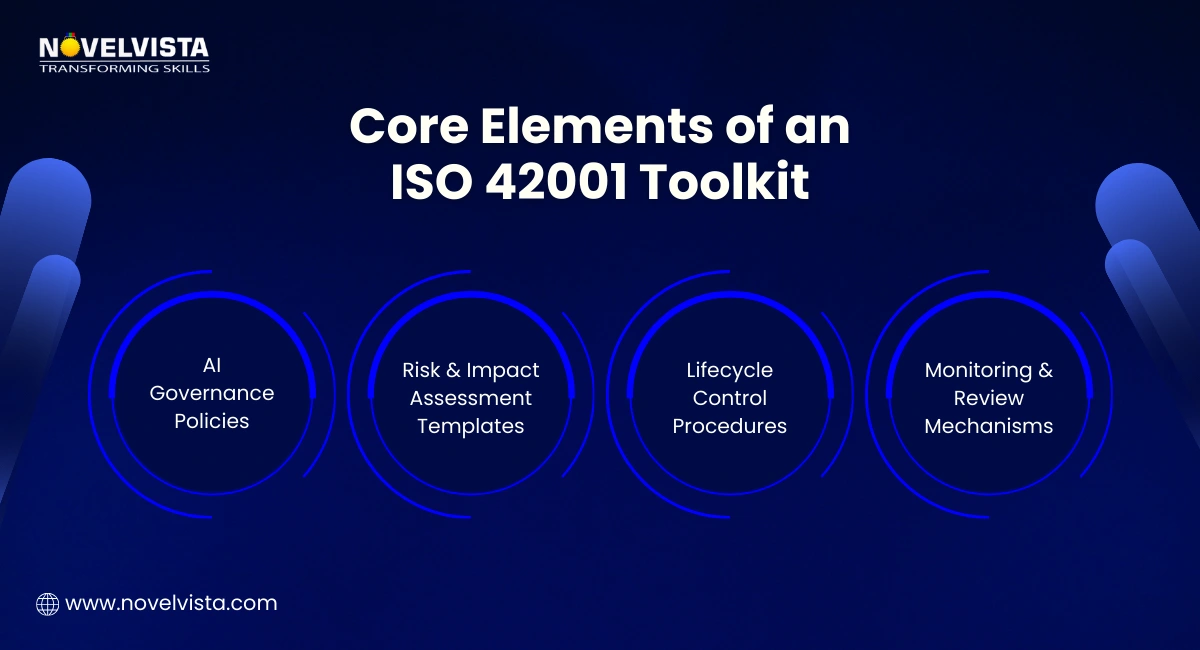
ISO 42001 places strong emphasis on identifying and managing AI-related risks. These risks may include algorithmic bias, lack of explainability, security vulnerabilities, or unintended social impacts. Risk assessments under ISO 42001 are not one-time exercises; they are living processes that evolve as AI systems change.
The iso 42001 toolkit typically includes structured risk assessment templates that guide teams through identifying risks, evaluating their likelihood and impact, and defining mitigation measures. This structured approach ensures consistency across projects and avoids subjective decision-making.
Impact analysis is equally important. Understanding how AI decisions affect individuals, customers, or operations helps organizations prioritize controls and demonstrate responsible AI use.
AI governance does not stop at deployment. ISO 42001 requires controls across the entire AI lifecycle, from design and development to monitoring and retirement. Operational controls ensure that changes to models are documented, tested, and approved before implementation.
Incident management is another critical area. When AI systems behave unexpectedly, organizations must respond quickly and transparently. A robust iso 42001 toolkit includes incident reporting and corrective action procedures that align with broader risk management practices.
These controls create stability without stifling innovation, allowing organizations to scale AI responsibly.
One of the most common challenges in AI governance is unclear ownership. ISO 42001 requires organizations to define who is responsible for AI decisions, risk acceptance, and oversight. Leadership accountability is central to this model.
The iso 42001 toolkit helps formalize governance structures by defining roles such as AI system owners, risk reviewers, and oversight committees. This clarity reduces confusion during audits and strengthens internal trust in AI-driven decisions.
Cross-functional collaboration is also encouraged, ensuring that technical teams, risk professionals, and business leaders share responsibility.
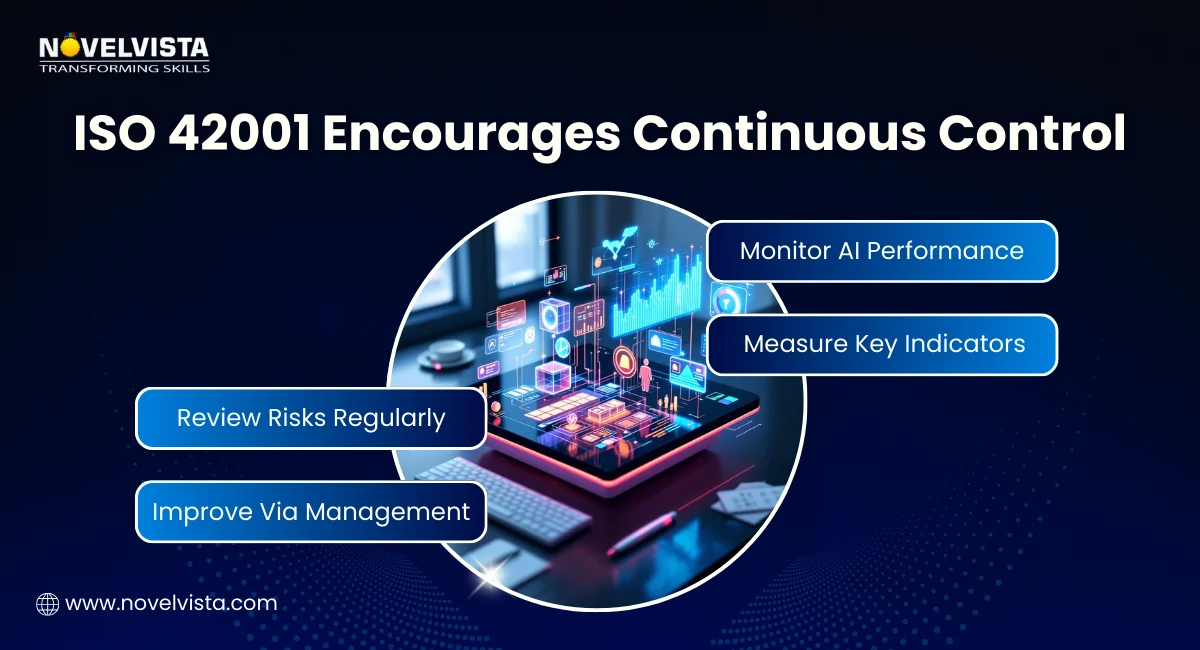
Continuous improvement is a core principle of ISO standards, and ISO 42001 is no different. Organizations are expected to monitor AI performance, track risk indicators, and review governance effectiveness regularly.
The iso 42001 toolkit supports this by providing metrics, review templates, and management review frameworks. These tools help organizations move from reactive problem-solving to proactive risk management.
Over time, this approach strengthens AI maturity and builds organizational confidence. The ISO 42001 Framework brings these policies, controls, and oversight mechanisms into a cohesive structure for managing AI responsibly.
Global AI regulations are evolving rapidly, and organizations are under increasing pressure to demonstrate compliance. While ISO 42001 is not a regulation, it provides a strong foundation for meeting regulatory expectations around transparency, accountability, and risk management.
An iso 42001 toolkit helps organizations stay ahead by embedding governance practices that align with emerging legal requirements. This reduces the likelihood of last-minute compliance efforts and supports long-term resilience.
As AI governance becomes a business priority, auditing AI Management Systems is an increasingly valuable skill. NovelVista’s ISO 42001 Lead Auditor Certification Training helps professionals develop practical auditing capabilities, understand AI governance requirements, and confidently assess compliance with ISO 42001. The course supports those looking to lead AI audits and contribute to responsible, well-governed AI adoption.

As AI becomes deeply embedded in business operations, governance can no longer be an afterthought. Organizations need practical systems that balance innovation with responsibility. The iso 42001 toolkit provides a structured, repeatable approach to building an AI Management System that is credible, auditable, and adaptable.
Beyond certification, the real value lies in trust—trust from customers, regulators, and internal teams. By implementing ISO 42001 with the support of a comprehensive toolkit, organizations position themselves to use AI confidently and sustainably in a rapidly changing landscape.
Author Details

Course Related To This blog
ISO 42001 Lead Auditor
Confused About Certification?
Get Free Consultation Call
Stay ahead of the curve by tapping into the latest emerging trends and transforming your subscription into a powerful resource. Maximize every feature, unlock exclusive benefits, and ensure you're always one step ahead in your journey to success.