Category | Project Management
Last Updated On 29/05/2026
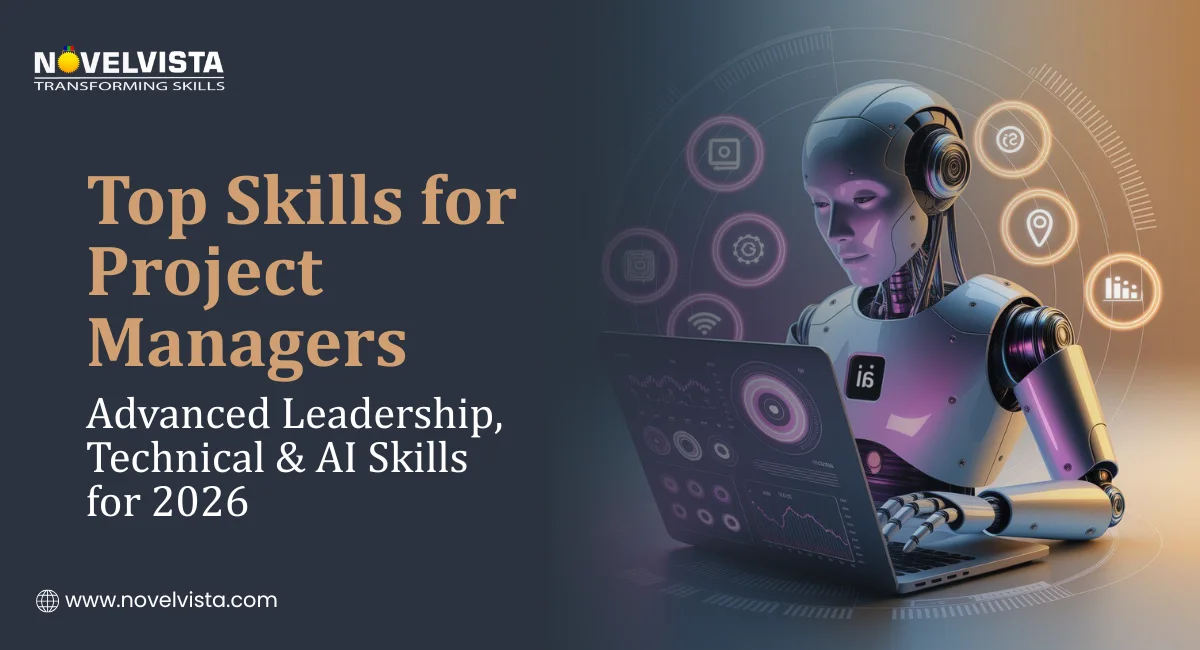
Project management is no longer limited to handling timelines, assigning tasks, and tracking budgets. In 2026, organizations expect project managers to become strategic business leaders who can combine leadership, technology, and AI-driven decision-making to deliver measurable business outcomes. According to recent industry reports, more than 70% of enterprises are actively investing in AI-enabled project delivery systems, while organizations adopting digital transformation initiatives are increasing their demand for skilled project managers faster than ever before.
But what exactly are the top skills for project managers in this new era? Are traditional leadership abilities still enough? How important are AI capabilities, technical expertise, and strategic thinking in modern project environments?
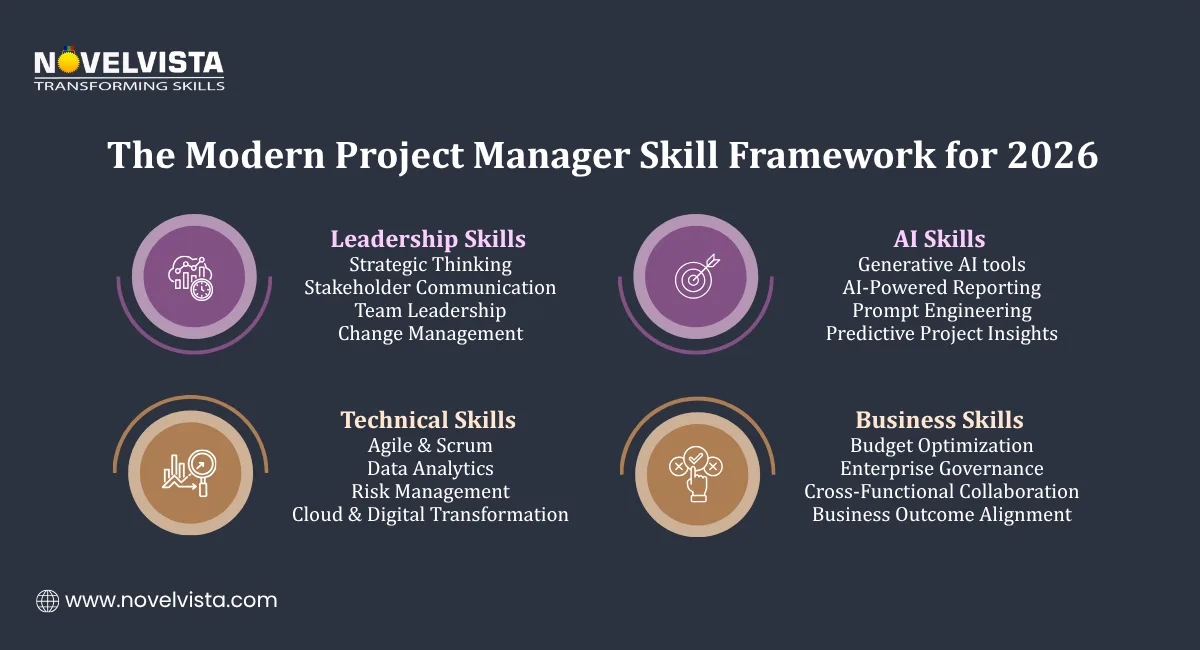
The reality is that project management roles are evolving rapidly. Enterprises now require professionals who can manage cross-functional teams, interpret business data, use AI-powered tools, and drive organizational transformation. The most important skills for project managers today include a balanced mix of leadership, communication, technical expertise, analytical thinking, and AI literacy.
This blog explores the top skills for project managers in 2026, including leadership, technical expertise, AI capabilities, and business strategy skills. You’ll learn how AI, digital transformation, and changing enterprise demands are reshaping project management careers, along with the certifications, tools, and future trends professionals need to stay competitive.
TL;DR | Key Insights |
| Leadership Skills | Strategic thinking, communication, and team leadership |
| Technical Skills | Agile, data analytics, cloud, and risk management |
| AI Skills | Generative AI, automation, and predictive reporting |
| Business Skills | ROI focus, product thinking, and stakeholder alignment |
| Career Growth | High-demand roles, certifications, and salary opportunities |
| Future Trends | AI-powered PMOs and Human + AI collaboration models |
Digital transformation is reshaping every industry, from healthcare and banking to manufacturing and retail. Organizations are adopting cloud platforms, automation systems, and AI-driven workflows to improve efficiency and competitiveness. As a result, project managers must now understand digital ecosystems and enterprise technology strategies.
The technical skills for project managers are becoming increasingly important because modern projects often involve cloud migration, cybersecurity, automation, and enterprise software implementation.
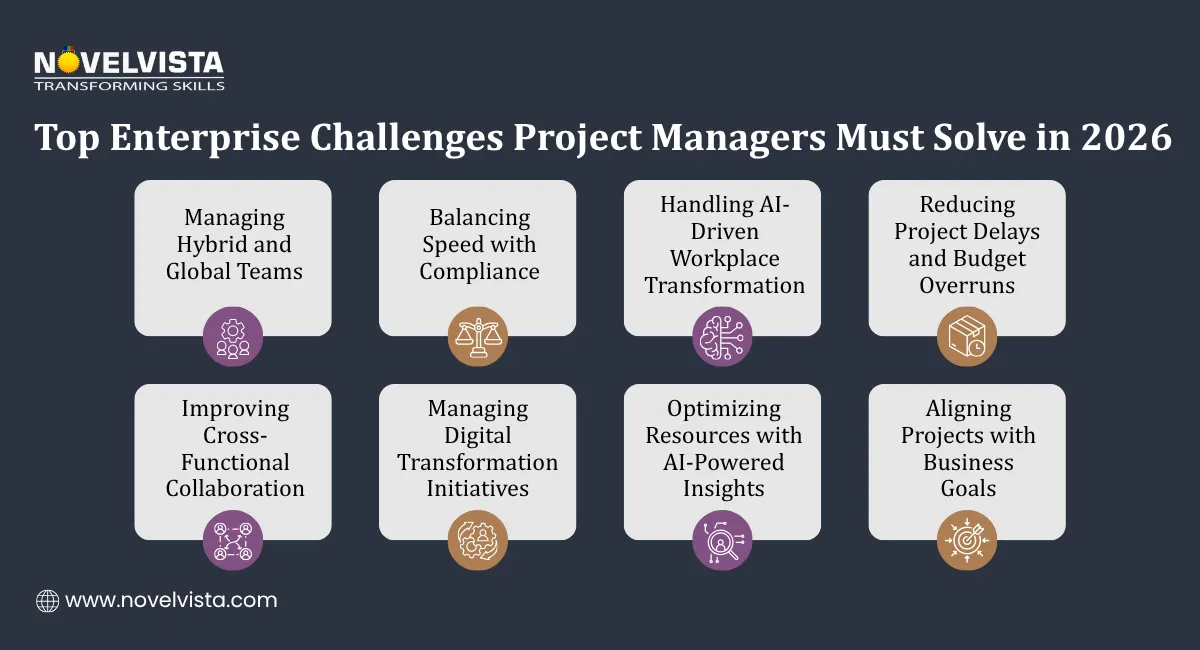
AI tools can now automate reporting, scheduling, resource allocation, and predictive risk analysis. This shift means project managers must learn how to collaborate with intelligent systems rather than rely entirely on manual processes.
Modern PMs are expected to understand AI-powered reporting tools, workflow automation, and predictive analytics platforms.
Remote and hybrid work environments have made communication and collaboration more complex. Managing distributed teams requires stronger leadership and advanced communication capabilities.
The interpersonal skills for project managers now include virtual collaboration, cultural awareness, and remote stakeholder management.
Executives expect project managers to contribute directly to business growth, operational efficiency, and innovation. Project managers must align delivery goals with broader organizational strategies.
| Traditional PM Role | Modern PM Role in 2026 |
| Task coordination | Strategic business leadership |
| Manual reporting | AI-powered analytics |
| Local team management | Global hybrid team leadership |
| Basic scheduling | Predictive project governance |
| Reactive problem-solving | Proactive risk management |
One of the top skills for project managers is the ability to make strategic decisions under pressure. Project managers must evaluate risks, business priorities, financial constraints, and stakeholder expectations before making critical choices.
High-performing teams require empathetic and emotionally intelligent leaders. Emotional intelligence helps project managers build trust, improve collaboration, and reduce workplace conflict.
Among the soft skills for project managers, emotional intelligence remains one of the most valuable because it directly impacts team productivity and engagement.
Project managers regularly communicate with executives, clients, technical teams, and business leaders. Clear communication improves alignment and reduces misunderstandings.
Strong reporting capabilities are considered one of the essential skills for project managers because leadership teams rely on accurate updates for decision-making.
Conflicts between departments, stakeholders, or project teams are common in enterprise environments. Skilled project managers resolve disputes quickly while maintaining business relationships and project momentum.
Modern enterprises experience constant technological and operational changes. Project managers must guide teams through transitions while minimizing resistance and maintaining productivity.
Today’s projects involve collaboration across IT, operations, finance, marketing, and cybersecurity teams. Cross-functional leadership is one of the most important skills for project managers in enterprise environments.
Agile methodologies continue to dominate enterprise project delivery. Project managers must understand Scrum, Kanban, SAFe, and hybrid delivery frameworks to manage changing project requirements effectively.
These are now considered core hard skills for project managers.
Data-driven decision-making has become central to project governance. PMs must analyze KPIs, project health metrics, team productivity data, and delivery performance reports.
Cloud migration projects are growing across enterprises. Project managers do not need deep technical expertise but should understand cloud platforms, SaaS models, and digital transformation strategies.
Cybersecurity risks are increasing globally. Project managers handling enterprise projects must understand security policies, compliance requirements, and risk management practices.
Financial management remains one of the basic skills for project managers, but modern forecasting now involves predictive analytics and AI-assisted budgeting.
Jira
Widely used for Agile project tracking, sprint planning, and backlog management.
Microsoft Project
Helpful for resource planning, scheduling, forecasting, and enterprise portfolio management.
Asana and Monday.com
Popular for workflow management, collaboration, and task visibility.
Power BI and Reporting Tools
Project managers increasingly use BI platforms for visual dashboards and executive reporting.
Technical Skill | Business Impact |
| Agile delivery | Faster project execution |
| Data analytics | Better decision-making |
| Cloud awareness | Improved digital transformation |
| Risk management | Reduced project failures |
| Reporting tools | Stronger executive visibility |
Generative AI tools are helping project managers automate reporting, summarize meetings, create project documentation, and analyze risks.
The top skills for project managers now include AI literacy and understanding how AI systems improve operational efficiency.
AI can analyze historical project data to predict delays, optimize timelines, and recommend resource allocation strategies.
Prompt engineering has emerged as an important business capability. Project managers can use structured prompts to generate reports, meeting summaries, stakeholder communications, and risk assessments.
AI tools can identify potential delivery risks before they escalate. Predictive analytics improves project forecasting accuracy and resource utilization.
Organizations are becoming increasingly concerned about responsible AI usage. Project managers must understand governance frameworks, ethical considerations, and AI compliance policies.
Microsoft Copilot
Supports productivity, reporting, and workflow automation.
ChatGPT
Useful for communication drafting, brainstorming, documentation, and project planning.
Notion AI
Enhances documentation management and knowledge sharing.
Jira AI Features
Provides automated sprint analysis, issue prioritization, and project insights.
As AI continues to reshape enterprise delivery models, project managers must understand how automation, predictive analytics, and intelligent workflows are transforming modern project environments. Professionals interested in exploring the growing impact of Project Management with AI can gain deeper insights into how AI-powered tools and strategies are redefining project execution and business decision-making.
In AI‑driven and digital transformation initiatives, project managers are no longer just delivery owners they are business value owners. They must connect technical execution with customer needs, financial outcomes, and long‑term product strategy.
AI‑enabled project leaders need a clear understanding of how their projects create measurable business value.
In practice, this means being able to sit with finance and product leaders, understand targets like revenue uplift or cost reduction, and translate them into realistic delivery scope and KPIs.
AI projects often behave more like evolving products than one‑time implementations. Leaders who apply product‑thinking make better long‑term decisions.
This mindset shifts conversations from “Did we deliver the model?” to “Are users actually getting better decisions, faster workflows, or improved experiences from this AI capability?”
In many AI and digital projects, business cases look strong on paper but benefits fade after go‑live. Modern project leaders are expected to own the benefits realization story.
Future‑ready PMs work closely with product owners, finance, and operations to maintain dashboards for value metrics, not just delivery metrics.
AI capabilities and digital initiatives typically compete for the same budgets, platforms, and data resources across an enterprise.
This portfolio lens helps prevent “AI for AI’s sake” and keeps teams focused on use cases that directly support business strategy.
AI projects often bring in vendors, SaaS platforms, and data partners. Business‑savvy PMs act as informed commercial partners, not just coordinators.
This commercial awareness is especially important in AI, where costs can scale with data volume, compute, and experimentation.
AI-powered workflows and Agile methodologies improve delivery timelines and reduce project bottlenecks.
Strong leadership combined with automation reduces repetitive tasks and allows teams to focus on innovation.
Predictive analytics and AI-driven forecasting improve financial accuracy and reduce project failures.
Effective communication and reporting create better executive visibility and business alignment.
Organizations with future-ready PMs adapt more quickly to market changes and technology disruptions.
Many enterprises now use AI-driven PMO systems for portfolio management, reporting automation, and predictive governance.
Cloud transformation initiatives require project managers who understand enterprise architecture, risk management, and cross-functional coordination.
Enterprises implementing Agile at scale need leaders with advanced collaboration and change management expertise.
Executives increasingly rely on AI-generated dashboards and predictive project insights for strategic planning.
The Project Management Professional certification remains one of the most respected credentials globally.
PRINCE2 provides structured governance and process-based project management frameworks.
Scrum Master and Agile certifications validate modern delivery management expertise.
Generative AI certifications help PMs understand automation, AI governance, and business applications of generative AI.
These certifications support enterprise service management and digital transformation initiatives.
Certification | Primary Focus |
| PMP | Enterprise project leadership |
| PRINCE2 | Structured project governance |
| Scrum Certification | Agile delivery management |
| Generative AI Certification | AI business applications |
| ITIL | Service and digital operations |
Industries actively hiring project managers include:
New roles are emerging rapidly, including:
Project managers with AI and technical expertise often command significantly higher salaries than traditional PM professionals. As the demand for AI-enabled and business-focused project managers continues to rise, organizations are also raising their expectations during hiring and leadership evaluations. Professionals preparing for leadership roles can explore commonly asked Project Management Interview Questions to better understand the skills, scenarios, and strategic thinking employers look for in modern project management candidates.
Continuous learning and certifications remain essential for long-term career advancement.
The project management landscape changes rapidly. Professionals should regularly learn new methodologies, AI tools, and enterprise technologies.
Understanding AI systems and enterprise technology platforms is becoming one of the essential skills for project managers.
Leadership and communication continue to be foundational soft skills for project managers.
Following industry trends helps PMs stay relevant in competitive job markets.
Certifications improve credibility, employability, and enterprise leadership opportunities.
PMOs will increasingly rely on AI-driven governance and automation platforms.
Real-time analytics and predictive intelligence will transform project oversight.
Automation will streamline workflows, reporting, approvals, and compliance monitoring.
Future project environments will combine human leadership with AI-assisted execution.
Organizations will prioritize adaptable leaders with multidisciplinary expertise.
The future of project management is being shaped by digital transformation, AI adoption, and evolving enterprise expectations. The top skills for project managers in 2026 go far beyond traditional scheduling and coordination capabilities. Organizations now demand professionals who can combine leadership, business strategy, technical expertise, and AI-driven decision-making.
The most important skills for project managers include strategic leadership, emotional intelligence, Agile delivery, data analytics, AI literacy, and stakeholder communication. Both hard skills for project managers and soft skills for project managers are essential for managing complex enterprise initiatives successfully.
As industries continue to evolve, professionals who invest in continuous learning, certifications, and emerging technologies will remain highly competitive. Building future-ready capabilities today will help project managers unlock stronger career growth, higher salaries, and long-term professional success. Professionals looking to strengthen these in-demand capabilities can also explore PMP Certification Training to build globally recognized leadership, strategic planning, and project delivery expertise.

Author Details

Course Related To This blog
PMP Training Certification
Confused About Certification?
Get Free Consultation Call
Stay ahead of the curve by tapping into the latest emerging trends and transforming your subscription into a powerful resource. Maximize every feature, unlock exclusive benefits, and ensure you're always one step ahead in your journey to success.