Category | Project Management
Last Updated On 18/08/2026
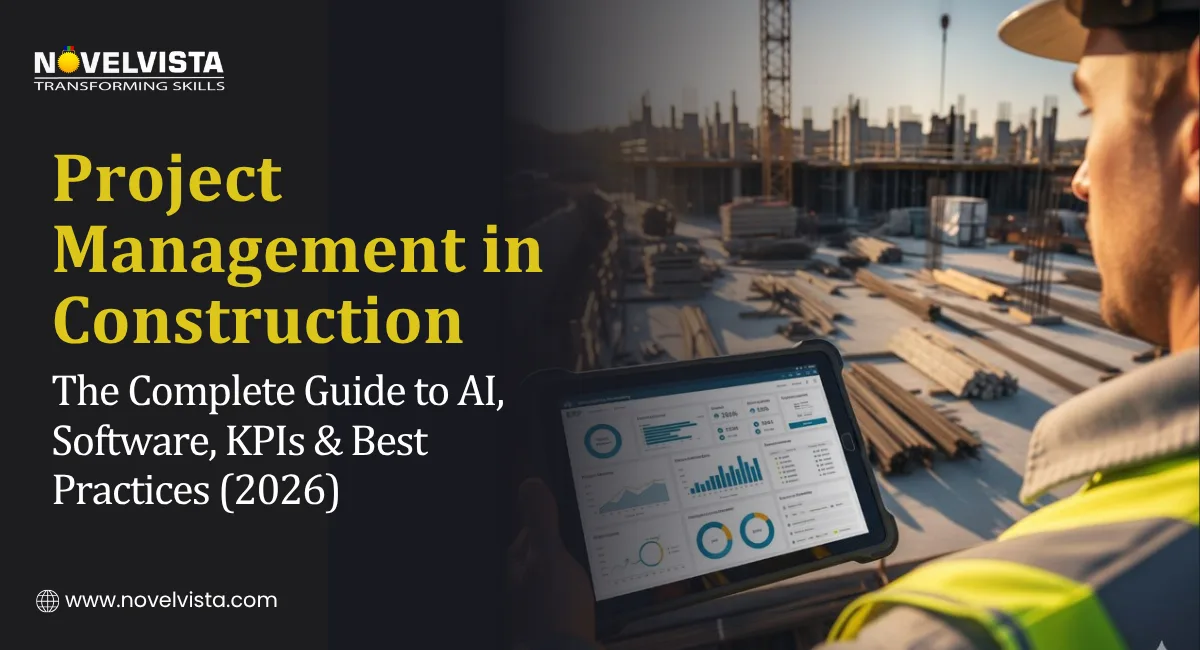
The global construction industry is on track to surpass $15 trillion by 2030 yet nearly 70% of projects still struggle with delays, budget overruns, or both. The real question is: why does this gap persist despite rapid technological advancement?
More often than not, the root causes are familiar poor planning, fragmented communication, and outdated execution methods that can’t keep up with today’s project complexity.
So, how are leading companies staying ahead in 2026?
The answer lies in project management in construction now redefined by AI-driven insights, advanced project management software in construction, and data-backed decision-making that bring clarity, control, and predictability to every stage of a project.
Whether you're a project manager, civil engineer, contractor, or someone exploring the project management in the construction industry, this guide will help you understand what’s changing—and how to stay ahead of it.
Let’s break it down step by step.
Before diving deeper, let’s answer the fundamental question: What is project management in construction?
It refers to the process of planning, coordinating, budgeting, and supervising construction projects from start to finish.
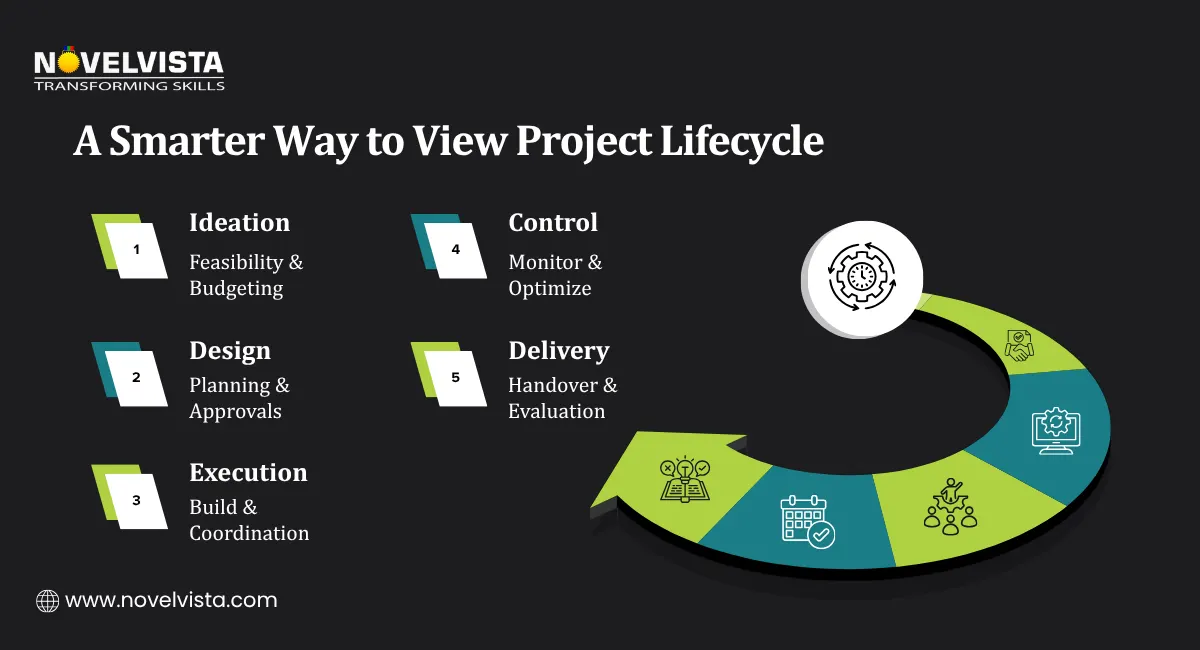
It typically includes four major phases:
In today’s fast-paced environment, project management in the construction industry is no longer just about timelines; it’s about efficiency, sustainability, and innovation.
The construction landscape has evolved dramatically. Projects are bigger, more complex, and technology-driven.
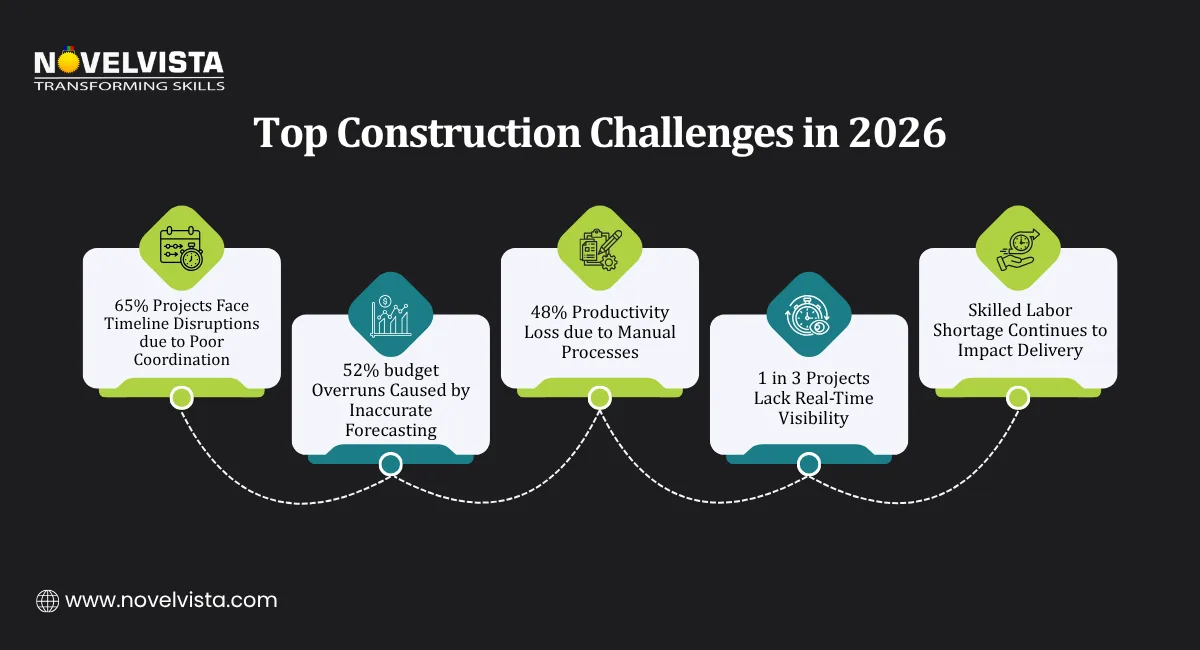
Here’s why project management in construction is more critical than ever:
Without effective project management in the construction industry, even well-funded projects can fail.
Implementing structured project management in construction brings measurable advantages.
One of the biggest benefits of project management in construction is better financial control. It helps track expenses and prevent budget overruns. With real-time budget tracking and forecasting, teams can identify cost leaks early and take corrective action. This ensures projects remain financially viable without compromising quality.
Efficient allocation of labor, materials, and equipment ensures optimal productivity. By aligning the right resources at the right time, project managers can avoid downtime and reduce wastage. This leads to smoother workflows and improved on-site efficiency.
From weather delays to safety hazards, risks are inevitable. Proper planning minimizes their impact. Proactive risk assessment allows teams to anticipate challenges and create contingency plans in advance. This reduces disruptions and keeps the project on track even under uncertainty.
Clear communication between stakeholders reduces misunderstandings and delays. With structured communication channels and collaborative tools, teams stay aligned throughout the project lifecycle. This improves decision-making and ensures faster issue resolution.
Overall, the benefits of project management in construction directly impact profitability and project success.
The rise of AI in construction project management is transforming the industry.
AI is no longer futuristic it’s practical and essential.
The integration of artificial intelligence in construction project management helps teams make smarter, faster decisions.
AI tools can analyze historical data to predict which phase of construction is likely to face delays allowing proactive action.
In 2026, companies that adopt ai in construction project management gain a significant competitive edge.
Technology plays a major role in modern projects. That’s where project management software in construction comes in.
Using project management software in construction ensures:
From small contractors to large enterprises, digital tools are now essential for effective project management in construction industry.
Pro Tip: Explore our How to Earn PMP Certification guide to fast-track your journey toward becoming a globally recognized project management professional.
Budget overruns are one of the biggest challenges in construction.
Effective cost control in construction project management ensures projects stay financially viable.
Strong cost control in construction project management not only saves money but also improves client trust.
To measure success, you need the right metrics.
Here are essential key performance indicators in construction project management:
Tracks whether the project is ahead or behind schedule
Measures budget performance
Evaluates workforce efficiency
Tracks incidents and compliance
Monitoring these key performance indicators in construction project management ensures continuous improvement and accountability.
To succeed in 2026, companies must follow proven best practices in construction project management.
Define clear objectives, timelines, and deliverables from the start.
Adopt AI tools and project management software in construction to streamline processes.
Ensure alignment between stakeholders, contractors, and teams.
Identify potential risks early and create mitigation strategies.
Use KPIs to track progress and make data-driven decisions.
Following these best practices in construction project management leads to higher efficiency and fewer project failures. Learn about the latest PMP Exam Changes 2026 and how they impact your certification journey.
In today’s rapidly evolving landscape, project management in construction is no longer just a support function it is the driving force behind successful, predictable project delivery.
From leveraging ai in construction project management to adopting advanced tools and tracking performance through KPIs, the industry is undergoing a powerful shift toward smarter, faster, and more efficient execution.
The organizations that will lead in 2026 and beyond are the ones that:
As projects grow larger and more demanding, the margin for error continues to shrink. Whether you're just starting out or aiming to grow your expertise, mastering project management in construction industry is no longer optional it’s a critical advantage for long-term success and career growth.

Ready to take your expertise in project management in construction to the next level?
Join NovelVista’s PMP Certification Training and gain practical project management skills, real-world insights, and globally recognized credentials that empower you to lead complex projects with confidence. Designed for professionals across industries—including those in the project management in construction industry this course helps you master planning, execution, cost control, and stakeholder management using proven global frameworks.
Start your journey toward becoming a high-impact project leader today!
It is the structured process of planning, organizing, executing, and monitoring construction projects to ensure timely completion, cost efficiency, and high-quality results.
Project management in construction offers several benefits, including better cost control, increased efficiency, minimized risks, and on-time project completion.
AI in construction project management enables smarter scheduling, proactive risk prediction, enhanced safety monitoring, and more informed decision-making.
Cost control in construction project management focuses on monitoring and managing expenses to keep the project within its approved budget.
Key performance indicators in construction project management include cost and schedule variance, workforce productivity, project efficiency, and safety performance.
Author Details

Course Related To This blog
PMP Training Certification
Confused About Certification?
Get Free Consultation Call
Stay ahead of the curve by tapping into the latest emerging trends and transforming your subscription into a powerful resource. Maximize every feature, unlock exclusive benefits, and ensure you're always one step ahead in your journey to success.