Category | News
Last Updated On 03/04/2026
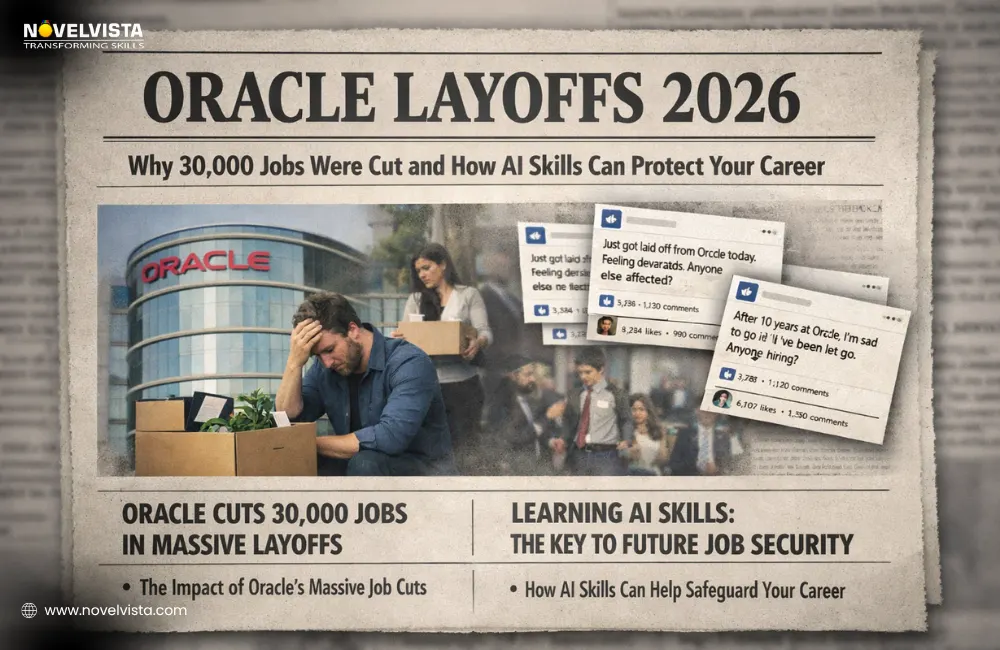
It started like any other morning. People woke up, checked their phones, maybe grabbed a coffee, and then saw the email.
Around 6 AM on March 30–31, 2026, employees at Oracle across the world received a message that changed everything. Their roles were being eliminated. Effective immediately.
No prior warning.
No transition conversations.
No gradual restructuring.
For many, system access was revoked within hours.
Just like that, thousands of professionals, some with years, even decades of experience, were locked out of their work, their teams, and their routines.
The scale made it even more shocking. Reports suggest that up to 30,000 employees were affected, which is roughly 18% of Oracle’s global workforce of 162,000.
This wasn’t a small correction. This was a major reset.
As more details came out, the full picture became clearer and heavier.
India took a particularly hard hit.
The layoffs were not limited to one team or function. They cut across:
In some teams, reports suggested that up to 50% of employees were let go.
There are also early signals that another round of layoffs in India may follow within weeks, which has added to the uncertainty.
To better understand how this fits into broader industry trends, explore our report on 2025 Tech Layoffs by Major Companies like Amazon, Microsoft, and TCS, and analyze last year’s patterns.
Behind every number is a story. And this time, those stories surfaced quickly.
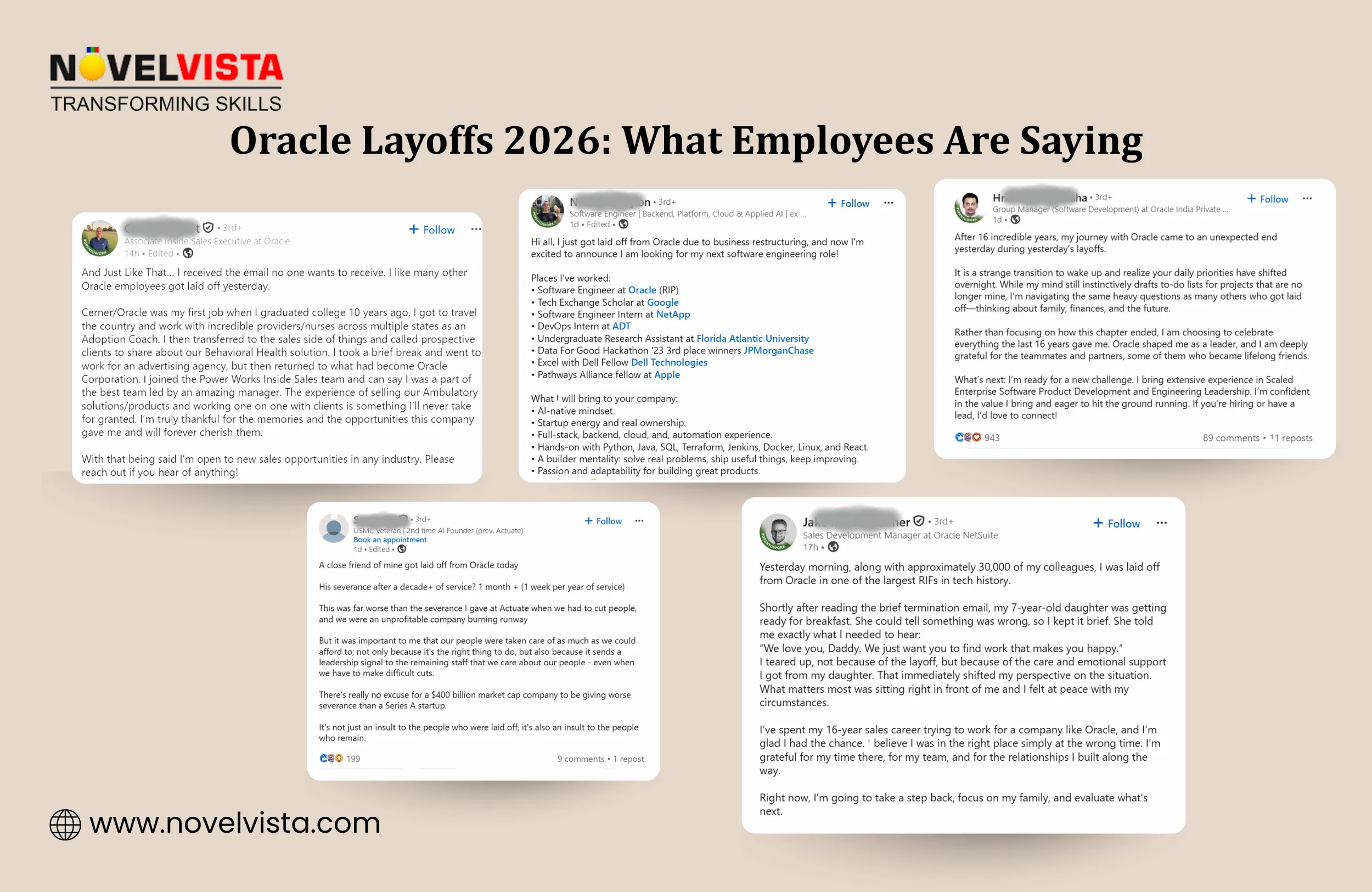
The communication itself felt abrupt. Many employees received a standard message mentioning “operational streamlining.” But the experience felt anything but streamlined.
Some common patterns emerged:
On platforms like X and Reddit, reactions ranged from shock to frustration. But there was also something else. Resilience.
People began sharing:
It showed something important. Even in disruption, the tech community adapts quickly.
Still, the emotional impact cannot be ignored. Losing a job, especially without warning, is not just a professional setback. It’s personal.
To understand this decision, you have to zoom out. This isn’t just about cutting costs. It’s about redirecting where those costs go.
Oracle is going through one of its largest restructuring efforts, and the core focus is clear:
AI infrastructure and data center expansion
One example often discussed is large systems like the Colossus supercomputer, which represent the kind of infrastructure companies are now prioritizing.
Analysts estimate that these layoffs could free up around:
That’s not a small number. That’s the kind of capital needed to:
This is the key point:
It’s not just cost-cutting.
It’s cost reallocation.
From:
To:
If this were only about Oracle, it would still be big news. But it’s not. This is part of a much larger pattern across the tech industry.
Companies are:
The important insight here is simple:
Jobs are not disappearing. They are being redefined.
The demand is shifting from:
To:
Let’s pause here for a second.
Before talking about trends, strategies, or skills, this needs to be said clearly: job loss is hard. Especially when it comes without warning.
For many people affected by the Oracle layoffs, this wasn’t just about losing a role. It meant:
There’s no shortcut around that reality.
But once the initial shock settles, a different question starts to come up:
What now?
And this is where understanding the larger shift becomes important. Because what’s happening here isn’t random. It’s part of a structural change in how the tech industry works.
For a long time, career growth in tech followed a predictable path:
That model is starting to break. Today, companies are reorganizing around capabilities, not fixed roles. The focus is shifting toward:
Which means the safer question to ask is no longer:
“Is my job secure?”
But:
“Are my skills relevant?”
This is what people mean when they talk about skill security. And the demand signals are already visible. Across hiring trends, companies are actively looking for professionals who understand:
These aren’t niche skills anymore. They are becoming baseline expectations.
Follow a structured 90-day plan, identify skill gaps, explore AI roles, and build a clear, step-by-step path to transition into AI, cloud, and automation careers.
When something like this happens, it’s easy to react with fear or frustration. That’s natural. But after that first reaction, there’s a more useful step: repositioning.
Here are a few practical ways professionals can respond:
Ask yourself:
The goal is to move closer to the second category.
Right now, that direction is clear:
You don’t need to switch careers overnight. But you do need to start aligning your skills with these areas.
You don’t need to become an AI expert in a month. What matters more is:
This is how transitions actually happen step by step, not all at once.
At this point, one thing becomes clear: if the industry is moving toward AI-driven systems, then understanding AI is no longer optional. Not at a deep research level, but at a practical, working level.
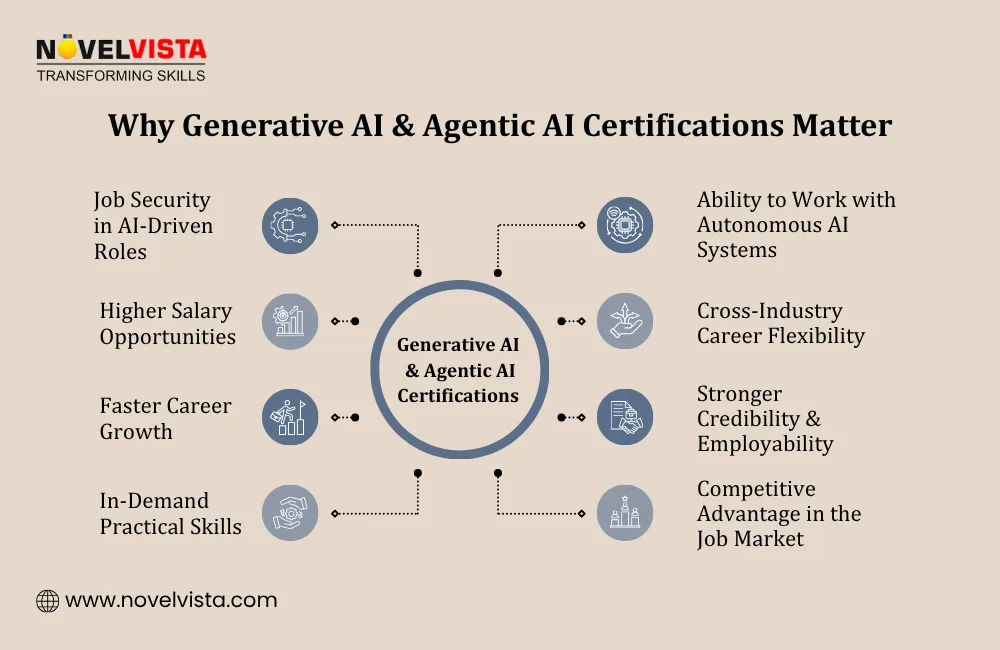
The NovelVista Generative AI Professional Certification focuses on how AI is actually used in real-world environments.
It helps professionals:
It’s especially useful for:
This goes one step further. As companies move toward automation and AI-driven workflows, the next layer is agentic AI, systems that can:
This Agentic AI Professional Certification focuses on:
These are exactly the kinds of systems companies are investing in as they reduce traditional roles.
Because they help bridge the gap between:
And that’s the real transition happening in the industry.
To plan your next career move, explore our blog on Best AI Certifications to Get Upskilled in 2026 and choose the right path for your goals.
It’s easy to look at the Oracle layoffs and see only the immediate impact. And yes, that impact is real. But there’s a larger story underneath.
This moment reflects a shift:
Companies are not just restructuring teams. They are restructuring how work itself gets done.
For professionals, this creates two paths:
The people who adapt, who learn, adjust, and build new capabilities won’t just recover from this kind of disruption.
They’ll be the ones shaping what comes next.
And that’s the part of the story that matters most.
Author Details

Confused About Certification?
Get Free Consultation Call
Stay ahead of the curve by tapping into the latest emerging trends and transforming your subscription into a powerful resource. Maximize every feature, unlock exclusive benefits, and ensure you're always one step ahead in your journey to success.