Category | News
Last Updated On 23/07/2026
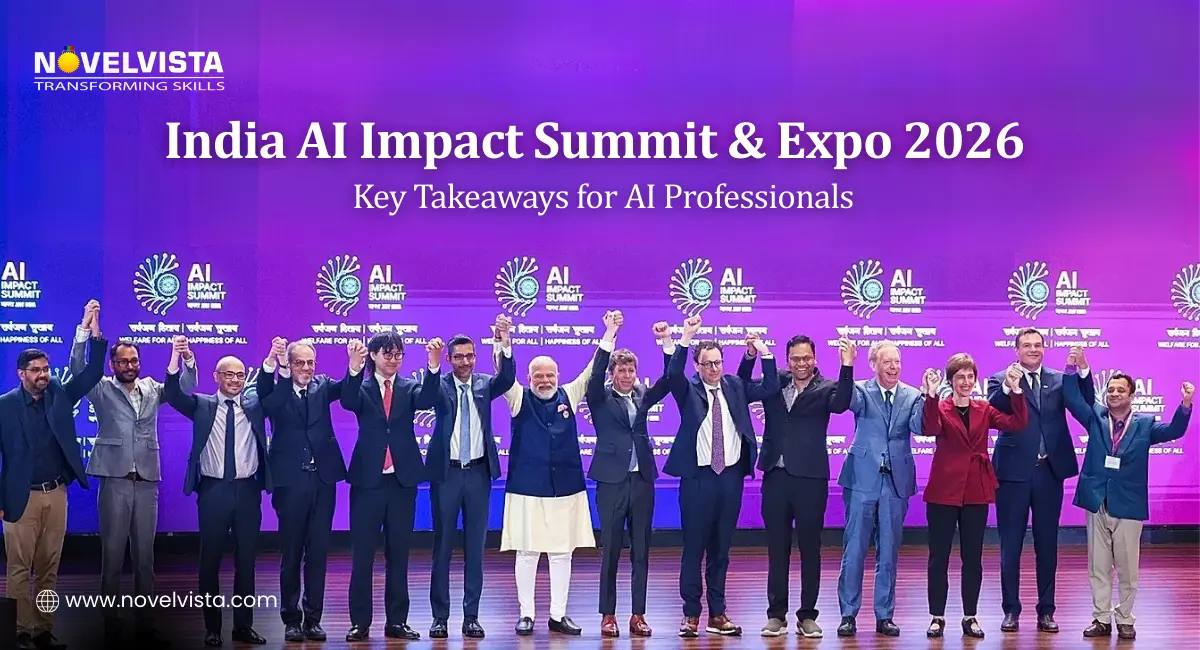
From February 16–20, 2026, Bharat Mandapam turned into the center of India’s AI ambition. The India AI Impact Summit & Expo 2026 was hosted by the DevGlobal Gate Foundation in collaboration with NITI Aayog, and inaugurated by Narendra Modi on February 16.
This wasn’t just another tech conference. It was positioned as India’s most ambitious AI gathering so far, a space where policymakers, startups, global leaders, researchers, and industry heads shared the same stage.
The tone was clear from day one: AI is no longer an experiment. It is becoming infrastructure. And India wants to be at the center of that shift.
The numbers alone tell part of the story.
Global political presence was expected, with leaders like Emmanuel Macron and Luiz Inácio Lula da Silva reportedly scheduled to attend.
Sessions were livestreamed on the IndiaAI YouTube channel, which expanded the reach far beyond Delhi. In simple terms, this wasn’t a local event. It was a signal to the world that India wants to shape AI’s future, not just adopt it.
What made the summit interesting wasn’t just the size. It was the clarity of the messages coming from different corners.
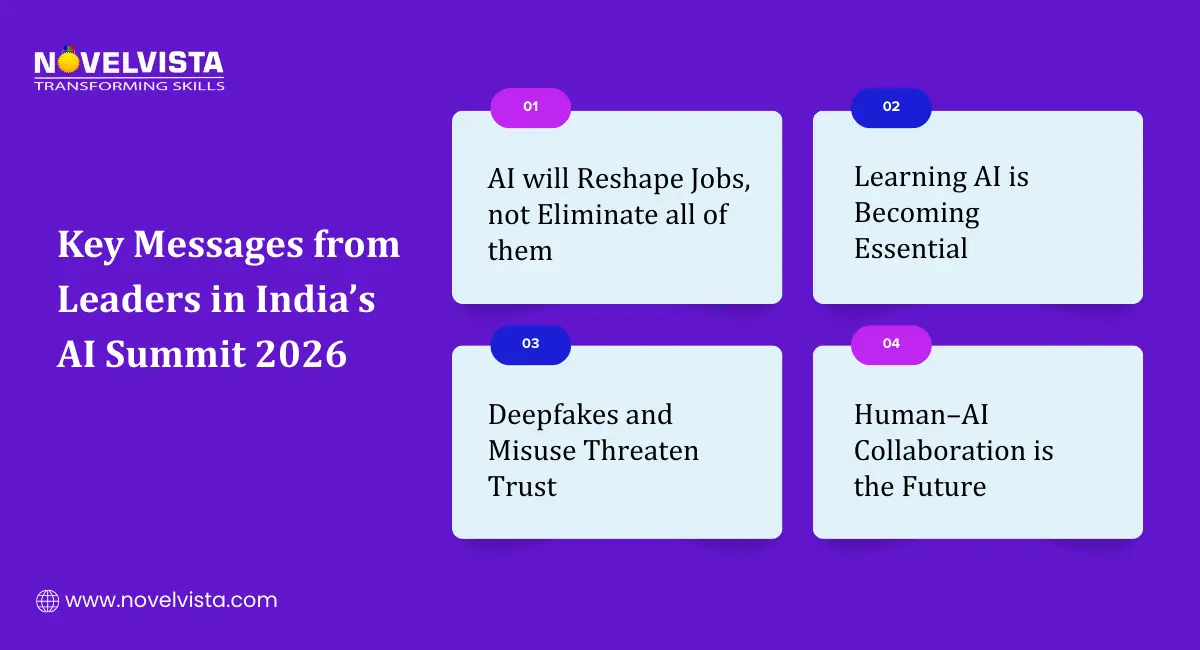
Puneet Chandok, President of Microsoft India, described AI as “unbundling jobs,” not eliminating them. His message was direct: not learning AI today is like choosing not to learn at all.
The idea wasn’t fear, it was urgency. Roles will change. Skills will evolve. But sitting still is not an option.
Union Railway Minister Ashwini Vaishnaw focused on AI safety and cybersecurity. He highlighted deepfakes as a direct attack on public trust and stressed that governance must keep pace with innovation.
The government’s approach seems to be balancing two realities:
Chief Economic Advisor V Anantha Nageswaran described India as the first large society attempting true human–machine synergy at scale. He called for a “Team India” effort to ensure growth and stability go hand in hand.
Actor Rana Daggubati added a sharp reminder: AI can replace people “quite quickly.” His statement reflected the emotional undercurrent of the event, excitement mixed with urgency.
Jitin Prasada described the summit as a “Maha Kumbh for AI,” emphasizing:
The message was clear: India’s AI strategy is not just about startups. It’s about population-level skill development.
Beyond speeches, the summit showcased how AI is already working on the ground.
Robotic tele-ultrasound systems demonstrated how remote diagnostics can bridge healthcare gaps. Meanwhile, Qure.ai presented AI-driven medical imaging solutions that:
This wasn’t a theory. It was a measurable impact.
The National Payments Corporation of India showcased UPI One World, enabling seamless payments for delegates from over 40 countries. AI-driven systems are clearly expanding financial inclusion at scale.
Cisco’s Krishi Mangal initiative demonstrated AI tools supporting 44,000 women farmers, helping improve productivity and decision-making.
Across sectors, one pattern stood out: AI is moving from labs to daily life.
Almost every panel touched on jobs.
The consistent message was this:
There was no denial that disruption is coming. But there was also a strong belief that AI literacy can turn risk into opportunity.
For professionals, the takeaway was simple: AI skills are becoming baseline skills.
As much as the summit celebrated AI progress, there was an equally strong focus on what could go wrong if growth runs ahead of control.
Across multiple sessions, speakers returned to the same concerns:
Government representatives made it clear that scaling AI without guardrails can backfire. Deepfakes were repeatedly mentioned as a direct threat to democratic processes, social trust, and even personal reputations. Once trust is lost, rebuilding it becomes far harder than deploying any new model.
The message was balanced but firm: innovation and governance must move together. AI systems that affect citizens, financial systems, or public services cannot be black boxes. Transparency, accountability, and security are no longer optional features — they are prerequisites.
One of the clearest signals from the India AI Impact Summit was that the role of AI professionals is expanding.
It’s no longer enough to:
Professionals are increasingly expected to understand:
India is positioning itself as both a global AI development hub and a large-scale testbed for human–AI collaboration. That combination creates opportunity, but also responsibility.
For AI engineers, architects, and tech leaders, this means career growth will favor those who can connect technical excellence with trust and compliance.
This is where the summit’s focus on safety and trust connects directly to professional skills.
ISO 42001 focuses on AI Management Systems, and its relevance was hard to miss at this event.
It helps professionals:
As governments and enterprises deploy AI at scale, they need people who can question systems, not just build them. ISO 42001 skills directly support that need.
AI systems amplify existing security risks, especially around data, access, and infrastructure.
ISO 27001 enables professionals to:
The India AI Impact Summit & Expo 2026 made one thing clear: India’s AI ambition is real, and it’s happening at scale.
But the summit also delivered a mature message. Growth without skills, governance, and security is fragile. Trust is what allows AI systems to be adopted widely and sustainably.
For professionals, this is a defining moment. Those who invest in AI literacy, governance, and security expertise will be the ones leading the next phase of adoption — not just in India, but globally.
India’s AI moment isn’t just about building faster or bigger systems. It’s about building systems people can trust.

Author Details
Confused About Certification?
Get Free Consultation Call
Stay ahead of the curve by tapping into the latest emerging trends and transforming your subscription into a powerful resource. Maximize every feature, unlock exclusive benefits, and ensure you're always one step ahead in your journey to success.