Category | News
Last Updated On 26/05/2026
A New Era for Privacy and Data Protection
February 2026 quietly changed the tone of global privacy compliance.
On February 5, 2026, the International Association of Privacy Professionals updated its Global Privacy Law and DPA Directory. On paper, this looks like a routine update. In reality, it confirmed something many security and privacy professionals already feel: data protection is getting more complex, faster, and more global.
The update doesn’t just list new laws. It includes amended regulations, draft frameworks, and newly created Data Protection Authorities (DPAs). For organizations operating across borders, this means fewer safe assumptions and more moving parts.
For ISO 27001 auditors and information security professionals, 2026 is a turning point. Privacy expectations are no longer something you “support” from the sidelines. They now sit directly inside audit scopes, risk assessments, and board-level discussions.
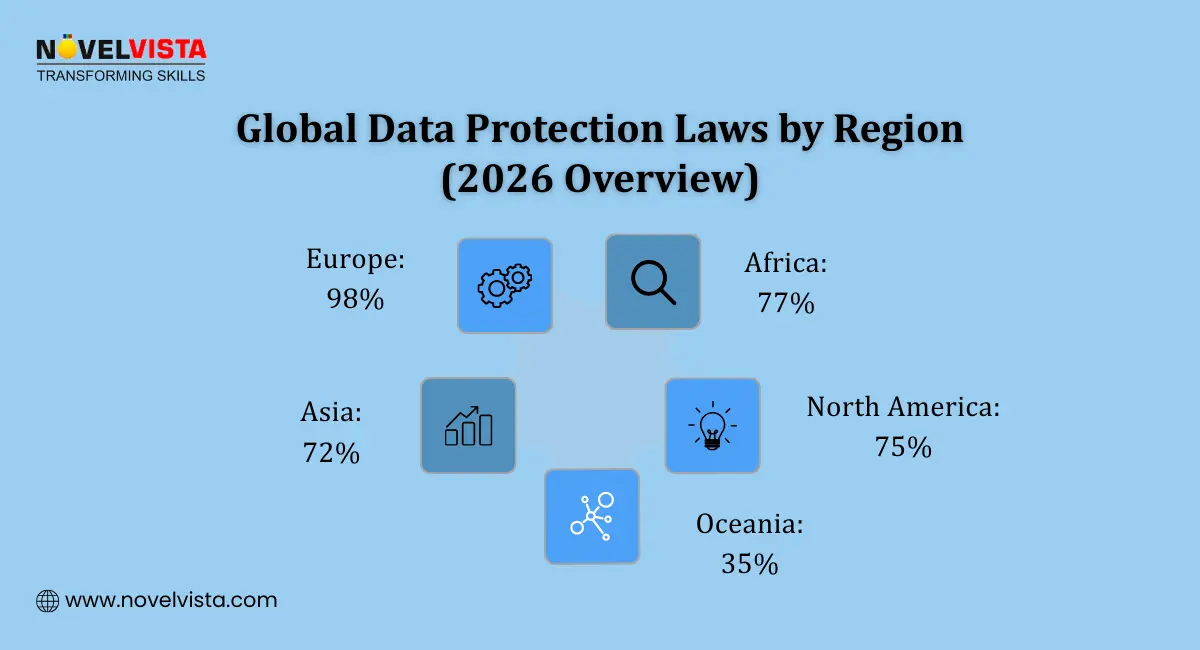
The scale of global data protection today surprises many people.
Out of 240 analyzed jurisdictions, 179 now have formal data protection frameworks in place. That’s roughly 75% of the world. Another eight countries are actively working on draft legislation.
What makes this even more significant is population coverage. These laws collectively apply to 6.6 billion people, which is close to 80% of the global population. In simple terms, if your organization handles personal data, chances are it’s already subject to at least one major privacy law.
This aligns closely with figures from UNCTAD, which reports that 79% of countries now have data protection legislation. Among developed economies, coverage jumps to 98%.
For ISO 27001 professionals, this confirms a critical reality: privacy compliance is no longer regional or optional. It’s becoming a baseline operational expectation.
Regional Coverage: A Global Mosaic, Not a Single Rulebook
While global coverage is expanding, the landscape is far from uniform.
Population coverage tells a slightly different story:
That lower number in North America is largely due to one factor: the United States still lacks a single, comprehensive federal data protection law.
Several notable countries also remain outside comprehensive frameworks, including DR Congo, Bangladesh, Pakistan, Venezuela, Bolivia, Papua New Guinea, and the U.S.
For global organizations, this creates a familiar challenge. Many laws borrow ideas from GDPR, but local differences matter. Auditors can no longer rely on one-size-fits-all interpretations.
2026 isn’t just about more laws. It’s about important changes to existing ones.
In late 2025, the European Commission proposed changes to the General Data Protection Regulation through what’s now called the Digital Omnibus Package.
The goals are practical:
These proposals are currently under negotiation and are expected to influence compliance benchmarks throughout 2026. For auditors, this means GDPR interpretation will likely shift, subtly, but meaningfully.
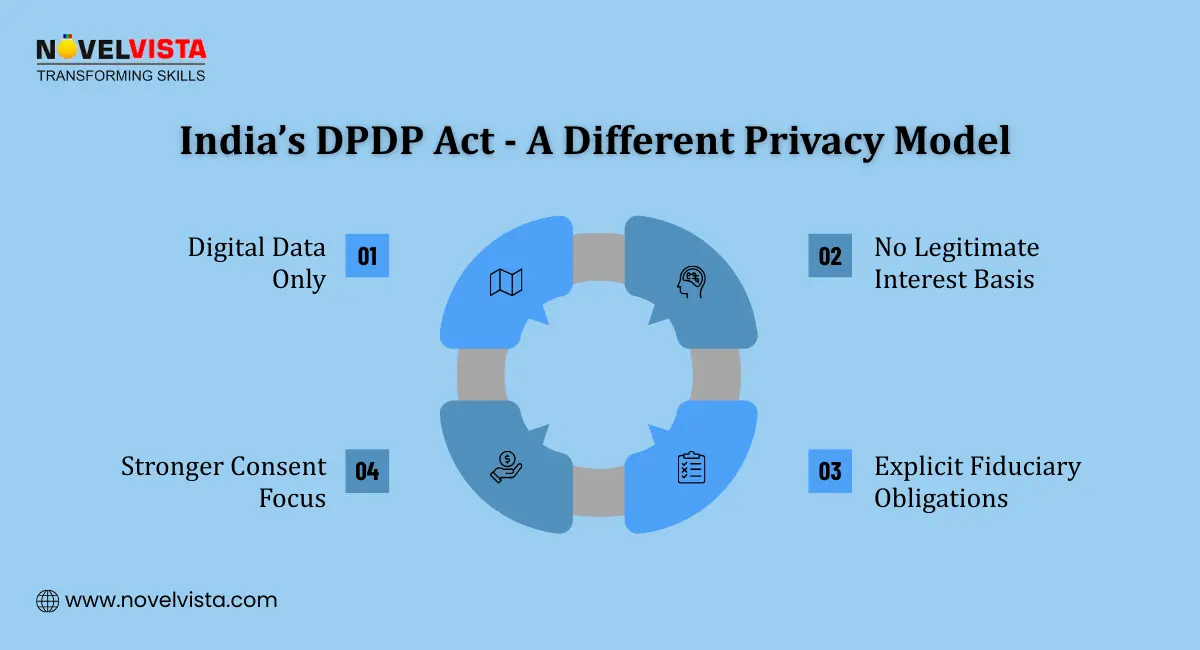
India is also stepping firmly into enforcement mode.
The Digital Personal Data Protection Act, passed in 2023, is becoming operational through the DPDP Rules, 2025, notified on November 14, 2025.
What makes India’s framework different from GDPR?
As global platforms increasingly process Indian resident data, this shift matters far beyond India’s borders.
Several countries are moving toward new or updated frameworks, including:
New DPAs are also becoming more active. Ecuador has begun enforcing sanctions, while Indonesia has reorganized its regulatory focus, signaling stronger enforcement intent.
For ISO 27001 professionals, this means audits must increasingly account for future compliance risk, not just current laws.
With roughly three-quarters of the world now covered by data protection laws, privacy compliance can no longer be treated as a regional checkbox. For global organizations, the shift is clear: privacy is now an operational risk, not just a legal one.
While many countries borrow principles from GDPR, the lawfulness, transparency, and accountability details differ. India’s consent-heavy model is a good example. Other regions introduce unique breach timelines, enforcement powers, or data localization expectations. This means a single global policy is rarely enough.
What’s changing in practice:
For organizations running global digital services or AI platforms, staying ahead of new frameworks is now essential to avoid disruptions, fines, and reputational damage.
This is where ISO 27001 professionals step into a much more visible role.
ISO 27001 is not a privacy law, but it underpins almost every privacy obligation. An effective Information Security Management System (ISMS) provides the structure that regulators look for when assessing readiness and accountability.
As laws evolve, organizations increasingly rely on auditors who can:
Privacy regulation is also colliding with another reality: AI is now everywhere. And many new laws explicitly or indirectly address automated decision-making, profiling, and data-driven systems.
ISO 42001 lead auditor certification focuses on AI governance and management systems, which are becoming critical as privacy laws intersect with AI use.
This certification helps professionals:
For auditors, this bridges a growing gap between privacy compliance and AI oversight.
ISO 27001 Lead Auditors are increasingly expected to:
Organizations that invest early in governance and auditing capability tend to move faster with fewer surprises.
The benefits are practical:
For privacy and security professionals, this moment creates a clear opportunity.
Those who can combine:
will be in high demand across industries. Auditors who understand how laws, controls, and technology intersect are no longer seen as cost centers; they’re seen as enablers of safe growth.
This is especially true for professionals who can audit not just today’s compliance, but tomorrow’s regulatory expectations.
Note: This news about the New Global Data Protection Laws is Directly Sourced from iapp.com.Strengthen privacy-focused audits by evaluating control effectiveness, mapping security to privacy principles, identifying blind spots, and defending audit conclusions with risk-based, regulator-ready evidence.
The global surge in privacy laws, now covering around 80% of the world’s population, marks a permanent shift toward formal data governance.
Organizations that adopt robust frameworks and certify their teams will navigate this complexity with more confidence and less friction. Those who delay will find compliance becoming more expensive and reactive.
For professionals, mastering ISO-based auditing isn’t just about passing audits. It’s about leading organizations through an environment where data protection, security, and AI governance are inseparable.
In 2026, that capability isn’t optional; it’s essential.

Author Details

Course Related To This blog
ISO 27001:2022 Lead Auditor
Confused About Certification?
Get Free Consultation Call
Stay ahead of the curve by tapping into the latest emerging trends and transforming your subscription into a powerful resource. Maximize every feature, unlock exclusive benefits, and ensure you're always one step ahead in your journey to success.