Category | AI And ML
Last Updated On 18/06/2026
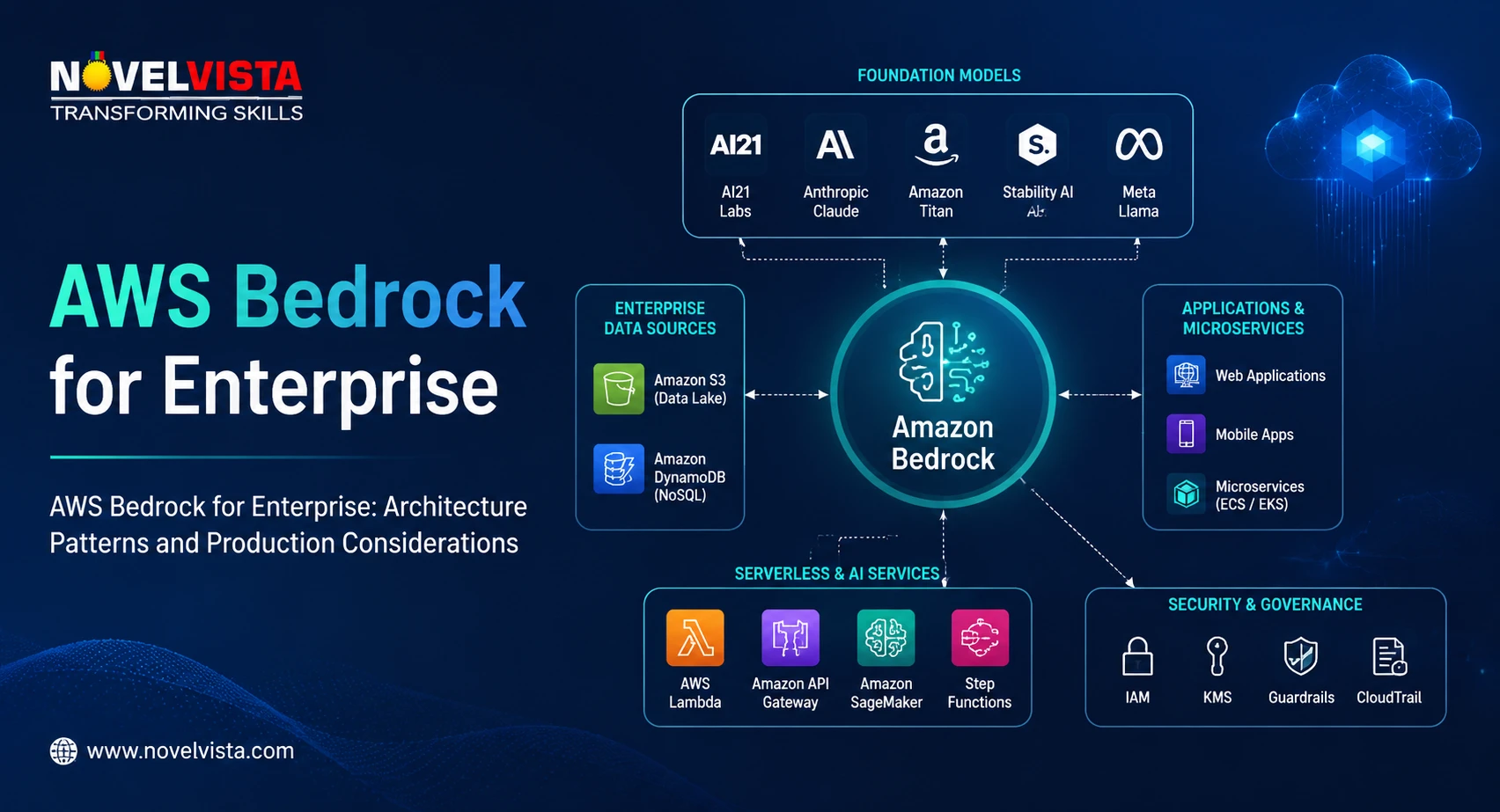
Enterprises are rapidly exploring generative AI to accelerate innovation. AWS Bedrock provides a foundation for scalable AI integration without managing complex model infrastructure. This blog explores AWS Bedrock enterprise architecture patterns, production considerations, and cost management strategies.
AWS Bedrock is transforming enterprise AI adoption by enabling organizations to deploy foundation models without managing infrastructure. In this blog, we cover AWS Bedrock enterprise architecture patterns, production best practices, and pricing strategies. Professionals, architects, and AI developers will gain insights into designing scalable and secure AI systems while understanding cost implications and operational challenges.
This article provides practical guidance for integrating AWS Bedrock into enterprise workflows, emphasizing reliability, security, and performance optimization.
Amazon Bedrock, also referred to as aws bedrock or bedrock aws, is a fully managed service that allows enterprises to build and scale generative AI applications using foundation models without provisioning servers. Key capabilities include text generation, natural language understanding, and document automation.
Compared to other LLM services, Bedrock simplifies integration with AWS-native tools, enabling rapid deployment, monitoring, and secure operations. Organizations can focus on application logic while Bedrock handles model hosting, scaling, and updates.
Learn more about practical implementation in our AWS Generative AI Developer Professional course.
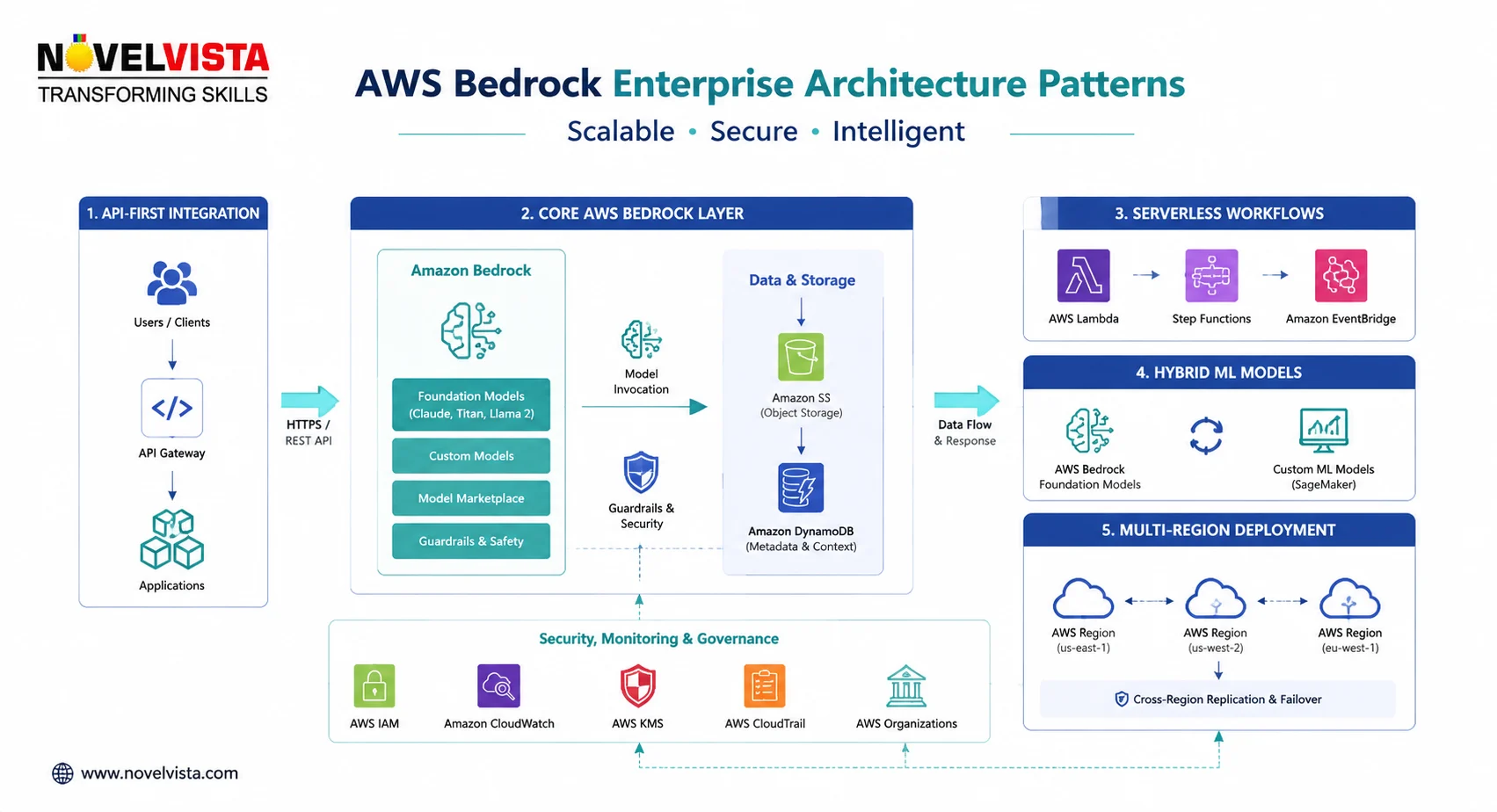
Enterprises need structured architecture patterns to leverage AWS Bedrock effectively. A typical Bedrock enterprise architecture includes:
This multi-layered architecture ensures scalability, observability, and security across enterprise AI workloads.
Deploying Bedrock in production requires attention to reliability, security, and performance:
Following these production best practices helps enterprises deploy Bedrock safely and efficiently.
Understanding aws bedrock pricing is essential for budget-conscious enterprises. Bedrock pricing depends on the foundation model used, request volume, and processing time. Cost management strategies include:
| Workload | Estimated Cost (Monthly) | Optimization Tips |
|---|---|---|
| Document Processing | $1,200 | Use caching and batching |
| Chatbots / Conversational Agents | $900 | Apply request throttling |
| Content Generation | $1,500 | Select lower-cost model if latency allows |
Monitoring usage and adjusting model selections ensures cost-effective operations while maintaining performance.
Implementing AWS Bedrock successfully requires governance, CI/CD integration, and testing:
Adhering to these practices ensures secure, compliant, and scalable AI operations.
AWS Bedrock provides enterprises with a powerful foundation for integrating AI at scale. By adopting structured architecture patterns, following production best practices, and managing costs effectively, organizations can accelerate AI-driven innovation.
To gain hands-on experience and master AWS Bedrock enterprise architecture, explore the AWS Generative AI Developer Professional course. This program equips teams with practical skills, real-world examples, and deployment strategies to successfully implement Bedrock in enterprise environments.
Author Details

Course Related To This blog
AWS Generative AI Developer Professional
Confused About Certification?
Get Free Consultation Call
Stay ahead of the curve by tapping into the latest emerging trends and transforming your subscription into a powerful resource. Maximize every feature, unlock exclusive benefits, and ensure you're always one step ahead in your journey to success.