Category | Quality Management
Last Updated On 29/05/2026
Artificial Intelligence is no longer a futuristic concept it’s the engine driving modern business transformation. From automating decisions to predicting customer behavior, AI is everywhere. In fact, over 80% of organizations are already using or actively exploring AI but here’s the bigger question: how many are managing it responsibly?
As AI adoption accelerates, so do the risks. Concerns around bias, data privacy, lack of transparency, and unclear accountability are no longer theoretical, they’re real challenges impacting businesses today. Without a structured approach, AI can quickly shift from being a competitive advantage to a serious liability.
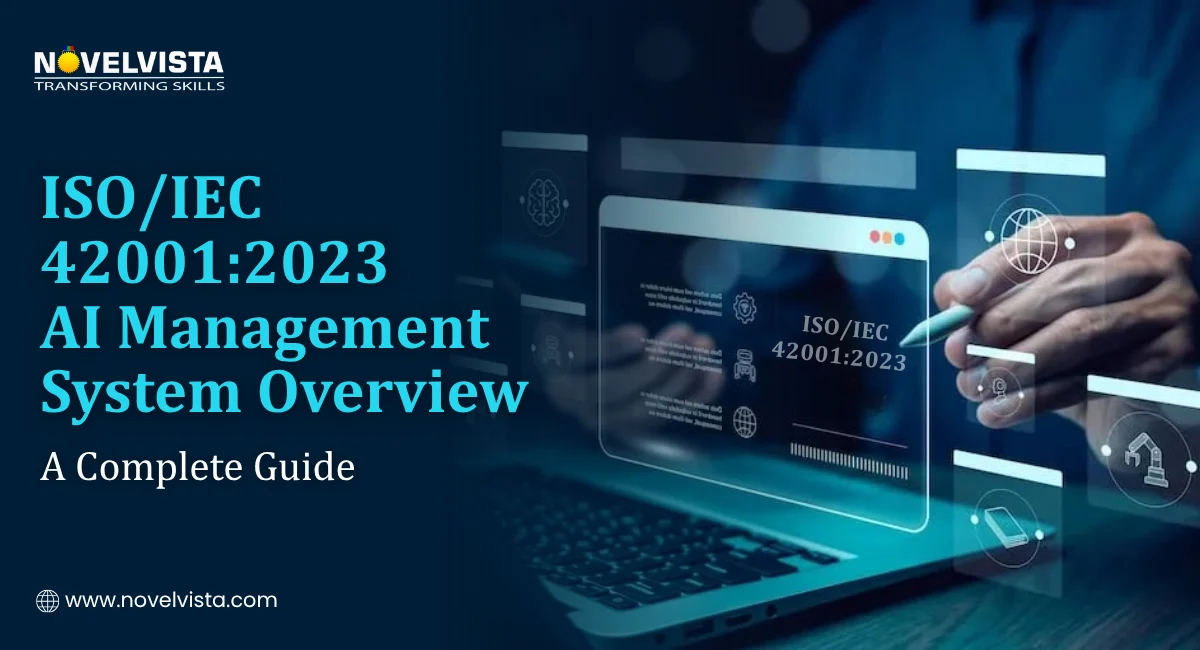
This is exactly where the ISO/IEC 42001:2023 AI Management System Overview becomes critical. It provides organizations with a clear, standardized framework to govern AI systems, ensure compliance, and implement Responsible AI management aligned with Ethical AI guidelines.
Whether you're a business leader aiming for strategic growth, an IT professional building AI solutions, or a compliance expert focusing on Artificial intelligence governance, understanding this standard is no longer optional; it’s essential.
So, what makes ISO/IEC 42001:2023 such a game-changer, and why is it gaining global attention? Let’s break it down step by step.
The ISO/IEC 42001:2023 AI Management System Overview refers to the first internationally recognized standard focused specifically on managing artificial intelligence systems.
It provides a structured framework that organizations can use to:
Unlike general IT standards, this one is tailored specifically for AI, addressing its unique challenges such as decision-making transparency and ethical considerations.
At its core, ISO/IEC 42001 is about creating a management system for AI, similar to how other ISO standards manage quality or security.
AI is transforming industries from healthcare and finance to retail and manufacturing. But with great power comes great responsibility.
Here’s why the ISO/IEC 42001:2023 AI Management System Overview is critical:
Without proper Artificial intelligence governance, organizations risk reputational damage, legal issues, and operational failures.
This standard helps organizations stay ahead by providing a clear roadmap for managing AI responsibly.
To understand the ISO/IEC 42001:2023 AI Management System Overview, you need to know its core components:
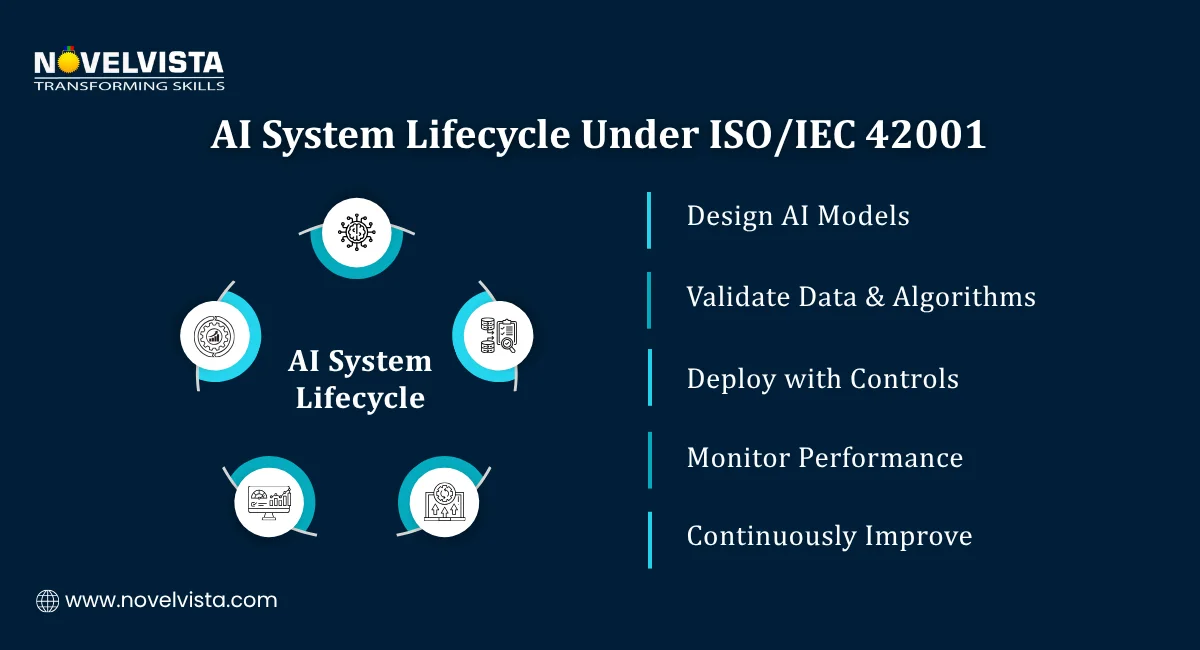
Defines roles, responsibilities, and policies for managing AI systems across the organization. It creates a clear structure for decision-making, ensuring accountability and alignment with business goals. As part of the ISO/IEC 42001:2023 AI Management System Overview, this framework helps organizations bring consistency and control to how AI is managed.
Identifies, assesses, and mitigates risks related to AI, including ethical and operational challenges. This includes handling concerns like bias, data privacy, and unexpected system behavior through proactive planning. A strong risk management approach supports more reliable and responsible use of AI across the organization.
Covers the entire lifecycle—from design and development to deployment and decommissioning. It ensures that AI systems are not just built effectively, but also maintained, evaluated, and retired responsibly when needed. This end-to-end approach is essential for maintaining long-term efficiency and trust in AI systems.
Ensures AI systems are regularly evaluated and improved based on performance and compliance. By tracking outcomes and refining models over time, organizations can adapt to changing requirements and improve accuracy. Continuous monitoring also helps maintain alignment with evolving standards and expectations around AI usage.
Together, these components create a strong foundation for Responsible AI management.
Effective Artificial intelligence governance is built on a few key principles:
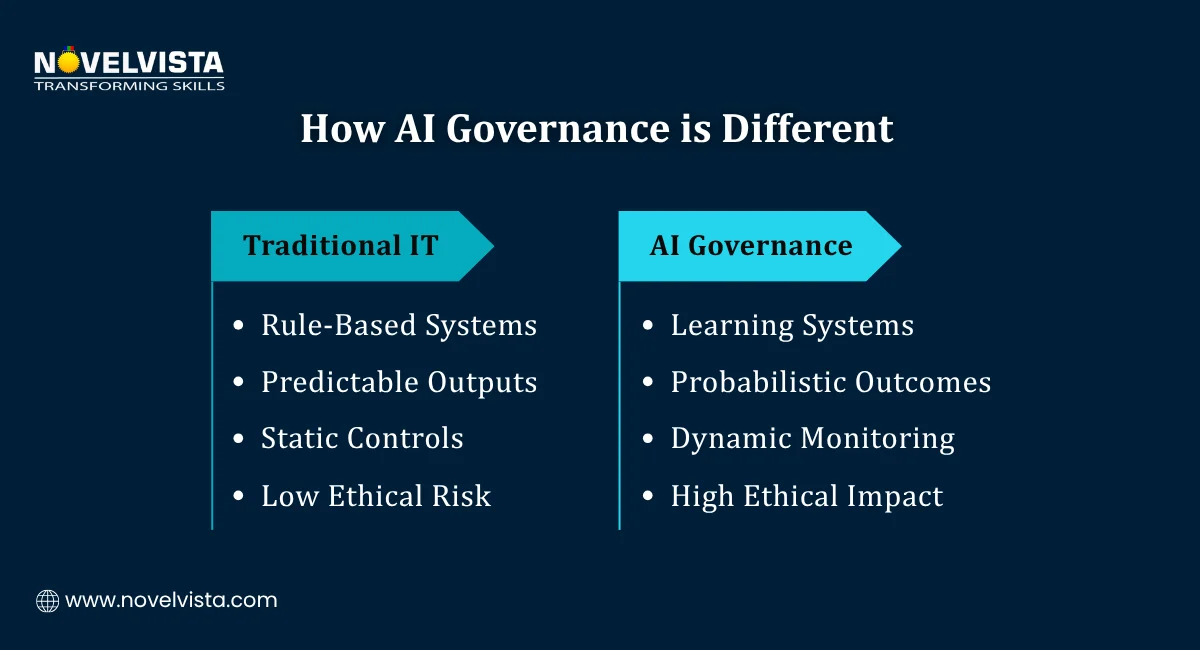
Organizations must clearly explain how AI systems make decisions.
There should always be a responsible party for AI outcomes.
AI systems must avoid bias and discrimination.
Data used in AI must be protected and handled responsibly.
The ISO/IEC 42001:2023 AI Management System Overview integrates these principles into its framework, ensuring ethical and reliable AI usage.
Responsible AI management is no longer optional, it’s a necessity.
Organizations that adopt the ISO/IEC 42001:2023 AI Management System Overview can:
Think of it as a safety net that ensures AI systems work for you, not against you.
One of the most important aspects of the ISO/IEC 42001:2023 AI Management System Overview is its focus on Ethical AI guidelines.
These guidelines help organizations:
By following these Ethical AI guidelines, organizations can create AI systems that are not only effective but also trustworthy.
Adopting the ISO/IEC 42001:2023 AI Management System Overview offers several advantages:
Helps organizations meet legal and regulatory requirements.
Builds confidence among customers, partners, and stakeholders.
Minimizes potential risks related to AI usage.
Ensures AI outputs are accurate and reliable.
Positions your organization as a leader in Responsible AI management.
The ISO/IEC 42001:2023 AI Management System Overview is relevant for:
In short, any organization working with AI can benefit from this standard.
Implementing the ISO/IEC 42001:2023 AI Management System Overview doesn’t have to be overwhelming. Here’s a simple approach:
Identify current AI practices and compare them with ISO requirements.
Establish policies, roles, and responsibilities.
Address risks related to AI systems.
Educate employees on Artificial intelligence governance and Ethical AI guidelines.
Continuously evaluate and refine AI systems.
Following these steps ensures a smooth transition toward Responsible AI management.
The ISO/IEC 42001:2023 AI Management System Overview is not just another compliance requirement; it’s a forward-looking framework that empowers organizations to scale AI with confidence and control. As AI becomes deeply embedded in business operations, prioritizing Artificial intelligence governance, following Ethical AI guidelines, and strengthening Responsible AI management are no longer optional; they are critical for long-term success. Organizations that embrace this standard position themselves to reduce risks, build stakeholder trust, and drive innovation without compromising on ethics or accountability. In a world where AI is evolving rapidly, adopting the ISO/IEC 42001:2023 AI Management System Overview is not just about staying compliant; it’s about staying relevant, resilient, and ready for the future.

Ready to take your expertise in AI governance to the next level?
Join NovelVista’s ISO/IEC 42001:2023 Lead Auditor Certification Training and gain practical auditing skills, real-world insights into AI Management Systems, and globally recognized credentials. Designed for professionals in AI, compliance, and risk management, this course equips you to implement, audit, and lead Responsible AI management initiatives with confidence while ensuring alignment with Ethical AI guidelines and Artificial intelligence governance frameworks.
Start your ISO/IEC 42001 Lead Auditor journey today
Author Details

Course Related To This blog
ISO 42001 Lead Auditor
Confused About Certification?
Get Free Consultation Call
Stay ahead of the curve by tapping into the latest emerging trends and transforming your subscription into a powerful resource. Maximize every feature, unlock exclusive benefits, and ensure you're always one step ahead in your journey to success.