Category | Quality Management
Last Updated On 09/01/2026
The ISO 9001 history is fascinating because it shows how quality management evolved from strict military requirements to a global standard that drives efficiency and customer satisfaction across industries. Understanding this history helps organizations and lead auditors appreciate why certain practices exist today and how the standard has adapted to meet changing business needs.
From early post-war military specifications to the current ISO 9001:2015 version emphasizing risk-based thinking, the history of ISO 9001 standards highlights continual improvement, customer focus, and alignment with international best practices. In this guide, we’ll explore the ISO 9001 history timeline, the key revisions, principles, and the impact on organizations and auditors.
The story of ISO 9001 begins in the post-WWII era, when industries needed standardized quality systems:
The ISO 9001 history timeline shows a steady evolution from industry-specific rules to a versatile standard applicable in multiple sectors.
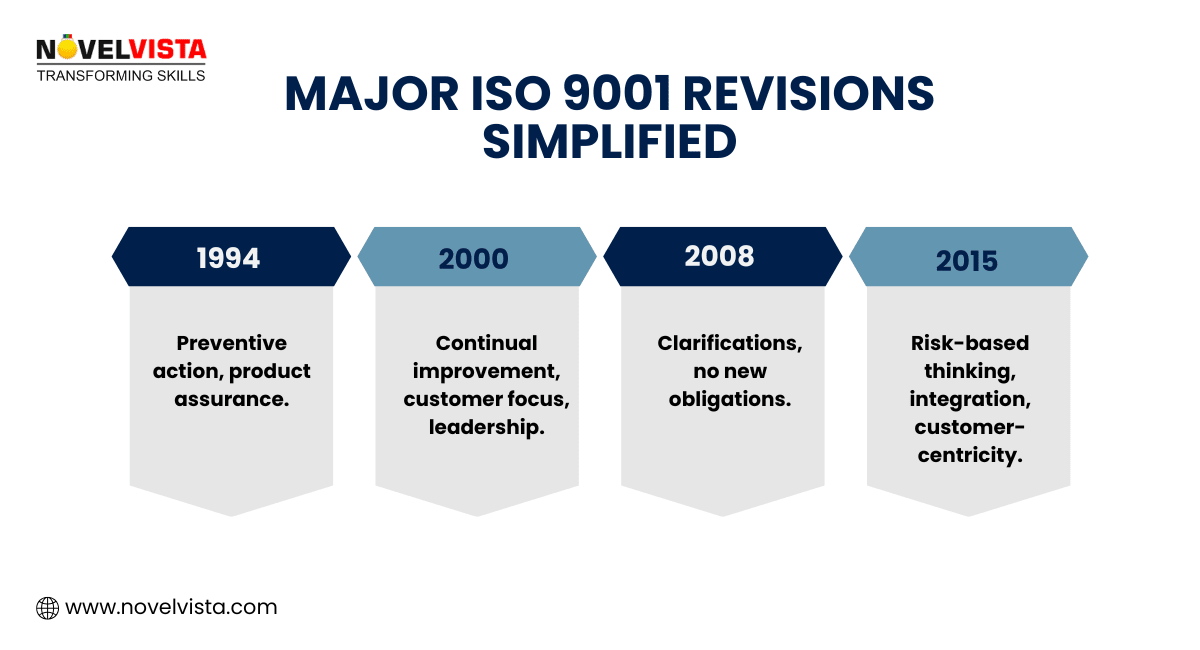
Over time, ISO 9001 has gone through several revisions, each refining and expanding the standard:
A minor update focusing on product assurance and preventive actions. It helped organizations strengthen control over processes and reduce defects.
A major overhaul introducing:
This revision made the standard more suitable for service providers as well as manufacturers, emphasizing outcomes rather than strict procedures.
Minor wording changes, clarifying requirements without adding new obligations. Organizations mainly focused on fine-tuning documentation and processes.
Significant revision introducing:
This version aligned quality management with modern business practices, digitalization, and integrated management systems.
Expert View: According to the ISO 9001:2015 Handbook published by ISO, the inclusion of risk-based thinking was not simply a theoretical update but a response to global demands for proactive management systems. This highlights how revisions are guided by research, industry consensus, and international expert committees, ensuring that every update reflects best practices rather than just regulatory compliance.
Several guiding principles have shaped the history of ISO 9001 standards:
These principles are embedded across all revisions, reinforcing the ISO 9001 history as a journey toward comprehensive and practical quality management.
See how ISO 9001 has evolved and
discover upcoming trends like
AI, sustainability, and digital QMS.
The ISO 9001 history timeline is marked by several important milestones that reflect its global adoption and influence:
Global Recognition: ISO 9001 is the world’s most widely adopted quality management standard, with over 1 million certified organizations across 170+ countries (ISO Survey). Its history demonstrates not only credibility but also leadership in shaping modern quality assurance. Adoption by global leaders in manufacturing, IT, healthcare, and aerospace further establishes ISO 9001 as an authoritative benchmark.
The ISO 9001 history has had profound effects on business operations:
Streamlined Processes: Organizations improved workflow efficiency and standardized operations.
Enhanced Product and Service Quality: Consistent quality standards reduced errors and improved reliability.
Operational Efficiency: Clear guidelines for processes reduced waste and minimized risk.
Influence on Supply Chains: Vendors and suppliers aligned with ISO 9001, ensuring quality throughout the supply chain.
Regulatory Compliance & Stakeholder Confidence: Certifications enhanced credibility with regulators, customers, and investors.
Customer Satisfaction & Competitiveness: Meeting quality standards helped organizations stand out in competitive markets.
Industry Evidence: Companies adopting ISO 9001 often see significant operational improvements, streamlined processes, reduced waste, and better resource management, typically boosting performance by around 10–20% within the first few years.
(Source: ISO.org)
Also Read: Benefits of ISO 9001
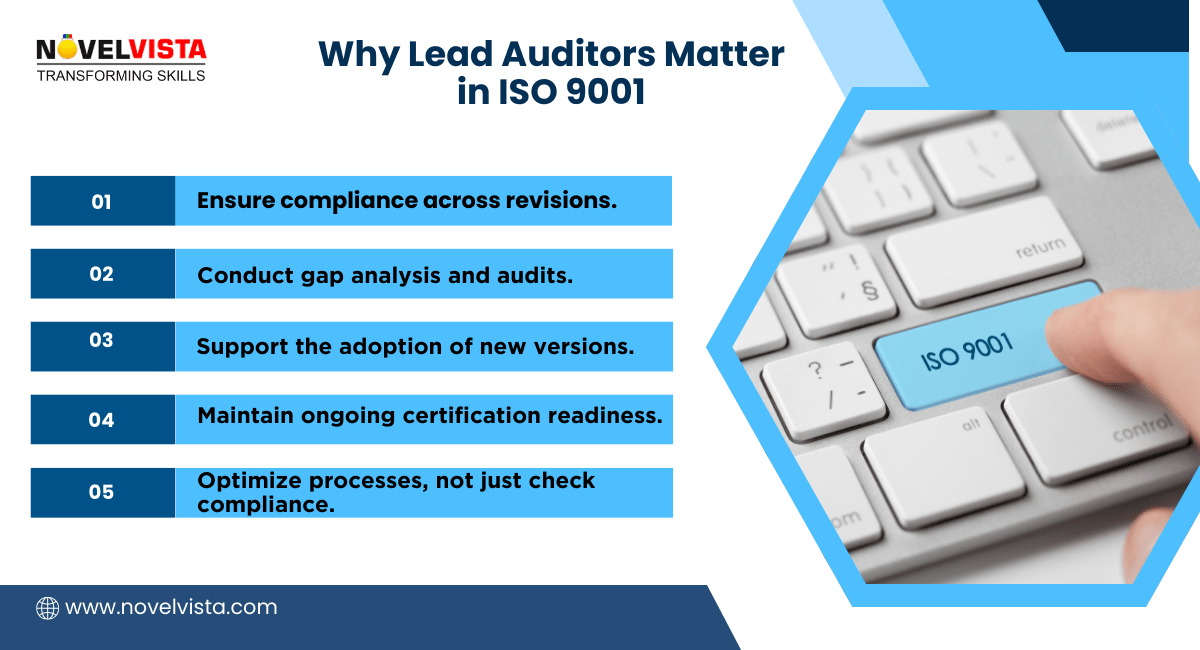
Lead auditors play a critical role in implementing lessons from the ISO 9001 history:
Auditors who understand the evolution of ISO 9001 bring SRE organizational value, helping organizations not just comply but also optimize processes for better outcomes.
The ISO 9001 history doesn’t stop at 2015; its evolution continues as organizations embrace modern practices:
Lead auditors will increasingly guide organizations through digital and risk-focused transformations, ensuring that quality management remains relevant and effective.
The ISO 9001 history shows a remarkable journey from post-war military standards to a globally recognized quality management system. Understanding its evolution helps auditors and organizations implement best practices, adapt to revisions, and maintain competitive, efficient, and compliant operations. The ISO 9001 history timeline underscores the value of continual improvement, customer focus, and risk-based thinking in modern quality management.

Are you ready to master ISO 9001 audits and understand its evolution fully? NovelVista’s ISO 9001 Lead Auditor Certification equips you to audit organizations effectively, stay updated on the latest revisions, and leverage insights from the ISO 9001 history. Gain practical skills to guide organizations, ensure compliance, and drive quality improvements across industries.
Author Details

Course Related To This blog
ISO 9001:2015 Lead Auditor Training and Certification
Confused About Certification?
Get Free Consultation Call
Stay ahead of the curve by tapping into the latest emerging trends and transforming your subscription into a powerful resource. Maximize every feature, unlock exclusive benefits, and ensure you're always one step ahead in your journey to success.