Category | Other
Last Updated On 09/06/2026
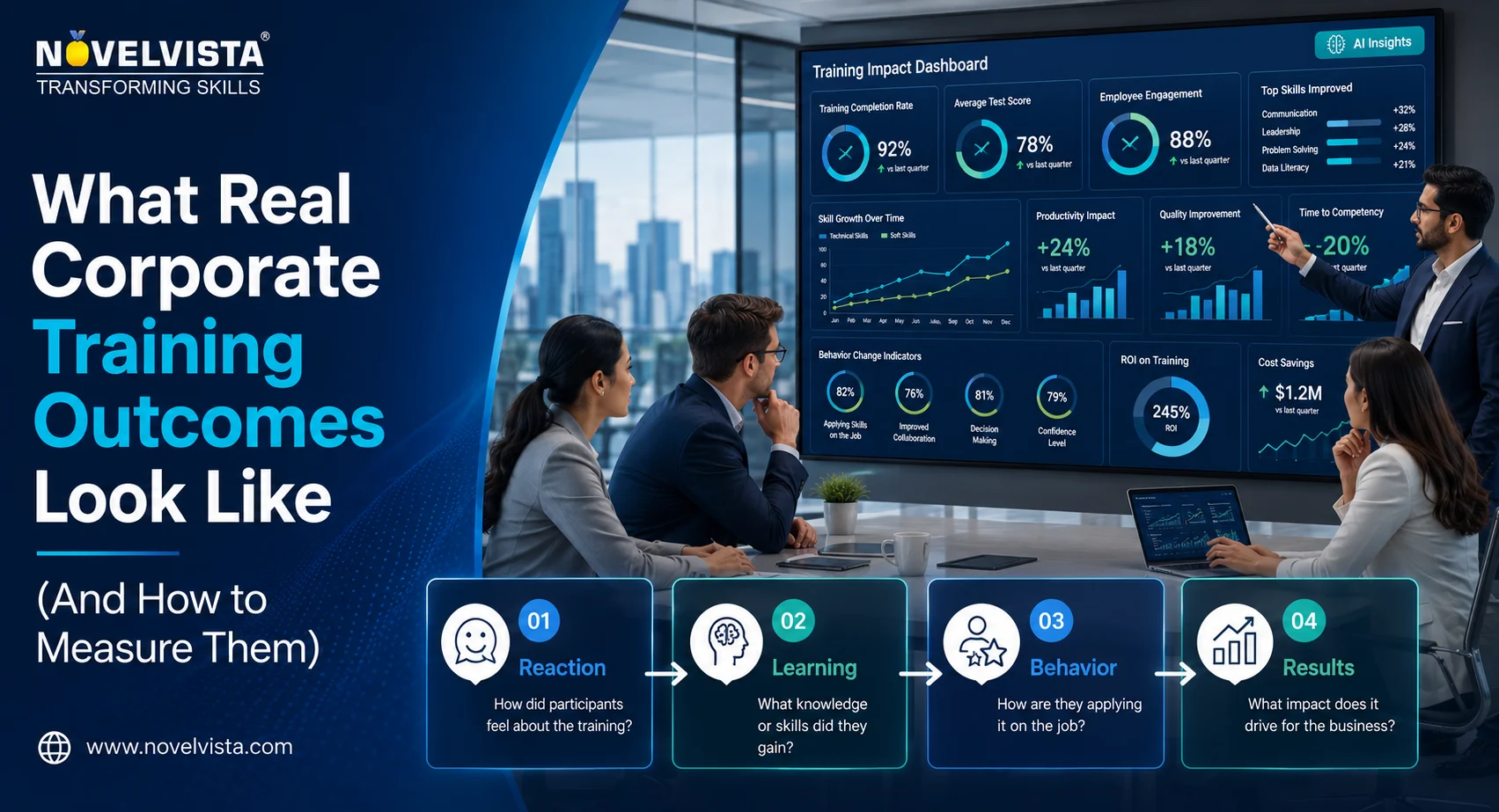
Training effectiveness cannot be treated as a post-program activity. It must be designed before the first session begins.
Many organizations collect feedback after training, but feedback alone does not prove capability. A learner may enjoy a workshop and still fail to apply the skill on the job.
That is why modern enterprises need measurable checkpoints such as:
When measurement starts early, corporate training roi becomes easier to justify.
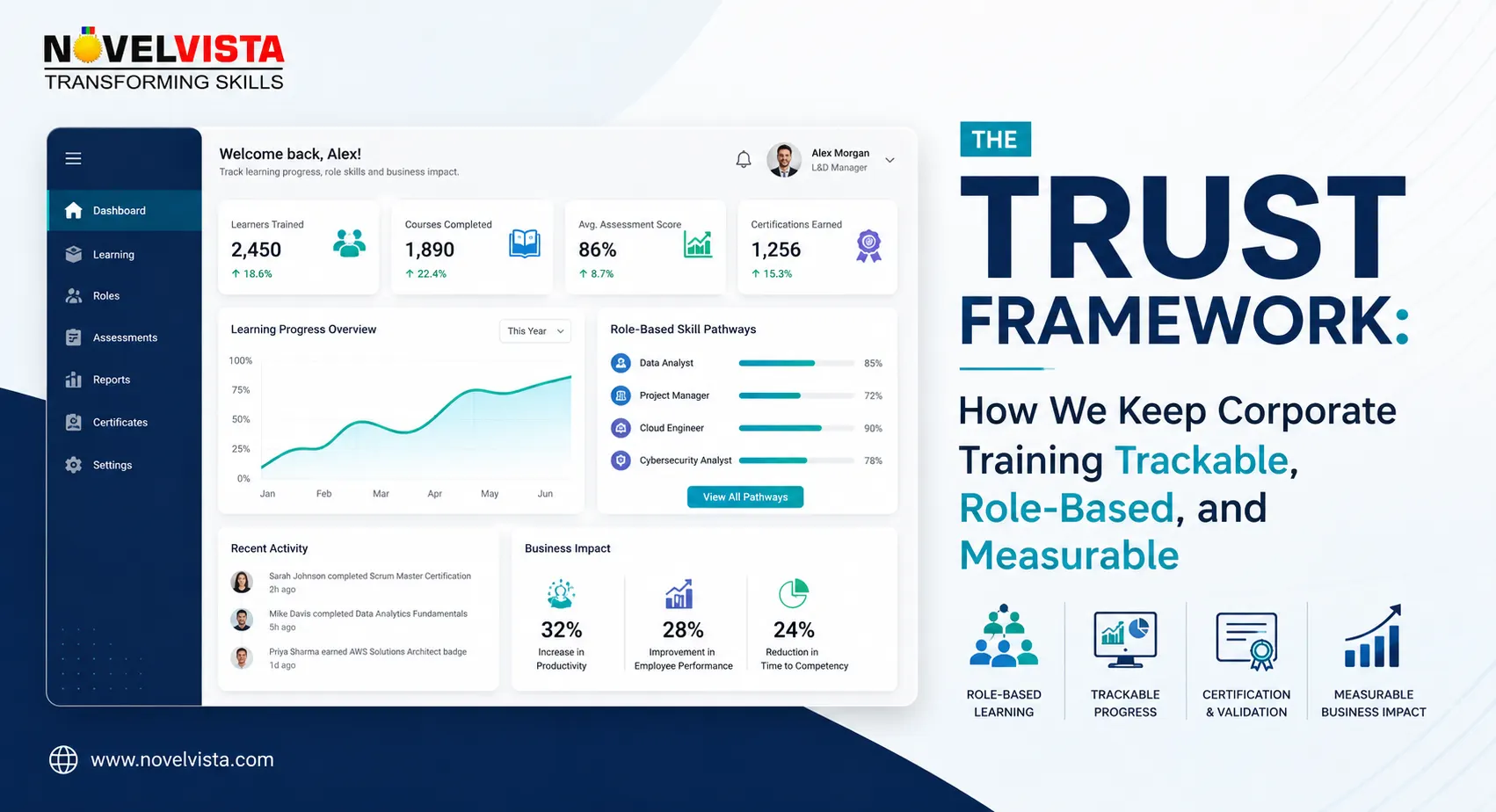
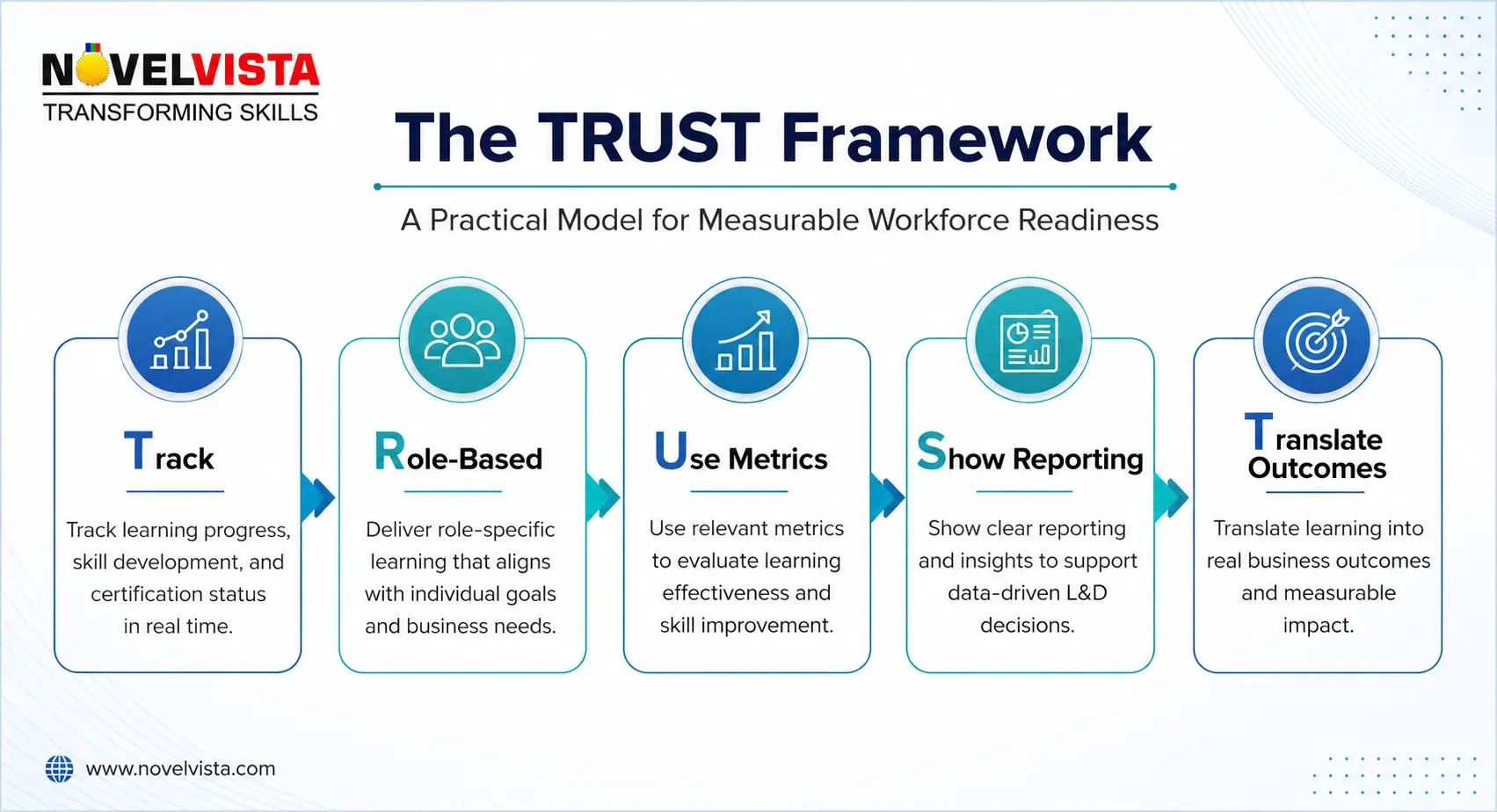
The TRUST Framework is NovelVista’s structured way to make training measurable across five dimensions:
| TRUST Element | Meaning | Business Purpose |
|---|---|---|
| T | Track learning data | Monitor participation, progress, and completion |
| R | Role-based alignment | Map training to job responsibilities |
| U | Use relevant metrics | Measure outcomes that matter to business teams |
| S | Show transparent reporting | Give stakeholders visibility into progress |
| T | Translate learning into outcomes | Connect training with workplace performance |
This approach improves Training effectiveness because every learning activity is tied to a practical result.
Tracking is more than recording attendance.
NovelVista focuses on meaningful learning signals such as:
These employee training metrics help L&D teams understand whether learners are moving from awareness to capability.
Good tracking also supports training program evaluation because it provides evidence instead of assumptions.
Generic training often fails because every employee receives the same content, even when their job responsibilities differ.
Role-based training solves this problem.
For example, an AI training program may need different learning paths for:
Each group needs different use cases, tools, examples, and performance outcomes.
This role-based approach improves Training effectiveness by making learning immediately relevant to daily work.
Training measurement becomes powerful only when it connects to business priorities.
For corporate teams, useful metrics may include:
This is where training roi becomes practical. Instead of asking, “Did employees like the training?” the better question is, “Did the training improve the way employees work?”
For enterprises, corporate training roi should always be linked to measurable workplace impact.
Stakeholders need visibility.
A strong reporting structure helps leaders see what is working, what needs reinforcement, and where additional support is required.
NovelVista’s reporting approach may include:
Transparent reporting improves decision-making and supports stronger training program evaluation.
It also helps L&D teams explain Training effectiveness to leadership in a clear, evidence-based way.
The final and most important step is transfer.
Effective training should help learners apply knowledge and skills in the workplace. This is where many programs fall short.
NovelVista focuses on application through:
This answers the core question of how to evaluate training effectiveness: check whether learners can apply the skill after the session ends.
| Traditional Approach | TRUST Framework Approach |
|---|---|
| Measures feedback after training | Builds measurement before training starts |
| Focuses on attendance and satisfaction | Focuses on skills, roles, and outcomes |
| Uses generic reporting | Uses role-wise progress tracking |
| Often disconnected from business goals | Connects learning to performance metrics |
| Limited visibility for leadership | Transparent reports for decision-makers |
This makes corporate training roi easier to communicate because leaders can see the complete journey from learning to application.
NovelVista uses the TRUST Framework to help organizations build learning programs that are structured, measurable, and aligned with workforce capability goals.
The process includes:
This is especially useful for enterprises investing in AI, cloud, cybersecurity, IT service management, project management, and digital transformation training.
The goal is not just course delivery. The goal is measurable workforce enablement.
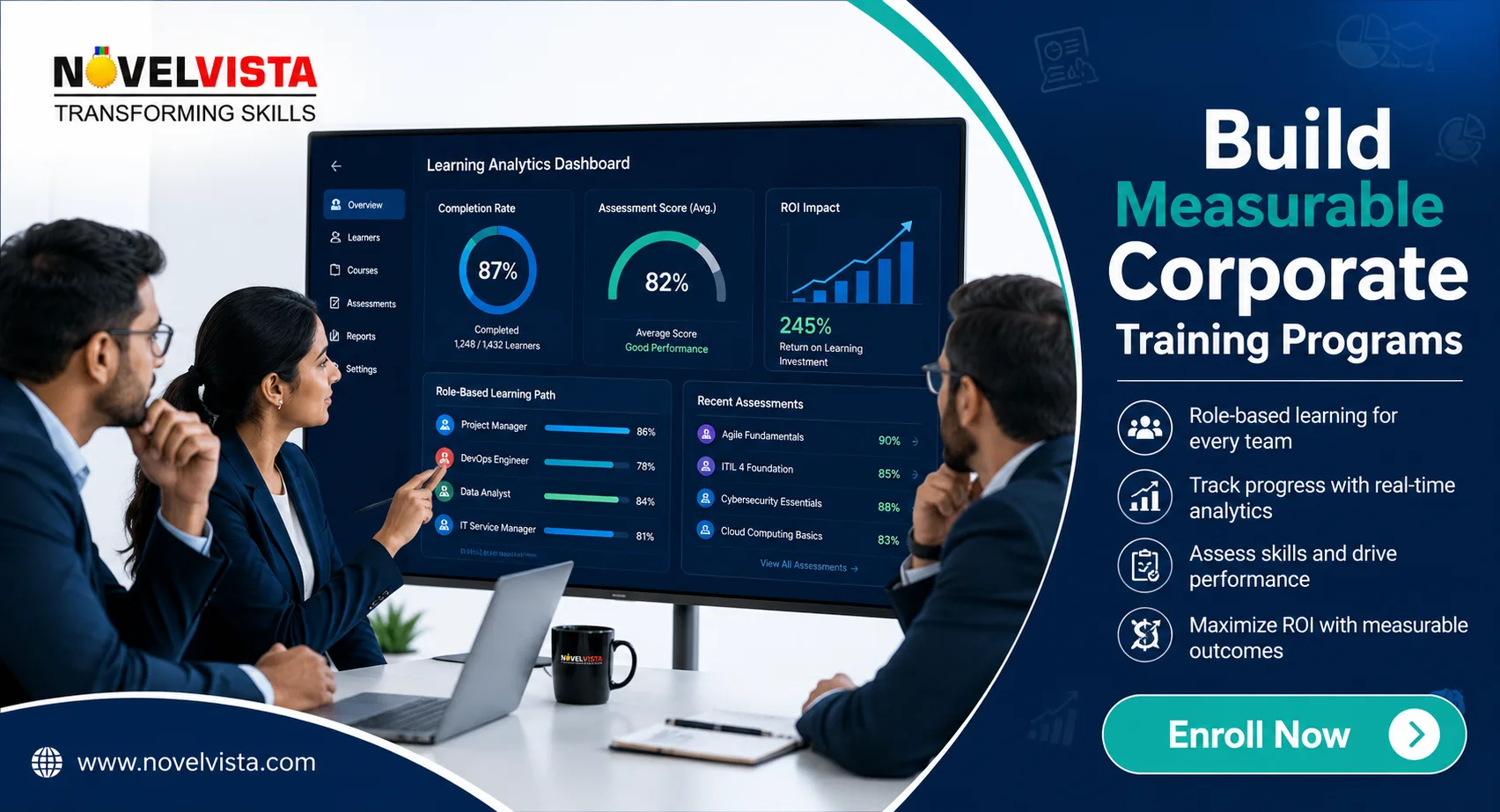
Training effectiveness is no longer about conducting sessions and collecting feedback forms. It is about proving that learning creates visible progress, stronger capability, and business value.
The TRUST Framework helps organizations make training trackable, role-based, and measurable from the start. It gives L&D teams the structure they need to evaluate learning, improve outcomes, and demonstrate corporate training roi with confidence.
To build measurable learning programs for your workforce, explore NovelVista’s corporate training solutions. NovelVista helps enterprises design role-based, trackable, and business-aligned learning programs that make workforce development easier to measure and scale.
Author Details

Confused About Certification?
Get Free Consultation Call
Stay ahead of the curve by tapping into the latest emerging trends and transforming your subscription into a powerful resource. Maximize every feature, unlock exclusive benefits, and ensure you're always one step ahead in your journey to success.