Category | Other
Last Updated On 09/06/2026
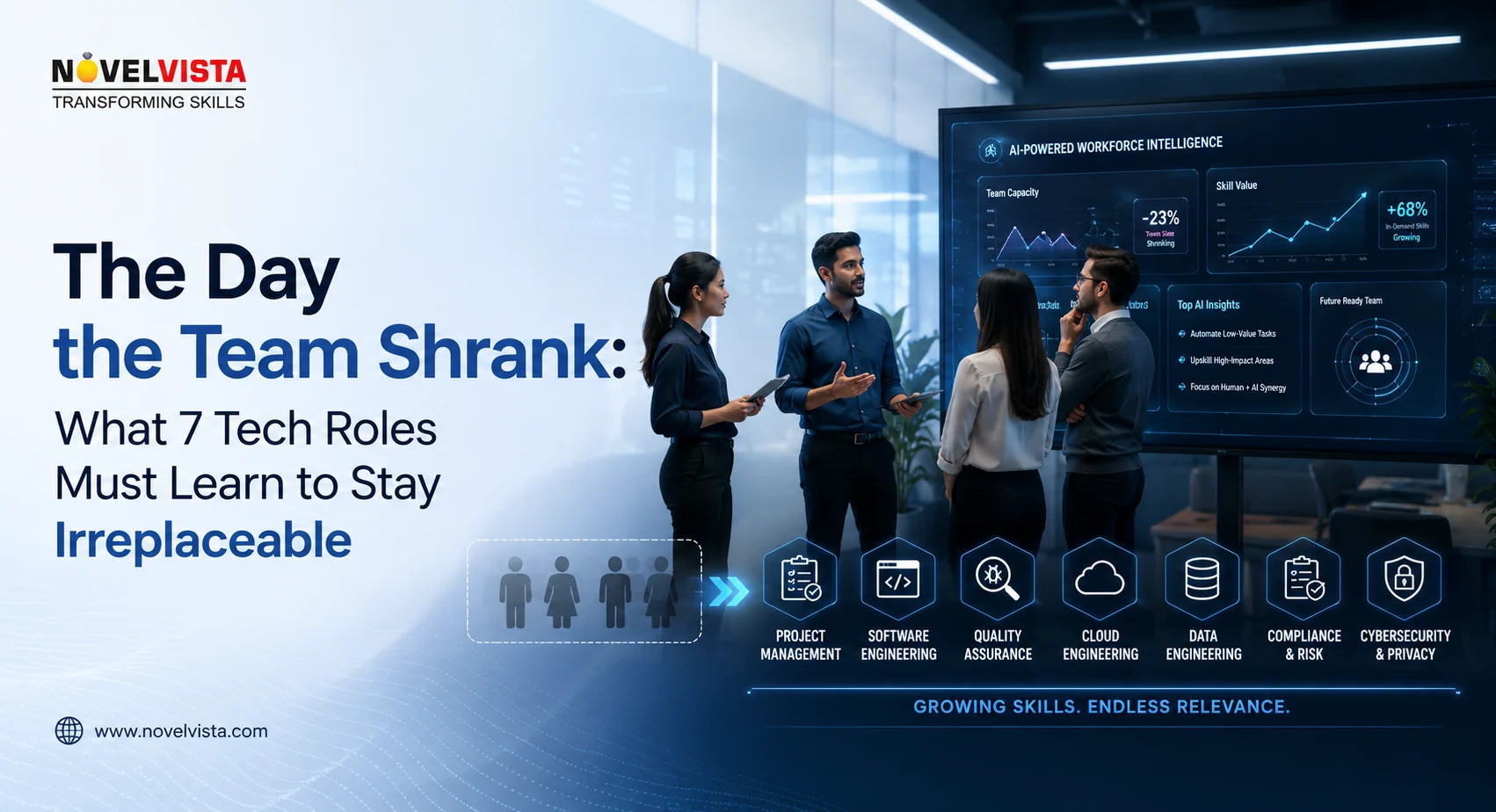
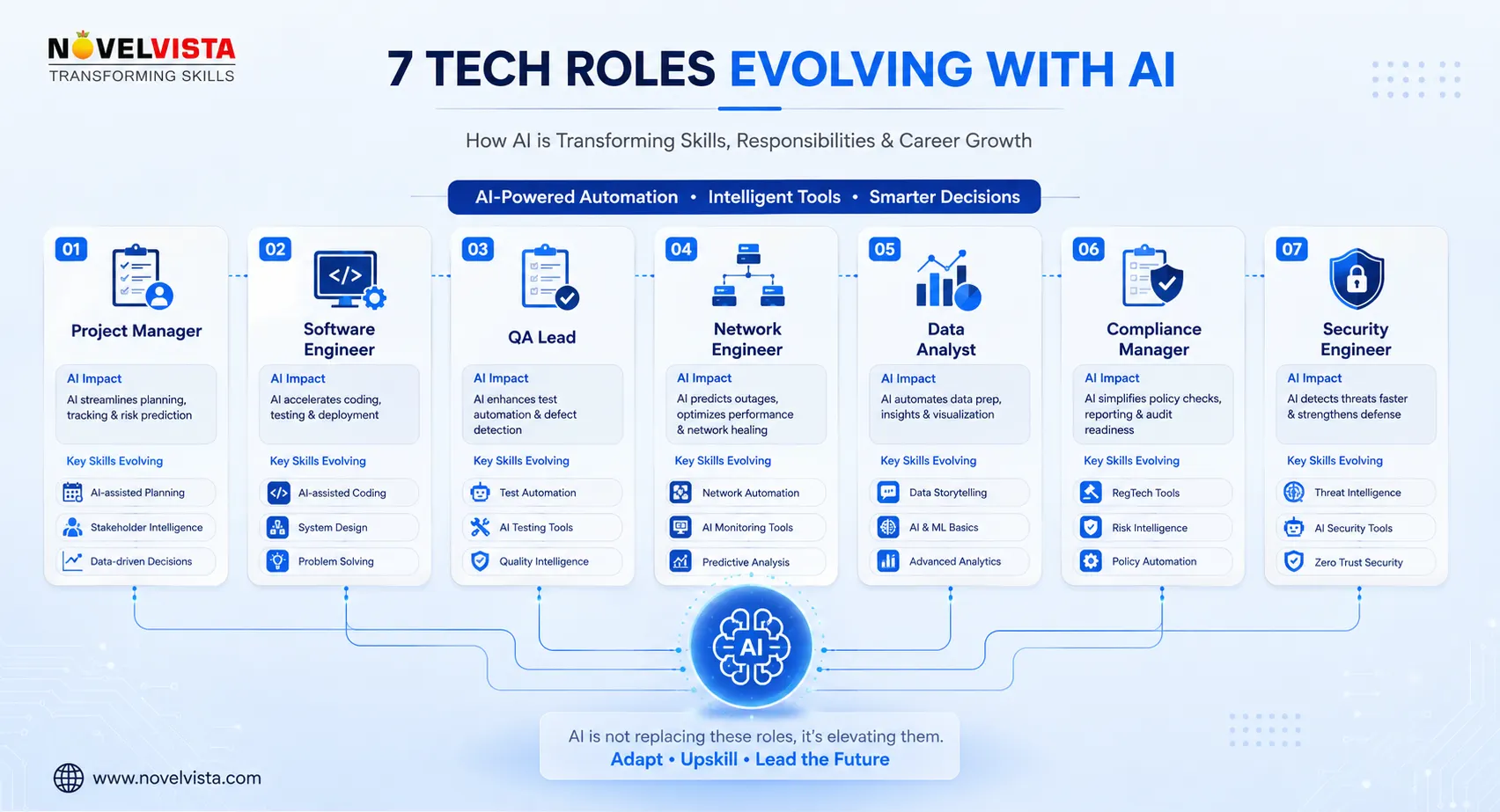
This blog covers how seven common tech roles are changing as AI adoption reshapes team structures, delivery expectations, and career resilience.
From project managers and software engineers to QA, network, data, compliance, and security professionals, the article explains what each role must learn to stay valuable when teams become leaner.
The core message is simple: AI may automate tasks, but business judgment, context, quality thinking, interpretation, governance, and risk-based decision-making still belong to skilled professionals.
Her sprint was planned for ten people. Now it is seven. The client deadline did not move.
For project and product managers, success can no longer depend only on tasks completed or milestones delivered. In an AI-driven workplace, execution is becoming increasingly automated. The manager who stays valuable is the one who improves decision velocity, reduces ambiguity, and keeps business risk visible.
Her value is not the project board. It is the judgment behind the decisions.
Arjun is now responsible for systems that used to be maintained by multiple engineers. AI coding assistants can generate code faster than ever, but organizations still need engineers who understand architecture, business context, and system trade-offs.
Code can be generated. Context cannot.
Three members of Meera’s testing team are gone. Leadership keeps talking about AI-powered testing, but the deeper issue is that executives often see testing as execution rather than strategic quality assurance.
The future belongs to professionals who know what needs testing and why.
The engineer who built the hybrid environment left last week. Rohan owns the access, but not the full context. As cloud environments grow more complex, undocumented systems become serious operational risks.
Institutional knowledge becomes incredibly valuable when teams shrink.
The dashboards still exist, but leadership no longer wants only reports. They want answers. AI can summarize data quickly, but organizations need professionals who can translate insights into business decisions.
The most valuable analysts will not just report numbers. They will shape decisions.
Audit deadlines remain unchanged even when headcount does not. As AI adoption accelerates, governance and compliance teams are being asked to manage rising complexity with fewer resources.
Compliance professionals who combine governance expertise with automation skills will be essential.
Vikram’s team got smaller, but the threat surface did not. Rapid technology adoption often increases security complexity, especially after workforce reductions, rushed offboarding, and unclear ownership.
Security teams that automate routine work can focus on risk management and response.
Although these professionals work in different functions, they are facing the same reality: the tasks are being automated, but the thinking is not.
The professionals who thrive in the AI era will not be the ones who resist change. They will be the ones who identify what AI cannot replace in their role and invest relentlessly in those capabilities.
The team may have shrunk. The workload may not have. But this moment creates an opportunity to become indispensable in the next phase of work.
The future belongs to professionals who combine technical expertise, business understanding, and AI fluency. The question is not whether your role will change. It is whether you will evolve faster than the role itself.
Ready to build stronger AI-ready teams? Explore NovelVista Corporate Training to upskill professionals across technology, cloud, cybersecurity, governance, project management, and enterprise AI capabilities.
Author Details

Confused About Certification?
Get Free Consultation Call
Stay ahead of the curve by tapping into the latest emerging trends and transforming your subscription into a powerful resource. Maximize every feature, unlock exclusive benefits, and ensure you're always one step ahead in your journey to success.