Category | News
Last Updated On 23/07/2026
The AI industry often celebrates bigger models, smarter chatbots, and breakthrough reasoning capabilities. But OpenAI’s latest announcement points to a different reality: the next frontier in artificial intelligence is not just about building better models, it is about making them run reliably and efficiently at an unprecedented scale.
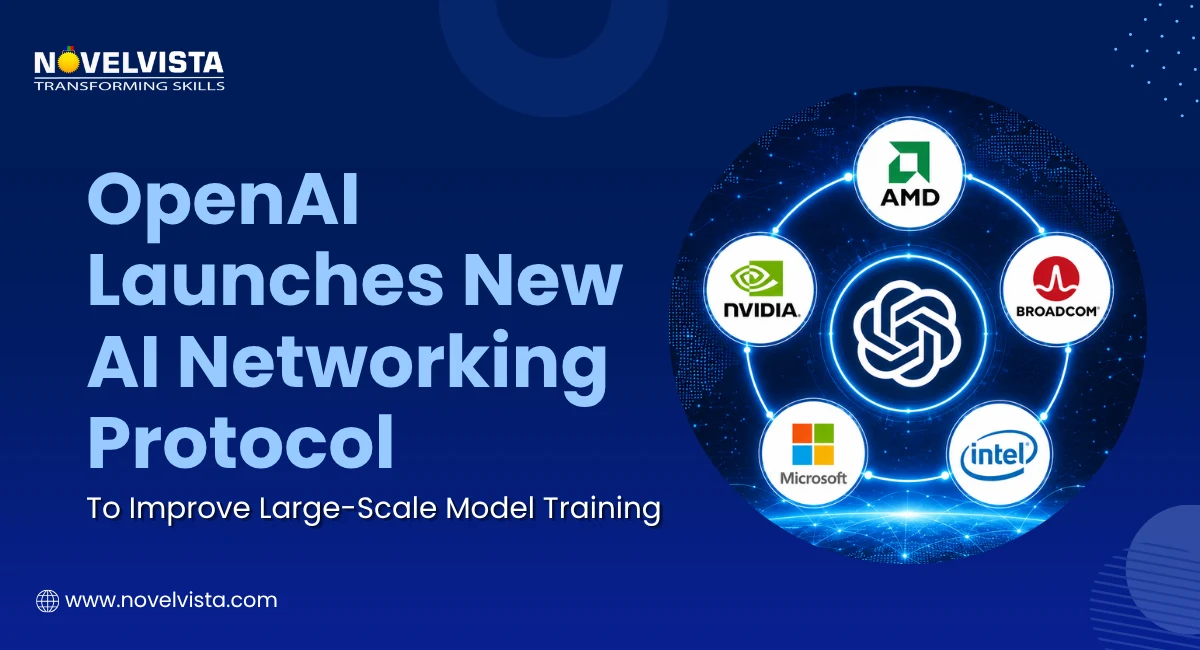
In collaboration with major technology players including AMD, Broadcom, Intel, Microsoft, and NVIDIA, OpenAI has introduced the Multipath Reliable Connection (MRC) protocol, an open networking innovation designed to improve communication across massive AI training clusters. While it may not grab headlines like a new GPT release, this development addresses one of the biggest challenges facing enterprise AI today: keeping large-scale AI infrastructure stable, performant, and cost-effective.
Training and deploying advanced AI models is no longer a matter of running a single application on a few servers. Frontier AI systems depend on thousands or even hundreds of thousands of GPUs working together across distributed environments. These GPUs constantly exchange data, synchronize workloads, and communicate across high-speed networks.
The problem is that even a small disruption can have a significant impact. A congested network path, a temporary hardware issue, or an inefficient communication protocol can leave expensive GPU resources waiting idly instead of processing workloads. At the scale of today’s AI infrastructure, even a few seconds of inefficiency can translate into substantial operational costs.
This is where OpenAI’s MRC protocol comes in. By intelligently distributing traffic across multiple available network paths, the technology helps reduce bottlenecks, minimize disruptions, and improve the resilience of AI training jobs. In simple terms, it allows large AI systems to continue operating smoothly even when parts of the underlying infrastructure encounter issues.
At first glance, a networking protocol for AI clusters may seem relevant only to hyperscalers and research labs. In reality, it reflects a broader shift happening across industries.
Organizations are rapidly moving from AI experimentation to AI deployment. Businesses are building retrieval-augmented generation (RAG) systems, AI copilots, autonomous agents, intelligent search platforms, and predictive analytics solutions that are deeply integrated into daily operations. As these systems become business-critical, reliability becomes just as important as model quality.
An AI application that delivers excellent results in a pilot environment but suffers from latency spikes, infrastructure failures, or runaway cloud costs will struggle to generate long-term business value. Enterprise leaders are beginning to realize that successful AI adoption requires more than access to powerful models; it requires the ability to manage, optimize, and scale AI workloads effectively.
The emergence of technologies like MRC highlights another important trend: AI is increasingly becoming an operational engineering discipline.
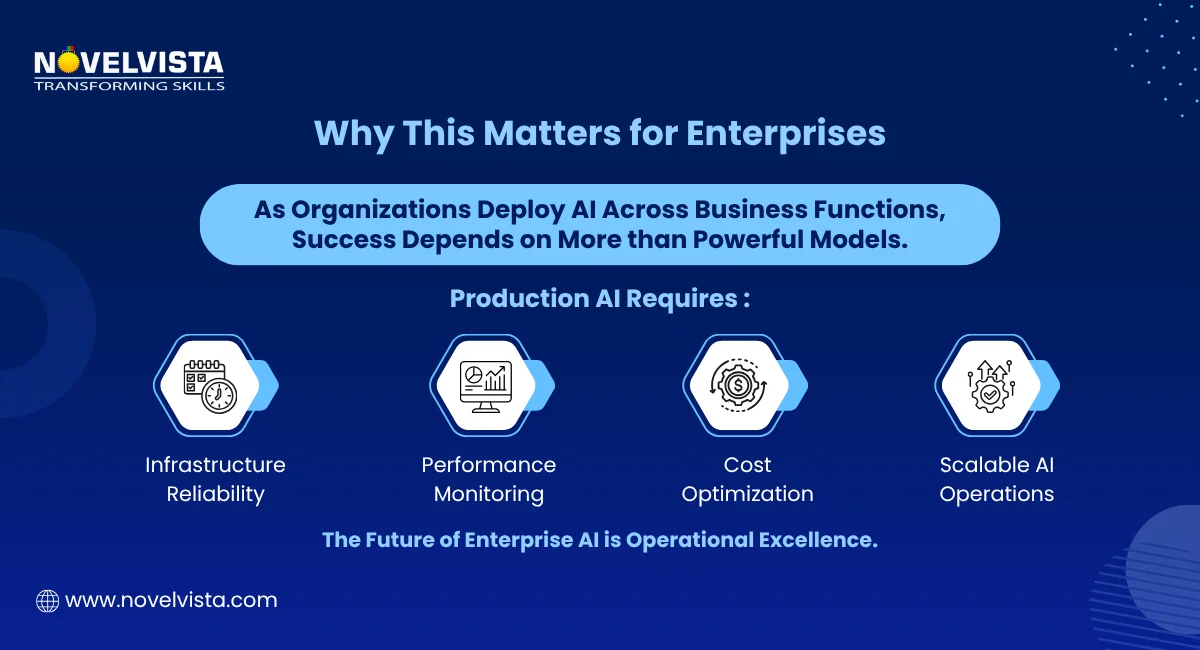
In the early days of generative AI adoption, organizations focused heavily on prompt engineering and experimentation. Today, the conversation has expanded to include AI observability, GPU utilization, model performance monitoring, cost optimization, infrastructure resilience, and production governance.
This evolution mirrors what happened with cloud computing over the past decade. Early cloud initiatives emphasized migration and adoption, but as organizations matured, they invested heavily in FinOps, Site Reliability Engineering (SRE), and cloud operations to ensure their environments remained efficient and reliable. AI is now entering a similar phase, where operational excellence is becoming a competitive advantage.
The professionals who can bridge the gap between AI innovation and production reliability are likely to become some of the most valuable talent in the technology workforce.
OpenAI’s latest announcement also underscores an emerging skills challenge. While many organizations have teams capable of building AI prototypes, far fewer have specialists who can ensure those systems perform consistently under real-world conditions.
Managing production AI environments requires a combination of skills that span multiple domains: AI engineering, cloud architecture, distributed systems, monitoring, performance tuning, and cost management. Teams must understand not only how AI models work, but also how to keep them running efficiently across complex enterprise environments.
As AI adoption accelerates, the demand for professionals who can optimize reliability, performance, and operational costs is expected to grow significantly. The future of AI will not be defined solely by data scientists or prompt engineers, but also by the engineers and operations teams responsible for delivering resilient AI services at scale.
OpenAI’s decision to invest in and openly share infrastructure-level innovation sends a clear message to the industry. The next stage of AI maturity will be driven by the ability to build systems that are not only intelligent but also dependable, scalable, and economically sustainable.
For organizations investing heavily in AI, this means placing greater emphasis on production readiness and operational capability. For technology professionals, it represents an opportunity to develop the expertise that enterprises increasingly need skills in AI reliability, infrastructure optimization, performance engineering, and cost control.
As businesses transition from AI pilots to enterprise-wide deployment, the spotlight is shifting from simply creating AI solutions to ensuring they operate effectively in production. This is precisely why disciplines such as AI Ops are gaining traction across the industry.
Corporate Training programs focused on AiOps, production AI reliability, performance engineering, and cost optimization are becoming increasingly relevant as enterprises prepare for the next wave of AI adoption. In a world where every second of GPU downtime carries a cost, and every AI service must meet business expectations, operational excellence is no longer an optional capability it is rapidly becoming the foundation of successful enterprise AI.

Author Details

Confused About Certification?
Get Free Consultation Call
Stay ahead of the curve by tapping into the latest emerging trends and transforming your subscription into a powerful resource. Maximize every feature, unlock exclusive benefits, and ensure you're always one step ahead in your journey to success.