Category | CLOUD and AWS
Last Updated On 21/06/2026

Healthcare organizations, health-tech startups, insurance providers, and life sciences companies are generating more digital data than ever before. According to industry estimates, healthcare data is growing at a compound annual growth rate of over 35%, making it one of the fastest-growing data sectors globally.
But as organizations move patient records, medical applications, and healthcare analytics to the cloud, one question continues to dominate boardroom discussions:
How can organizations leverage cloud technology without compromising patient privacy?
Can cloud platforms meet strict healthcare regulations?
And perhaps most importantly, how can businesses achieve AWS HIPAA Compliance while also addressing global requirements such as GDPR?
The reality is that cloud adoption and compliance are no longer separate conversations. Organizations must ensure that their cloud environments are secure, auditable, and aligned with industry regulations from day one.
This is where AWS HIPAA Compliance becomes critical.
Amazon Web Services provides a broad range of security controls, compliance programs, and managed services that help organizations build secure healthcare applications. However, compliance is not automatically inherited simply by moving workloads to AWS. Organizations must understand their responsibilities, implement appropriate controls, and continuously monitor their environments.
Healthcare organizations using AWS must balance innovation with strict compliance requirements. In this blog, we'll explore AWS HIPAA Compliance, RDS HIPAA Compliance, and AWS GDPR Compliance, while understanding the AWS Shared Responsibility Model and key security controls. You'll also learn practical strategies for building a strong AWS regulatory compliance framework that supports both security and business growth.
TL;DR
Topic | Key Takeaway |
| AWS HIPAA Compliance | Core requirements and best practices |
| RDS HIPAA Compliance | Secure database compliance on AWS |
| AWS GDPR Compliance | Meeting global data privacy requirements |
| AWS Regulatory Compliance | Governance, monitoring, and risk management |
AWS HIPAA Compliance refers to the use of Amazon Web Services in a manner that satisfies the security, privacy, and administrative requirements outlined by the Health Insurance Portability and Accountability Act (HIPAA).
HIPAA is designed to protect sensitive patient information known as Protected Health Information (PHI). Any healthcare organization or business associate handling PHI must implement safeguards to prevent unauthorized access, disclosure, or misuse.
AWS provides a HIPAA-eligible environment through a combination of:
However, AWS follows a Shared Responsibility Model. While AWS secures the underlying cloud infrastructure, customers remain responsible for securing their data, applications, identities, and configurations.
One of the biggest misconceptions surrounding AWS HIPAA Compliance is that AWS handles everything.
In reality, compliance responsibilities are divided.
| AWS Responsibilities | Customer Responsibilities |
| Physical data center security | Data classification |
| Hardware maintenance | Access control policies |
| Network infrastructure | Encryption configuration |
| Global infrastructure security | Application security |
| Managed service availability | User activity monitoring |
| Compliance certifications | Regulatory compliance implementation |
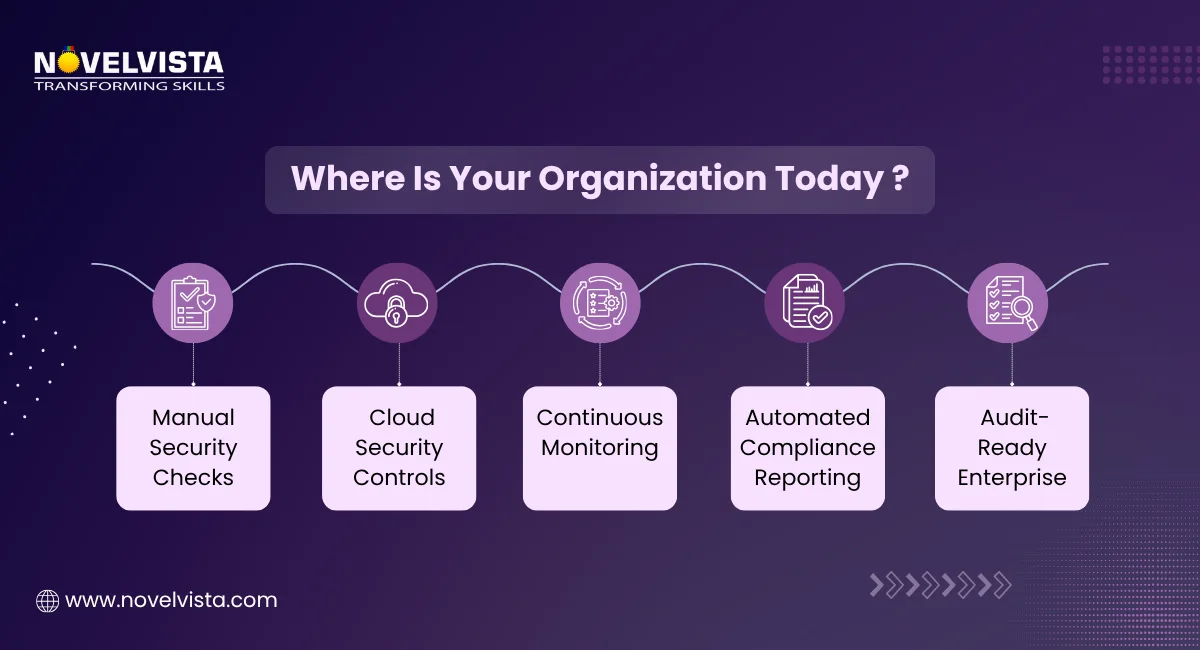
Organizations must understand that achieving AWS regulatory compliance requires collaboration between AWS services and internal governance practices.
To achieve AWS HIPAA Compliance, organizations should focus on several core areas.
Access to patient information should follow the principle of least privilege.
Best practices include:
AWS Identity and Access Management (IAM) enables organizations to define granular permissions across cloud resources.
HIPAA strongly emphasizes data protection.
Organizations should encrypt:
AWS Key Management Service (KMS) provides centralized encryption key management capabilities.
Audit trails are essential for demonstrating AWS HIPAA Compliance.
AWS services such as:
help organizations monitor activity and maintain audit records.
HIPAA requires organizations to continuously identify and mitigate risks.
This includes:
One of the most frequently asked questions is: Is Amazon RDS HIPAA compliant?
The answer is yes, Amazon RDS can support HIPAA-compliant workloads when configured appropriately.
However, simply deploying a database in Amazon RDS does not automatically guarantee compliance.
Organizations must ensure that:
Therefore, when discussing RDS HIPAA Compliance, it is important to understand that compliance depends on both AWS capabilities and customer implementation.
Amazon Relational Database Service (RDS) is widely used for healthcare applications because it reduces operational overhead while supporting secure database management.
To strengthen RDS HIPAA Compliance, organizations should implement the following controls:
Compliance Area | Best Practice |
| Encryption | Enable encryption at rest using AWS KMS |
| Authentication | Use IAM database authentication |
| Backup Security | Encrypt snapshots and backups |
| Monitoring | Enable CloudWatch and CloudTrail |
| Network Security | Deploy within private subnets |
| Access Management | Restrict privileged database access |
These practices help create a secure database environment capable of supporting healthcare workloads.
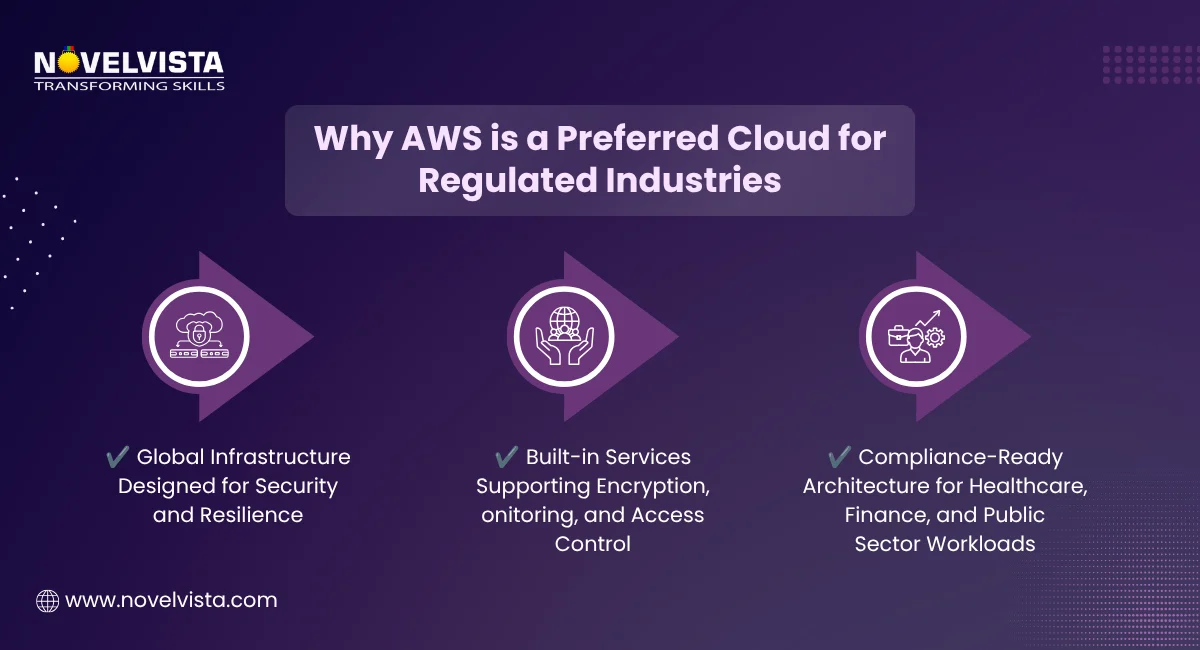
While HIPAA focuses primarily on healthcare data in the United States, organizations operating globally must also address AWS GDPR Compliance requirements.
The General Data Protection Regulation (GDPR) governs how personal data of European Union residents is collected, processed, stored, and transferred.
Many organizations handling healthcare information may simultaneously need both HIPAA and GDPR compliance.
AWS provides several capabilities that support AWS GDPR Compliance, including:
However, just as with HIPAA, AWS GDPR Compliance requires organizations to properly configure and manage their environments.
Although both regulations focus on protecting sensitive information, their objectives differ.
HIPAA | GDPR |
| Protects healthcare information | Protects personal data |
| Applies primarily in the United States | Applies across the European Union |
| Focuses on PHI | Focuses on personal identifiable information |
| Healthcare-specific regulation | Broad privacy regulation |
| Industry-focused | Individual privacy-focused |
Organizations serving international patients often need strategies that support both AWS HIPAA Compliance and GDPR compliance AWS requirements simultaneously.
Compliance should never be treated as a one-time project.
Successful organizations establish a continuous compliance framework that includes people, processes, and technology.
Create documented policies covering:
Automation reduces human error and improves visibility.
Tools such as AWS Config and Security Hub help identify non-compliant resources before they become security risks.
Regular audits help organizations:
Even the best technology can fail without skilled professionals.
Cloud architects, DevOps engineers, security analysts, and compliance officers should receive ongoing training on AWS regulatory compliance requirements. For professionals planning to build expertise in cloud architecture and security, following a structured Roadmap to AWS Certification can help identify the right certifications based on career goals, experience level, and specialization areas.
Many organizations struggle with AWS HIPAA Compliance because they focus solely on technical controls.
Common mistakes include:
Avoiding these pitfalls significantly improves compliance readiness and reduces regulatory risk.
Beyond avoiding penalties, achieving AWS HIPAA Compliance and AWS GDPR Compliance delivers measurable business value.
Benefits include:
Patients and partners are more likely to engage with organizations that demonstrate strong security practices.
Compliance frameworks encourage stronger controls and proactive risk management.
Well-documented cloud environments simplify audit preparation.
Automation reduces manual compliance activities and administrative overhead.
Organizations that prioritize compliance often gain an advantage in highly regulated industries.
If you're preparing to validate your cloud architecture knowledge, taking a Free AWS Solutions Architect Associate Practice Exam can be an excellent way to assess your readiness and identify areas that require additional focus before attempting the certification exam.
As healthcare organizations continue accelerating cloud adoption, compliance remains a top priority. Achieving AWS HIPAA Compliance requires more than simply hosting workloads on AWS. It involves implementing security controls, monitoring activity, protecting patient data, and maintaining continuous governance.
Similarly, organizations operating internationally must address AWS GDPR Compliance requirements while ensuring that healthcare databases meet RDS HIPAA Compliance standards.

The good news is that AWS provides a powerful foundation for compliance initiatives. By understanding the shared responsibility model, implementing security best practices, and adopting continuous monitoring strategies, organizations can build secure, scalable, and regulation-ready cloud environments.
Ultimately, successful AWS HIPAA Compliance is not just about passing audits it's about protecting sensitive data, maintaining customer trust, and enabling long-term business growth. As compliance requirements continue to evolve, organizations must also invest in developing cloud architecture expertise to design secure and compliant environments effectively. For professionals looking to strengthen their AWS security, governance, and architecture skills, pursuing an AWS Solutions Architect Associate certification can be a valuable step toward building and managing compliance-ready cloud infrastructures.
AWS HIPAA Compliance refers to using AWS services in a way that meets HIPAA security and privacy requirements for protecting healthcare data and Protected Health Information.
Yes, Amazon RDS can support HIPAA-compliant workloads when configured correctly with encryption, monitoring, access controls, and other required security measures.
AWS HIPAA Compliance focuses on protecting healthcare data, while AWS GDPR Compliance focuses on protecting personal data belonging to EU residents.
AWS supports AWS regulatory compliance through security services, compliance certifications, encryption tools, monitoring capabilities, and governance frameworks.
Yes. Many organizations implement controls that support both AWS HIPAA Compliance and GDPR compliance AWS requirements, especially when serving international healthcare customers.
Author Details

Course Related To This blog
AWS Solution Architect Associates
Confused About Certification?
Get Free Consultation Call
Stay ahead of the curve by tapping into the latest emerging trends and transforming your subscription into a powerful resource. Maximize every feature, unlock exclusive benefits, and ensure you're always one step ahead in your journey to success.