Category | CLOUD and AWS
Last Updated On 12/05/2026
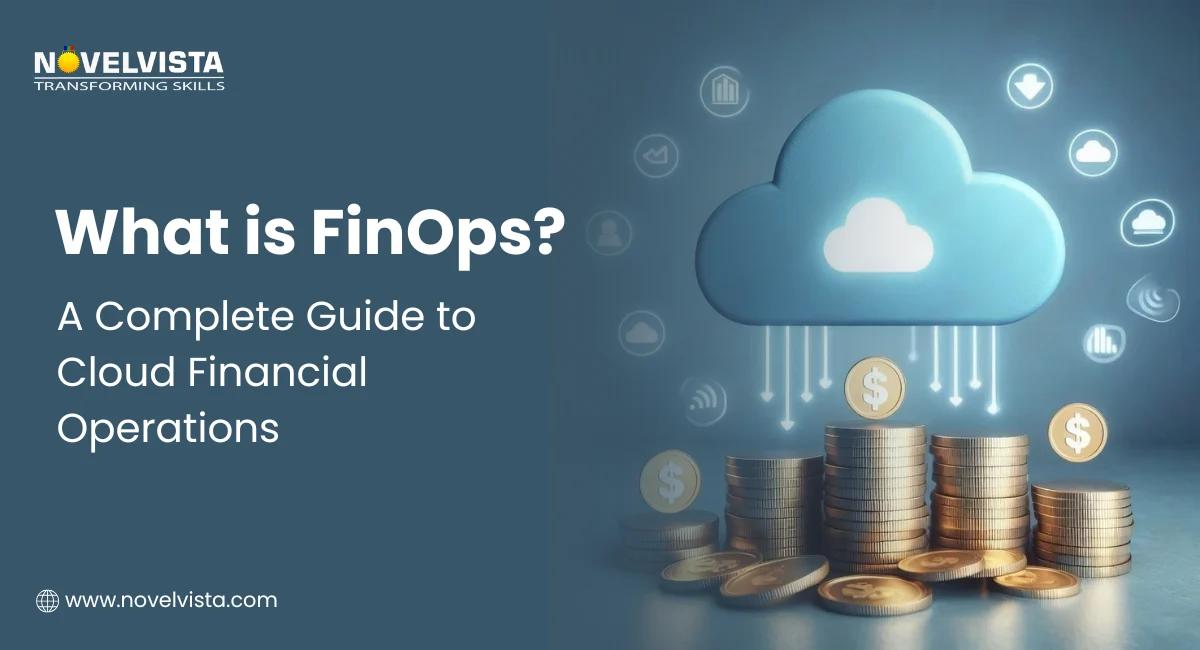
Our cloud bill keeps growing, but nobody can clearly explain why. Engineering wants flexibility, finance wants control, and leadership wants faster growth without unnecessary cloud waste.
This is exactly why FinOps has become critical for modern businesses. FinOps is a Cloud Financial Management practice that helps organizations bring visibility, accountability, and optimization to cloud spending by aligning engineering, finance, and business teams around shared goals.
The problem is not the cloud itself. The problem is that most organizations treat cloud costs like a fixed utility bill rather than a business variable they can actively manage, optimize, and align to outcomes. That is exactly where FinOps comes in.
In this blog, we will explore what is FinOps, understand the FinOps framework, discuss the cultural and operational changes behind Cloud Financial Management, and learn how reporting and automation help organizations optimize cloud spending effectively.
What is FinOps? FinOps, short for Financial Operations, is a modern Cloud Financial Management practice that combines people, processes, and technology to help organizations maximize the business value of their cloud investments.
At its core, Cloud FinOps is both:
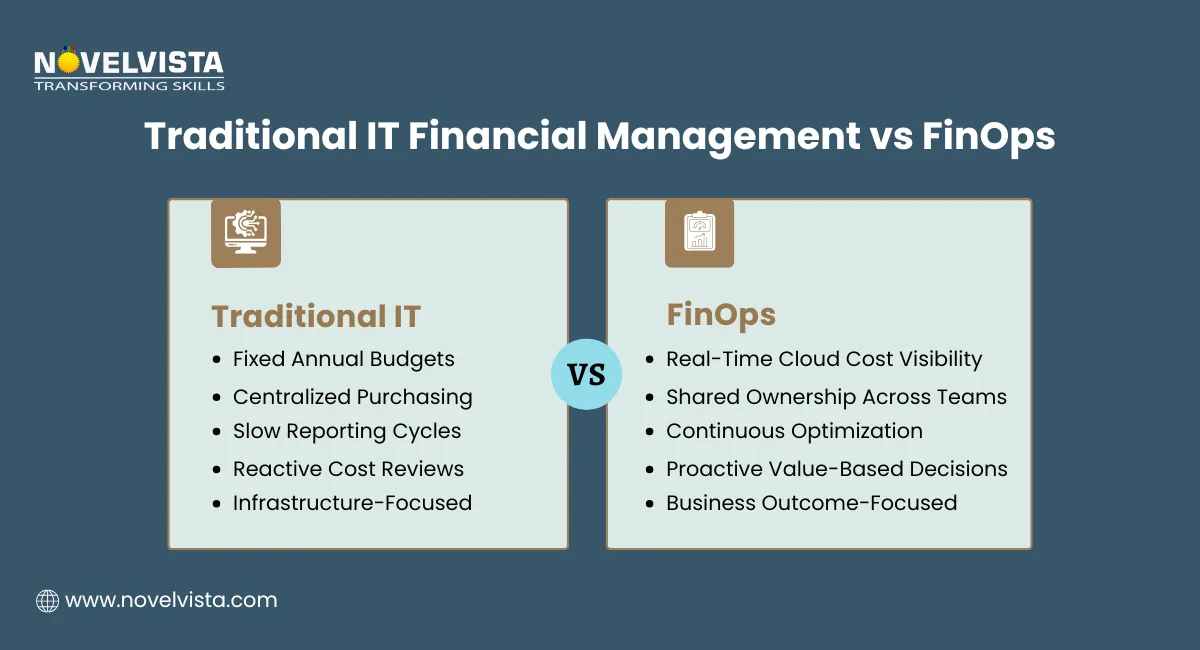
Unlike traditional IT financial management, the cloud operates with dynamic and variable pricing models. Resources can scale up or down in minutes, making conventional budgeting methods ineffective. The FinOps framework addresses this challenge by enabling real-time visibility, accountability, and optimization.
According to Flexera's 2024 State of the Cloud report, organizations waste an average of 35 percent of their cloud spend every year. For a company spending one million dollars monthly on cloud infrastructure, that is $350,000 disappearing with nothing to show for it. And yet, global cloud adoption continues to accelerate, with worldwide spending projected to exceed one trillion dollars annually by 2027.
It is important to understand that FinOps is not simply about cutting costs. Instead, Cloud Financial Management focuses on balancing:
Sometimes spending more on cloud infrastructure is the correct decision if it improves performance, accelerates time-to-market, or enhances business outcomes.
The FinOps framework is built around a continuous lifecycle that helps organizations mature their Cloud Financial Management capabilities over time. The three phases are Inform, Optimize, and Operate.
The first step in Cloud FinOps is gaining clear visibility into cloud usage and spending.
Organizations implement:
This phase enables teams to understand exactly where cloud costs originate. Businesses can analyze spending by:
For example, organizations can calculate metrics such as cost per transaction, cost per customer, or cost per feature. This level of visibility creates accountability and helps teams manage their own budgets more effectively.
Without visibility, Cloud Financial Management becomes reactive instead of strategic.
Once visibility is established, organizations can begin optimizing cloud usage.
Common Cloud FinOps optimization strategies include:
However, optimization in the FinOps framework is not just about reducing expenses. The goal is value optimization.
For instance, increasing infrastructure spending may be justified if it:
Cloud Financial Management focuses on achieving the best balance between cost, speed, reliability, and scalability.
Cloud environments constantly evolve. New workloads, applications, and services are added regularly, which makes continuous governance essential.
The Operate phase of the FinOps framework focuses on:
Organizations establish recurring review cycles to evaluate:
Automation also becomes critical in this phase. Policies and scripts ensure that cloud environments remain optimized even as infrastructure changes dynamically.
Ultimately, Cloud FinOps connects cloud spending directly to business outcomes instead of treating cloud bills as isolated IT expenses.
One of the most important aspects of understanding what is FinOps is recognizing that it is not just a technology initiative. It is a cultural transformation.
Traditional IT budgeting worked in centralized environments where infrastructure procurement was controlled by finance or IT leadership. In the cloud, engineers can provision resources instantly, making decentralized accountability essential.
The FinOps framework promotes a shared responsibility model where:
Cloud Financial Management succeeds when all stakeholders collaborate continuously.
Common cross-functional FinOps practices include:
This collaboration enables organizations to move at cloud speed while maintaining financial discipline.
The FinOps Foundation defines six core principles that guide successful Cloud FinOps practices.
FinOps requires collaboration between:
Cross-functional collaboration leads to faster decisions, standardized governance, and better cloud optimization outcomes.
Visibility from the Inform phase empowers teams to take responsibility for their cloud spending.
Engineering teams begin treating cloud cost as a standard operational metric alongside:
This ownership model is central to effective Cloud Financial Management.
Most organizations establish a central Cloud FinOps or Cloud Center of Excellence team responsible for:
This team balances centralized governance with distributed accountability.
Near real-time reporting is essential in dynamic cloud environments.
Teams need self-service dashboards and timely reports to:
Delayed reporting reduces the effectiveness of the FinOps framework.
A core principle of Cloud Financial Management is value-based decision-making.
Organizations analyze:
Instead of focusing only on cost reduction, Cloud FinOps prioritizes investments that create measurable business value.
Cloud platforms provide flexible pricing options that organizations can optimize strategically.
These include:
The FinOps framework encourages businesses to fully utilize the flexibility of cloud pricing models to maximize ROI.
Many organizations wonder who should manage Cloud Financial Management. The reality is that FinOps ownership is distributed across multiple stakeholder groups.
CIOs, CTOs, CFOs, and Cloud Center of Excellence leaders focus on:
They ensure cloud investments align with overall business goals.
Business stakeholders balance:
They play a key role in aligning cloud spending with revenue growth and product performance.
Engineers, SREs, cloud architects, and operations teams implement the technical side of Cloud FinOps by:
They make daily decisions that directly impact cloud costs.
Finance teams use FinOps data for:
Procurement teams also help optimize committed-use agreements and cloud contracts.
Dedicated FinOps practitioners often lead the operational side of Cloud Financial Management.
Their responsibilities include:
They act as the bridge between finance, engineering, and business teams.
FinOps reporting refers to consolidating and visualizing cloud billing, licensing, and usage data into a unified view across multi-cloud and hybrid environments.
Effective reporting enables organizations to:
Key components of Cloud FinOps reporting include:
Strong reporting capabilities are foundational to successful Cloud Financial Management.
Manual optimization cannot scale in modern cloud environments.
Automation helps organizations continuously optimize infrastructure by using:
Common automation use cases include:
Automation ensures applications receive the exact resources they need while maintaining both performance and cost efficiency.
Reporting provides visibility, while automation converts insights into action.
Advanced Cloud Financial Management practices combine:
High-performing organizations often achieve:
Together, reporting and automation create a continuous optimization cycle that supports business performance while controlling cloud costs.
Organizations starting their Cloud FinOps journey should take a phased approach.
Step | Action | Focus |
| 1 | Build FinOps Team | Align engineering, finance, operations, and leadership |
| 2 | Gain Visibility | Use tagging, billing, and dashboards |
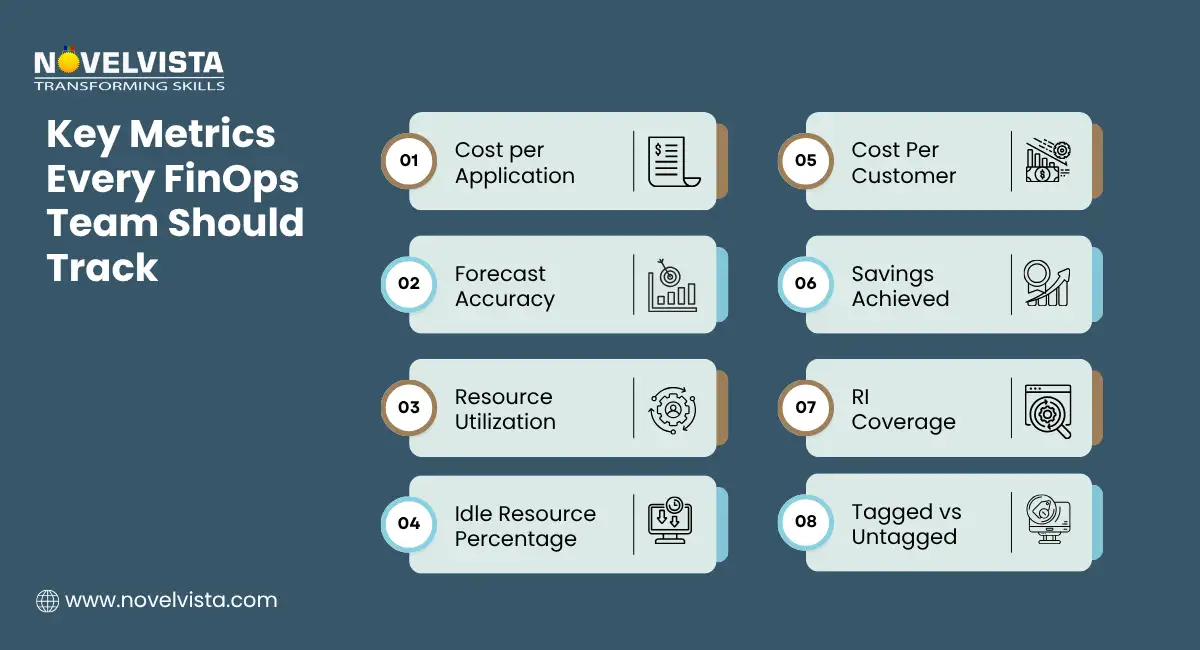
| 3 | Set KPIs | Track spend, usage, and forecast accuracy |
| 4 | Optimize Usage | Rightsize and remove unused resources |
| 5 | Automate Processes | Enable scaling, policies, and workflows |
Understanding what is FinOps is no longer optional for organizations operating in the cloud. As cloud infrastructure becomes increasingly dynamic and distributed, businesses need a modern operating model that balances agility, innovation, performance, and cost efficiency.
The FinOps framework provides the structure, culture, and processes needed to transform cloud spending into measurable business value. By combining visibility, optimization, governance, reporting, and automation, organizations can reduce waste while improving ROI and operational efficiency.
Most importantly, Cloud Financial Management is not a one-time cost-saving exercise. It is an evolving capability that helps businesses make smarter decisions, improve accountability, and gain a long-term competitive advantage through better cloud operations.
Now is the right time to evaluate your organization’s Cloud FinOps maturity and build a strategy that aligns cloud investments with business outcomes.

Ready to build stronger Cloud Financial Management capabilities in the age of AI?
Join NovelVista’s Certified FinOps for AI Course and gain practical expertise in Cloud FinOps, AI-driven cost optimization, cloud governance, reporting, and automation strategies. Designed for cloud professionals, finance teams, architects, and business leaders, this course helps you confidently manage modern AI and cloud spending while maximizing business value.
Start your FinOps journey today and transform cloud costs into a strategic business advantage.
Author Details

Course Related To This blog
FinOps Certified Practitioner certification
Confused About Certification?
Get Free Consultation Call
Stay ahead of the curve by tapping into the latest emerging trends and transforming your subscription into a powerful resource. Maximize every feature, unlock exclusive benefits, and ensure you're always one step ahead in your journey to success.