Category | CLOUD and AWS
Last Updated On 12/05/2026
Cloud bills do not lie but they do surprise. In 2024, worldwide end‑user spending on public cloud services exceeded $675 billion, according to Gartner’s widely cited figures, while new IDC‑style analyses put the broader cloud‑services market even higher at around $805 billion. (Source: Monitordaily) That is hundreds of billions of dollars evaporating every year into idle virtual machines, forgotten storage buckets, and over-provisioned databases that nobody is using at 2 a.m.
So here is the uncomfortable question every engineering leader eventually faces: who is actually responsible for your cloud costs? Is it the finance team that gets the invoice? The DevOps team that spins up the infrastructure? Or the product manager who approved the feature that doubled your compute bill? In most organizations, the honest answer is: nobody and that is exactly the problem FinOps was built to solve.
FinOps, short for cloud financial management, is a discipline that brings financial accountability into the heart of cloud operations. It is not a tool, a single role, or a one-time audit. It is a cultural and operational framework that aligns engineering velocity with fiscal discipline. For teams running workloads on AWS, Azure, and Google Cloud or all three FinOps for AWS, FinOps for Azure, and FinOps for Google Cloud are no longer optional conversations. They are operational necessities.
This blog explains why FinOps is important for AWS, Azure, and Google Cloud teams. You will learn how it helps reduce cloud waste, improve cost visibility, and create shared accountability across teams. It also covers multi-cloud cost management challenges and the core principles of FinOps.
| TL;DR | Key Point |
| FinOps | Improves cloud cost control and visibility |
| Main Benefit | Reduces waste and optimizes spending |
| Multi-Cloud | Manages costs across AWS, Azure, and GCP |
| Core Focus | Inform, Optimize, and Operate |
Before understanding what FinOps does, it helps to understand what happens without it.
According to the FinOps Foundation's State of FinOps report, organizations without a structured cloud financial management practice routinely exceed their cloud budgets by 20% to 40%. Reserved capacity goes underutilized. Tagging policies are inconsistently applied, making it impossible to attribute costs to specific teams or products. Engineers provision resources for peak load and never scale them back down.
In a multi-cloud environment where a company runs AWS for its core infrastructure, Azure for enterprise integrations, and Google Cloud for its data and AI workloads this problem compounds. Each cloud provider has its own billing model, its own discount mechanisms, and its own native cost tooling. Without a unified framework for multi-cloud cost management, visibility fractures, and waste multiplies.
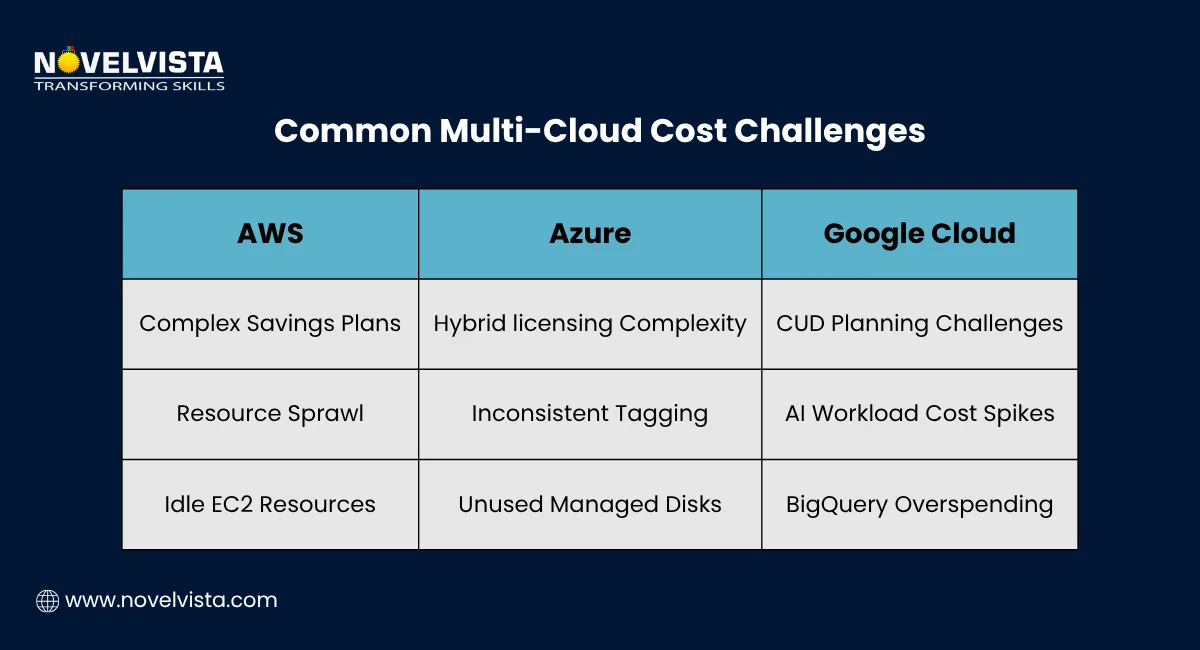
The 30% waste figure is not theoretical. It shows up in unused Elastic IPs on AWS, unattached managed disks on Azure, and idle Compute Engine instances on Google Cloud. FinOps for AWS gives teams the framework to systematically identify these inefficiencies through rightsizing recommendations, instance scheduling, and storage lifecycle policies. The same principles apply to FinOps for Azure and FinOps for Google Cloud, adapted to each provider's resource model.
Cloud cost optimization at this level requires more than periodic reviews. It demands continuous monitoring, automated policy enforcement, and clear ownership of every resource.
One of the foundational shifts FinOps introduces is moving cost ownership from a centralized finance function to the engineering and product teams that actually generate the spend. This is sometimes called the "polluter pays" model: the team that provisions the resource is responsible for understanding and justifying its cost.
This cultural shift does not happen by accident. It requires executive sponsorship, agreed-upon cost allocation policies, and tooling that makes cost data visible to engineers in the platforms they already use. When a developer can see in their CI/CD pipeline that a new architecture decision will increase monthly spend by $12,000, they make better choices.
Perhaps the greatest operational challenge in multi-cloud environments is inconsistent tagging. AWS uses one tagging convention, Azure uses resource tags with its own structure, and Google Cloud uses labels. Without governance, the same workload might be tagged differently across providers, making it impossible to get a unified view of what a product or team is actually spending.
FinOps addresses this through standardized cost allocation frameworks. Organizations that implement FinOps typically define a company-wide taxonomy project codes, team identifiers, environment labels and enforce it consistently across AWS, Azure, and Google Cloud. The result is a single pane of glass for multi-cloud cost management, enabling leadership to make decisions based on real data rather than approximations.
| Dimension | AWS | Azure | Google Cloud |
| Primary Discount Mechanism | Reserved Instances, Savings Plans | Reserved VM Instances, Azure Hybrid Benefit | Committed Use Discounts (CUDs) |
| Native Cost Tool | AWS Cost Explorer | Azure Cost Management + Billing | Google Cloud Billing Reports |
| Tagging Convention | Resource Tags (key-value) | Resource Tags + Azure Policy | Labels (key-value) |
| Common Waste Sources | Idle EC2, unattached EBS volumes | Unattached managed disks, orphaned snapshots | Idle Compute Engine, unused Cloud Storage |
| FinOps Focus Area | Savings Plans analysis, S3 lifecycle | Reservation coverage, license optimization | CUD commitment planning, BigQuery slot management |
| Multi-Cloud Challenge | Complex billing export to S3 | EA/MCA agreement tiers | Billing data in BigQuery natively |
Each cloud platform requires a FinOps approach that accounts for its unique pricing structures and discount programs. A Reserved Instance strategy that works perfectly on AWS does not map directly to Google Cloud's Committed Use Discounts, and Azure's licensing model introduces additional complexity through the Azure Hybrid Benefit for Windows Server and SQL Server workloads.
FinOps for AWS, Azure, and Google Cloud is not just about cutting costs. It is equally about enabling faster decisions. When financial metrics are integrated into engineering workflows dashboards, pull request checks, sprint reviews teams can evaluate architectural trade-offs in real time.
Should you use a managed database service or self-host? Should you run on spot/preemptible instances or on-demand? Should you expand your Azure Reserved Instance coverage or wait for better utilization data? These are questions that FinOps disciplines answer with data, not gut instinct. The result is that engineering velocity actually increases, because teams spend less time debating costs in quarterly reviews and more time building with confidence.
Cloud costs are inherently variable, but they need not be unpredictable. FinOps introduces continuous monitoring practices daily cost anomaly detection, monthly budget reviews, and quarterly commitment planning that transform cloud spend from a mystery into a managed variable.
Historical consumption data, combined with tagged resource hierarchies, allows finance teams to forecast with significantly greater accuracy. Instead of receiving a surprise bill at month-end, stakeholders see cost projections updated in near real time. This is especially critical in multi-cloud environments where billing cycles, currencies, and discount structures vary between providers.
Every major cloud provider offers substantial discounts in exchange for usage commitments: AWS Savings Plans can reduce compute costs by up to 66%, Azure Reserved Instances offer savings of up to 72% compared to pay-as-you-go rates, and Google Cloud's Committed Use Discounts provide up to 57% off for one- or three-year commitments.
The challenge is that committing too aggressively locks capital into capacity you may not fully use, while committing too conservatively leaves significant savings on the table. FinOps for Google Cloud, FinOps for Azure, and FinOps for AWS each require a disciplined approach to commitment planning one that analyzes baseline usage, forecasts growth, and sets appropriate coverage targets by workload type.
The first principle of FinOps is gaining clear, granular visibility into where cloud money is going. This means implementing consistent tagging across AWS, Azure, and Google Cloud, configuring billing exports, and centralizing cost data in a platform that the whole organization can access. Without accurate data, every other FinOps practice is guesswork.
FinOps Phase | Key Actions | Outcome |
| Inform | Tagging governance, cost allocation, benchmarking, anomaly alerts | Full visibility into spend by team, product, and environment |
| Optimize | Rightsizing, scheduling, spot usage, commitment planning | Reduction of waste and unit cost |
| Operate | Cross-functional reviews, KPI tracking, continuous process refinement | Sustained efficiency and cultural alignment |
Once visibility is established, optimization becomes systematic. Cloud cost optimization at this stage involves rightsizing underutilized resources, scheduling non-production environments to shut down outside working hours, migrating eligible workloads to spot or preemptible instances, and cleaning up orphaned resources. These activities, applied consistently across AWS, Azure, and Google Cloud, compound over time.
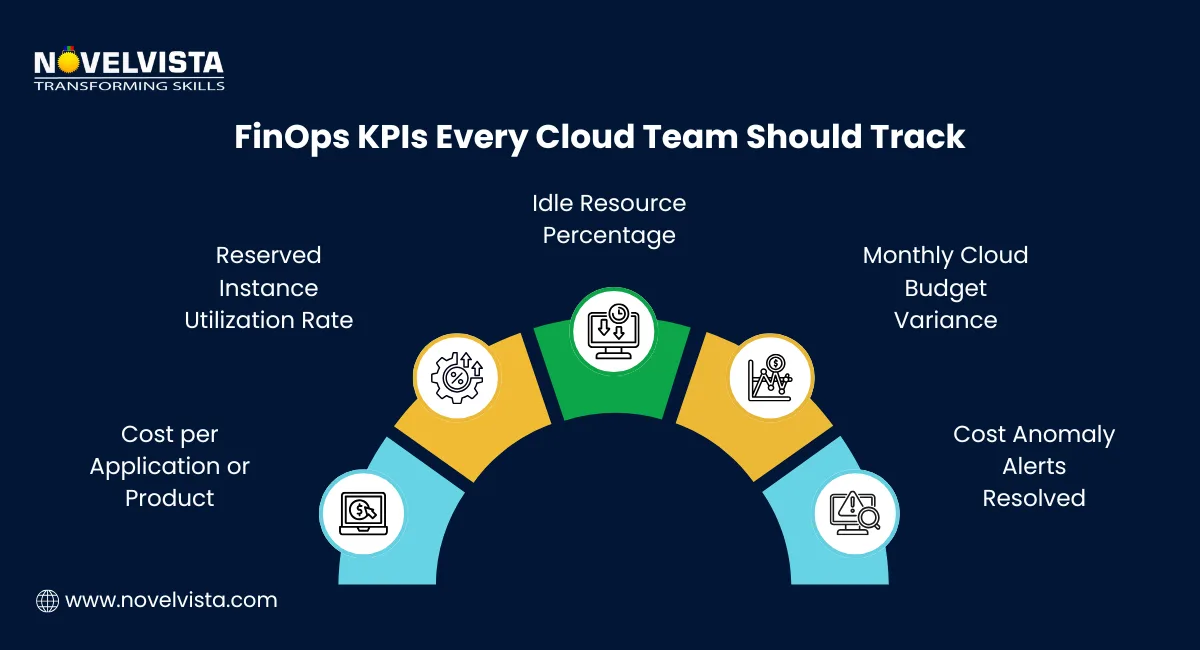
The most mature FinOps organizations do not treat cloud financial management as a project with a start and end date. They operate it as an ongoing practice, with regular cross-functional meetings between finance, engineering, and product teams, shared KPIs tied to unit economics, and a culture where cost efficiency is a first-class engineering value.
FinOps is important for AWS, Azure, and Google Cloud teams because it closes the accountability gap that cloud's on-demand model inherently creates. It transforms cloud spend from a passive cost center into an actively managed business variable. Organizations that adopt FinOps for AWS, FinOps for Azure, and FinOps for Google Cloud gain the visibility to understand where every dollar goes, the framework to eliminate waste systematically, and the cultural alignment to make cost efficiency a shared engineering value rather than a finance team complaint.
As cloud environments grow more complex and multi-cloud architectures become the norm, the discipline of cloud financial management will only grow more critical. The teams that build FinOps practices now will spend less, move faster, and forecast more accurately than those who treat their cloud bill as an inevitability rather than a variable they can control.

Take Your FinOps Skills to the Next Level
Knowing why FinOps matters is one thing applying it to real AI and cloud workloads is another. NovelVista's Certified FinOps for AI course equips FinOps practitioners, cloud engineers, and finance professionals with hands-on skills in cost allocation, anomaly management, GPU optimization, and AI spend reporting. With an exam voucher included and 9,000+ professionals already certified, it is the credential that proves you can manage cloud financial complexity at scale.
Start your FinOps for AI certification journey today.
Author Details

Course Related To This blog
FinOps Certified Practitioner certification
Confused About Certification?
Get Free Consultation Call
Stay ahead of the curve by tapping into the latest emerging trends and transforming your subscription into a powerful resource. Maximize every feature, unlock exclusive benefits, and ensure you're always one step ahead in your journey to success.