Category | AI And ML
Last Updated On 13/02/2026
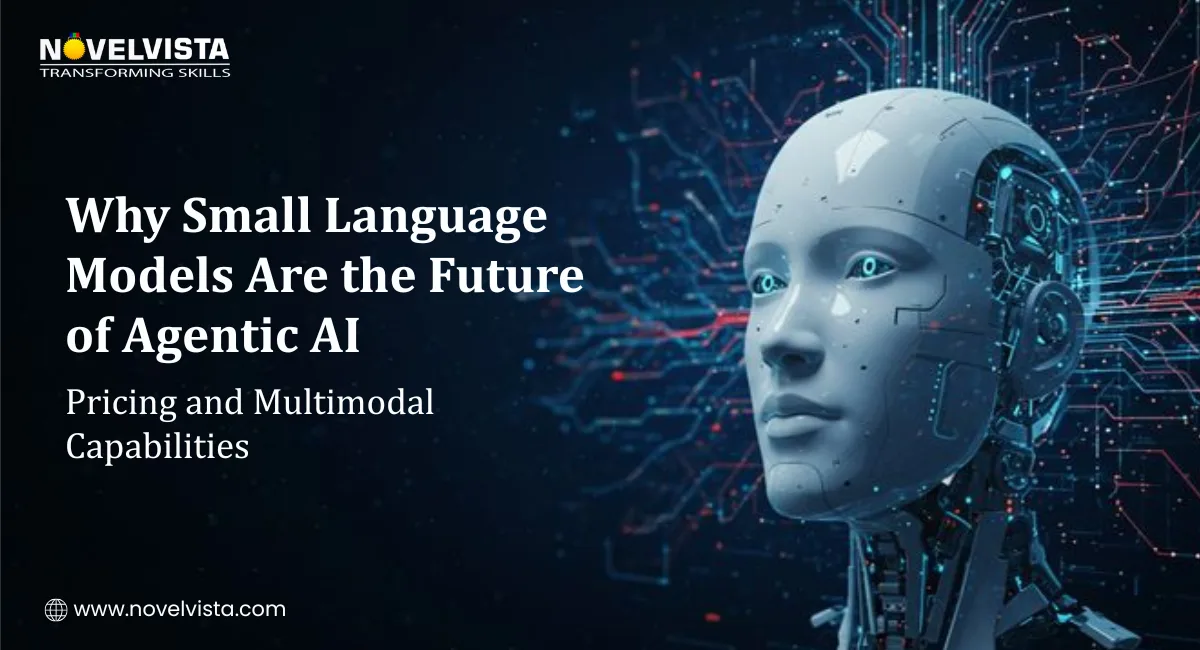
Artificial Intelligence is evolving faster than any enterprise technology in history. According to McKinsey, over 55% of organizations now use AI in at least one business function, while Gartner predicts that agentic AI systems will power 40% of enterprise workflows by 2027. As AI shifts from passive assistants to autonomous decision-makers, one truth is becoming increasingly clear: small language models are the future of agentic AI.
But why is this happening now? Why are enterprises rethinking their dependency on massive large language models (LLMs)? And who should care about this shift?
This article is for CTOs, AI architects, startup founders, data scientists, and business leaders who want scalable, cost-effective, and production-ready AI systems. We’ll explore why small language models are the future of agentic AI, how pricing and multimodal capabilities shape adoption, and what this means for enterprise AI strategy.
Agentic AI models are advanced systems designed to act autonomously, rather than simply respond to prompts. Unlike traditional AI, an agentic AI model can plan tasks, leverage tools, evaluate outcomes, and adapt its behavior based on specific goals. In simple terms, while traditional AI answers questions, agentic models take actions. Real-world examples of these systems include autonomous customer support agents, financial risk assessors, DevOps remediation bots, and AI research assistants. These agentic AI models rely on reasoning loops, memory, and contextual awareness, making them fundamentally different from static chatbot architectures and enabling them to operate as true autonomous agents in complex workflows. Curious what is agentic AI? Learn how small language models power autonomous, intelligent workflows.
The assumption that “bigger is better” no longer holds true. While massive LLMs excel at general knowledge, they come with high costs, latency issues, and limited controllability. This is why the idea that small language models are the future of agentic AI has gained significant momentum. Small language models are faster to infer, require less compute, are easier to fine-tune, and can be deployed on private infrastructure. For agentic workflows, where models run continuously and autonomously, efficiency matters more than sheer size. As a result, enterprises increasingly recognize that small language models are the future of agentic AI in real-world applications, enabling scalable, cost-effective, and production-ready autonomous systems.
One of the biggest drivers behind the adoption of agentic AI models is cost. Traditional LLM-based systems often rely on token-based billing, making them expensive for agentic workflows that involve constant reasoning and iteration. Modern agentic AI pricing models focus on factors such as task completion cost, inference frequency, and infrastructure efficiency. Small language models drastically reduce these expenses, as they can be hosted on-premise or in private clouds, eliminating unpredictable API bills. As agentic AI models scale across departments, cost predictability becomes critical for sustainable operations. Simply put, agentic AI pricing models favor smaller, optimized models over massive general-purpose ones, making efficiency and scalability more achievable for enterprises.
The future of AI is not just text-based. Multimodal agentic AI systems can reason across text, images, audio, and structured data simultaneously.
Examples include:
Running multimodal workloads on massive LLMs is expensive and inefficient. Smaller, specialized models handle these tasks more effectively. This is another reason why small language models are the future of agentic AI, especially in multimodal environments.
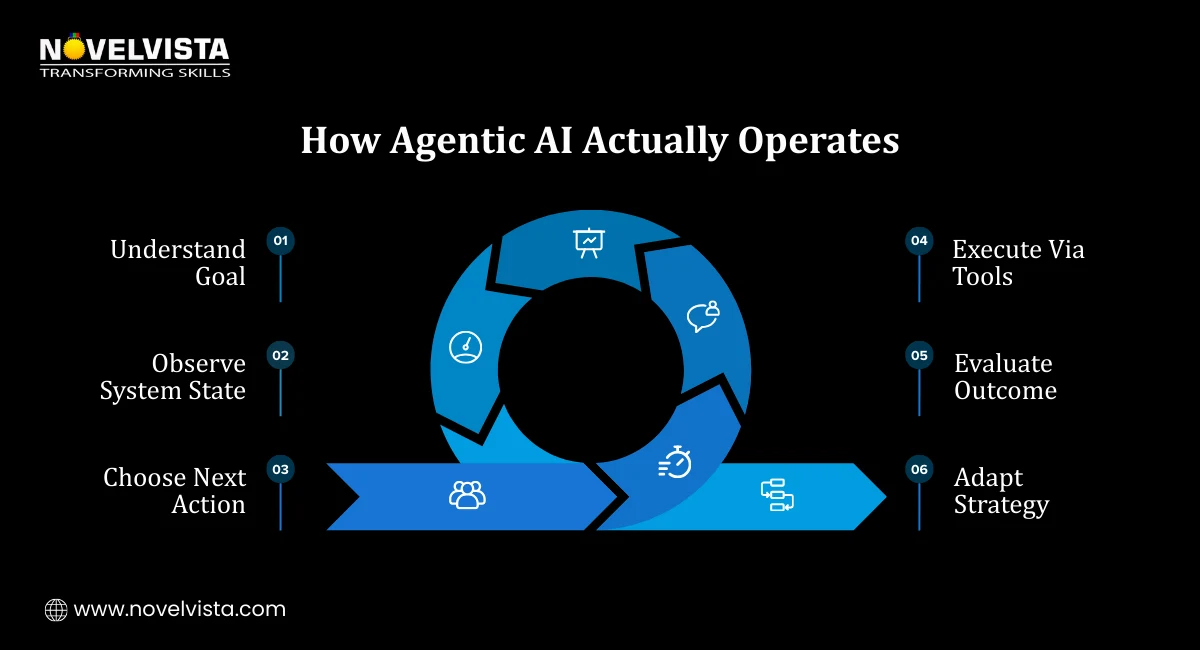
Context is critical for autonomous systems, and the model context protocol MCP agentic AI approach allows agents to retain memory, understand environment states, and coordinate tools efficiently. Small language models excel in this setup because context windows are optimized, memory management is more controllable, and latency remains low during reasoning loops. By combining MCP with compact models, organizations can build agentic AI models that are context-aware, secure, and scalable without excessive compute overhead.
Large enterprises are leading this shift. The Capital One agentic AI model demonstrates how regulated organizations adopt AI responsibly by focusing on governance, efficiency, and control.
Instead of relying on massive black-box models, enterprises deploy:
This approach aligns perfectly with the idea that small language models are the future of agentic AI, especially in finance, healthcare, and regulated industries.
The agentic AI maturity model helps organizations assess their progress:
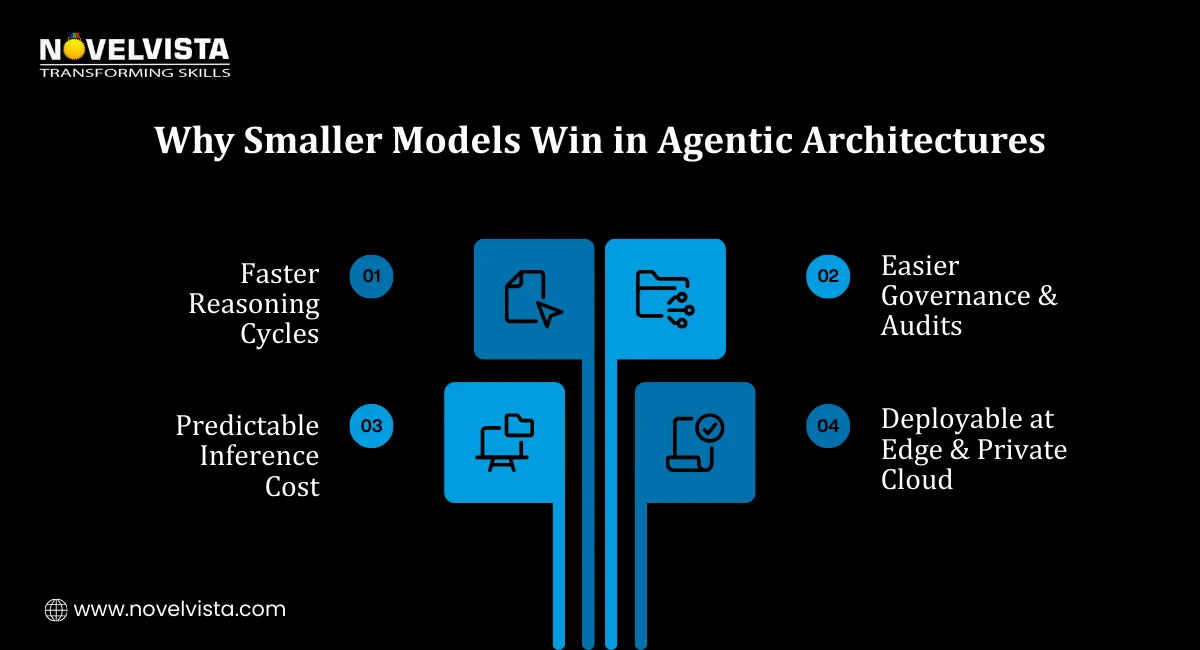
Despite their advantages, small language models are not without limitations. Common challenges include limited general knowledge, the need for high-quality fine-tuning, and complex orchestration across multiple agentic AI models. However, these issues are increasingly mitigated through techniques such as model ensembles, retrieval-augmented generation, and agent orchestration frameworks, enabling more robust and efficient agentic AI deployments.
The future of agentic models AI is modular. Instead of one giant model, ecosystems will consist of:
This architecture is more secure, cost-efficient, and regulation-friendly. That’s why industry leaders agree that small language models are the future of agentic AI in enterprise and beyond.
As AI systems evolve from assistants to autonomous agents, efficiency, cost, and control become non-negotiable. Massive models may dominate demos, but production systems tell a different story. Small language models are the future of agentic AI because they enable scalable pricing, multimodal intelligence, and enterprise-grade governance.
For organizations building the next generation of autonomous systems, the future isn’t bigger it’s smarter, smaller, and more agentic.
Join NovelVista’s Agentic AI Certification Training and gain hands-on skills in designing real-world agentic AI systems, mastering multi-agent workflows, and implementing enterprise-grade governance. Designed for AI architects, engineers, and business leaders, this course equips you to confidently build and manage agentic AI solutions.
Start your agentic AI journey today!
Author Details

Course Related To This blog
Generative AI Certification
Agentic AI Certification
Confused About Certification?
Get Free Consultation Call
Stay ahead of the curve by tapping into the latest emerging trends and transforming your subscription into a powerful resource. Maximize every feature, unlock exclusive benefits, and ensure you're always one step ahead in your journey to success.