Category | AI And ML
Last Updated On 19/08/2026
AI adoption has entered a new phase. The question for enterprises is no longer simply, “Which AI model should we use?” It is becoming, “Who will actually make AI work inside our business?”
That distinction matters.
On May 11, 2026, OpenAI announced a major move into enterprise AI deployment: the launch of the OpenAI Deployment Company, backed by more than $4 billion in initial investment. At the same time, OpenAI agreed to acquire applied AI consulting and engineering firm Tomoro, bringing approximately 150 experienced Forward Deployed Engineers (FDEs) and deployment specialists into the new company from day one.
So, is this simply another investment in enterprise AI?
Not quite.
The bigger story is the investment in the people and engineering capability required to move AI from pilots and demonstrations into real production environments. And at the centre of that strategy is the Forward Deployed Engineer.
The more than $4 billion represents the initial investment backing the OpenAI Deployment Company.
However, FDEs are a central part of how that company intends to deliver enterprise AI deployment.
OpenAI describes its Deployment Company as a business designed to help organizations build and deploy AI systems across important business operations. Its FDEs will work directly with business leaders, operators and frontline teams to identify opportunities, redesign workflows and build AI systems that can operate as part of everyday business processes.
This makes the announcement significant for another reason: OpenAI is investing heavily in the last mile of AI adoption.
OpenAI Deployment Company | What it means |
More than $4B initial investment | Large-scale commitment to enterprise AI deployment |
Tomoro acquisition | Immediate access to experienced AI deployment talent |
~150 FDEs and specialists | Ready-made engineering and implementation capability |
19 founding investment/strategic partners | Broader transformation and enterprise reach |
Workflow-focused deployment | Moving beyond model access toward business outcomes |
The message is clear: having access to a powerful AI model is only the beginning.
Why would a company building frontier AI models need engineers working directly with individual businesses?
Because enterprise AI is rarely a plug-and-play problem.
A company may have thousands of employees, legacy applications, fragmented databases, security requirements, regulatory obligations and highly specialized workflows. Simply giving employees access to an AI model does not automatically create business value.
An FDE operates at the intersection of AI engineering, software engineering, business processes and customer requirements.
Instead of asking only whether a model can perform a task, an FDE asks:
This is fundamentally different from selling AI software as a standalone product.
The FDE becomes the bridge between frontier AI capability and operational execution.
OpenAI's acquisition of Tomoro is particularly important because it gives the Deployment Company an experienced team immediately rather than requiring OpenAI to build an enterprise deployment organization from scratch.
Tomoro is an applied AI consulting and engineering firm focused on helping enterprises turn AI into operational outcomes. The acquisition is expected to bring approximately 150 experienced FDEs and deployment specialists into the new company.
That provides OpenAI with something extremely valuable: deployment experience.
Building a frontier model and implementing that model inside a complex enterprise are two very different engineering challenges.
The former focuses heavily on model capability, infrastructure and research.
The latter involves understanding business processes, enterprise architecture, user behaviour, integration constraints and operational risk.
Tomoro's existing experience therefore gives OpenAI a faster route into the implementation layer of enterprise AI.
The size of the investment signals that OpenAI sees enterprise deployment as a major business opportunity.
The OpenAI Deployment Company is backed by OpenAI and a group of 19 leading investment firms, consultancies and system integrators, with TPG leading the partnership and Advent, Bain Capital and Brookfield among the co-lead founding partners.
This combination is strategically important.
OpenAI brings frontier AI technology and knowledge of where model capabilities are heading.
Its partners bring experience in transformation, implementation and organizational change.
Together, the model looks less like traditional software licensing and more like an AI transformation ecosystem.
Traditional AI adoption | FDE-led AI deployment |
Buy AI tool | Identify business problem |
Give users access | Redesign workflow |
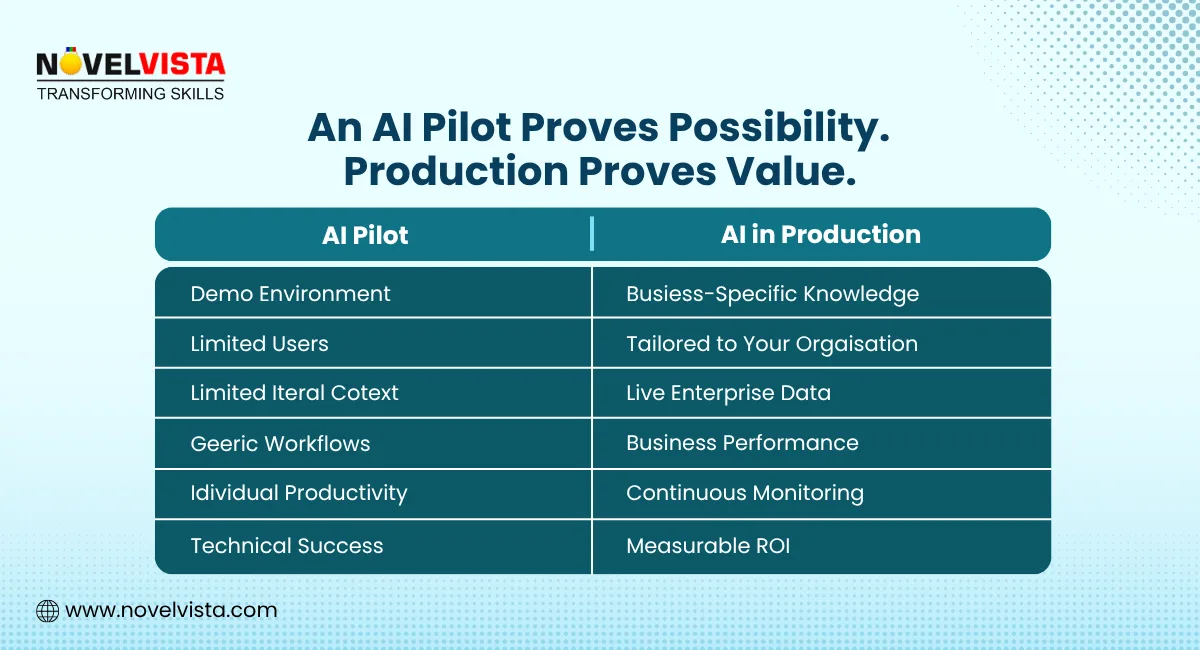
Run pilot | Build production system |
Measure usage | Measure business outcomes |
Separate IT and business teams | Cross-functional collaboration |
Deploy and maintain | Continuously evaluate and improve |
This could change how enterprises approach AI implementation.
OpenAI's strategy also highlights a growing career opportunity.
As AI systems move deeper into business operations, organizations need professionals who can combine technical knowledge with business problem-solving.
The next generation of FDEs will likely need skills across several areas:
This combination is what makes the FDE role different from a conventional software engineering position.
An FDE does not simply build what is specified.
They often help determine what should be built in the first place.
The AI industry's biggest opportunity may no longer be improving model intelligence alone.
It may be making that intelligence useful inside millions of real-world workflows.
Think about the journey:
Foundation models → AI applications → Enterprise workflows → Business outcomes
FDEs operate heavily in the final two stages.
That is why OpenAI's more than $4 billion commitment is worth watching. It represents a bet that enterprise AI adoption will depend not only on increasingly capable models, but also on engineers who can translate those capabilities into measurable operational improvements.
For businesses, this means AI implementation may increasingly require a hybrid skill set.
For technology professionals, it creates demand for engineers who understand both how AI works and how organizations work.
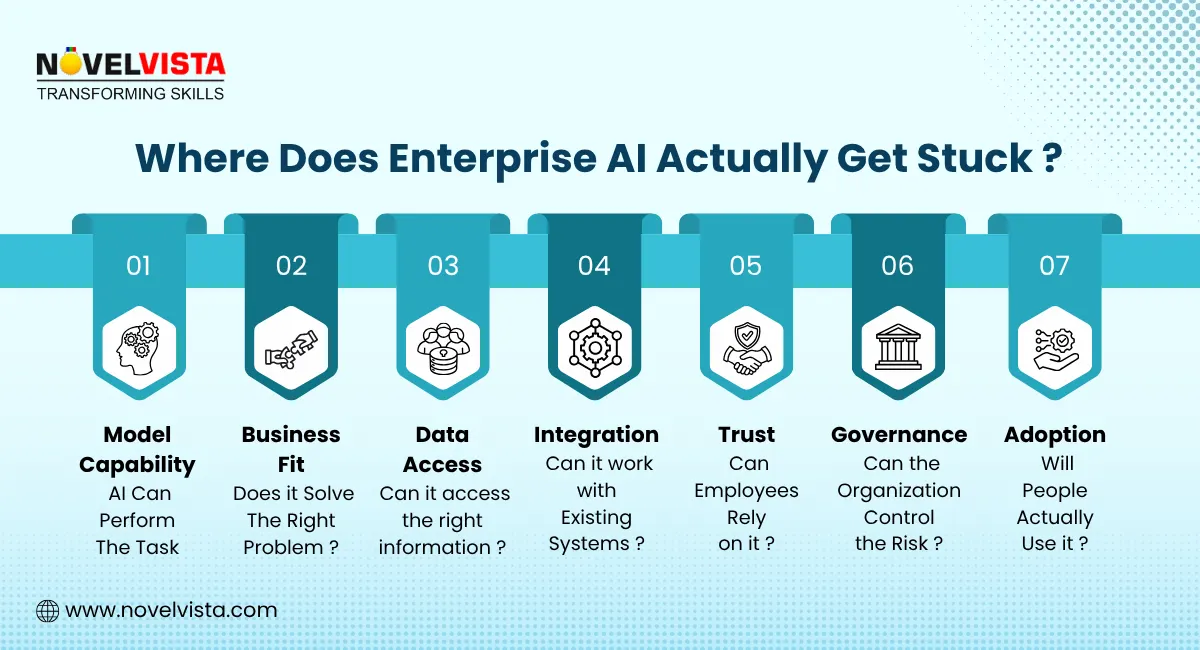
OpenAI's FDE strategy also provides a useful lesson for organizations building their own AI teams.
Hiring only data scientists or ML engineers may not be enough.
Enterprise AI teams increasingly need multiple capabilities:
| Capability | Why it matters |
| AI/ML Engineering | Builds and integrates AI systems |
| Data Engineering | Makes enterprise data usable |
| AI Product Management | Connects technology with business priorities |
| LLMOps | Monitors and manages AI in production |
| AI Governance | Controls risk, security and compliance |
| Domain Expertise | Ensures solutions fit real workflows |
| FDE Skills | Connects all of these capabilities with customer needs |
The strongest AI teams will therefore be cross-functional.
They will understand models, data, software architecture, workflows, governance and business outcomes.
OpenAI's move is part of a broader evolution in the AI market.
The first phase was about model capability.
The second phase was about AI applications.
The next phase is increasingly about deployment and organizational transformation.
This is why the FDE role is becoming strategically important.
Enterprises do not ultimately buy tokens, models or APIs because they want more AI.
They invest because they want faster operations, better decisions, improved customer experiences, lower costs or new sources of revenue.
The companies that can consistently connect AI capabilities to those outcomes will have a significant advantage.
OpenAI's Deployment Company is effectively designed around that connection.

OpenAI's more than $4 billion investment in the OpenAI Deployment Company is about much more than creating another enterprise services business. It signals a strategic shift toward making AI work inside real organizations.
With approximately 150 FDEs and deployment specialists coming through the Tomoro acquisition, OpenAI is starting with a significant pool of implementation expertise. The larger lesson is even more important: the next AI race may not simply be about who builds the smartest model, but who can deploy intelligence most effectively across the enterprise.
That puts the Forward Deployed Engineer directly in the spotlight. As AI becomes embedded into core business processes, professionals who can combine AI engineering, software development, enterprise architecture and business problem-solving will become increasingly valuable.
For organizations looking to build these capabilities, NovelVista’s Forward Deployed Engineer Corporate Training can help teams develop the practical skills needed to connect AI solutions with real enterprise workflows and business outcomes.
OpenAI's $4 billion deployment strategy is therefore not just an investment in enterprise AI. It is a strong signal that FDEs could become one of the most important engineering roles in the next phase of AI adoption.
OpenAI launched the OpenAI Deployment Company with more than $4 billion in initial investment. The company will use FDEs and deployment specialists to help enterprises implement AI in real-world workflows.
A Forward Deployed Engineer works closely with customers to identify business problems and build AI solutions around their workflows, data, systems and operational requirements.
OpenAI agreed to acquire Tomoro to rapidly expand its enterprise AI deployment capabilities. The deal brings approximately 150 experienced FDEs and deployment specialists into the Deployment Company.
FDEs help organizations move from AI experiments to production systems by combining AI engineering with workflow redesign, integration, evaluation, governance and business requirements.
Yes. As enterprises move AI into production, professionals who understand AI engineering, software development, cloud, data, automation and business processes can become increasingly valuable in FDE roles.
Author Details

Course Related To This blog
Forward Deployed Engineer (AI)
Confused About Certification?
Get Free Consultation Call
Stay ahead of the curve by tapping into the latest emerging trends and transforming your subscription into a powerful resource. Maximize every feature, unlock exclusive benefits, and ensure you're always one step ahead in your journey to success.