Category | AI And ML
Last Updated On 31/08/2026
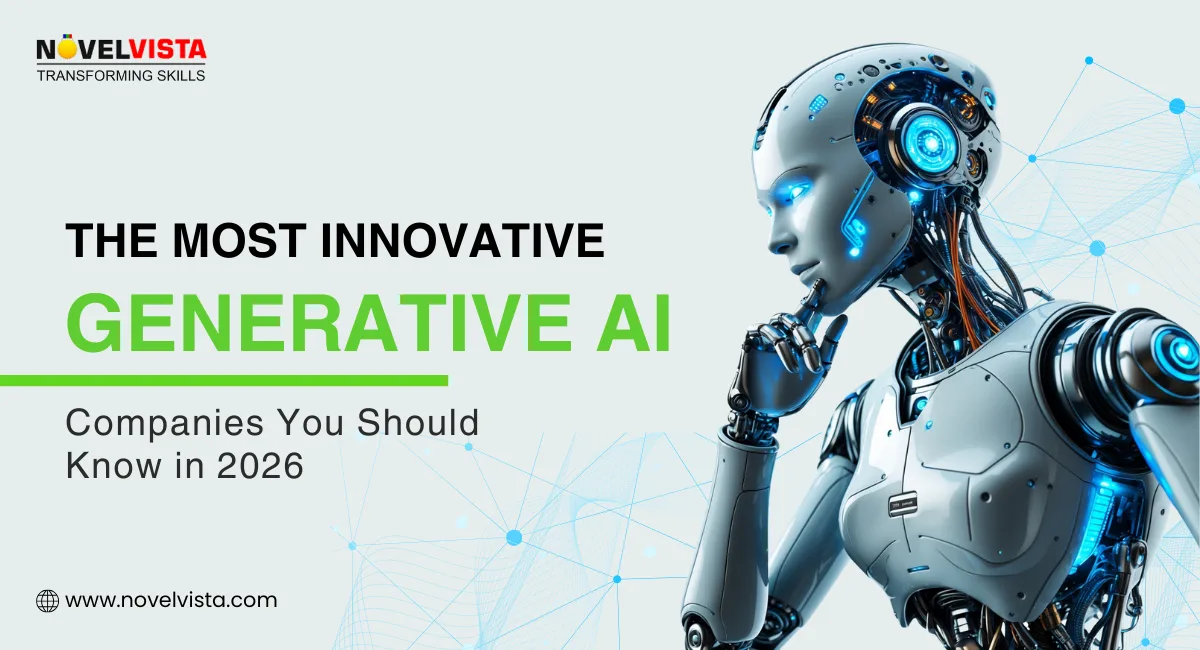
By 2026, generative AI has shifted from niche research labs to mainstream business engines. According to industry forecasts, the generative AI market is projected to grow at a CAGR of nearly 38% between 2025 and 2030, fueling innovation across sectors from advertising to healthcare, finance, media, and creative arts. But with hundreds of startups and established tech giants racing to build smarter models, how do you identify the most innovative generative AI companies that are truly shaping the future?
This blog answers that question. Whether you’re a business leader exploring generative AI for digital transformation, a developer seeking top tools for productivity, or an investor watching the next big AI startups to watch, you’ll get a guided tour of the most innovative generative AI companies, their real use cases, and what makes them stand out in 2026.
We’ll also cover related trends such as AI video generation companies, open‑source AI models, AI agents for workflow automation, and how these innovations are transforming productivity and business workflows.
Let’s begin by understanding what we mean by generative AI companies and why they are so crucial today.
At its core, a generative AI company develops models and tools that can create, not just analyze, data. This includes generating text, images, audio, video, code, or even entire interactive experiences from structured or natural language prompts.
Generative AI differs from traditional AI (which focused on classification and prediction) because it introduces creation: machines that can write blogs, compose music, design visuals, edit videos, summarize documents, or autonomously manage simple workflows.
Some of these companies provide open‑source AI models that developers can fine‑tune, while others offer powerful APIs and tools used by businesses to improve efficiency or launch new products.
With this in mind, let’s look at the companies leading the charge.
Innovation in generative AI isn’t just about having the loudest name. The most innovative generative AI companies typically share these traits:
These criteria help us spotlight companies that are reshaping how humans interact with and scale generative AI.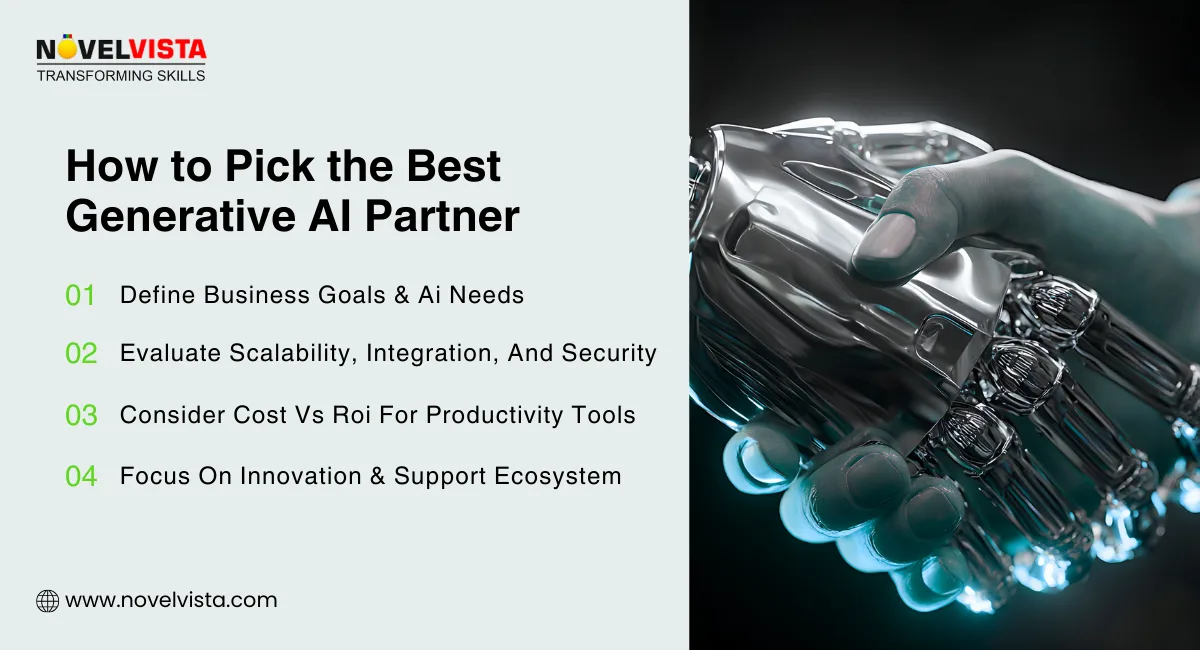
Below is a curated list of companies actively defining the generative AI landscape in 2026. We’ve organized them by key focus areas for clarity.
These companies have developed foundational systems that power hundreds of applications and APIs used around the world.
OpenAI
OpenAI continues to be one of the most influential generative AI companies globally. With models like GPT‑4o and Sora powering text, multimodal inputs, and creative generation, OpenAI tools are embedded in enterprise workflows, customer engagement, product automation, and research tools, supporting over 1 million businesses worldwide. Know more about ChatGPT and its role as generative AI.
Anthropic
Anthropic focuses on safe and steerable models (Claude AI family), enabling enterprises to build dependable conversational agents, summarization tools, and custom workflows. Its emphasis on alignment and ethical AI places it among the top AI startups to watch.
Google DeepMind / Google AI
A research juggernaut, Google DeepMind blends cutting‑edge AI with practical products that process text, images, audio, and structured data, contributing to generative applications across healthcare, robotics, and enterprise intelligence.
Video is one of the fastest‑growing media formats, and these companies are leading the way in automating video creation.
Synthesia
Synthesia is a standout AI video generation company that turns text prompts into polished, human‑like video content, ideal for training videos, personalized marketing, and enterprise communications.
OpusClip
OpusClip uses generative AI to help creators edit social media videos automatically by extracting key clips, reorganizing content, and optimizing formats for platforms. It recently raised funding from SoftBank’s Vision Fund, highlighting investor confidence in AI video creation trends.
LTX‑2 (Lightricks)
LTX‑2 is an open‑source text‑to‑video AI model that enables developers and creators to generate video content programmatically - democratizing access to video generation capabilities.
Kuaishou earns a spot here too its Kling AI model generates cinematic text-to-video output and has become one of the most-used video generators worldwide.
These companies drive innovation by sharing models and tools that developers and enterprises can extend or deploy.
Hugging Face
Hugging Face’s model hub hosts thousands of open‑source AI models and datasets, enabling developers worldwide to build generative applications rapidly.
Mistral AI
As an open‑weight foundational model developer, Mistral AI delivers high‑performance, multilingual models widely used in research and enterprise contexts, making it among the most innovative generative AI companies to watch.
Poolside AI
Poolside AI is a startup focusing on secure and efficient AI models, especially for enterprise and developer toolchains, another exciting player emerging in the generative space.
These companies focus on applying generative AI directly to business problems like automation, retrieval, and data workflows.
Cohere
Cohere specializes in enterprise‑ready generative systems for tasks like summarization, document generation, and retrieval‑augmented workflows, helping teams scale content creation and analytics.
Contextual AI (Vector Agents)
Focused on retrieval‑augmented generation and enterprise knowledge access, context‑aware AI agents automate intelligent content responses and integration with enterprise data sources.
AWS (Amazon) Nova Models
Amazon’s Nova foundation models, deployed via AWS Bedrock, provide scalable, cost‑effective APIs for businesses to integrate generative text, image, and multimodal AI into workflows.
These players may be less famous, but they’re pushing boundaries in niche areas.
Thinking Machines Lab
Founded by former OpenAI CTO Mira Murati, this startup is designing new generative models and systems that emphasize high performance and ethical design.
Multiverse Computing
Merging quantum computing and AI, Multiverse Computing works on efficient AI model compression and quantum‑enhanced AI solutions, a unique frontier in generative innovation.
See how generative AI is changing modern leadership
Learn where AI creates real business value
Make confident, informed AI decisions
The companies above have spawned tools that make AI adoption concrete and practical. Some notable productivity AI tools emerging from these companies include:
These examples illustrate how generative AI tools can reduce costs, accelerate processes, and enhance creative output across teams. The most innovative generative AI companies showcase real-world Generative AI examples that are transforming business workflows in 2026.
Choosing the right generative AI partner depends on your business goals:
Always evaluate scalability, security, integration capability, pricing, and compliance when choosing a solution.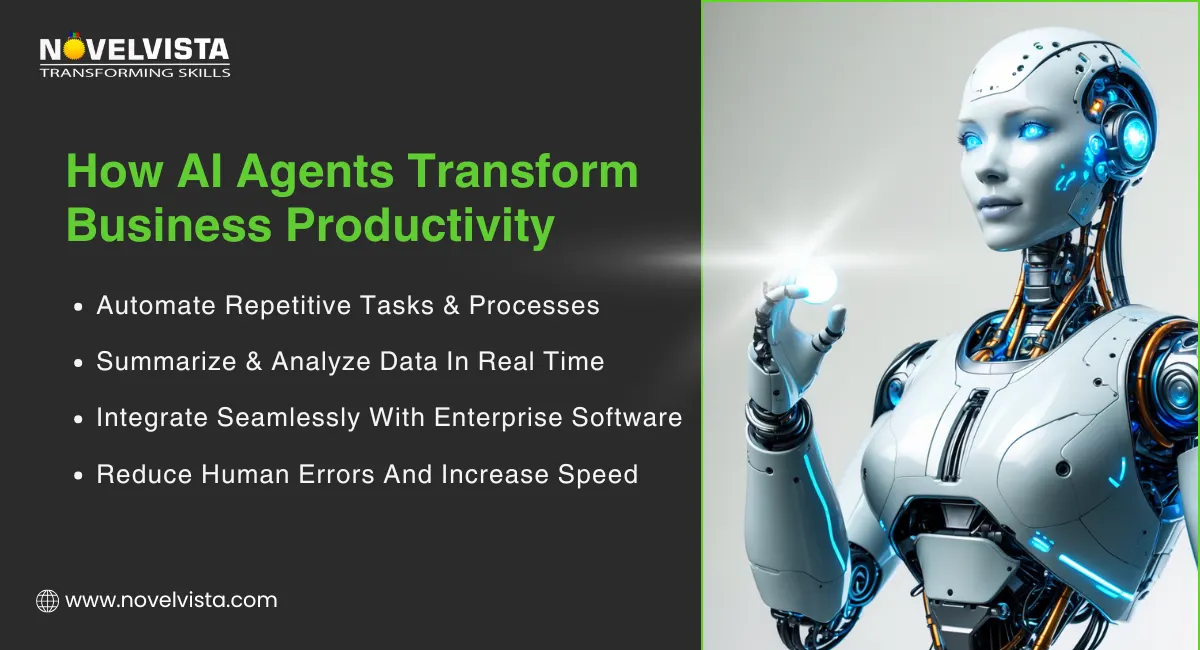
Generative AI will continue transforming how businesses operate, create, and compete:
Leading companies will not only build better models but will also enable better human‑AI collaboration, ensuring productivity and creativity are amplified across sectors. The rise of the most innovative generative AI companies is driving new opportunities in Generative AI Jobs in 2026.
From foundational model pioneers like OpenAI and Anthropic to AI video generation companies such as Synthesia and open platforms like Hugging Face and Mistral AI, the list of most innovative generative AI companies continues to grow in depth and impact.
Every business, whether in marketing, finance, healthcare, or creative media, should watch these innovators and explore how generative AI for businesses 2026 can help unlock efficiencies, spark creativity, and fuel growth.
The future is generative, the advancements are real, and these companies are at the forefront.
Ready to advance your generative AI expertise and apply these innovations in real-world business scenarios?
Join NovelVista’s Generative AI Professional Training and gain hands-on experience with AI agents, video generation, multimodal models, and productivity-enhancing tools. Designed for business leaders, developers, and AI enthusiasts, this course equips you with the skills to implement, manage, and scale generative AI solutions effectively.
Start your Generative AI professional journey today!
Author Details

Course Related To This blog
Generative AI Professional
Generative AI in Project Management
Generative AI in Risk & Compliance
Generative AI in Retail
Generative AI in Marketing
Generative AI in Finance and Banking
Generative AI for HR and L&D
Generative AI in Cybersecurity
Generative AI in Business
Generative AI in Software Development
Agentic AI Certification
Confused About Certification?
Get Free Consultation Call
Stay ahead of the curve by tapping into the latest emerging trends and transforming your subscription into a powerful resource. Maximize every feature, unlock exclusive benefits, and ensure you're always one step ahead in your journey to success.