Category | AI And ML
Last Updated On 28/02/2026
Artificial Intelligence isn’t just evolving, it’s accelerating at a pace few predicted. In the last few years alone, AI adoption has moved from experimental pilots to enterprise-wide transformation. Analysts estimate that AI-driven technologies could add trillions of dollars to the global economy this decade. At the center of this momentum are generative AI models, systems capable of producing human-like text, code, images, and more, reshaping how businesses innovate and compete.
Yet despite the rapid adoption, there’s still widespread confusion.
Is ChatGPT actually a model or just an AI-powered application?
Where exactly does it fit within generative AI models?
What are foundation models in generative AI, and why are they considered revolutionary?
How do foundation models in generative AI enable tools like ChatGPT to perform complex reasoning and conversation?
These aren’t just technical questions; they’re strategic ones.
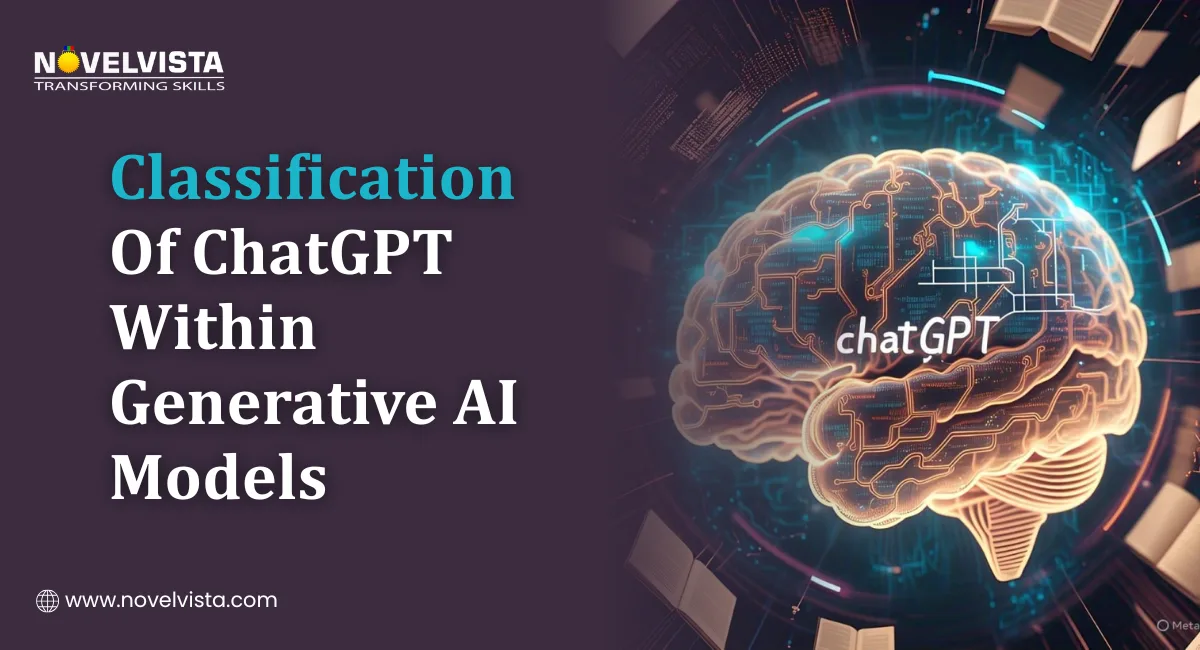
Whether you’re an IT professional evaluating AI integration, a business leader assessing AI investments, or a learner building foundational knowledge, understanding the Classification Of ChatGPT Within Generative AI Models gives you clarity. And in the world of emerging technology, clarity equals competitive advantage.
Let’s decode it layer by layer.
To understand the Classification Of ChatGPT Within Generative AI Models, we first need clarity on the broader ecosystem.
Artificial Intelligence has multiple branches:
ChatGPT belongs to the Generative AI branch but that’s just the first layer.
Within generative AI models, there are multiple categories based on output type, architecture, and training approach. ChatGPT is not just a chatbot it is powered by a large language model (LLM), which itself is built upon foundation model principles.
So, its classification is layered, not singular.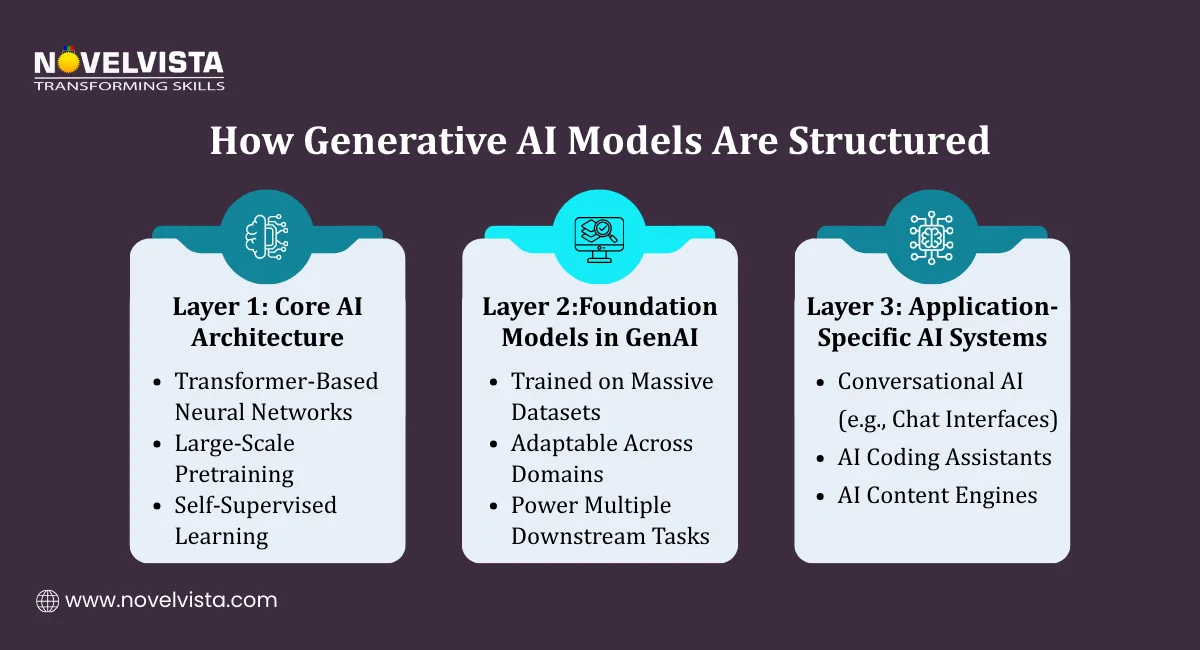
Generative AI models are systems designed to create new content, text, images, code, audio, or video based on patterns learned from large datasets.
Unlike traditional predictive models that classify or detect patterns, a generative AI model produces entirely new outputs.
Trained on massive datasets
Use deep neural networks
Generate human-like outputs
Adapt across multiple tasks
Text generation models (like large language models)
Image generation models (diffusion models)
Audio generation models
Video generation models
Code generation systems
ChatGPT clearly falls into the text generation category, but that’s still not the full picture.
One of the most searched questions today is: What are foundation models in generative AI?
Foundation models are large-scale AI models trained on vast amounts of diverse data that can be adapted to multiple downstream tasks.
In simple terms:
They are the “base intelligence” upon which applications are built.
Examples include large language models (LLMs) built using transformer architectures.
So when we talk about foundation models in generative AI, we’re referring to the base models that power tools like ChatGPT.
ChatGPT itself is not the raw foundation model. It is an application layer built on top of one.
Now, let’s clearly define the classification of ChatGPT within generative AI models.
ChatGPT is:
A conversational AI application
Powered by a large language foundation model
Built using transformer-based deep learning architecture
Fine-tuned for dialogue
At its core lies a generative AI model trained using unsupervised and reinforcement learning techniques.
ChatGPT is based on:
Transformer neural networks
Pre-trained language modeling
Reinforcement Learning from Human Feedback (RLHF)
Pre-training on massive text datasets
Fine-tuning for conversational alignment
This means ChatGPT is not a standalone generative AI model, but rather an implementation of one.
To fully understand the classification of ChatGPT within generative AI models, we must analyze it across four dimensions:
ChatGPT is a text-based generative AI model system that:
It is built on:
This layered classification explains why ChatGPT is often confused with the base model itself.
| Parameter | Generative AI Models | ChatGPT |
| Definition | Broad category of content-generating AI | Specific AI chatbot system |
| Architecture | Varies (LLMs, GANs, Diffusion Models) | Transformer-based LLM |
| Output Type | Text, Image, Audio, Video | Primarily Text |
| Foundation Model | Base trained model | Built on foundation models in generative AI |
| Scope | Technical model category | User-facing application |
This comparison makes the classification of ChatGPT within generative AI models clearer.
Understanding generative AI models is not just academic—it’s strategic.
Helps in understanding architecture, deployment, and AI integration.
Clarifies concepts like what foundation models are in generative AI.
Enables smarter investment decisions in AI adoption.
When organizations say they are “using generative AI,” it’s important to ask:
Are they using a base generative AI model?
Or are they using an application like ChatGPT built on foundation models in generative AI?
The answer changes the technical and strategic implications. A well-structured generative AI Certification exam guide can help you understand the syllabus, exam pattern, and key concepts required to clear the certification successfully.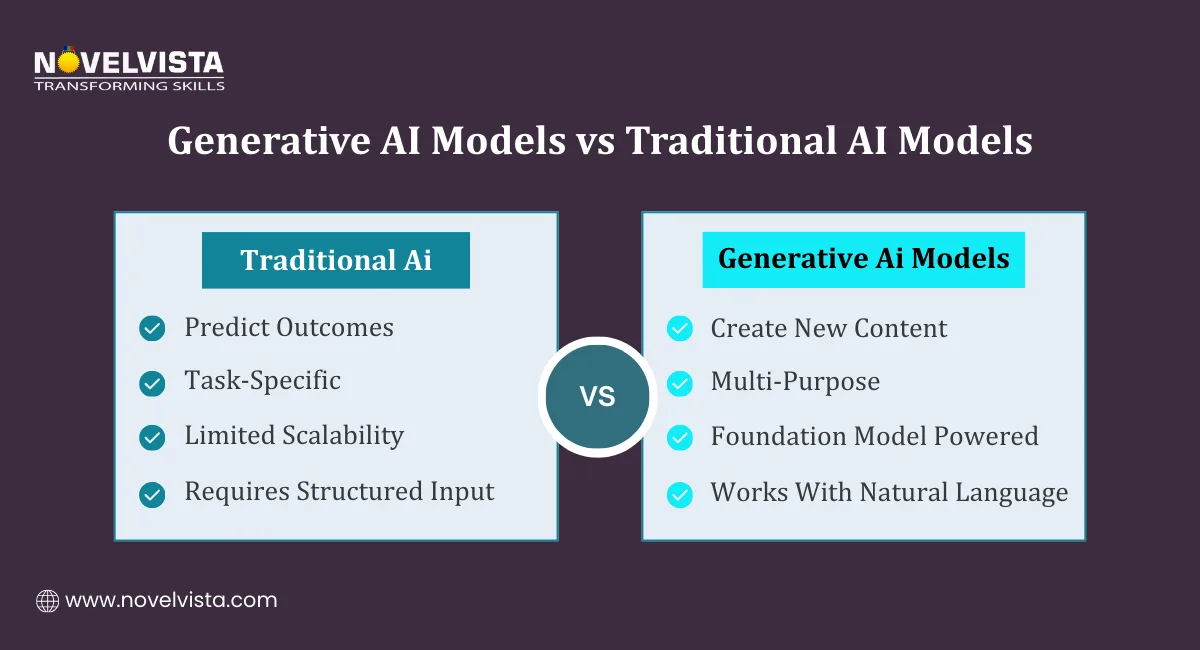
Foundation models in generative AI are evolving rapidly.
Trends include:
ChatGPT represents one evolution stage of these foundation systems.
But the ecosystem will continue expanding into autonomous agents, enterprise copilots, and multimodal assistants.
In conclusion, the classification of ChatGPT within generative AI models becomes clear when we examine it through a layered perspective. ChatGPT belongs to the broader ecosystem of generative AI models, yet it is not the foundational system itself; it is powered by foundation models in generative AI that are trained on massive datasets and later fine-tuned for specific tasks. It operates as a refined large language generative AI model and ultimately functions as a conversational AI application designed for practical, real-world interaction. Understanding what foundation models in generative AI are helps remove the confusion between a base generative AI model and the applications built on top of it. Generative AI Salary trends show that certified professionals often earn significantly higher packages due to their validated expertise in generative AI technologies. As generative AI models continue to reshape industries, professionals who understand the classification of ChatGPT within generative AI models gain both technical clarity and strategic insight. The real advantage lies not just in using AI tools, but in understanding the architecture that powers them.
Ready to build real expertise in generative AI models?
Join NovelVista’s Generative AI Professional Training and gain practical knowledge of foundation models in generative AI, hands-on experience with modern AI tools, and industry-relevant implementation strategies. Designed for IT professionals, developers, architects, and business leaders, this course helps you confidently understand the classification of ChatGPT within generative AI models and apply generative AI model concepts in real-world business environments.
Start your generative AI professional journey today!
Author Details

Confused About Certification?
Get Free Consultation Call
Stay ahead of the curve by tapping into the latest emerging trends and transforming your subscription into a powerful resource. Maximize every feature, unlock exclusive benefits, and ensure you're always one step ahead in your journey to success.