Category | AI And ML
Last Updated On 08/04/2026
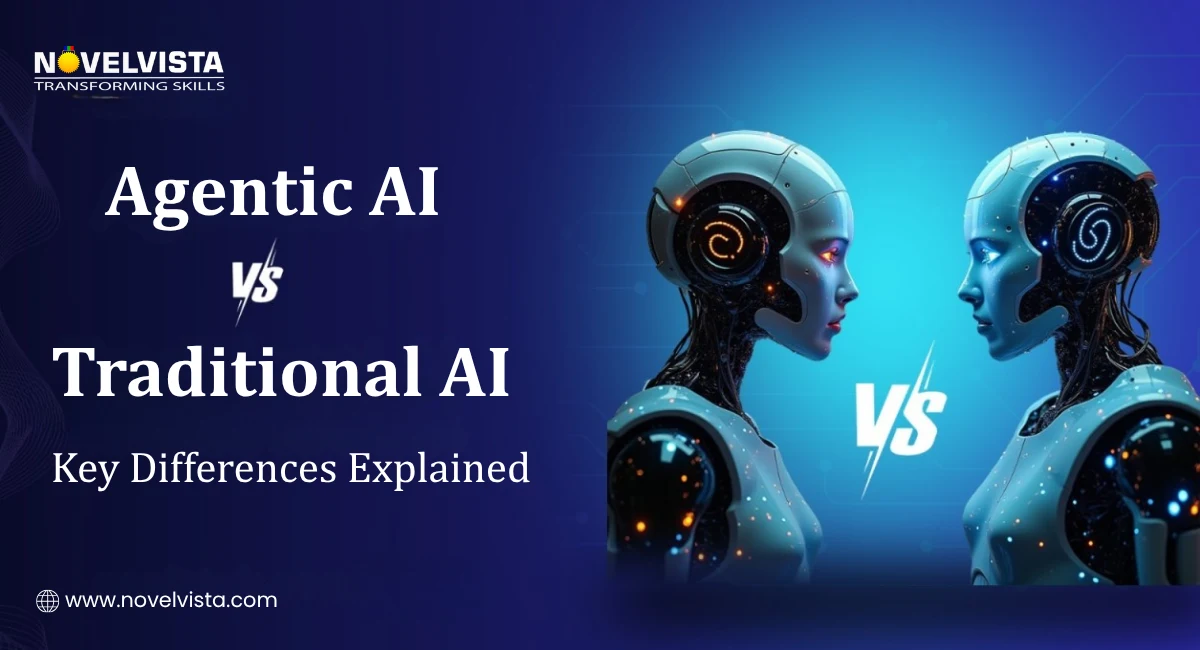
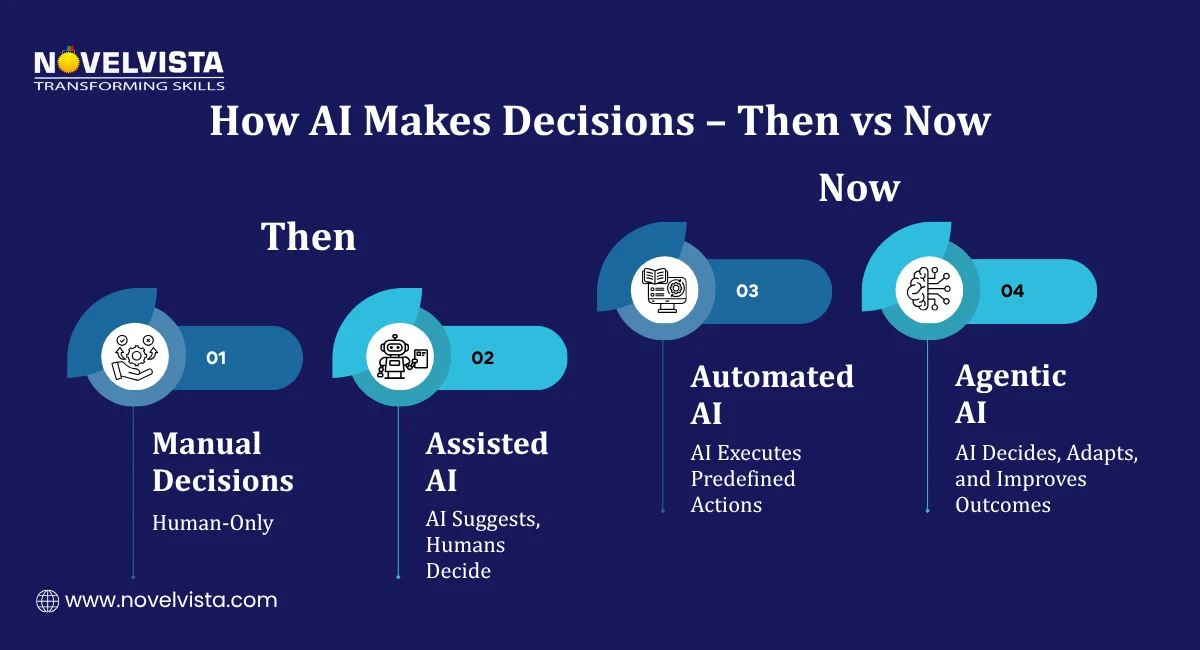
AI didn’t just evolve it quietly changed its role.
What started as systems that could analyze data and follow instructions is now transforming into technology that can set goals, make decisions, and take action on its own. That’s not just an upgrade it’s a fundamental shift in how intelligence is built and used.
And this shift is exactly why the conversation around agentic AI vs traditional AI is gaining momentum.
For years, traditional AI has been the backbone of automation powering chatbots, recommendations, and predictive models. But here’s the catch: it still waits for instructions. It reacts. It depends.
Agentic AI, on the other hand, doesn’t just respond it initiates.
It can plan, adapt, and execute tasks with minimal human input, turning AI from a support tool into an independent problem-solver.
So the real question isn’t just what is AI anymore?
It’s:
If you’re trying to understand the real agentic AI vs traditional AI differences, evaluate whether agentic AI can replace traditional automation, or decide what fits your business best you’re exactly where you need to be.
Let’s break it down.
Before diving into Agentic AI vs Traditional AI, it’s important to understand the foundation.
Traditional AI refers to systems designed to perform specific tasks based on predefined rules or trained models. These systems rely heavily on structured data and human-defined objectives.
While effective, traditional AI systems operate within fixed boundaries. They don’t make independent decisions beyond their programming.
This is where the shift toward agentic AI vs traditional models becomes significant.
Agentic AI represents the next evolution of artificial intelligence.
Unlike traditional systems, Agentic AI is designed to act autonomously, make decisions, and achieve goals with minimal human intervention.
Instead of just responding to inputs, Agentic AI systems proactively plan, execute, and optimize actions.
A key reason this shift is accelerating in the agentic AI vs traditional AI systems debate is the emergence of the Model Context Protocol (MCP).
In 2026, AI is no longer a “black box.” MCP acts as a universal plug-and-play interface, allowing agents to securely connect with tools like Google, Slack, and Amazon Web Services without custom integrations.
This enables Agentic AI to access, decide, and act across systems, making the shift from reactive to proactive intelligence the biggest differentiator.
Understanding the agentic AI vs traditional AI differences requires a side-by-side comparison.
This agentic AI vs traditional AI comparison clearly shows how AI is evolving from tools to intelligent collaborators.
Automation has been a key driver of efficiency but not all automation is equal.
When comparing agentic ai vs traditional automation, the difference lies in intelligence.
Traditional automation executes tasks.
Agentic AI thinks, decides, and acts.
Process automation is widely used in IT, HR, and operations. But the agentic ai vs traditional process automation debate highlights a major shift.
For example, in IT operations:
This is a major leap in operational efficiency.
Step-by-step roadmap to implement Agentic AI in real-world scenarios
Practical frameworks for building autonomous, decision-driven systems
Expert insights to transition from traditional AI to agentic AI successfully
Let’s explore how agentic AI vs traditional AI systems play out across industries.
The rise of agentic commerce vs traditional AI in ecommerce is transforming customer experiences.
What’s accelerating the agentic AI vs traditional AI systems evolution is the move from a single AI agent to Multi-Agent Systems (MAS) also known as “The Swarm.”
Instead of one AI handling everything, multiple specialized agents collaborate, communicate, and coordinate to solve complex problems.
Together, this collaborative swarm delivers a seamless, end-to-end experience something traditional AI simply cannot achieve alone.
Why are organizations shifting toward Agentic AI?
Agentic AI eliminates manual intervention, speeding up processes.
It can handle complex workflows across systems without human input.
Unlike static models, Agentic AI improves over time.
Real-time insights enable smarter actions.
These advantages make the agentic AI vs traditional AI differences more impactful in business transformation.
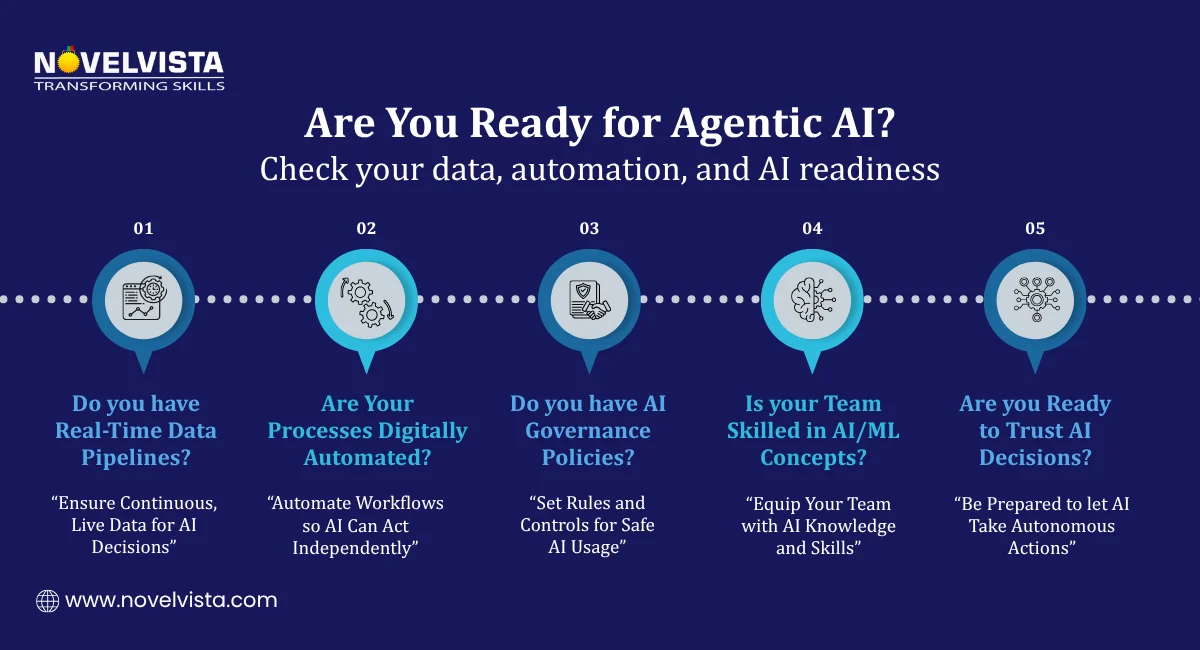
Despite its potential, Agentic AI comes with challenges.
As AI systems become autonomous, the focus shifts from basic oversight to traceability and control.
For IT auditors especially professionals aligned with CISA and ISO standards the goal is no longer just monitoring AI decisions, but ensuring a “Flight Recorder” for AI actions.
This means:
Organizations need strong control frameworks to define boundaries, permissions, and escalation paths for autonomous agents.
Implementation requires advanced infrastructure, integration capabilities, and skilled expertise.
So while evaluating agentic AI vs traditional AI comparison, it’s important to balance innovation with control.
Choosing between the two depends on your needs.
This practical approach helps organizations navigate the agentic ai vs traditional automation differences effectively. Master in-demand Agentic AI Skills to design, deploy, and manage autonomous systems that drive smarter, faster decision-making.
The conversation around Agentic AI vs Traditional AI is no longer theoretical it’s a strategic shift shaping how businesses operate and scale.
Traditional AI has enabled automation and insights, but in fast-changing environments, its limitations are clear. Understanding the agentic AI vs traditional AI differences is now essential to stay competitive.
Agentic AI goes beyond execution it redefines AI’s role from responding to initiating, enabling end-to-end intelligent workflows and self-optimizing systems.
But the real transformation is in how humans work with AI.
The future isn’t human vs AI it’s orchestration.
IT professionals are evolving from administrators to AI orchestrators, managing a team of autonomous agents instead of performing tasks themselves.
Because the future of AI isn’t about replacement it’s about leading intelligent systems that can think, decide, and act with purpose.
And the real question is:
Will your systems keep up with that future or fall behind it?
Ready to stay ahead in the rapidly evolving world of AI?
Join NovelVista’s Agentic AI Certification Training and gain hands-on expertise in building autonomous AI systems, understanding real-world use cases, and mastering next-generation intelligent automation. Designed for IT professionals, business leaders, and AI enthusiasts, this course equips you with the practical knowledge and globally relevant skills needed to navigate the shift from traditional AI to agentic AI with confidence.
Start your Agentic AI journey today!
Author Details

Confused About Certification?
Get Free Consultation Call
Stay ahead of the curve by tapping into the latest emerging trends and transforming your subscription into a powerful resource. Maximize every feature, unlock exclusive benefits, and ensure you're always one step ahead in your journey to success.