Category | Security
Last Updated On 25/03/2026
Did you know that by 2026, global cybersecurity spending is expected to cross $520 billion? At the same time, organizations are facing increasing pressure to secure their systems, manage risks, and stay compliant with evolving regulations.
This shift has created a strong demand for professionals who can do more than just manage IT companies now need experts who can audit systems, identify vulnerabilities, and ensure governance standards are met.
That’s exactly where the CISA certification stands out.
But before you dive into preparation, there’s one key thing to figure out:
Are you actually eligible to become a Certified Information Systems Auditor?
Whether you’re an IT professional, an aspiring auditor, or someone exploring a career in cybersecurity and compliance, understanding the requirements beforehand can save you time, effort, and confusion later.
In this guide, we’ll walk you through everything you need to know from eligibility and experience requirements to what it really takes to get certified.
The Certified Information Systems Auditor (CISA) certification is one of the most respected credentials in IT auditing, governance, and risk management.
It validates your ability to:
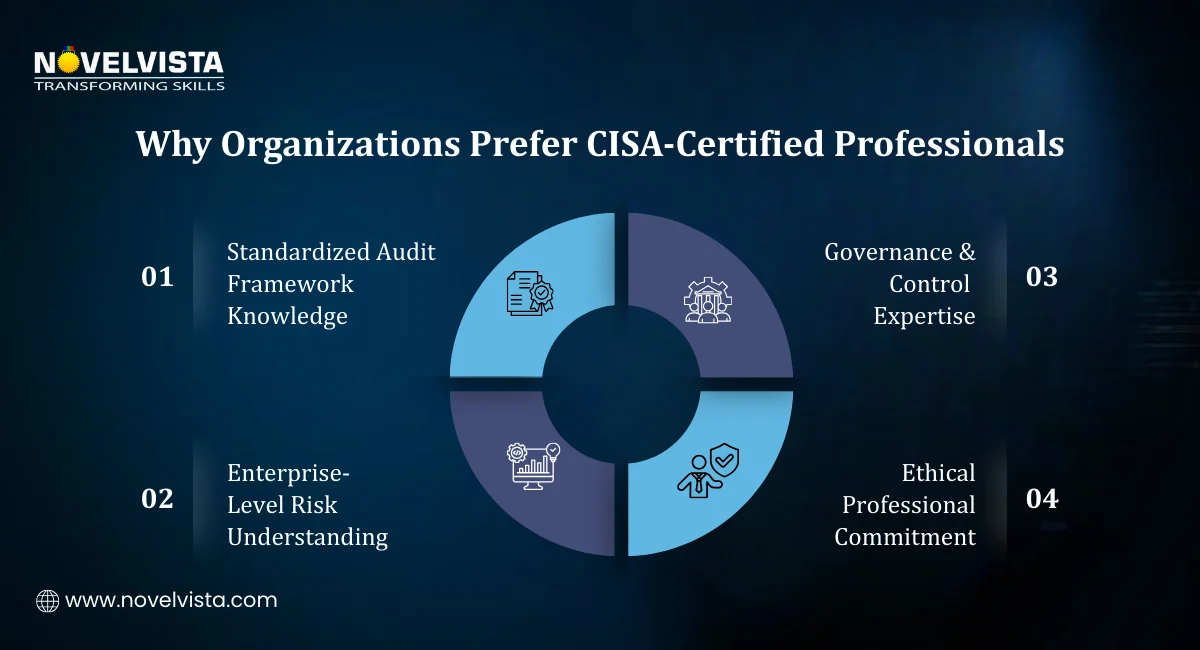
With organizations facing increasing cyber threats and compliance pressures, CISA-certified professionals are in high demand.
Why does it matter?
Before accessing these benefits, however, you must meet the CISA Certification Prerequisites.
One of the most common questions is: Who can apply for CISA?
The good news is that CISA is open to a wide range of professionals.
You can apply if you are:
Even if you don’t have deep technical expertise, you can still qualify as long as you meet the CISA Certification Prerequisites over time.
So, while anyone can take the exam, not everyone immediately qualifies for certification. That depends on the CISA work experience prerequisites.
If you're a student or planning a career switch, there’s good news. After passing the exam, you can claim an “Associate” status, which allows you to showcase your achievement even before completing the required work experience.
This is a great way to strengthen your resume, demonstrate your commitment to the field, and start opening doors to relevant roles. As you gain hands-on experience over time, you can then fulfill the remaining requirements and upgrade to full certification.
Let’s break down the CISA Certification Prerequisites into simple components.
To become officially certified, you need to:
These CISA Certification Prerequisites ensure that certified professionals are not only knowledgeable but also experienced and ethical.
The CISA work experience prerequisites are often the most critical part of eligibility.
You need 5 years of professional experience in:
Here’s where it gets flexible:
You can reduce the 5-year requirement through the following approved waivers:
These waivers make it easier for candidates from different educational and professional backgrounds to meet the CISA work experience prerequisites faster, without compromising on credibility.
This means you could qualify with as little as 2–3 years of experience, depending on your background.
Understanding these CISA work experience prerequisites is essential to planning your certification journey.
Get Free Copy:
The Complete Guide to CISA Certification
Know eligibility, exam format, and requirements at a glance
Use smart, proven strategies to prepare effectively
Follow a clear path to becoming a certified IT auditor
The official ISACA CISA prerequisites go beyond just passing an exam.
1. Pass the CISA Exam
2. Submit Work Experience
3. Agree to Code of Ethics
4. Continuing Professional Education (CPE)
These ISACA CISA prerequisites ensure that certified professionals remain competent and relevant in a fast-changing IT landscape.
Understanding how the exam is structured can give you a major advantage during preparation. Here’s the latest domain weight distribution:
| Domain | Topic Area | Weight (%) |
| Domain 1 | Information Systems Auditing Process | 21% |
| Domain 2 | Governance and Management of IT | 17% |
| Domain 3 | Information Systems Acquisition, Development & Implementation | 12% |
| Domain 4 | Information Systems Operations & Business Resilience | 26% |
| Domain 5 | Protection of Information Assets | 26% |
Key Insight:
Domains 4 and 5 together make up 52% of the exam, meaning more than half of your questions will come from operations, resilience, and security-related topics.
This is crucial “insider” information—if you focus your preparation heavily on these two domains, you can significantly improve your chances of passing on the first attempt.
Unlike many certifications, there’s no strict degree requirement in the CISA Certification Prerequisites.
However, having a background in:
Can significantly help.
Even if you’re new, these skills can be developed while working toward meeting the CISA Certification Prerequisites.
Many candidates misunderstand the CISA Certification Prerequisites, which can delay their certification.
Assuming the exam alone is enough
Passing the exam doesn’t grant certification—you must meet all prerequisites, including the required work experience. Also, once you pass the exam, you have exactly 5 years to apply for full certification. If you miss this window, your exam results expire, and you’ll need to retake the exam.
Ignoring experience documentation
You’ll need proof of your work experience.
Delaying application submission
You have a limited window after passing the exam to apply.
Misjudging eligibility
Not understanding who can apply for CISA can lead to confusion.
Being aware of these pitfalls helps you stay aligned with the ISACA CISA prerequisites.
If you’re wondering how to start, here’s a simple roadmap:
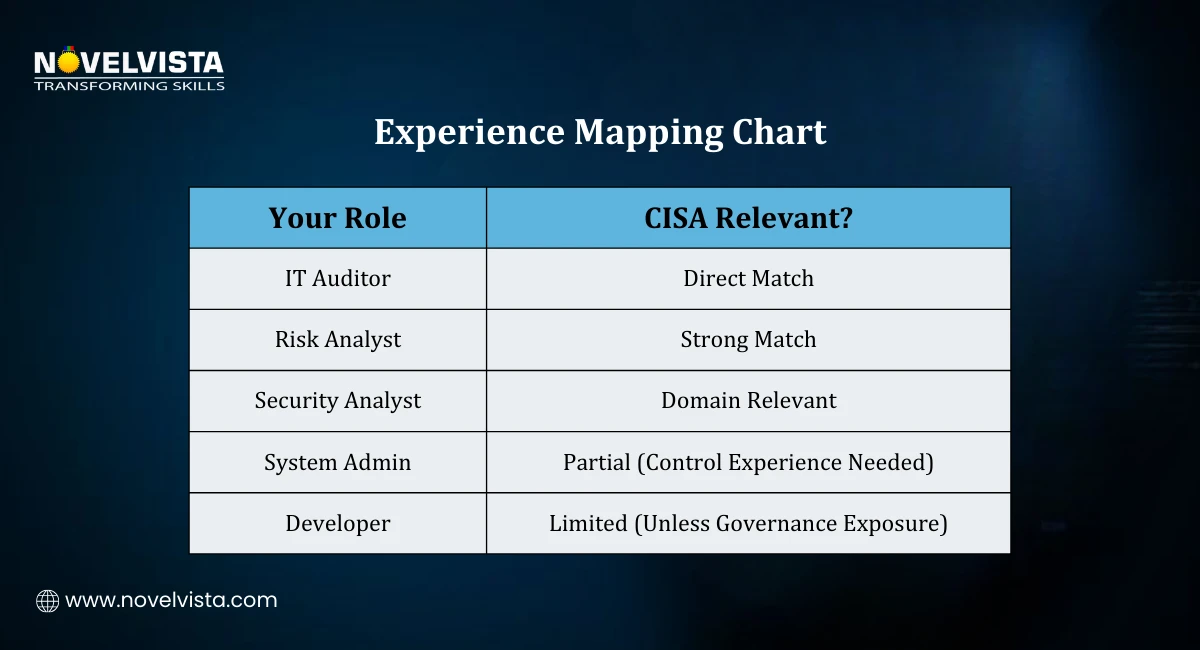
Understand who can apply for CISA and evaluate your current experience against the requirements. Take time to review your background in IT audit, security, or risk-related roles. This helps you clearly see where you stand and what gaps you may need to fill before moving forward.
Begin your preparation by focusing on core domains like IT audit, governance, and risk management. Build a strong conceptual foundation and practice regularly to improve accuracy. Consistent study and exposure to real-world scenarios will make the exam much more manageable.
Work in roles that align with the CISA work experience prerequisites, such as auditing, compliance, or information security. Hands-on experience is crucial for understanding how concepts apply in real business environments. This step also strengthens your profile for certification approval.
Schedule your exam once you feel confident with the syllabus and practice tests. Focus on time management and question analysis during the test. Clearing the exam is a major milestone, but remember it’s only one part of the certification journey.
After passing the exam, submit your application with documented experience and agree to the ISACA CISA prerequisites. Ensure all details are accurate and verified to avoid delays. This step officially validates your eligibility for becoming CISA certified.
To keep your certification active, earn Continuing Professional Education (CPE) credits annually. You must complete at least 20 CPE hours each year and a total of 120 hours over a 3-year cycle. Staying updated with industry trends ensures your skills remain relevant, while continuous learning reinforces your credibility as a trusted audit professional.
Following this structured approach ensures you meet all CISA Certification Prerequisites efficiently. Practicing CISA Certification Exam Questions is one of the most effective ways to understand the exam pattern, identify knowledge gaps, and boost your confidence before the final test.
Becoming a Certified Information Systems Auditor isn’t just about clearing an exam it’s about building real-world credibility in auditing, risk management, and information security.
To get there, you need a clear understanding of what’s required from eligibility and relevant experience to meeting professional and ethical standards. Each step plays a role in shaping you into a well-rounded audit professional.
The good news? Demand for skilled IT auditors is only increasing, and organizations are actively looking for professionals who can strengthen security, ensure compliance, and manage evolving risks.
If you’re serious about growing your career in IT audit, now is the time to take the first step. Start preparing, gain the right experience, and move steadily toward becoming a trusted expert in the field.
Ready to take the next step toward becoming a Certified Information Systems Auditor?
Join NovelVista’s CISA Certification Training and gain in-depth auditing knowledge, real-world insights, and globally recognized credentials aligned with industry standards. Designed for IT professionals, auditors, and risk management experts, this course equips you with the skills needed to confidently assess systems, manage risks, and ensure compliance in today’s complex digital landscape.
Start your CISA certification journey today!

Author Details

Course Related To This blog
CISA® Certified Information Systems Auditor
Confused About Certification?
Get Free Consultation Call
Stay ahead of the curve by tapping into the latest emerging trends and transforming your subscription into a powerful resource. Maximize every feature, unlock exclusive benefits, and ensure you're always one step ahead in your journey to success.