Category | AI And ML
Last Updated On 14/04/2026
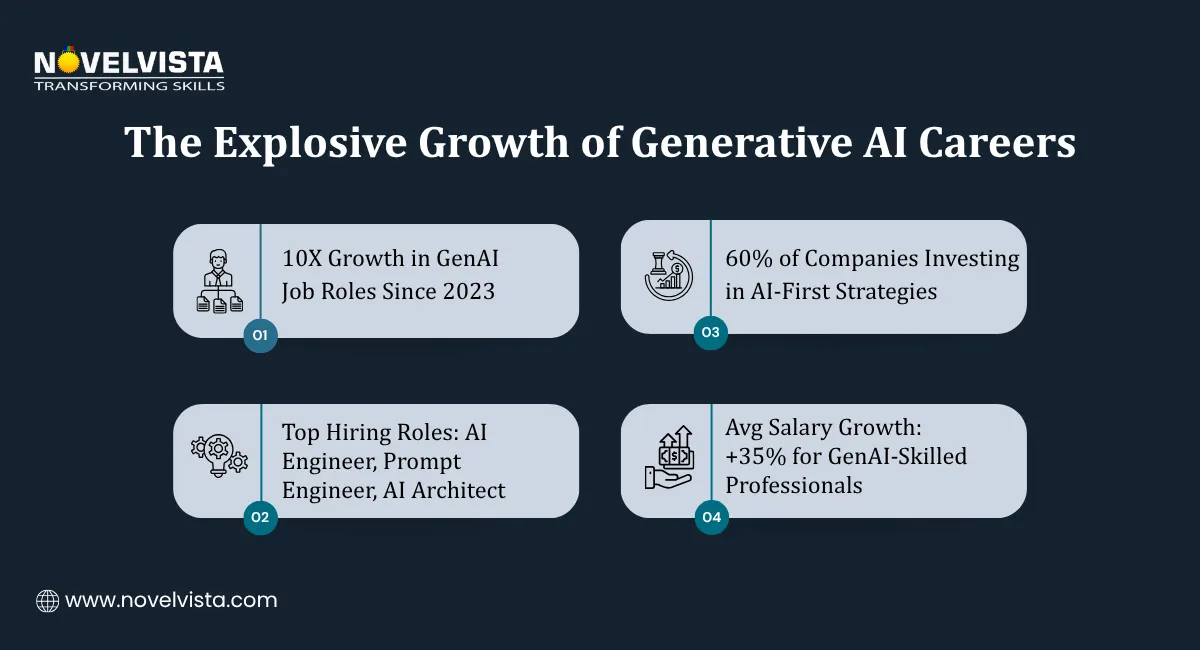
Did you know that by 2026, over 75% of enterprises are expected to adopt Generative AI, accelerating the demand for skilled professionals at an unprecedented pace? From intelligent automation to hyper-personalized content creation, Generative AI is rapidly transforming how businesses operate and at the heart of this shift is the generative AI engineer.
But stepping into this field raises some important questions:
Whether you’re an IT professional, developer, or data enthusiast looking to stay ahead, understanding the Generative AI Engineer Skills 2026 is your first step toward building a future-ready career. In this blog, we’ll simplify what truly matters, highlight the most in-demand capabilities, and guide you with a clear, practical roadmap to get started.
A generative AI engineer is a professional who designs, builds, and deploys AI systems capable of generating text, images, code, and more. Unlike traditional AI roles that focus on prediction or classification, this role revolves around creation.
In simple terms, a generative AI engineer bridges the gap between AI research and practical applications.
To succeed in this role, mastering the right generative AI engineer skills is critical. Let’s start with the fundamentals.
Strong coding skills form the backbone of all skills required for generative AI engineer roles.
Languages to focus on:
You should also understand APIs, backend systems, and version control tools like Git.
Before diving into GenAI, you need a solid understanding of:
These concepts form the base of generative AI skills and help you understand how models like GPT work.
Large Language Models (LLMs) are the core of modern GenAI systems.
Key areas to master:
This is one of the most practical skills needed to become a generative AI engineer, as it directly impacts output quality. A comprehensive Generative AI Certification Exam Guide can help you understand key concepts, prepare effectively, and boost your chances of passing on your first attempt.
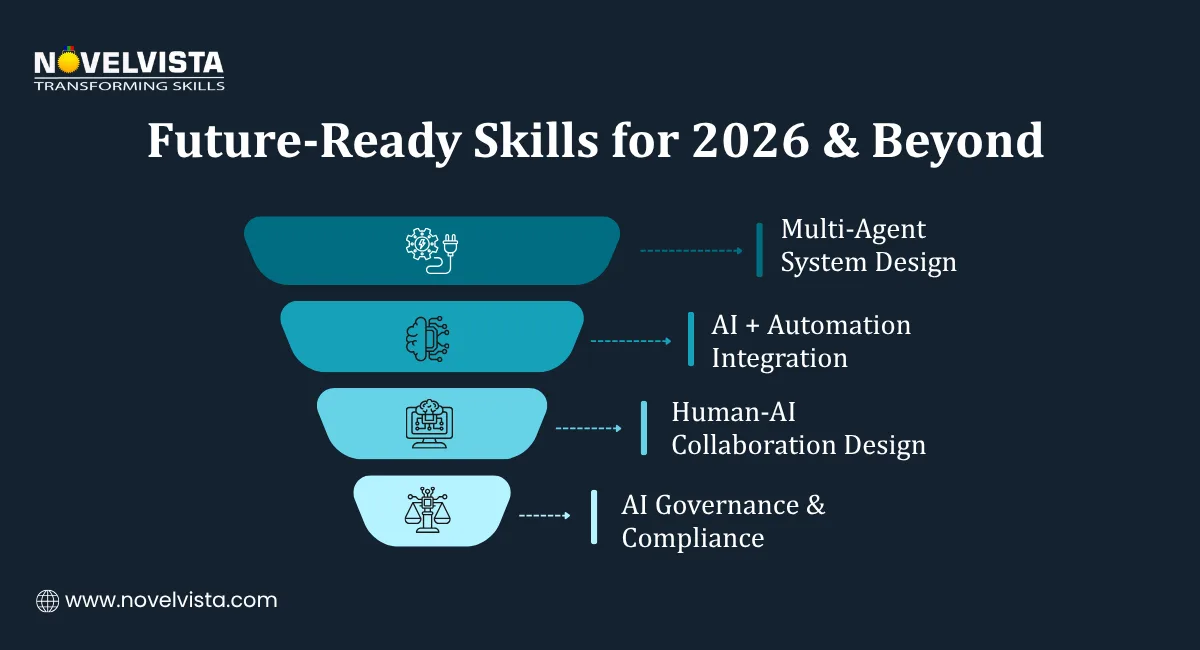
Once you’ve built your foundation, it’s time to move into advanced capabilities that define the Generative AI Engineer Skills 2026.
Retrieval-Augmented Generation (RAG) is a game-changer.
Why it matters:
You’ll need to learn:
These RAG and LLM fine-tuning skills are essential for building enterprise-grade AI systems.
One of the hottest trends right now is Agentic AI.
Instead of single prompts, AI systems are evolving into multi-step autonomous agents.
Key capabilities:
Mastering Agentic AI Workflow Skills allows you to build systems that think, plan, and execute tasks independently. Entry-Level Jobs provide the perfect starting point to gain hands-on experience, develop core skills, and build a strong foundation for long-term career growth.
Building a model is just the beginning deploying it is where real value lies.
Important areas:
These are crucial skills required for generative AI engineer roles in production environments.
In enterprise environments, data is not just a resource it is a governed asset. For a generative AI engineer, the ability to manage data responsibly and align with global standards is no longer optional; it is a critical expectation.
High-quality, well-governed data is the foundation of reliable AI systems.
You should know:
As AI adoption scales, organizations are placing strong emphasis on governance frameworks and regulatory alignment.
Key focus areas:
A critical addition to modern generative AI skills is understanding global standards such as ISO/IEC 42001 (AI Management System). Engineers must be capable of designing and deploying AI systems that align with this framework ensuring accountability, transparency, and continuous monitoring.
In consulting and enterprise contexts, this elevates your role from a developer to a trusted AI practitioner who can build systems that are not only powerful, but also compliant, ethical, and business-ready.
To build the strong skills needed to become a generative AI engineer, you must be familiar with modern tools:
These tools help you implement your knowledge efficiently.
Technical expertise alone isn’t enough.
Top-performing professionals also have:
These complement your generative AI engineer skills and make you industry-ready.
If you’re wondering how to become a GenAI engineer, here’s a structured roadmap that not only helps you enter the field but also grow into senior leadership roles:
Start with Python and machine learning fundamentals. Build a strong base in data structures, APIs, and basic model concepts.
Dive into prompt engineering, transformer architectures, and how Large Language Models function in real-world applications.
Create practical projects like chatbots, AI assistants, or content generators to demonstrate your generative AI skills.
Focus on RAG, fine-tuning, and Agentic AI workflows to develop industry-relevant expertise.
Work with cloud platforms and MLOps tools to take models from development to production.
This field evolves rapidly continuous learning is essential to stay competitive.
As you build the skills needed to become a generative AI engineer, your career can evolve across multiple levels:
This progression ensures that your journey doesn’t just stop at learning how to become a GenAI engineer but positions you for long-term growth, leadership, and strategic impact in the AI-driven future.
Following this roadmap ensures you develop all the skills needed to become a generative AI engineer. Explore a wide range of Entry-Level Jobs After Generative AI Certification, including roles like AI Associate, Prompt Engineer, and Junior Generative AI Engineer, to kickstart your career in the evolving AI landscape.
The demand for a skilled generative AI engineer is set to grow exponentially as organizations continue embedding AI into their core strategies and operations. Those who invest in mastering the right Generative AI Engineer Skills 2026 will not just stay relevant they’ll lead the next wave of innovation.
From building a strong foundation in programming to advancing into Agentic AI Workflow Skills and RAG and LLM fine-tuning skills, every capability you develop moves you closer to becoming a future-ready professional. This is more than just a career path it’s an opportunity to shape how technology interacts with the world.
If you’re serious about stepping into this space, the best time to start is now. Focus on developing your generative AI skills, experiment with real-world applications, and continuously evolve with the technology. The future of AI is being built today and you have the chance to be a part of it.
Ready to build your expertise as a generative AI engineer and stay ahead in the evolving AI landscape?
Join NovelVista’s Generative AI Professional Training and gain hands-on experience with real-world tools, practical use cases, and in-demand Generative AI Engineer Skills 2026. Designed for IT professionals, developers, and aspiring AI specialists, this course equips you with essential generative AI skills, including Agentic AI Workflow Skills and RAG and LLM fine-tuning skills, to help you confidently design and deploy modern AI solutions.
Start your Generative AI journey today!
Author Details

Course Related To This blog
Generative AI Professional
Agentic AI Certification
Confused About Certification?
Get Free Consultation Call
Stay ahead of the curve by tapping into the latest emerging trends and transforming your subscription into a powerful resource. Maximize every feature, unlock exclusive benefits, and ensure you're always one step ahead in your journey to success.