Category | AI And ML
Last Updated On 17/06/2026
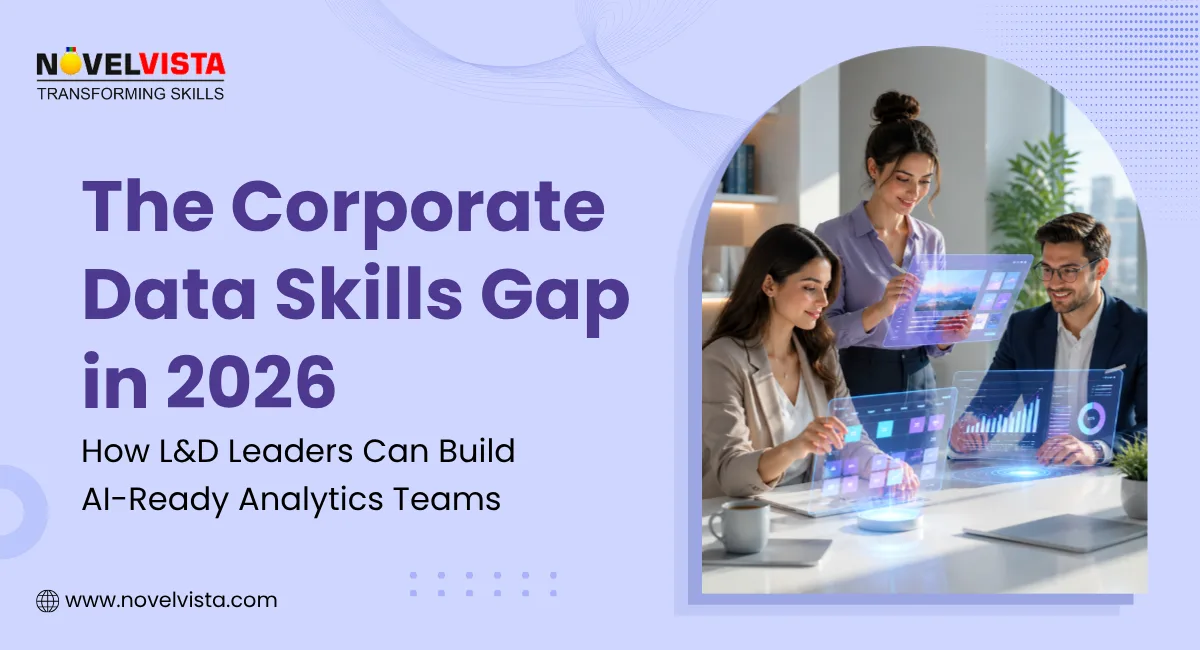
For the last few years, conversations around digital transformation have been dominated by artificial intelligence. Organizations have invested in AI copilots, automation platforms, predictive analytics, and data modernization initiatives, expecting faster decisions and higher productivity.
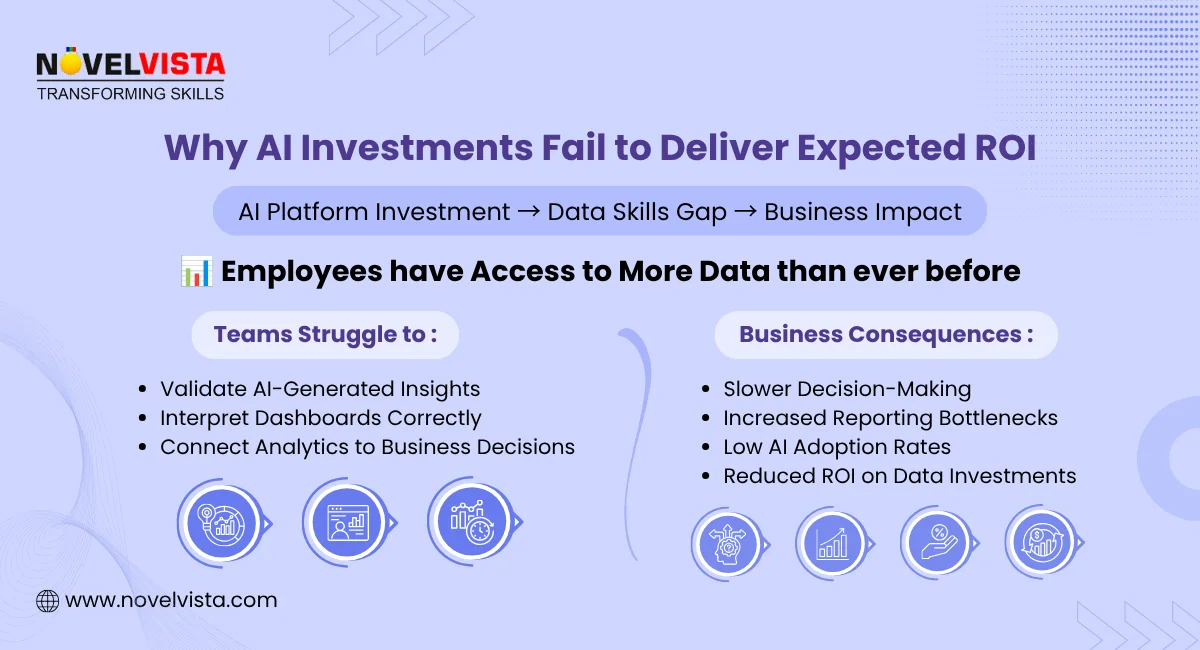
Yet many of these initiatives run into the same unexpected challenge: employees have access to more data than ever before, but not enough people know how to interpret it, visualize it, or use it confidently to make business decisions.
This is the corporate data skills gap, and in 2026, it is becoming one of the biggest barriers to successful AI adoption.
A common assumption is that AI will simplify analytics to the point where specialized skills are no longer required. With natural language queries and AI-generated dashboards, anyone can ask a question and get an answer.
But the reality inside enterprises looks different.
AI can generate insights, but employees still need to:
Without these capabilities, organizations risk making faster decisions but not necessarily better ones.
In many companies, AI is exposing gaps that have existed for years. Teams are highly dependent on a small group of analysts, reporting requests pile up, and business units continue to rely on spreadsheets because they lack confidence in modern analytics tools.
Traditionally, analytics capability was considered the responsibility of the BI or data team. In 2026, that model is no longer sustainable.
Marketing teams are expected to monitor campaign performance in real time. Operations managers need visibility into the supply chain and process metrics. Finance teams rely on interactive dashboards instead of static reports. HR leaders use workforce analytics to guide hiring and retention strategies.
In other words, data has become everyone's responsibility.
However, many organizations still have a narrow analytics talent base. A handful of specialists create dashboards and reports, while hundreds of business users consume information without fully understanding how to explore, question, or validate it.
The result is a familiar cycle:
The issue is not a lack of technology. It is a lack of enterprise-wide data capability.
Historically, AI strategy has been led by IT and digital transformation teams. But the workforce dimension of AI adoption is increasingly becoming an L&D challenge.
Technology can be purchased. Skills cannot.
Forward-thinking organizations are recognizing that successful AI transformation depends on building a workforce that is comfortable working with data. This means moving beyond one-off technical workshops and creating structured, role-based analytics learning pathways.
L&D teams now have an opportunity to bridge the gap between technology investments and business outcomes by helping employees develop practical data skills that they can apply immediately in their day-to-day roles.
The question is no longer, "Should we train our people on analytics?" It is, "How quickly can we build the capabilities needed to support our AI strategy?"
The most successful organizations are not trying to turn every employee into a data scientist. Instead, they build analytics capability in layers, aligned to different roles across the business.
The first step is ensuring that employees understand how to consume and interact with data. Managers and functional teams should be able to navigate dashboards, interpret KPIs, and ask meaningful business questions without relying on technical specialists.
This creates a common language around data and encourages evidence-based decision-making across the organization.
The next layer focuses on enabling business users and analysts to prepare, explore, and visualize data independently. Self-service analytics reduces the burden on centralized BI teams and empowers departments to solve day-to-day reporting needs more efficiently.
Organizations that invest in self-service capabilities often see improvements not only in productivity but also in the speed of business decisions.
As analytics adoption grows, organizations need professionals who can design scalable data models, manage reporting environments, and ensure consistency across business units.
Without governance, self-service analytics can quickly turn into dashboard sprawl, duplicate reports, and conflicting metrics. Building advanced BI capability helps organizations maintain trust in their data while supporting enterprise growth.
Perhaps the most important step is measuring analytics training by its business impact rather than completion rates.
Instead of tracking the number of employees certified, organizations should evaluate outcomes such as:
When learning initiatives are tied directly to operational metrics, they become strategic investments rather than training expenses.
Many organizations respond to the analytics skills shortage by trying to hire experienced data professionals. While external hiring is important, it is not enough to meet growing demand.
Experienced analytics talent remains expensive and highly competitive. More importantly, a few new hires cannot solve a company-wide capability challenge.
Upskilling existing employees offers a more scalable approach. Business teams already understand organizational processes, customers, and operational priorities. Equipping them with modern analytics skills allows organizations to unlock greater value from the talent they already have.
For L&D leaders, this shift represents a strategic opportunity: moving from delivering isolated technical training programs to becoming an active partner in digital transformation.
The conversation around AI often focuses on models, platforms, and automation. But technology alone does not create a competitive advantage. The organizations that will lead in the coming years are those that enable their people to work confidently with data.
An AI-ready enterprise is not one where only a specialized analytics team understands the numbers. It is one where managers, analysts, business users, and leaders all share the ability to interpret insights, ask the right questions, and turn data into informed action.
For L&D leaders, the challenge is clear but so is the opportunity. Building enterprise-wide analytics capability is no longer simply about supporting employee development. It is about creating the workforce foundation that every successful AI strategy depends on.
In 2026, the companies that close the data skills gap will not just adopt AI more effectively they will make better decisions, respond faster to change, and build a lasting competitive advantage. That is why many organizations are moving beyond ad hoc analytics workshops and investing in structured, role-based learning pathways that build long-term capability. Programs such as Design and Manage Analytics Solutions Using Power BI corporate training can help teams develop the practical skills needed to create, manage, and scale modern analytics solutions across the enterprise.
Because in the age of AI, the organizations that win will not simply have access to more data they will have more people who know how to use it.
Author Details

Confused About Certification?
Get Free Consultation Call
Stay ahead of the curve by tapping into the latest emerging trends and transforming your subscription into a powerful resource. Maximize every feature, unlock exclusive benefits, and ensure you're always one step ahead in your journey to success.