DevOps Foundation Certification | Training Course
DevOps Course Training and Certification provided by NovelVista supports IT professionals with important DevOps skills and knowledge. As a leading Accredited Training Organization (ATO), we provide comprehensive DevOps Foundation certification training designed to enhance your career prospects. Get DevOps Foundation certified today and accelerate your growth in the IT industry!
- Industry Expert Trainers
- Exam fee included
- Accredited Trainer
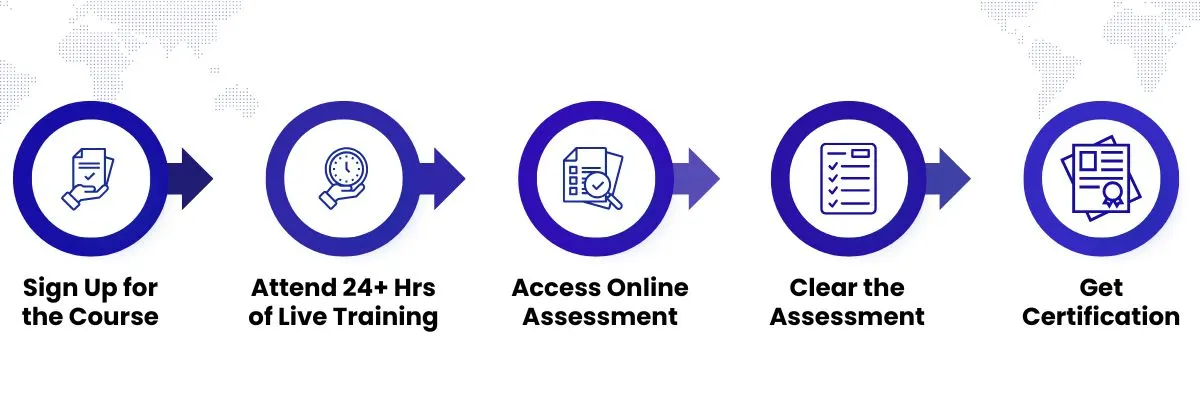
- Online learning session with live instructor-led training

DevOps Foundation Course Certification Overview
Ever wondered what truly DevOps Course Certification's job is? It gracefully fills the gap between Development and Operations, That's the core job of DevOps and this DevOps Foundation Course Certification is your pathway to mastering it.
Our DevOps Course is not just about tools and automation; it's about completely changing the way you think, work, and provide value. You'll explore the basic principles of DevOps, understand how smooth collaboration increases efficiency, and learn how continuous integration, delivery, and feedback loops change traditional workflows.
This DevOps Training equips you with real-world insights on how to accelerate software delivery without compromising reliability. From smoother handoffs between dev and ops to building a blame-free culture that encourages empathy and shared goals, this course covers it all.
By the end of the training, you won't just understand DevOps, you'll live it. Whether you're part of IT, development, QA, or operations, this course supports you to drive transformation, adapt sustainable practices, and keep up with fast-moving business demands through intentional change.
What You Will Get?
Learning Outcome
After the completion of the course, the participants would be able to:
Training Calendar
English
- Self paced videos, assessments, recall quizzes, more
- For more details, reach us at training@novelvista.com
Includes Training, Exam & Certification
Lifetime Access
- Self paced videos, assessments, recall quizzes, more
- For more details, reach us at training@novelvista.com
Includes Training, Exam & Certification
DevOps Course Curriculum
Module 1: Introduction to DevOps+
- Definition and evolution of DevOps
- Agenda for the DevOps Foundation Certification Workshop
- About the Exam, Format, and what is tested.
- Pre-requisites for the Exam
- Overview of DevOps Course Training and Certification for practical skills and career growth.
- Understand the purpose, objectives, and the business value of adopting practices.
- The role in modern software development and IT operations.
- Business value: Faster time to market, improved collaboration, reduced risk, and enhanced customer satisfaction.
- Key benefits for organizations: Cost efficiency, improved software quality, and continuous delivery.
Module 2: Key Principles+
- Explore the key guiding principles of DevOps and their impact on business agility. The following are the key Principles:
- Collaboration between the Development and Operations teams
- Continuous Integration (CI) and Continuous Deployment (CD).
- Infrastructure as Code (IaC).
- Automation of manual processes.
- Monitoring and feedback loops for continuous improvement.
- Understanding the basics of DevOps Foundation Training for career development.
Module 3: Coordination with Other Frameworks+
- Learn the relationship between DevOps and relevant frameworks and standards (e.g., Agile, ITIL, Lean) You’ll get the knowledge of:
- Explore the foundational principles: Flow, Feedback, and Continual Learning
- The integration of DevOps with Agile methodologies.
- Relationship with ITIL (Information Technology Infrastructure Library) for service management.
- Lean principles and their application in DevOps.
- How does it enhance the implementation of Scrum, Kanban, and other Agile frameworks?
- The synergy between DevOps and Continuous Delivery.
Module 4: DevOps Culture+
- What is DevOps Culture?
- Examine the characteristics of a DevOps culture and the essential elements for driving cultural change within an organization. Key Pillars of a High-Performing of a DevOps culture:
- Creating a culture of trust and collaboration.
- Breaking down silos between development, operations, and other departments
- Encouraging shared responsibility and accountability.
- The importance of communication and transparency.
- Promoting a growth mindset and a focus on learning from failures.
- Real-life examples of organizations that successfully implemented a culture.
Module 5: Roles and Organizational Considerations+
- Understand the responsibilities of DevOps key roles and how they align with different organizational structures.
- Overview Of Key Roles
- What are the Key roles of DevOps.
- DevOps Engineer, Release Manager, Automation Engineer, and Site Reliability Engineer (SRE).
- Defining responsibilities for development, operations, and quality assurance teams.
- What are the Organizational considerations?
- Aligning roles with company structures and team dynamics.
- Transitioning from traditional IT structures to enabled teams.
- Leadership’s role in driving and supporting adoption.
- Skills required for roles and career growth opportunities.
Module 6: Best Practices+
- Overview Of DevOps Practices.
- Dive into common DevOps practices and the related processes that drive continuous integration, delivery, and improvement. The following are the Key DevOps Practices and Related Processes:
- Continuous Integration (CI): Automated testing, building, and integration of code.
- Continuous Delivery (CD): Automated release pipeline and deployment strategies.
- Test-Driven Development (TDD) and behavior-driven development (BDD).
- Infrastructure Automation using tools like Ansible, Chef, and Puppet
- Configuration Management and version control with Git and other tools.
- Monitoring and Logging practices to ensure system reliability and feedback loops.
Module 7: Tools and Automation+
Identify the common technologies in DevOps automation and understand their critical role in enhancing efficiency.
- Tools for automation: Jenkins, CircleCI, GitLab CI, etc.
- Infrastructure as Code (IaC): Tools like Terraform, AWS CloudFormation, and Ansible.
- Automated testing tools: Selenium, JUnit, TestNG.
- Managing and automating infrastructure scaling with Kubernetes and Docker.
- Managing configuration through tools like Puppet, Chef, and SaltStack
- Implementing continuous monitoring with tools like Prometheus, Grafana, and New Relic.
- Automation best practices are covered in the DevOps Foundation Course and Certification.
Module 8: Challenges and Key Factors+
- Address the challenges, risks, and critical success factors associated with adopting DevOps, along with key performance measures for effective implementation.
- Challenges in adoption: Resistance to change, skill gaps, and legacy systems.
- Risks and pitfalls: Over-automation, lack of proper security measures, and cultural barriers.
- Key success factors: Leadership buy-in, training, and clear objectives.
- Measuring success: KPIs and metrics like deployment frequency, lead time, and mean time to recovery (MTTR).
- Frameworks for successful adoption: The CALMS model (Culture, Automation, Lean, Measurement, and Sharing).
- Real-world case studies of successful implementation.
Module 9: Toolchains, Monitoring, and Metrics That Matter+
- Overview of DevOps toolchains: Git, Jenkins, Docker, etc.
- Importance of monitoring for reliability.
- Key metrics: MTTD, MTTR, Lead Time, Deployment Frequency.
- Handling change fatigue and improving service reliability.
Module 10: Continuous Improvement and DevOps training Maturity+
- Establishing feedback loops to drive improvement.
- Change the failure rate and how to reduce it.
- Using checklists and maturity models (CALMS, DORA).
- Building a long-term DevOps roadmap for organizational growth.
Course Details
What will I learn?+
DevOps develop productivity and collaboration by automating workflows and infrastructure and continuously measuring the performance of the applications. In this course, you will learn about Code Automation, Version Controlling, Continuous Deployment, Continuous Integration, Configuration Management, and Monitoring of applications.
Managing the complete lifecycle of applications and services, including end-of-life conditions.
DevOps is a growing culture that has been adored across the industries since ages. DevOps Certification course curriculum is aimed towards the understanding of
- The need for DevOps and the benefit it offers
- How it helps in continuous delivery and offers solutions to problems
- The common Infrastructure Servers, Scalability and Availability
- Implementation of automated installations and deployments
- Performance and basic Security for Infrastructure
- Implementation and visualization of concepts
- The need and concepts of Monitoring and Logging
- The Continuous Integration and Deployment
- Various DevOps tools like Chef, Puppets, Jenkins, Nagios, Docker, Git, etc
- Business benefits of DevOps
- DevOps develop productivity and collaboration by automating workflows and infrastructure and continuously measuring the performance of the applications. In this course, you will learn about Code Automation, Version Controlling, Continuous Deployment, Continuous Integration, Configuration Management, and Monitoring of applications.
- Managing the complete lifecycle of applications and services, including end-of-life conditions.
Key Features+
- Classroom training during weekends
- Study materials accredited by DevOps Institution
- Practice tests to make you certification ready
- Virtual training session for Bangalore and Mumbai
After completing this DevOps Certification Training, you should be able to:
- Manage and keep a track of different versions of the source code using Git
- Build and Automate Test using Jenkins and Maven
- Automate testing of web elements using Selenium suite of tools
- Build and Deploy containerization using Docker
- Learn different roles and Command Line usage of Ansible
- Manage clustering and scaling with Kubernetes
- Perform Continuous Monitoring using Nagios
- Gain experience of working on an industry standard live Project
Eligibility+
- Application or Service Developers
- Product Owners Prerequisites
- Scrum Masters
- Project Managers
- Test Engineers
- Test Managersli>
- IT Service Managers
- Process Managers and Lean IT Practitioners
Prerequisites+
Familiarity with IT terminology and IT related work experience are recommended.
DevOps Training Delivery Style:
This DevOps Course Certification and Training focuses on experiential learning. The material of this course is divided into 60-90 minutes of interactive sessions. Not only this, if you are participating, expect yourself to get indulged with interesting group activities. By this, you will get a chance to put the theory into action.
This training will be nothing like any ordinary training you imagine. We follow a vast range of creative methodology which will allow you to wrack your grey matter and boost your energy up to participate.
The key features of our training program would be:
- Training sessions in a storytelling format
- Exhibition of concepts with the help of professional examples
- Self-analysis and group discussions
- Case studies as the application of the concepts which were taught
- Vibrant presentations along with individual and team activities
- Post-training reading suggestions
Benefits of DevOps Certification+
- Understand the need for DevOps Course Training and Certification and the benefit it offers
- Understand how it helps in continuous delivery and offers solutions to problems
- Learn about the common Infrastructure Servers, Scalability and Availability
- Implement Automated Installations and Deployments
- Understand Performance and basic Security for Infrastructure
- Understand & Implement Visualization Concepts
- Understand the need and concepts of Monitoring and Logging
- Understand the Continuous Integration and Deployment
- Learn variousDevOps Foundation tools Chef, Puppets, Jenkins, Nagios, Docker, Git, etc
- Understand how DevOps provides business benefits
Faculty+
DevOps Course training will be delivered by accredited trainers. The instructors for this course are highly experienced professionals with 16+ years of industry experience and have trained more than 7000 professionals.
Their core expertise includes:
- DevOps & Automation Implementation
- GAP Analysis, Automation Tools
- Git, Docker, Jenkin and so on
- Process Definition, Implementation & Compliance
- Quality Assurance & Program Governance
Instructors Achievements:
- ITIL v3 Expert
- DevOps Certified
- Axelos Accredited Trainer
- PRINCE2 Practitioner
- PMP Certified
- Lean Six Sigma Black Belt
DevOps Foundation Professional Certification Exam Format
Exam Format - Objective Type, Multiple Choice
Exam Duration - 90 Minutes
No. of Questions - 40 (multiple-choice questions)
Passing Criteria - 35 out of 70 (65%)
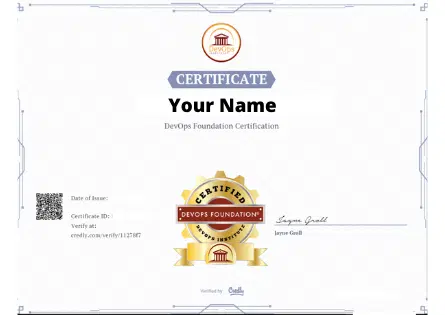
Certificate - Within 5 business days
Result - Immediately after the exam
Closed book
DevOps Foundation By DOI Path