Category | Quality Management
Last Updated On 09/01/2026
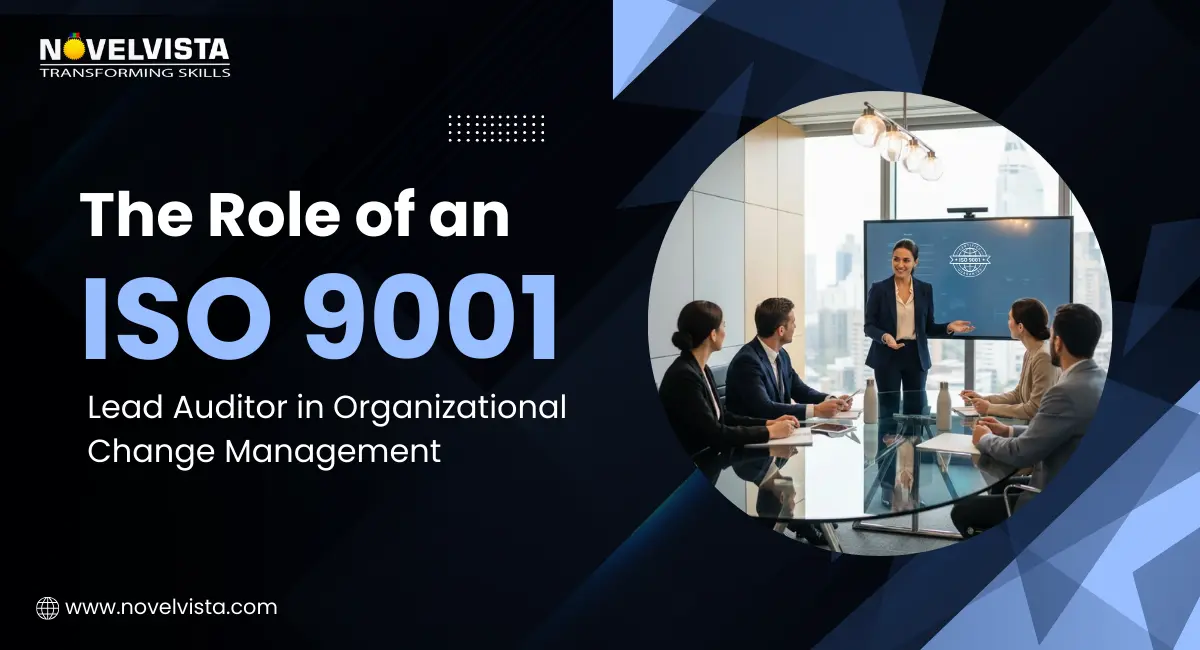
Change does not happen in isolation. When organizations introduce new systems, restructure teams, enter new markets, or adopt digital tools, the impact spreads across workflows, responsibilities, documentation, and performance metrics.
Without a structured approach, change often results in:
A well-designed change management quality system helps organizations translate high-level change into controlled, repeatable processes. It ensures that changes are not just implemented—but embedded into daily operations in a measurable way.
This is precisely the environment where ISO 9001-based thinking becomes essential.
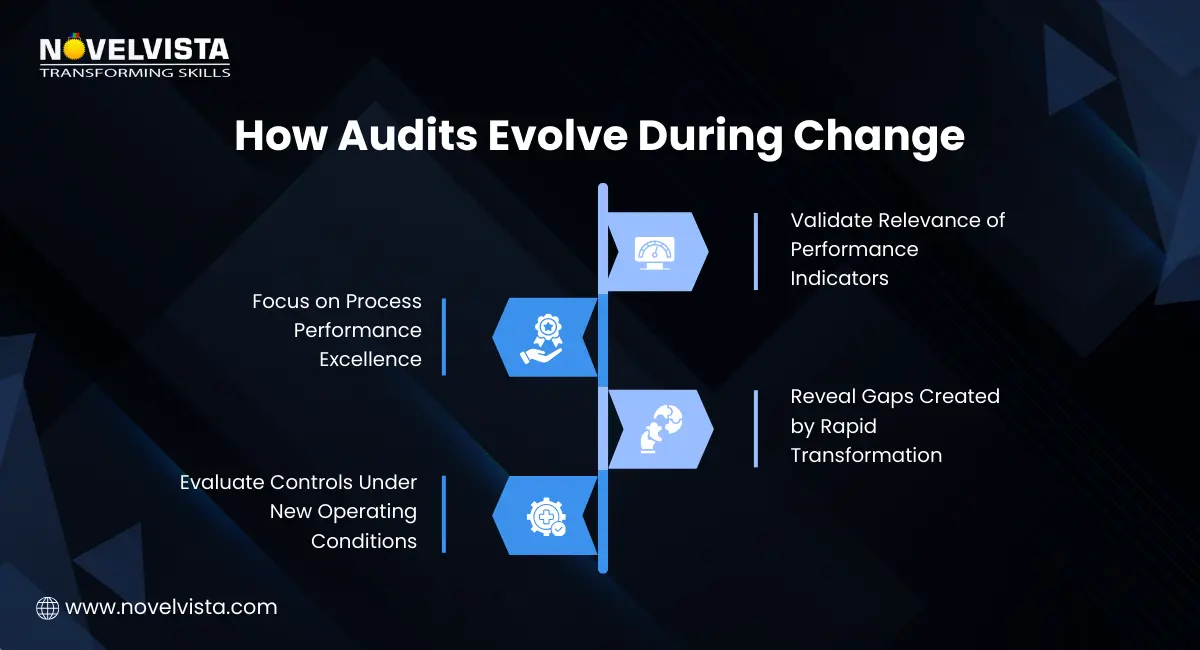
An ISO 9001 audit evaluates whether an organization’s Quality Management System (QMS) is effectively designed, implemented, and maintained, going beyond documentation to understand how processes actually perform in real operating conditions. During periods of organizational change, audits take on a deeper role by verifying alignment between new objectives and operational processes, identifying gaps created by rapid transformation, and providing evidence-based insight into what is working and what is not. In this context, the ISO 9001 lead auditor role ensures that audits remain objective, structured, and focused on overall system effectiveness rather than just procedural compliance.
Traditionally, audits were seen as a pass-or-fail activity. Today, the ISO 9001 lead auditor role has evolved into something far more influential.
Lead auditors:
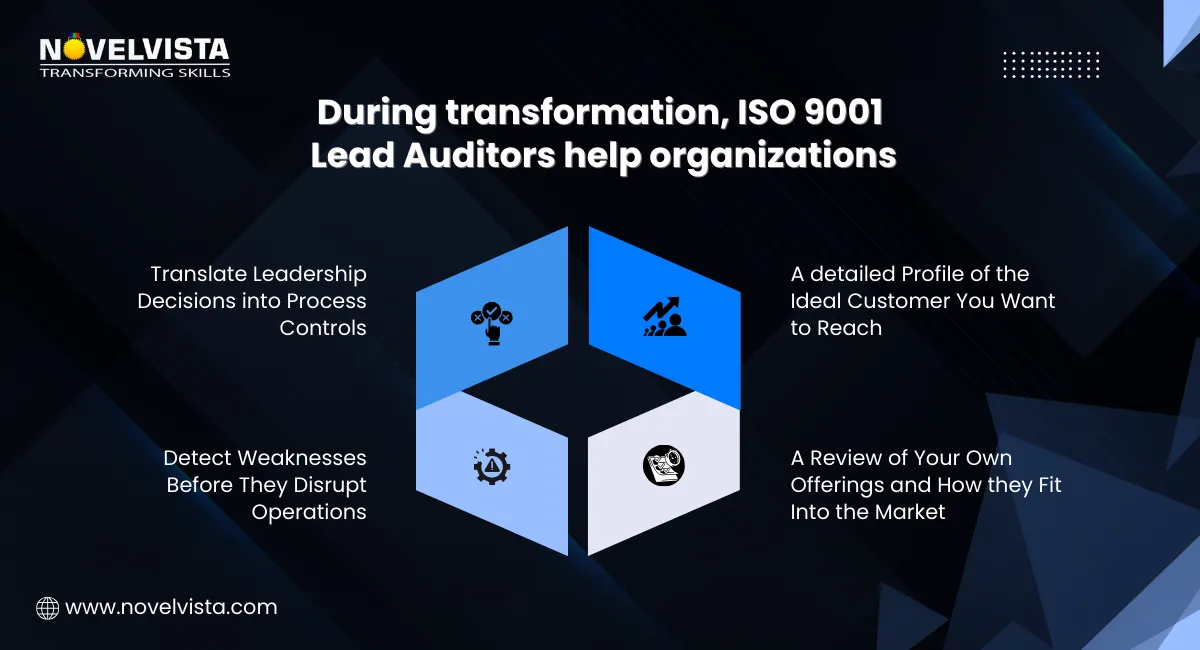
Change introduces uncertainty, and uncertainty naturally increases risk within organizational processes. One of the most valuable contributions of the ISO 9001 lead auditor role is the application of risk-based thinking to change initiatives. Lead auditors help translate strategic change into controlled process updates, verify that roles, responsibilities, and competencies are clearly defined, and ensure that performance indicators reflect new operational realities. By gathering objective evidence, auditors provide leadership with factual insights rather than assumptions, strengthening decision-making and reinforcing the effectiveness of the change management quality system.
A change management quality system ensures that organizational transformation is not reactive or fragmented. Instead, it aligns change with:
The ISO 9001 lead auditor role plays a key part in evaluating whether changes are properly integrated into the QMS. This includes reviewing:
Through structured audits, lead auditors confirm that change is not temporary or informal—but standardized and sustainable.
Cultural Impact Beyond Compliance
One of the most overlooked contributions of the ISO 9001 lead auditor role is its influence on organizational culture. When audits are framed as learning mechanisms rather than inspections, they naturally support a continuous improvement culture.
Objective and Constructive Feedback
Lead auditors present findings in a balanced, evidence-based manner. This helps teams view audit outcomes as opportunities to refine processes instead of personal or departmental criticism.
Focus on Root Causes, Not Blame
By encouraging root cause analysis over fault-finding, auditors help organizations address systemic issues. This approach strengthens long-term process stability during change.
Verification of Meaningful Improvement
Follow-up on corrective actions ensures that improvements are actually implemented and sustained. Over time, this turns audits into a powerful driver of organizational learning, especially during periods of transformation.
Change often meets resistance, particularly when employees feel uncertain about new expectations. The ISO 9001 lead auditor role requires strong communication and interpersonal skills to navigate these situations effectively.
Through structured opening and closing meetings, auditors:
Organizations that manage change without structured oversight often face process drift after implementation, inconsistent performance across departments, and difficulty sustaining improvements over time. The ISO 9001 lead auditor role ensures continuity during change by maintaining the integrity of core quality principles. By maintaining focus on customer satisfaction, process effectiveness, and long-term stability, auditors help organizations balance compliance with progress, becoming key enablers of sustainable change. Considering advancing your career? Learn about the ISO 9001 certification cost to plan your next step in auditing and quality leadership.
Organizational change is inevitable, but unmanaged change is costly. The ISO 9001 lead auditor role bridges the gap between transformation goals and operational reality.
By strengthening the change management quality system and reinforcing a continuous improvement culture, lead auditors ensure that change is not only implemented—but sustained. Their objective insights, process focus, and system-level perspective make them indispensable partners in modern organizational transformation.
In a world of constant change, quality-led change is what truly endures.
Ready to strengthen your impact as an ISO 9001 Lead Auditor?
NovelVista’s ISO 9001 Lead Auditor Certification Training is designed for quality professionals, managers, and auditors who want to go beyond compliance and play a meaningful role in organizational change. The course focuses on practical auditing skills, real-world Quality Management System scenarios, and globally recognized certification aligned with ISO 9001 requirements. It equips you to lead audits with confidence, support change management quality systems, and foster a continuous improvement culture across organizations.
Begin your ISO 9001 lead auditor journey with clarity and confidence today.

Author Details

Course Related To This blog
ISO 9001:2015 Lead Auditor Training and Certification
Confused About Certification?
Get Free Consultation Call
Stay ahead of the curve by tapping into the latest emerging trends and transforming your subscription into a powerful resource. Maximize every feature, unlock exclusive benefits, and ensure you're always one step ahead in your journey to success.