Category | Quality Management
Last Updated On 26/05/2026
Quality is no longer a “nice to have” — it’s a competitive advantage. According to global studies, organizations lose an estimated 15–20% of their revenue due to poor quality, rework, non-conformities, and inefficiencies. With such high stakes, more than one million companies worldwide have adopted ISO 9001 to strengthen their quality management systems. But here’s the real question leaders are asking today: What is the actual ROI of ISO 9001 certification?
Is the investment delivering measurable value?
Are trained lead auditors truly driving quality improvements?
And who exactly benefits from this audit-led approach?
This topic is especially important for quality managers, business leaders, auditors, and organizations striving to elevate their operational performance through structured quality frameworks. As the demand for strong governance and consistent quality grows, understanding the ROI of ISO 9001 certification becomes essential.
Before we dive deeper into how organizations measure ROI and how lead auditor training contributes to improved performance, let’s start from the foundation, understanding what an ISO 9001 audit really is, and why it plays a vital role in business excellence.
An ISO 9001 audit is a systematic, independent assessment of how well an organization’s Quality Management System (QMS) aligns with the ISO 9001:2015 standard. Audits help identify gaps, evaluate compliance, and confirm whether processes are functioning as intended.
There are three main types:
A Lead Auditor plays a pivotal role in planning, executing, leading, and reporting audit activities, directly shaping audit quality, findings, corrective actions, and long-term improvement outcomes. Effective lead auditor training ensures accurate interpretation of ISO 9001 requirements, strong process-based auditing techniques, objective identification of non-conformities, and improved organizational capability for continual improvement. Overall, the lead auditor training impact remains one of the strongest drivers of the business benefits ISO 9001 delivers.
Organizations today expect measurable returns for every investment — and ISO 9001 is no exception. The ROI of ISO 9001 certification extends far beyond compliance. It brings cost savings, efficiency gains, process improvements, and stronger customer loyalty.
Key global findings reveal:
But unless organizations measure the ROI, these benefits remain assumptions instead of strategic outcomes.
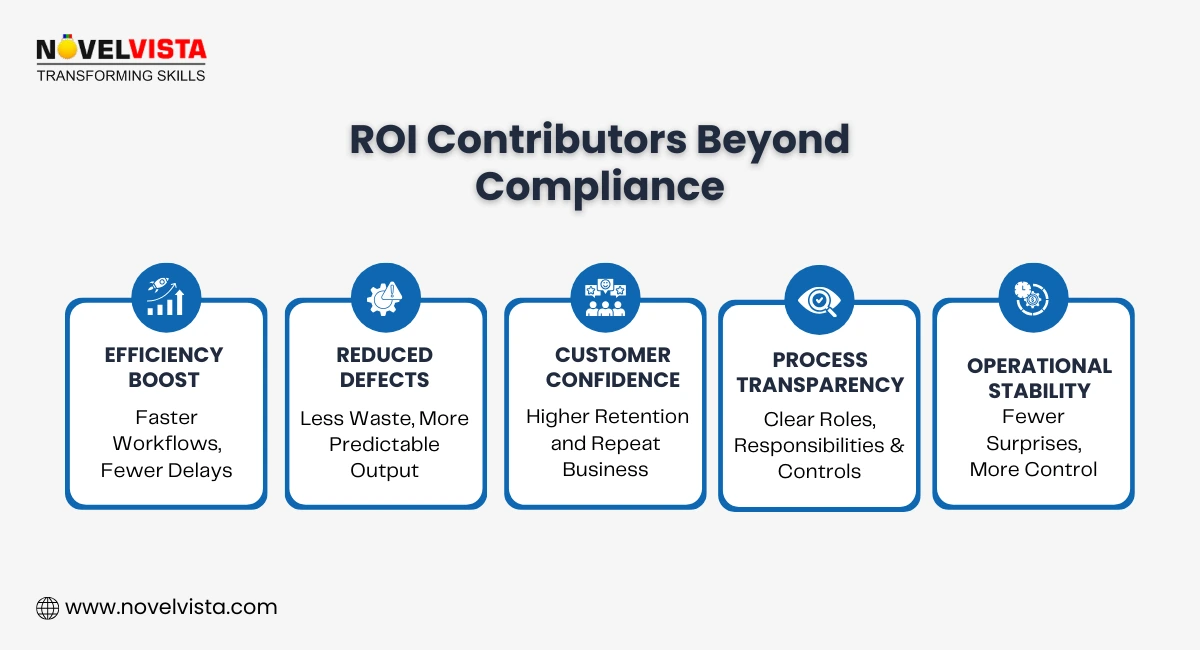
Several elements influence the real ROI of ISO 9001 certification:
1. Lead Auditor Training Impact
Well-trained auditors can identify deeper process issues, waste, and risks — improving audit value and strengthening quality culture. Their expertise helps uncover root causes rather than surface-level symptoms, leading to more effective corrective actions. This enhanced capability ensures audits drive meaningful improvements and directly contribute to stronger organizational quality performance.
2. Employee Engagement
When employees understand processes clearly, efficiency increases, and non-conformities decrease. Engaged teams are more likely to follow standardized procedures, contribute ideas for improvement, and support corrective actions. This involvement strengthens overall quality performance and boosts the long-term ROI of ISO 9001 certification.
3. Process Standardization
Consistent workflows reduce errors, delays, and customer complaints. Standardization helps teams perform tasks the same way every time, minimizing variation and improving reliability. This stability strengthens process efficiency, enhances customer satisfaction, and directly supports sustained organizational quality performance.
4. Continuous Improvement Culture
ISO 9001 is not a one-time event; ongoing improvements significantly enhance the long-term ROI. When organizations regularly review performance, refine processes, and address emerging risks, they build a culture that adapts and evolves. This commitment to continual improvement leads to sustained efficiency, reduced waste, and stronger overall quality performance.
5. Strategic Use of Audit Findings
Organizations that integrate audit insights into strategy or operations gain higher returns on their certification investment.
These factors collectively improve organizational quality performance, reinforcing the value of certification.

Though ISO 9001 has qualitative advantages, its ROI can be measured with tangible data.
Here’s a simple way to calculate:
ROI = (Total Benefits – Total Costs) / Total Costs × 100
Measurable benefits include:
The true value of lead auditor certification extends across the entire organization:
1. Stronger Compliance and Risk Management
2. Streamlined Operations
3. Enhanced Reputation and Market Advantage
4. Data-Driven Decision-Making
5. Improved Organizational Quality Performance
These outcomes contribute directly to the measurable business benefits ISO 9001 promises.
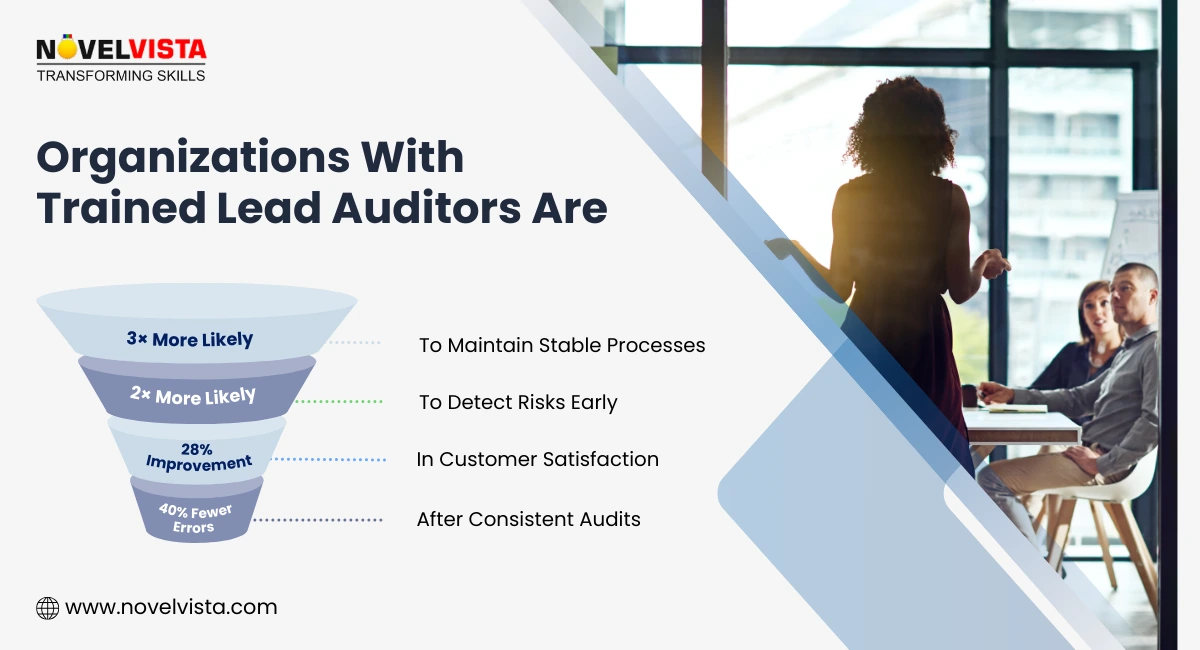
To maximize the ROI of ISO 9001 certification, organizations should adopt the following best practices:
Skilled auditors elevate audit effectiveness, improve process visibility, and drive impactful improvements. Their advanced knowledge helps uncover hidden inefficiencies, strengthen corrective actions, and support strategic decision-making. This investment directly enhances the overall value and ROI of ISO 9001 certification.
ISO 9001 thrives when employees regularly refine processes, reduce waste, and strengthen quality. Encouraging teams to spot issues early and suggest improvements creates a proactive environment. This culture boosts efficiency, supports long-term performance gains, and maximizes the ROI of ISO 9001 certification.
Audit findings should feed into strategic planning, resource allocation, and performance measurement. When organizations analyze trends and root causes, they can make informed decisions that strengthen process efficiency. This strategic use of data ensures continuous improvement and enhances the overall ROI of ISO 9001 certification. Understanding ISO 9001 history helps highlight how the standard has evolved from basic quality guidelines into a globally trusted framework that drives consistency, efficiency, and continuous improvement across industries.
When certification outcomes match business priorities — such as customer satisfaction, efficiency, or cost control — ROI increases naturally. Aligning ISO 9001 initiatives with organizational goals ensures that every improvement effort supports measurable results. This integration strengthens overall performance and maximizes the long-term ROI of ISO 9001 certification.
Track KPIs like defect rates, lead time, customer complaints, and cost savings to validate ROI.
Organizations that follow these best practices experience stronger lead auditor training impact, improved processes, and measurable results.
Measuring the ROI of ISO 9001 certification is essential for organizations committed to quality excellence and operational efficiency. With the right approach, ISO 9001 brings measurable benefits — reduced costs, stronger customer trust, standardized processes, and long-term performance gains. Lead auditor training enhances audit accuracy and drives meaningful improvements, further amplifying the business benefits ISO 9001 offers. By using audit data wisely, investing in skill development, and aligning quality goals with business priorities, organizations can achieve sustainable improvements in their organizational quality performance.
Join NovelVista’s ISO 9001 Lead Auditor Certification Training and gain the practical audit skills, process insights, and globally recognized credentials needed to lead high-impact quality audits. This course is designed for quality managers, auditors, and business leaders who want to strengthen compliance, improve organizational performance, and drive measurable results through ISO 9001.
Become a certified auditor who not only assesses quality — but transforms it.
Author Details

Course Related To This blog
ISO 9001:2015 Lead Auditor Training and Certification
Confused About Certification?
Get Free Consultation Call
Stay ahead of the curve by tapping into the latest emerging trends and transforming your subscription into a powerful resource. Maximize every feature, unlock exclusive benefits, and ensure you're always one step ahead in your journey to success.