Category | Quality Management
Last Updated On 21/02/2026
Ever wondered how global leaders like IBM, Siemens, or Shell manage risks long before they turn into problems? Their secret lies in the ISO 31000 model, a trusted global framework that guides organizations in identifying, assessing, and managing risks effectively.
This model, part of the ISO 31000 series, defines the key principles, framework, and process of risk management, helping businesses make smarter, data-driven decisions. Even though it’s not a certifiable standard, the ISO 31000 model acts as a universal playbook for resilience, ensuring organizations stay agile and prepared in uncertain environments.
Whether you’re building your first risk management strategy or improving an existing one, the ISO 31000 model gives you a clear roadmap to create a culture of foresight, control, and confidence, just like the world’s most successful organizations.
The model is a comprehensive guide for risk management across industries. It helps organizations:
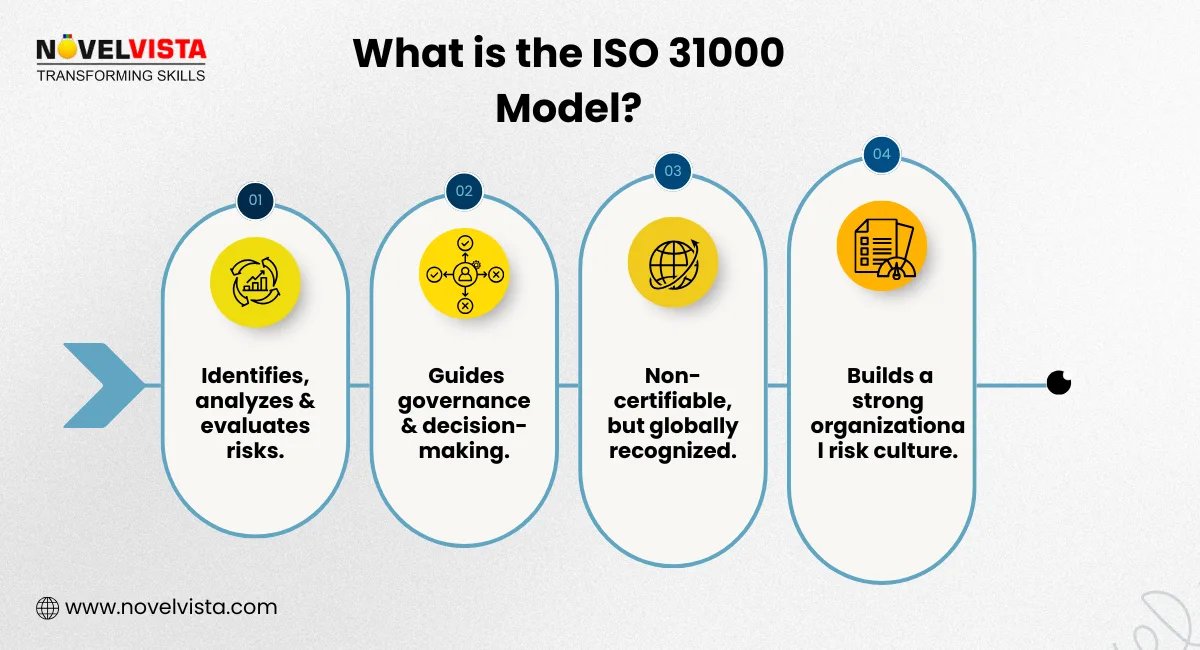
While organizations cannot get certified for ISO 31000 itself, the model is critical for effective governance. It ensures decision-makers embed risk management into daily operations and long-term planning, forming the backbone of a strong risk culture.
The ISO 31000 series defines a set of guiding principles that ensure risk management is practical, adaptive, and deeply embedded in every part of an organization. These principles form the foundation of the ISO 31000 model, helping businesses strengthen decision-making, resilience, and accountability.
Integrated – Risk management isn’t a standalone function; it must be woven into every business decision, process, and strategy. The ISO 31000 model emphasizes integration across all levels so that managing uncertainty becomes a shared responsibility, not an isolated task.
Structured and Comprehensive – The ISO 31000 series promotes a systematic, consistent, and data-backed approach to risk. A well-structured process ensures organizations achieve reliable outcomes, fostering trust and stability even in unpredictable conditions.
Customized – No two organizations face the same risks. The ISO 31000 model encourages tailoring risk management strategies to the organization’s size, culture, goals, and industry context, ensuring relevance and effectiveness across diverse environments.
Inclusive – Engaging stakeholders at all levels enhances both the quality and acceptance of risk decisions. Inclusivity ensures that insights, experiences, and expectations are considered—creating stronger alignment and ownership within the organization.
Dynamic – Risks evolve constantly, and so should the response. The ISO 31000 series calls for continuous monitoring, analysis, and adaptation, ensuring that risk management practices remain relevant as internal and external environments change.
Best Available Information – Effective risk decisions rely on accurate, timely, and transparent data. The ISO 31000 model emphasizes the use of both quantitative and qualitative information, blending data-driven insights with expert judgment for better outcomes.
Human and Cultural Factors – People’s values, attitudes, and behaviors significantly impact how risks are identified and managed. The ISO 31000 series recognizes that fostering a positive risk culture improves communication, accountability, and proactive action.
Continual Improvement – Risk management isn’t a one-time setup—it’s an ongoing journey. The ISO 31000 model promotes regular evaluation, learning, and innovation to refine strategies and stay ahead of emerging challenges.
Together, these principles empower organizations to embed risk awareness into their DNA, turning uncertainty into opportunity through a proactive and resilient approach.
Learn in-depth about the ISO 31000 Principles in our comprehensive blog. [Read the full Blog]
The ISO 31000 series framework transforms its guiding principles into a structured, actionable model for organizations to follow. These components ensure that risk management becomes a continuous and strategic part of daily operations, not just a compliance exercise.
Leadership & Commitment – Strong leadership is the backbone of effective risk management. The ISO 31000 model emphasizes executive commitment to setting direction, defining objectives, and ensuring resources are in place to embed a culture of risk awareness across the organization.
Integration – The ISO 31000 series encourages organizations to weave risk management into every layer of their structure—from strategic planning to daily workflows. This integration ensures decisions are made with a clear understanding of risks and opportunities.
Design & Implementation – Successful adoption of the ISO 31000 model starts with creating a clear framework, like defining roles, policies, and processes, while assigning resources to ensure risk management is operationalized effectively across departments and teams.
Evaluation – Continuous assessment is key. The ISO 31000 series recommends regular audits, performance metrics, and management reviews to evaluate how well the framework is working and identify areas that require improvement or recalibration.
Improvement – Risk management is an evolving discipline. The ISO 31000 model urges organizations to refine their strategies based on new insights, trends, and lessons learned, ensuring that risk practices remain responsive and future-ready.
When implemented effectively, this framework builds a resilient foundation for governance, decision-making, and long-term sustainability.
To dive deeper into each component and learn how to apply them step-by-step, explore our comprehensive guide on the ISO 31000 Risk Management Framework.
The ISO 31000 model provides a structured, practical process for managing risks across all organizational levels. Each stage ensures consistency, accountability, and alignment with strategic goals, making it a cornerstone of the ISO 31000 series.
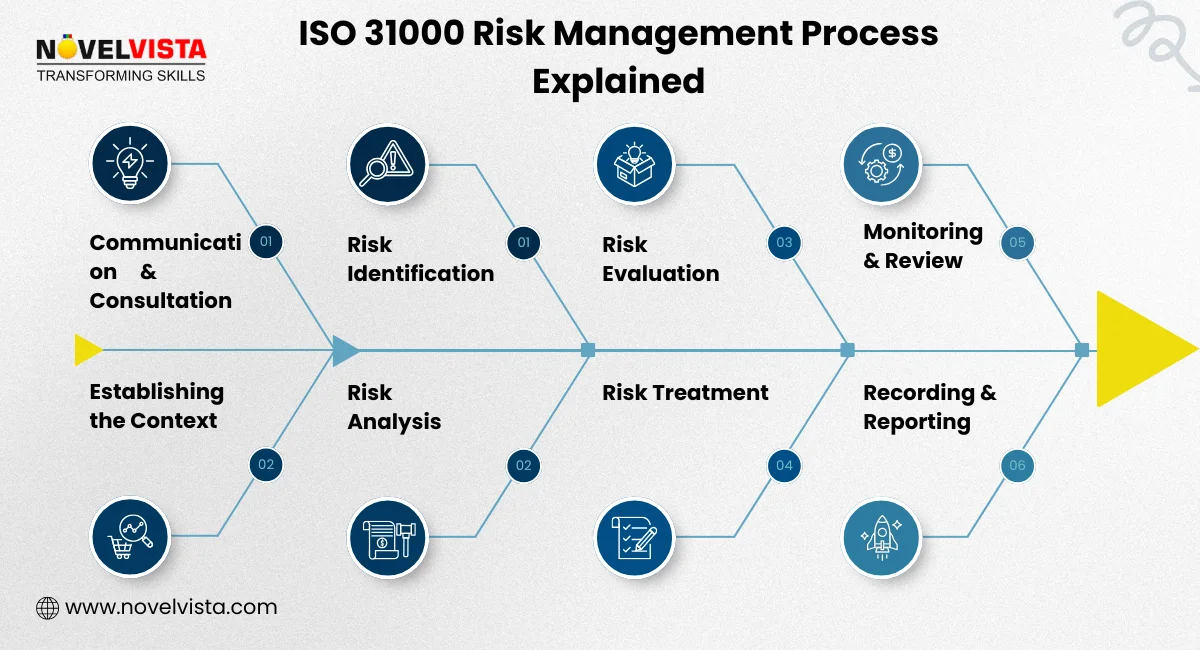
Communication & Consultation – Risk management begins with open dialogue. The ISO 31000 model emphasizes engaging stakeholders at every stage to ensure shared understanding, gather insights, and align expectations about risks and their potential impact on objectives.
Establishing the Context – The ISO 31000 series requires defining the internal and external environment in which the organization operates. This includes clarifying scope, objectives, and risk criteria to ensure all decisions are made with the right contextual understanding.
Risk Identification – At this stage, organizations using the ISO 31000 model identify possible events or scenarios that could impact objectives—both positively and negatively. This step forms the foundation for proactive and informed risk handling.
Risk Analysis – The ISO 31000 series framework encourages a detailed examination of each risk’s likelihood and consequence. This helps decision-makers understand how severe each risk is and prioritize resources accordingly.
Risk Evaluation – Once analyzed, risks are compared against established criteria within the ISO 31000 model. This evaluation helps determine which risks require immediate attention, which can be monitored, and which can be accepted.
Risk Treatment – The ISO 31000 series outlines multiple response strategies—such as avoiding, mitigating, transferring, or accepting risks. Organizations select the most effective treatment based on feasibility, cost, and expected outcomes.
Monitoring & Review – Since risks and conditions evolve, the ISO 31000 model stresses regular performance checks. This ensures risk management processes stay relevant and responsive to internal and external changes.
Recording & Reporting – Transparency is key in the ISO 31000 series. Every activity, decision, and result must be documented, ensuring accountability, clarity, and continuous learning across the organization.
Together, these steps form a dynamic, cyclical process that enables organizations to anticipate, manage, and adapt to risks effectively, anchoring resilience at the heart of their operations.
Want a deeper dive into the ISO 31000 Risk Management Process? Explore our comprehensive blog to understand each step, best practices, and how to implement a consistent, effective risk management framework.
The ISO 31000 model provides a structured approach to risk management, offering tangible benefits to organizations:
By embedding the ISO 31000 series into daily operations, businesses can turn risk management from a compliance requirement into a strategic advantage.
Risk managers are the champions of the ISO 31000 model, translating principles into practical strategies:
These roles ensure that the ISO 31000 model delivers real-world value rather than remaining a theoretical framework.
Using the ISO 31000 model in your organization isn’t just about following a standard — it’s about creating a culture that manages risks wisely and makes confident decisions. Here’s a simple step-by-step way to do it:
Get Leadership Support – Start from the top. Leaders must understand that risk management helps achieve goals, not slow them down. Their support ensures the right resources and attention are given.
Include Risk in Everyday Work – The ISO 31000 model should be part of all major activities, like planning, budgeting, or new projects. Every decision should consider possible risks and opportunities.
Adapt It to Your Organization – Every business is different. Adjust the ISO 31000 series framework to match your size, structure, and industry needs. Assign clear roles and make processes easy to follow.
Train and Communicate – Build awareness through training sessions and open discussions. Help your team understand what the ISO 31000 model is and how they can use it in daily work.
Use Tools and Data – Track and analyze risks using risk registers or software. Data helps you respond faster and make smarter decisions that align with the ISO 31000 series guidelines.
Review and Improve – Risk management is an ongoing process. Keep reviewing what’s working and what’s not. Update your approach as new risks and opportunities appear.
When used well, the ISO 31000 model helps organizations stay prepared, reduce surprises, and make confident, informed decisions in a changing world.
The ISO 31000 model is an essential roadmap for organizations beginning their risk management journey. From core principles to framework and processes, it provides a structured approach to identifying, analyzing, and mitigating risks. By applying these practices, organizations improve resilience, make better decisions, and build trust with stakeholders.
For beginners, starting small but embedding risk practices consistently ensures long-term benefits and a stronger organizational risk culture. The ISO 31000 series equips professionals with the tools to integrate risk management into everyday business operations successfully.
Want to master ISO 31000 and guide organizations in risk management? NovelVista’s ISO 31000 Risk Manager Certification gives you the skills to identify, analyze, and mitigate risks effectively. Gain practical strategies, earn global recognition, and advance your career while helping organizations build resilience, adapt to uncertainty, and manage risks confidently.

Author Details

Confused About Certification?
Get Free Consultation Call
Stay ahead of the curve by tapping into the latest emerging trends and transforming your subscription into a powerful resource. Maximize every feature, unlock exclusive benefits, and ensure you're always one step ahead in your journey to success.