Category | Quality Management
Last Updated On 16/12/2025
In a world where operational disruptions are becoming the norm rather than the exception, resilience isn’t optional anymore—it’s a strategic necessity. Recent global reports show that over 75% of organizations experienced at least one major business disruption in the last 24 months, and nearly 60% admit they aren’t confident in their recovery capabilities. Unexpected downtime now costs companies an average of USD 300,000 per hour, affecting revenue, customer trust, and even long-term survival.
So the real question is: How prepared is your organization?
Do you know where you stand today in terms of business continuity readiness?
The answer: any organization that wants predictable resilience—from SMEs building continuity from scratch to large enterprises advancing their Business Continuity Management System (BCMS). If you’ve ever wondered how mature your continuity capabilities are, what gaps you carry, and how structured your resilience strategy should be, the ISO 22301 Maturity Model is your roadmap.
Before we dive deep, let’s smoothly transition into the basics.
It is a structured framework that measures how effectively an organization implements and improves its Business Continuity Management System. Think of it as a diagnostic tool that evaluates your resilience capabilities across multiple dimensions—governance, risk assessment, testing, documentation, incident response, and continuous improvement.
While ISO 22301 outlines what a company should do to build a BCMS, the maturity model helps determine how well these elements are embedded in real practice. It gives a clear picture of readiness and identifies strengths, weaknesses, and growth opportunities.
This model aligns naturally with related areas like BCM lifecycle, disaster recovery, risk management, and organizational resilience, offering a practical way to benchmark progress.
Organizations face disruptions from almost every direction—cyberattacks, natural disasters, system failures, supply-chain delays, workforce unavailability, and geopolitical shifts. Studies suggest that cyberattacks have increased by 72% over the past year, while climate-related disruptions have doubled over the last decade.
With such uncertainty, the it is no longer just beneficial—it’s essential.
Here’s why it matters:
In short, the model acts as a resilience roadmap that evolves with changing business needs.
Understand your BCMS maturity and take the next step toward true resilience.
Simple framework, easy to apply
Clear maturity levels explained
Practical actions to improve fast
A mature business continuity system doesn’t happen by accident; it’s built intentionally, layer by layer. It evaluates several core components:
Strong governance ensures continuity responsibilities are clearly assigned and leadership remains actively involved throughout the BCMS lifecycle. It establishes accountability, decision-making authority, and oversight to keep resilience efforts aligned with organizational goals. Effective governance also ensures regular reviews and updates to strengthen model implementation.
Organizations use BIA to identify critical processes, interdependencies, and the potential consequences of operational downtime. This analysis highlights essential recovery time objectives and resource needs to support continuity planning. A well-executed BIA forms the backbone of a strong ISO 22301 Maturity Model assessment.
This step evaluates internal and external threats, vulnerabilities, and the likelihood of disruptions impacting operations. By aligning risk findings with enterprise risk management, organizations gain a comprehensive view of their exposure. Risk assessment enables smarter decision-making and helps improve maturity levels.
Plans and strategies are created to maintain or rapidly restore operations during a disruption or crisis. This includes selecting suitable recovery solutions, alternate sites, communication methods, and resource allocations. A strong continuity strategy ensures the organization moves toward higher maturity on the scale.
Clear roles, escalation paths, and communication plans enable teams to respond quickly and effectively when incidents occur. Defined response teams ensure coordination across departments and minimize downtime during disruptions. This structure is essential for improving operational resilience within the ISO 22301 Maturity Model.
Simulations, drills, tabletop exercises, and full-scale tests validate how well continuity plans perform in real-world scenarios. Frequent testing reveals gaps, enhances team readiness, and strengthens confidence in recovery processes. This practice is a key driver of continual improvement in the ISO 22301 Maturity Model.
Policies, procedures, evidence logs, and audit records ensure transparency and traceability across the BCMS. Regular reviews, corrective actions, and post-incident evaluations help refine strategies and close operational gaps. Strong documentation supports all stages of the ISO 22301 Maturity Model and drives long-term resilience.
These components collectively provide the lens through which an organization evaluates its resilience maturity.
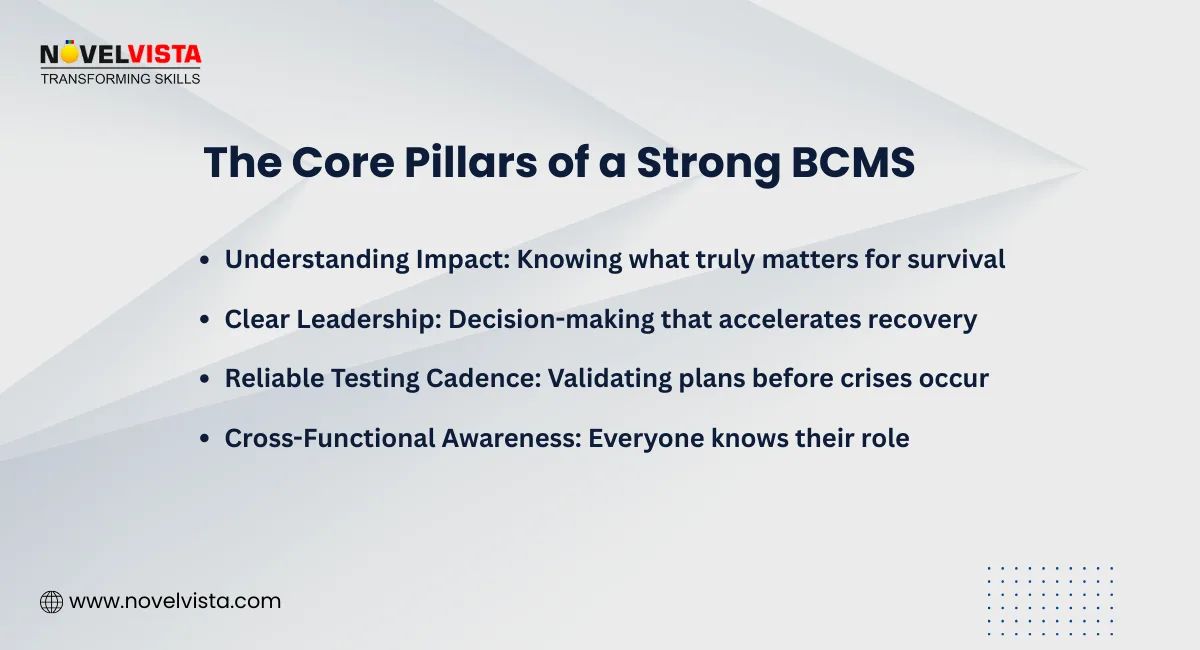
It typically includes five levels. Each reflects how deeply continuity concepts are embedded in the organization:
These levels help companies identify where they stand today—and where they should aim to be tomorrow.
Assessment using the ISO 22301 Maturity Model follows a systematic process. Here’s a clear, step-by-step approach:
1. Define the Scope
2. Review Current Practices
3. Score Each Component
4. Identify Gaps
5. Prioritize Improvements
This process may be conducted internally or through an external audit or business continuity consultant.
Even mature organizations struggle with certain barriers when adopting or assessing the ISO 22301 Maturity Model:
Recognizing these challenges early allows organizations to strengthen their evaluation and improvement journey.
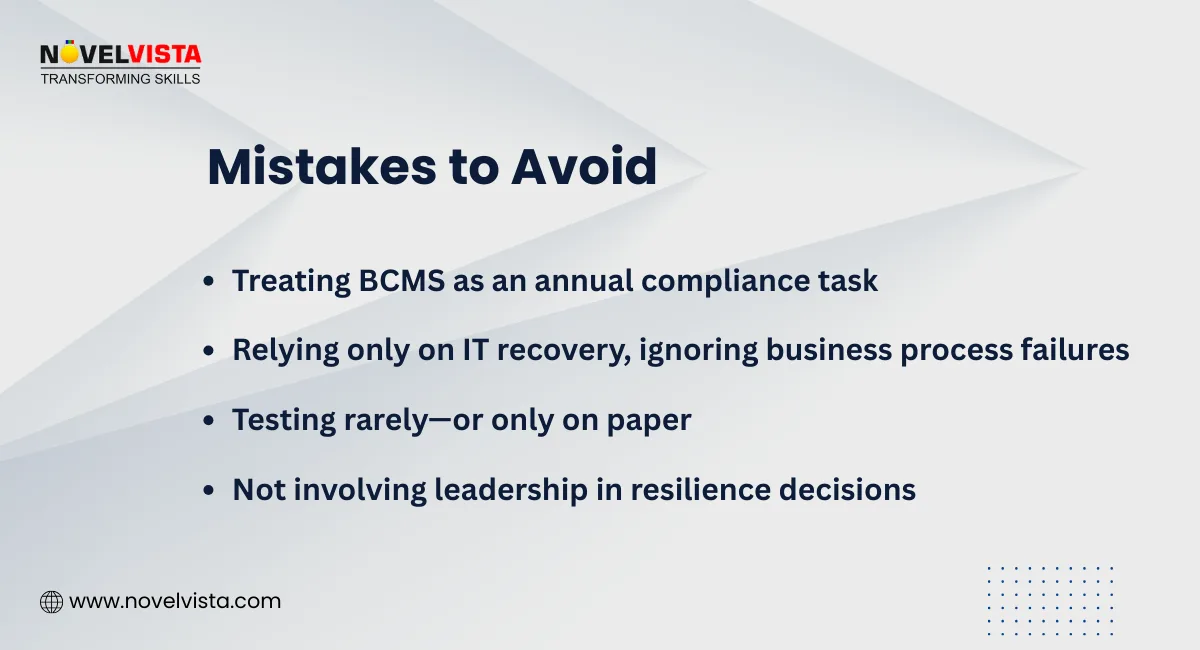
If you want to elevate your resilience levels, here are some proven strategies:
Engage leadership, define responsibilities, and integrate continuity into strategic decisions to build a strong foundation for resilience. Clear governance ensures accountability, transparency, and consistent oversight of continuity activities. This strengthens alignment across teams and supports higher performance.
Align continuity planning with enterprise risks for end-to-end resilience and better situational awareness. When BCMS and risk functions work together, organizations gain a unified view of potential threats and vulnerabilities. This integration enhances decision-making and supports more accurate maturity evaluations.
Regular drills expose hidden gaps before real disruptions occur and validate how well preparedness plans perform under pressure. Frequent testing boosts team confidence and ensures recovery steps are practical and effective. It also helps organizations climb the ISO 22301 levels with evidence-based improvements.

Traditional compliance asks: “Are you meeting the minimum requirements?”
But the ISO 22301 Maturity Model asks: “How well are you performing against those requirements?”
Traditional Compliance Approach |
ISO 22301 Maturity Model Approach |
Checklist-based |
Performance-driven |
Focuses on passing audits |
Helps integrate resilience deeply |
Static and point-in-time |
Enables continuous improvement |
Minimum requirements focus |
Supports operational excellence |
Using a maturity model transforms continuity from a checkbox activity into a competitive advantage.
In an era where disruptions can strike at any moment, organizations cannot rely on luck or basic compliance. The ISO 22301 Maturity Model offers a structured, measurable, and strategic way to build resilience step by step. Whether you're starting your continuity journey or looking to enhance an existing BCMS, the maturity model helps you understand where you stand, what you need, and how to grow.
By following the maturity levels, evaluating gaps, strengthening processes, and fostering continuous improvement, organizations can build continuity capabilities that support long-term success and stability. The ISO 22301 Maturity Model is more than an ISO 22301 Framework—it’s your pathway to predictable resilience.
Ready to strengthen your organization’s business continuity capabilities and lead with confidence?
Join NovelVista’s ISO 22301 Lead Auditor Certification Training and gain hands-on auditing expertise, practical BCMS insights, and globally recognized credentials. Designed for business continuity professionals, auditors, consultants, and risk leaders, this program empowers you to assess resilience maturity, drive continual improvement, and guide organizations toward ISO 22301 excellence.Author Details

Confused About Certification?
Get Free Consultation Call
Stay ahead of the curve by tapping into the latest emerging trends and transforming your subscription into a powerful resource. Maximize every feature, unlock exclusive benefits, and ensure you're always one step ahead in your journey to success.