Category | Quality Management
Last Updated On 17/08/2026
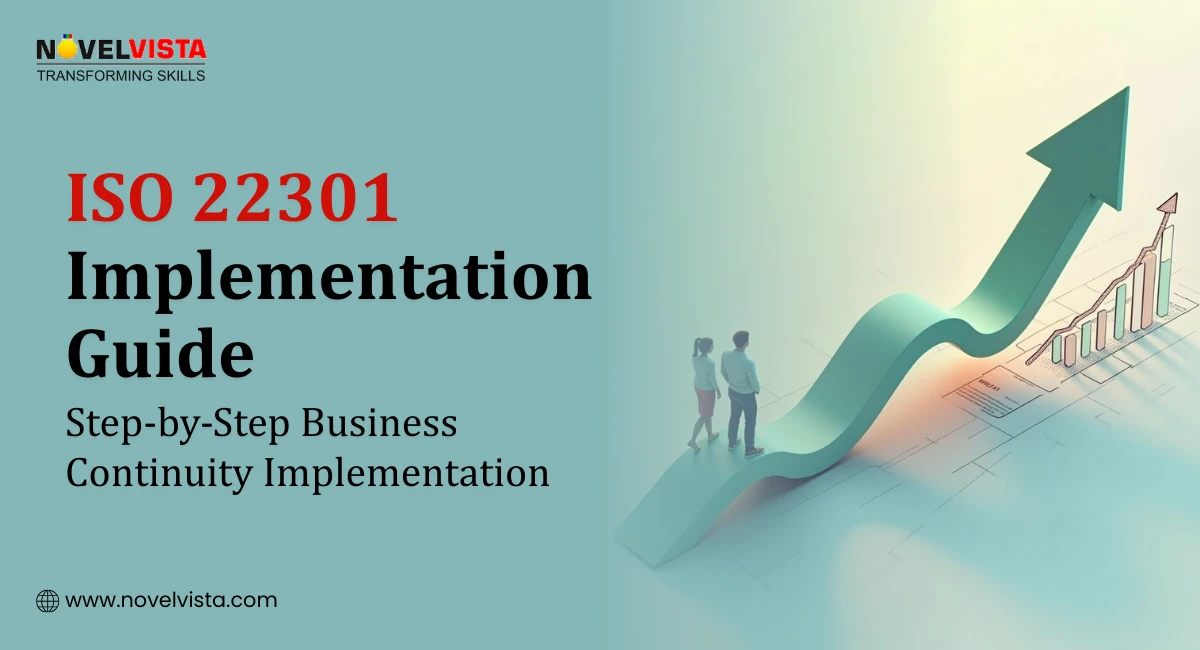
Most organizations only think about business continuity after something goes wrong. A server goes down, a supplier fails, a flood hits the office, and suddenly everyone is scrambling with no clear plan.
ISO 22301 Implementation changes that. It gives your organization a proper system to prepare for disruptions before they happen, respond faster when they do, and recover without the chaos.
This guide walks you through every phase of implementation, from setting up your foundation to getting audit-ready in a clear, step-by-step format.
Every solid BCMS starts with a solid foundation. This is where you set up the governance structure and define exactly what your BCMS will cover.
Nothing moves without executive sponsorship. Before any documentation or planning begins, you need a senior leader who owns this initiative and has the authority to allocate resources.
This person will lead the day-to-day implementation. They coordinate between teams, manage documentation, and keep the project on track.
This group provides oversight and makes key decisions throughout the project. It usually includes department heads and the BC Manager.
Look at where your organization currently stands against ISO 22301 requirements. This tells you how much work lies ahead and where to focus first.
This covers three ISO 22301 clauses:
This is a short, formal document that sets out your organization's commitment to business continuity. It does not need to be complicated. It needs to be clear and approved by leadership.
Key deliverables from Phase 1:
This first phase of the ISO 22301 Implementation Guide sets the direction for everything that follows. Once governance is in place, you can start digging into the real substance, understanding what your organization cannot afford to lose.
This is one of the most important phases in the entire ISO 22301 Implementation Steps process. It answers two questions: what do we need to protect, and what could go wrong?
The BIA identifies your critical business activities and works out how long you can survive without them.
For each critical process, you need to determine:
BIA interviews typically take 1 to 2 hours per business process. You will be talking to department heads and process owners to get accurate numbers.
Once you know what is critical, you assess what could disrupt it.
This involves:
Key deliverables from Phase 2:
The BIA and risk assessment form the backbone of your entire ISO 22301 Business Continuity Implementation. Every strategy and plan you build in the next phase will be based on what you discover here.
Now you know what is critical and what could disrupt it. This phase is about deciding what you will do about it.
Strategies are the high-level decisions about how your organization will keep operating during a disruption. Common examples include:
A BCP is a step-by-step document that tells people exactly what to do when a disruption hits a specific process. Each critical process identified in your BIA should have its own BCP.
Each plan typically includes:
Well-structured BCPs developed during guided sessions reduce confusion during exercises by nearly 50%, especially when roles and escalation paths are clearly defined and validated.
This covers how you communicate with employees, customers, suppliers, and regulators during an incident. Who speaks publicly? What do you say and when? This plan prevents mixed messages and delays during a real crisis.
Key deliverables from Phase 3:
Plans on paper are only useful if people know about them and systems are actually in place. This phase turns your documentation into reality.
This is where the technical and operational work happens:
Two levels of training are needed:
This step is often underestimated in ISO 22301 Implementation Steps. A well-written plan means nothing if the people responsible for it have never read it.
The results speak for themselves. According to research, 82% of organizations report faster recovery times after ISO 22301 certification. That improvement does not come from documentation alone; it comes from trained people following tested plans.
Key deliverables from Phase 4:
Staff awareness program materials
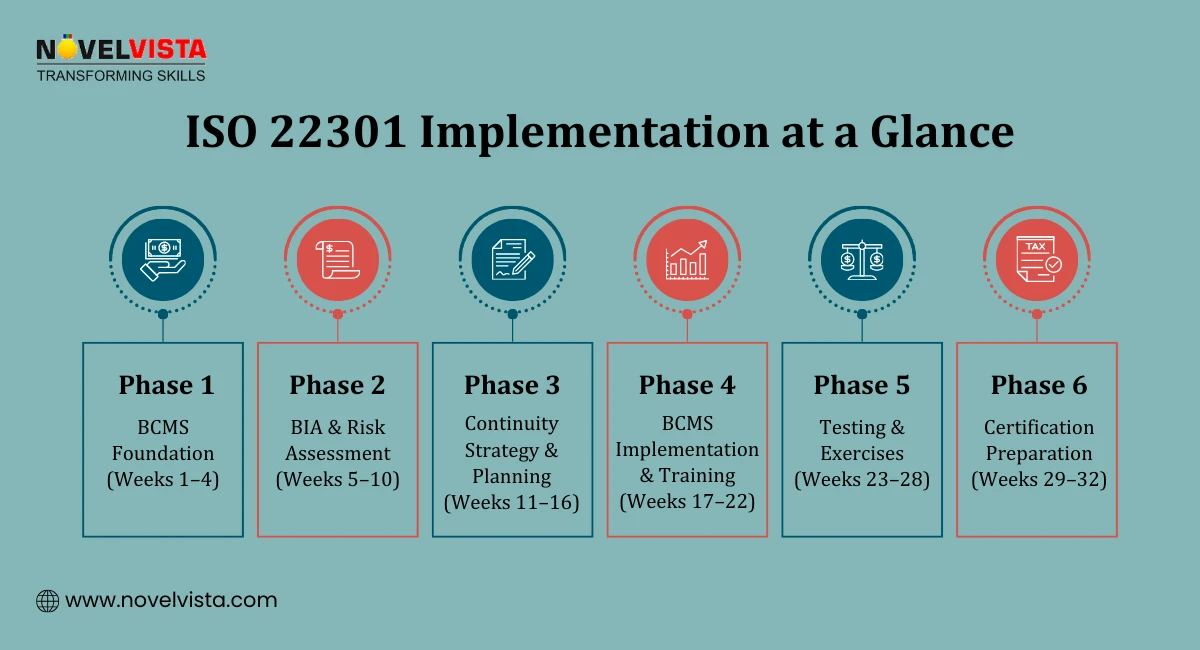
ISO 22301 Implementation is a six-phase journey that takes your organization from no formal continuity system to a fully certified, tested, and audit-ready BCMS.
Each phase builds on the one before it. Foundation and governance come first. Then the BIA and risk work. Then strategies, plans, training, testing, and finally certification.
The organizations that do this well are not the ones with the most resources. They are the ones that follow the process properly, train their people genuinely, and treat their plans as living documents rather than files that collect dust.
If you are ready to start your ISO 22301 Implementation journey or strengthen a BCMS you already have in place, the next step is getting the right training and guidance behind you.

NovelVista's ISO 22301 training gives you the practical knowledge to implement, manage, and audit a Business Continuity Management System with confidence. Whether you are starting from scratch or preparing for certification, the course covers every phase of the implementation process with real-world context.
Explore NovelVista's ISO 22301 certification and take the next step in your business continuity career.
The structure typically involves strategic, tactical, and operational levels, where strategic teams set overall direction, tactical teams coordinate response efforts, and operational teams execute specific technical recovery procedures.
Author Details

Course Related To This blog
ISO 22301:2019 Lead Auditor
Confused About Certification?
Get Free Consultation Call
Stay ahead of the curve by tapping into the latest emerging trends and transforming your subscription into a powerful resource. Maximize every feature, unlock exclusive benefits, and ensure you're always one step ahead in your journey to success.