Category | Quality Management
Last Updated On 08/12/2025
Think about the moment an audit pops up on your calendar. The quick heartbeat… the sudden scramble… the tiny voice asking, “Will our processes hold up?” That’s exactly why ISO 20000 Internal Audit Requirements matter so much; they stop this last-minute panic and help IT service teams stay steady all year.
This blog gives you a clear and friendly walkthrough of what ISO 20000 internal audits involve, what documents you need, how to prepare your team, and the complete audit procedure you can follow without confusion. If you want a simple guide that removes the fear from audits and replaces it with confidence, you’re in the right place.
Internal audits sit in the “Check” phase of PDCA and act as a mirror for your Service Management System (SMS). They show how well services are planned, delivered, monitored, and improved. They also help your team spot gaps before customers notice them, which is why they play a big role in service quality and readiness for certification.
ISO 20000 Internal Audit Requirements are built around structure, clarity, and fairness. To make them work smoothly, there are a few things every organization must put in place.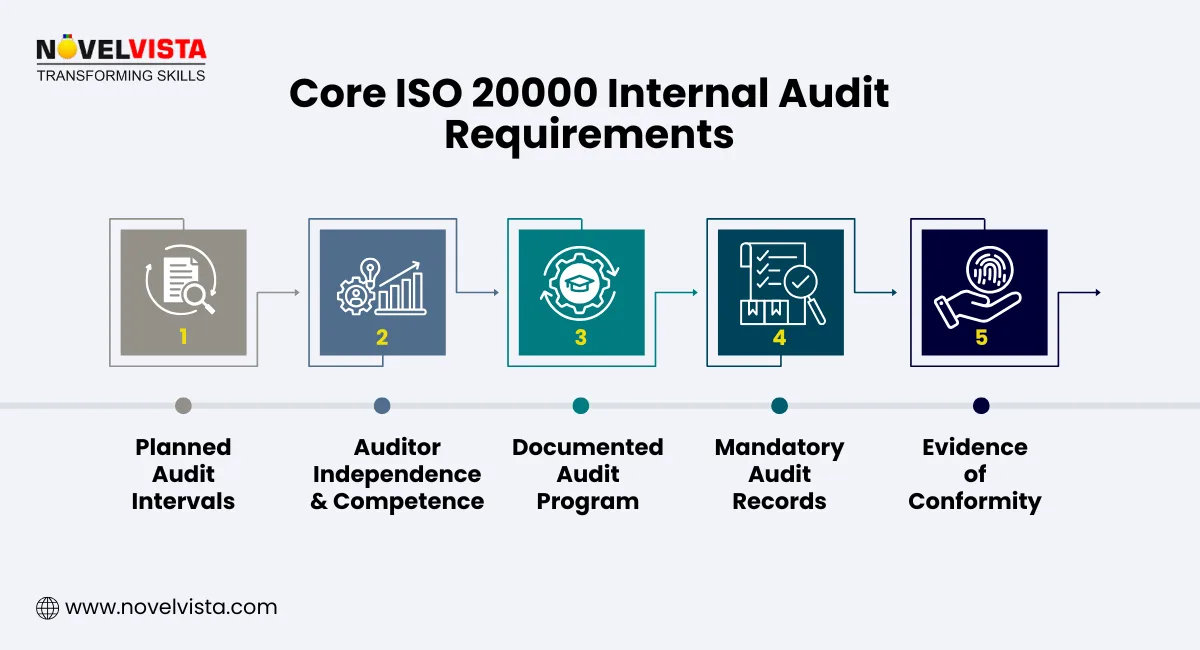
Your audits should not happen randomly. The standard expects you to plan intervals based on service risks, major changes, SLA commitments, and the overall health of your SMS. The goal is to ensure you are checking the right processes at the right time.
Auditors must understand IT service management and must not audit their own work. This avoids bias and ensures results are honest. Many companies train internal staff or invite external experts to keep the review fair and reliable.
You need a formal plan that shows:
This program keeps the audit team aligned and ensures the entire SMS is covered, not just a few processes.
Every audit must leave behind clear evidence. ISO 20000 Internal Audit Requirements call for specific records, including:
These documents help management review performance and prepare for external certification audits.
Want a clearer breakdown of which ISO 20000 documents are mandatory and which ones are optional? Check out our full guide that explains every requirement in a simple, practical way.
The scope decides how deep and wide your internal audit will go. The stronger the scope, the clearer the audit path.
The documents and lifecycle areas mentioned here come directly from the gaps we commonly observe during our audit simulation exercises. When teams understand how daily operations align with ISO 20000 requirements, the audit becomes easier, and service quality improves faster.
Get a clear list of the most common ISO 20000 audit mistakes. Plus, quick fixes you can apply immediately to stay fully audit-ready.
A smooth audit starts way before the actual audit day. Preparation helps your team feel ready instead of uncomfortable.
Internal auditors must be technically capable and free from influence. Many teams train their own people in ISO 20000 Internal Audit, while others hire external auditors for more impartiality.
A good checklist makes the audit structured and stress-free. These checklists are based on:
They help auditors ask the right questions and ensure no important area is missed.
Audits should feel like improvement sessions, not investigations. When teams understand that audits help strengthen service quality, they become more open and cooperative.
Before the audit begins, the team must finalize:
This documentation shows auditors that the SMS is active, structured, and well-managed.
Once everything is ready, the audit process begins. Following a structured approach makes the review clear and meaningful.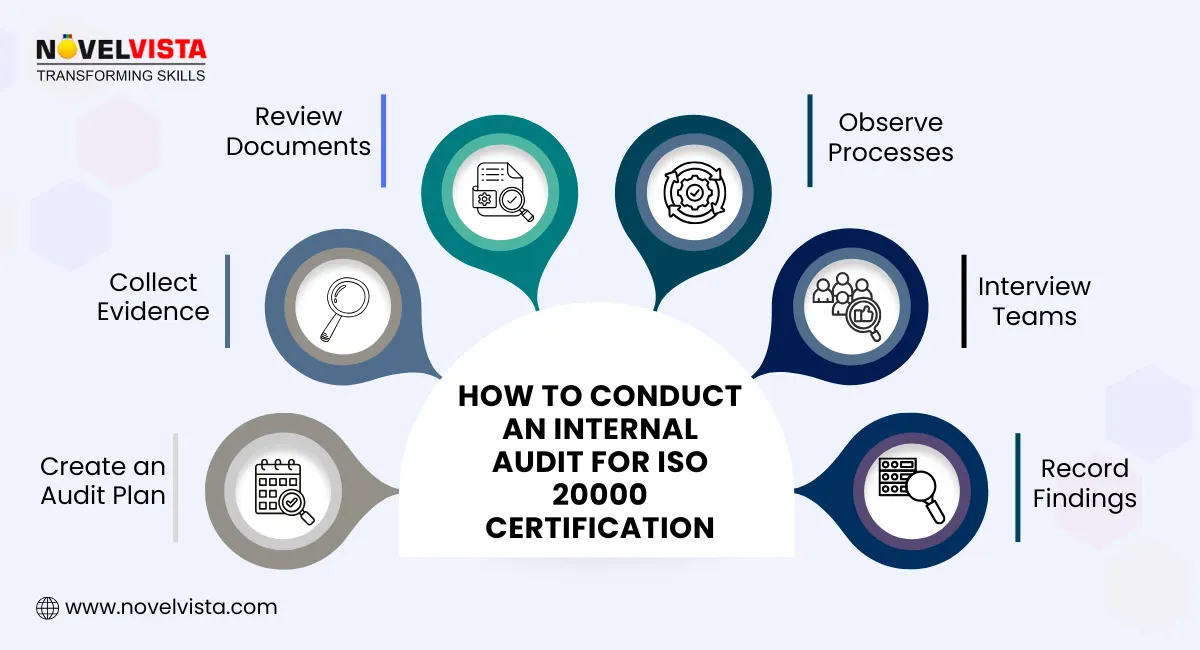
Findings include:
This process mirrors the structure we teach in auditor-level courses, based on ISO 19011. Following these principles ensures internal audits stay professional, consistent, and aligned with globally accepted auditing practices.
Once the audit report is shared, the real value of the audit begins. This is where teams turn findings into stronger service practices and cleaner workflows.
Analyzing findings for root causes: Instead of fixing the surface-level issue, teams dig deeper to understand why the problem happened in the first place. This helps ensure the same issue does not return in future audits or during daily operations.
Updating SMS processes based on audit evidence: Whenever an audit shows missing controls, unclear roles, weak communication steps, or outdated workflows, SMS documents should be updated. This keeps the Service Management System aligned with how services are actually delivered.
Tracking corrective actions to closure: Corrective actions should not stay pending for months. Each action needs an owner, a timeline, and a review to confirm the issue is fixed. This structured closure builds long-term compliance and trust within the team.
Benefits teams see from this cycle: When organizations act on audit findings, they often experience more stable services, fewer major incidents, faster resolution times, and much better readiness for certification audits. It also reduces firefighting because processes become cleaner and easier to follow.
Lead auditors bring structure and maturity to the internal audit process. Their presence usually means teams stay calm, the audit runs smoothly, and findings are clearer.
Lead auditors plan the audit schedule, guide the audit team, review checklists, and ensure all SMS processes are evaluated fairly. This avoids confusion and makes the audit predictable and professional.
Lead auditors ensure people do not audit their own work. They also step in whenever there is a conflict of interest. This protects the accuracy of audit results and boosts the credibility of the SMS.
Many teams struggle to understand the exact meaning of certain clauses or how to show evidence for them. Lead auditors fill this gap by helping the team understand what the standard expects and how to demonstrate it through documents and real practices.
Lead auditor skills bring long-term value to service management teams. Their understanding of controls, documentation, and evidence helps keep the SMS strong all year, not just during audits.
Lead auditors know how to evaluate whether procedures match actual operations. They can instantly spot missing records, mismatched activities, or weak controls that might affect service quality.
Instead of rushing only before certification, lead auditors help teams maintain readiness month-by-month. They guide process owners, support improvements, and review documents regularly to make sure nothing slips.
Because of their audit experience, lead auditors often suggest simple and effective improvements that boost service reliability. Their inputs reduce recurring incidents and improve customer experience.
These skills reflect the competencies defined in international auditor guidelines. The techniques we teach help professionals evaluate documentation, identify evidence gaps, and strengthen SMS controls in a practical, hands-on way.
Internal audits are not just a compliance task; they shape stronger services, better teamwork, and a more reliable Service Management System. When ISO 20000 Internal Audit Requirements are followed consistently, teams understand their strengths, fix gaps early, and build processes that support stable service delivery. A steady internal audit routine keeps the SMS healthy and gives everyone confidence during external certification audits.
Everything shared in this guide reflects insights gathered from our ISO 20000 training programs, audit simulations, and real implementation experience across multiple industries. These practices help teams build an SMS that works in everyday operations, not just for audits.

If you want to lead internal audits with confidence and understand ISO 20000 Internal Audit Requirements at a deeper level, upgrading your skills is the best next step. NovelVista’s ISO 20000 Lead Auditor Certification helps you master clause interpretation, evidence review, audit reporting, and end-to-end auditing techniques. It’s designed for IT professionals, service managers, and auditors who want to build stronger careers in service management and compliance.
Author Details

Course Related To This blog
ISO 20000:2018 Lead Auditor
Confused About Certification?
Get Free Consultation Call
Stay ahead of the curve by tapping into the latest emerging trends and transforming your subscription into a powerful resource. Maximize every feature, unlock exclusive benefits, and ensure you're always one step ahead in your journey to success.