Category | Quality Management
Last Updated On 10/12/2025
The SaaS industry is exploding—fast. In 2024, the global SaaS market crossed USD 257 billion, and analysts expect it to exceed USD 900 billion by 2030. But as growth accelerates, so do customer expectations. Today’s users no longer tolerate outages, slow support, or inconsistent service delivery. Even a single hour of downtime can cost a SaaS company thousands—or millions—depending on subscription volumes and SLAs.
In this high-pressure landscape, ISO 20000 for SaaS has become more than a badge of credibility. It’s becoming a strategic necessity.
But the bigger question is: Who is this really for?
If you are a SaaS founder, CTO, ITSM leader, cloud operations manager, reliability engineer, or part of a compliance-driven team, you’ve probably felt the growing demand for stronger service quality, predictable uptime, and trustworthy SLAs. And you’ve likely asked yourself:
This is where ISO 20000 enters the picture. Before we dive into why SaaS companies are adopting it, let’s start with the basics.
ISO 20000 for SaaS is the globally recognized IT Service Management (ITSM) standard that helps cloud-native companies deliver services with consistency, reliability, and transparency. While earlier it was mainly used by traditional IT teams, today SaaS companies adopt ISO 20000 to strengthen ITSM for SaaS companies, streamline workflows, boost customer satisfaction, and align internal teams under one unified service model. It covers essential areas like service design, incident management in SaaS, problem management, change management best practices for SaaS, service continuity, resilience, SLA compliance for SaaS customers, and continual service improvement. Since it aligns well with frameworks like ISO 20000 vs ITIL for cloud providers, it becomes even easier for SaaS teams already following ITIL to integrate and implement.
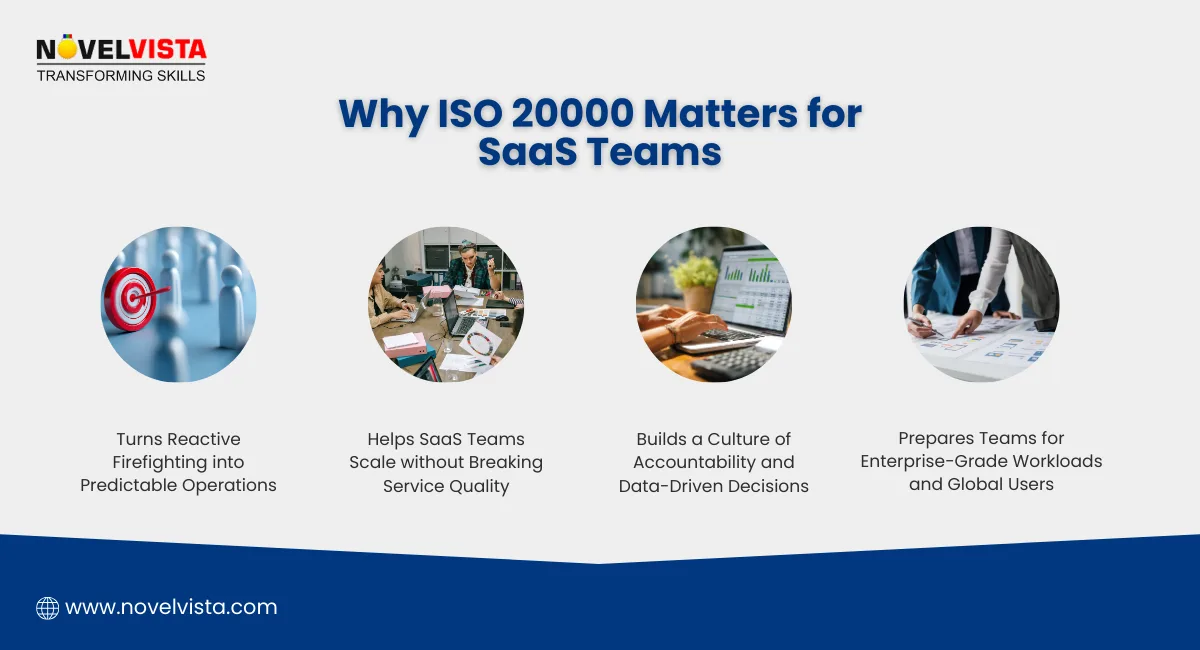
Downtime is one of the biggest threats to SaaS companies. Research suggests that outages cost SaaS companies an average of $5,600 per minute, depending on customer volume and criticality of the application.
This is why companies are turning to ISO 20000 for SaaS—it establishes structured service controls, monitoring mechanisms, and defined escalation paths. It ensures consistency in:
One of the biggest advantages is in how ISO 20000 reduces SaaS downtime. By enforcing preventive actions, standardized workflows, and proactive monitoring, the standard significantly minimizes the risk of outages or service disruptions. SaaS companies that adopt ISO 20000 report improved uptime, faster recovery during incidents, and fewer customer escalations.
Strengthening incident management in SaaS is crucial because customers expect immediate action whenever an issue occurs. ISO 20000 helps by setting clear guidelines for incident management in SaaS, ensuring faster detection, better prioritization, standardized workflows, defined SLAs, reduced MTTR, and meaningful post-incident reviews. This structured approach replaces chaotic firefighting with predictable, transparent processes that minimize churn, enhance customer trust, and improve overall service quality. To ensure seamless ISO 20000 implementation, it’s essential to understand the role of technology in ISO 20000, as modern ITSM tools automate workflows, monitor performance, and support compliance across all service management processes.
SaaS platforms evolve rapidly—new features, patches, and releases often go live daily or weekly. But without structure, fast changes can break things.
ISO 20000 emphasizes change management best practices for SaaS, including:
This dramatically reduces the change failure rate, one of the biggest causes of instability in SaaS platforms. With fewer failed deployments, customers experience smoother rollouts and more reliable service performance.
Improving SLA compliance and transparency is essential for SaaS companies, especially when dealing with enterprise clients who rely on strict contractual expectations. ISO 20000 strengthens SLA compliance in SaaS by defining clear service levels, standardized reporting, and transparent communication. This helps teams meet uptime guarantees, track performance accurately, avoid penalties, improve customer satisfaction, and build stronger buyer confidence. Most importantly, ISO 20000 ensures internal operations stay aligned with external SLA commitments, creating consistency across all teams and service functions.
Enterprise customers prefer working with SaaS vendors who can demonstrate operational reliability. That’s why more SaaS providers are using ISO 20000 as a trust-building advantage. The standard directly strengthens ISO 20000 customer confidence, as buyers see certification as proof of:
In competitive RFPs, certified SaaS companies often win deals faster because buyers don’t need to spend weeks assessing their internal service maturity.
With hundreds of SaaS products emerging every month, differentiation is harder than ever. SaaS competitive advantage ISO 20000 is becoming a powerful USP. Certifications like ISO 20000 show prospects that you are:
Buyers consider this a sign of stability, especially when evaluating long-term vendors.
ISO 20000 service continuity for SaaS companies is one of the standard’s most critical yet often overlooked components. It covers essential areas such as business continuity planning, disaster recovery readiness, backup strategies, redundancy and failover, and high-availability design. With SaaS platforms running workloads across multiple cloud regions, ISO 20000 helps ensure resilience even during cloud outages, cyber threats, or internal system failures. For customers, this means they can rely on the service to remain stable and accessible—even in times of crisis.
Learn what drives real ISO 20000 success
Avoid common service management pitfalls
Build a scalable, customer-reliable service culture
Many SaaS and cloud operations teams already use ITIL, so they often ask about the difference between ISO 20000 vs ITIL for cloud providers. The comparison is simple:
Implementation doesn’t need to be overwhelming. Most SaaS companies follow these high-level steps:
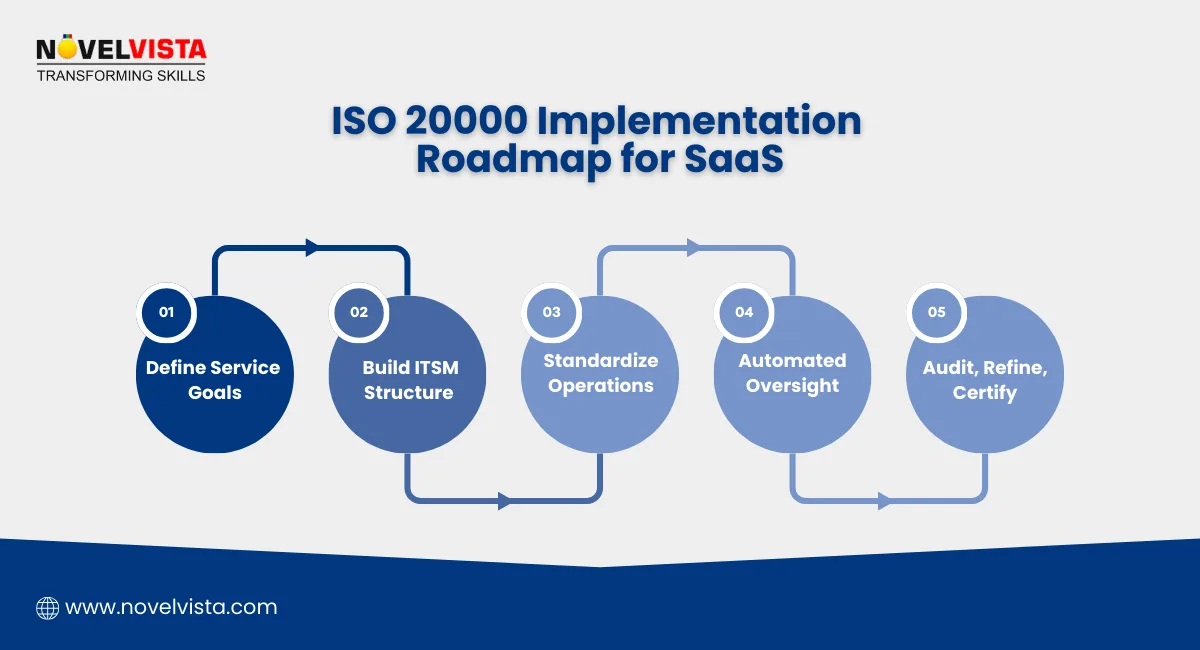
Throughout implementation, it’s important to continuously reference ISO 20000 for SaaS to ensure processes stay aligned with cloud-native service delivery needs.
As SaaS becomes the backbone of global digital infrastructure, operational excellence is no longer optional—it’s a survival requirement. ISO 20000 for SaaS gives companies the structure and discipline needed to deliver high-quality services consistently. For professionals looking to build a career in IT service management, understanding the potential ISO 20000 salary can help gauge the value of certification and the career growth opportunities discussed throughout this blog.
From reducing downtime to enhancing service continuity, improving incident management, strengthening SLAs, and boosting customer confidence, ISO 20000 positions SaaS companies for sustained long-term growth.
SaaS providers that invest in service quality not only avoid outages and churn—they build trust, stand out from competitors, and win more enterprise customers. And as the industry continues to scale, ISO 20000 is set to become a core differentiator for the most successful SaaS brands.
Join NovelVista’s ISO 20000 Lead Auditor Certification Training and gain practical auditing skills, real‑world service management insights, and a globally recognized credential. This course is tailored for SaaS founders, ITSM professionals, cloud‑operations leaders, and reliability engineers who want to confidently lead audits, improve service reliability, and deliver consistent excellence to customers.
Start your ISO 20000 auditor journey today!
Author Details

Course Related To This blog
ISO 20000:2018 Lead Auditor
Confused About Certification?
Get Free Consultation Call
Stay ahead of the curve by tapping into the latest emerging trends and transforming your subscription into a powerful resource. Maximize every feature, unlock exclusive benefits, and ensure you're always one step ahead in your journey to success.