Category | Quality Management
Last Updated On 08/05/2026
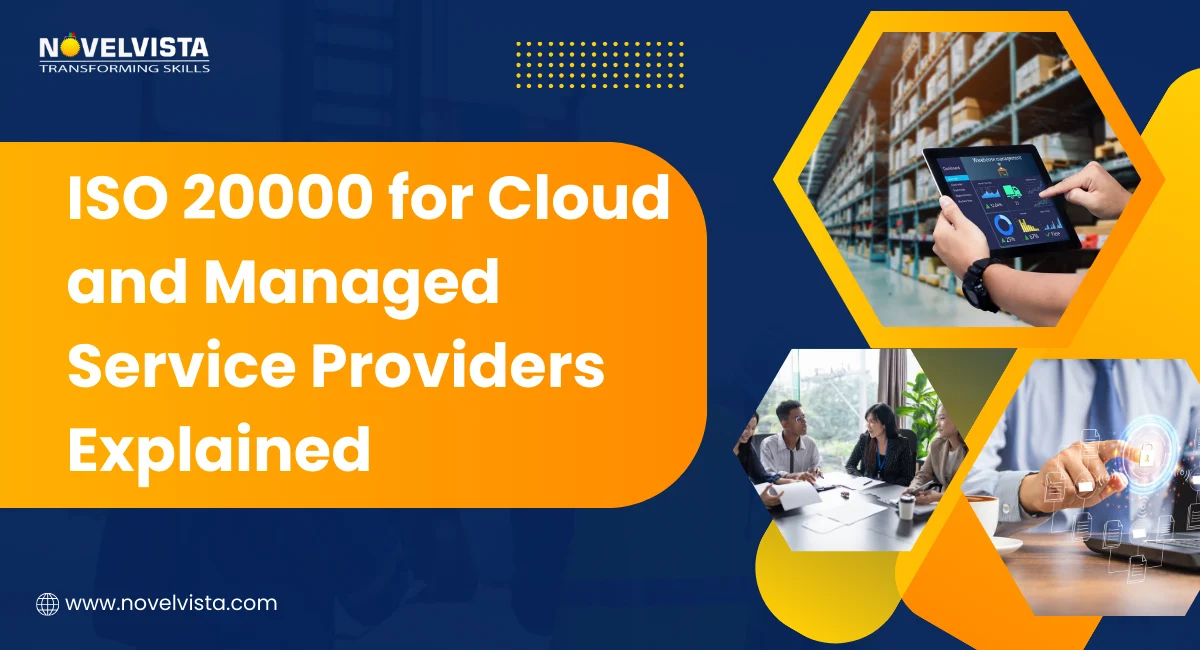
Let’s start with something most cloud teams won’t say out loud — running services smoothly every single day is getting tougher. Clients want stable uptime, predictable support, and zero surprises, but the background chaos never stops. That’s exactly where ISO 20000 for Cloud and Managed Services makes things easier. It sets a clear structure so cloud and managed service teams can deliver reliable, predictable, and high-quality services without firefighting all the time.
This guide walks you through everything that matters: what the standard means, how it fits cloud environments, the key ITSM processes, business benefits, cloud-specific applications, auditor expectations, an implementation roadmap, and how it strengthens long-term service stability.
When you hear “ISO 20000,” think of it as a complete blueprint that helps an ISO 20000 Service Provider run services with proper control, tracking, communication, and improvement. For cloud and managed service operations, this framework becomes even more important because the moving parts never stop — multi-region workloads, shared responsibility models, uptime guarantees, and supplier chains.
ISO 20000 creates a proper IT Service Management System (SMS) that every ISO 20000 Service Provider can use to keep services stable, predictable, and aligned with what customers expect. Whether it’s SaaS hosting, PaaS environments, managed infrastructure, or hybrid cloud support, the standard helps bring order to everyday service operations.
Even though cloud environments are modern and dynamic, the backbone of stable operations still depends on strong ITSM processes. These components help any ISO 20000 Service Provider maintain service consistency even during high load and rapid deployments.
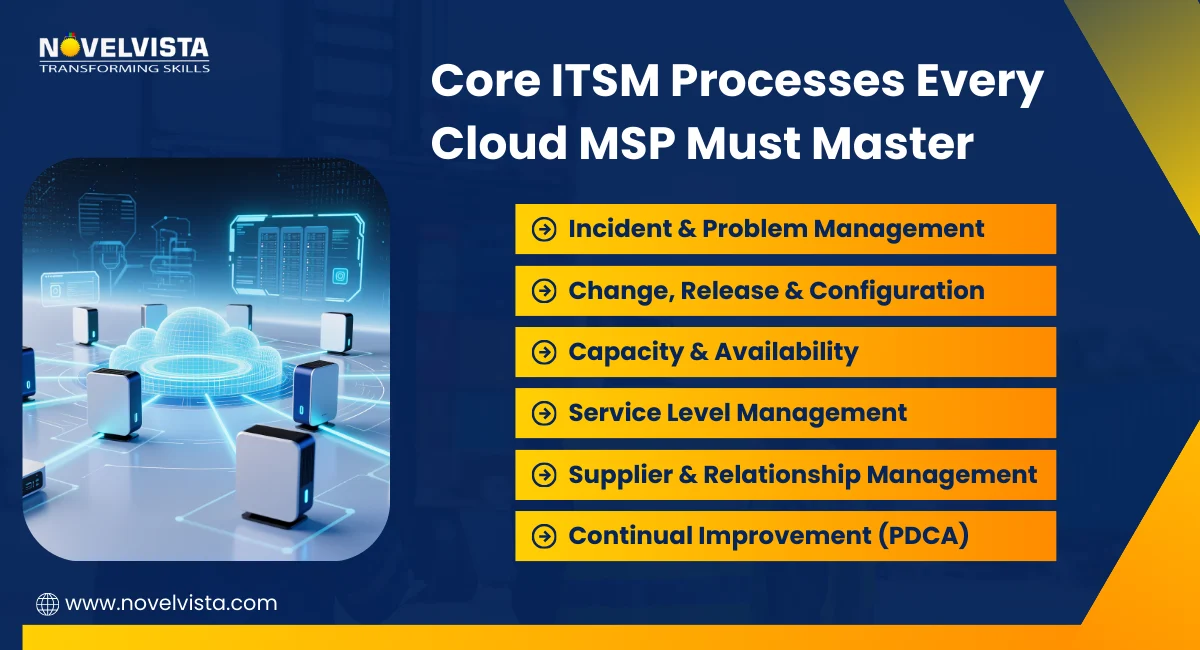
Incident & Problem Management: Keeps outages controlled and reduces repeat issues so teams can respond faster, fix smarter, and track service patterns.
Change, Release & Configuration Management: Helps control deployments, track components, and reduce surprises when rolling out updates across cloud regions.
Capacity, Availability & Service Level Management: Ensures cloud systems run smoothly with the right performance, uptime, and resource planning.
Supplier & Relationship Management: Make sure vendors, cloud providers, and partners meet expectations that support the main service.
Continual Improvement (PDCA Model): Keeps services updated by reviewing what works, what doesn’t, and what needs refinement.
From the cloud training programs we run, it’s clear that teams using structured incident, change, and configuration workflows perform far better. One fast-growing MSP improved SLA compliance and reduced rollbacks after aligning its change pipeline with ISO 20000 practices. Results like this show how strong ITSM discipline directly boosts daily cloud performance.
This is where ISO 20000 shines. It adapts beautifully to cloud-native setups because its structure supports scalability and distributed operations.
Here’s how it fits modern cloud environments:
It helps maintain consistency across different cloud regions, so services behave the same everywhere.
ISO 20000 supports uptime planning through availability management, redundancy planning, and risk controls.
The standard strengthens continuity planning, so services keep running even when something breaks.
It helps teams align ITSM workflows with cloud-native service models in AWS, Azure, and hybrid setups.
This makes ISO 20000 for Cloud and Managed a strong backbone for service reliability and predictable cloud operations.
Get a practical, cloud-ready checklist that shows you exactly what documents, processes, and controls you need for ISO 20000 in modern cloud environments, without overwhelm.
Cloud clients don’t just want uptime — they want confidence. They want to know that their provider has proper systems behind the scenes. That’s why ISO 20000 for Cloud and Managed boosts business outcomes.
Stronger Client Confidence and Service Credibility: Certification shows that services run with structure and discipline.
Lower Outages and Faster Recovery: Many providers see a 20–30% improvement in MTTR after implementing ISO 20000.
Better Service Alignment With Customer Expectations: Service quality becomes consistent rather than depending on “busy days” or “lucky days.”
Competitive Advantage in RFPs and Enterprise Deals: Large clients often prefer or require ISO-certified providers, giving certified companies an edge.
All these benefits directly support long-term success for an ISO 20000 Service Provider in the cloud market.
Here are the processes that matter most when applying ISO 20000 for Cloud and Managed environments:
Incident & Problem Handling: Ensures faster issue identification, better root cause analysis, and fewer repeated disruptions.
Controlled Change and Release Pipelines: Supports predictable deployments so updates don’t accidentally break running workloads.
SLA Monitoring & Capacity Planning: Helps maintain performance alignment during peak usage or large-scale operations.
Availability Management: Supports uptime planning with redundancy, monitoring, and automated alerts.
Customer Communication & Feedback Loops: Ensures clear updates, outage notifications, and structured feedback collection.
These processes make service performance much more stable and predictable for cloud providers.
Many providers jump straight into documentation, but a strong roadmap makes the whole journey easier. ISO 20000 for Cloud and Managed setups works best when the rollout follows a clean, step-by-step path that keeps teams aligned and avoids last-minute fixes.
Gap Assessment: This is where you compare your current cloud workflows with the ISO 20000 requirements. It helps you find missing controls, unclear roles, weak monitoring areas, and outdated processes that need redesign.
SMS Design & Documentation: Every ISO 20000 Service Provider needs a well-structured Service Management System. This stage includes defining procedures, responsibilities, communication channels, escalation paths, service reporting methods, and cloud-specific activities like redundancy and failover.
Roles, Responsibilities & Training: Teams must understand what ISO 20000 expects from them. Cloud engineers, support teams, managers, and auditors all need clarity on who owns incidents, who approves changes, and who maintains continuity.
Tooling & Monitoring Setup: Cloud providers rely heavily on automated tools. You configure log monitoring, incident dashboards, capacity alerts, ticketing flows, and configuration tracking to meet ISO 20000 for Cloud and Managed expectations.
Internal Audits: Before facing the certification body, internal audits help validate whether processes work as designed. This is where gaps appear, evidence gets refined, and improvements are applied.
Stage 1 & Stage 2 Certification: Stage 1 reviews the SMS structure. Stage 2 tests real implementation, evidence, records, and cloud performance data. Passing Stage 2 means the organization officially becomes an ISO 20000 Service Provider.
Ongoing Improvement & Surveillance Audits: ISO 20000 is not a one-time effort. Surveillance audits ensure you maintain consistency, update controls, and keep cloud operations reliable.
Cloud environments demand strong security, which makes ISO 20000 and ISO 27001 a perfect pairing. While ISO 20000 focuses on service quality, ISO 27001 manages risk, controls, and data protection.
Here’s how both frameworks support each other:
Industry bodies such as ISO, ITIL, and ENISA keep stressing how important it is to blend service management with strong security controls. The Cloud Security Alliance (CSA) also notes that integrated frameworks help prevent failures caused by cloud misconfigurations. This is why many organizations pair ISO 20000 with ISO 27001 to build stable, secure, and well-governed cloud services.
This added section highlights what happens during audits, something many teams overlook.
Auditors check whether:
A strong ISO 20000 Service Provider presents clear evidence, smooth workflows, and predictable service outcomes.
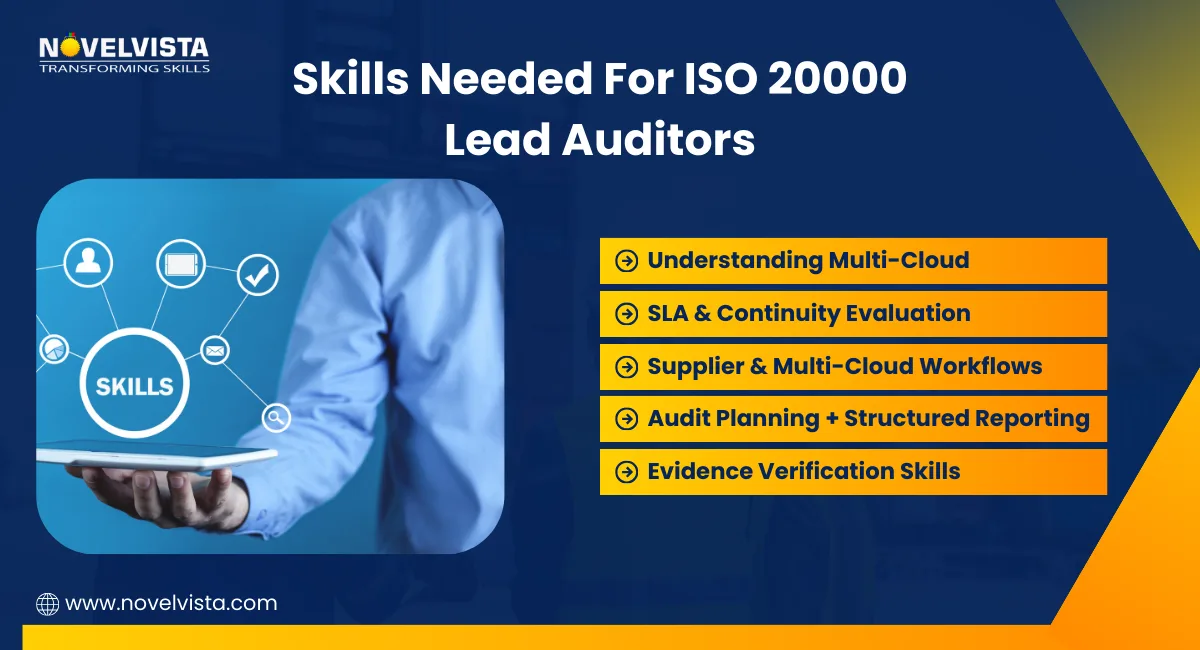 Auditing cloud environments requires more than understanding ITSM.
Lead auditors need skills like:
These skills help auditors validate whether a company truly follows ISO 20000 for Cloud and Managed practices.
Why does certification matter so much today? Because clients expect stability.
Being an ISO 20000 Service Provider helps you:
It’s less about the certificate and more about the reliability that comes with it.
Cloud brings speed, but also complexity.
These practices help maintain strong ISO 20000 for Cloud and Managed performance across all workloads.
ISO 20000 gives Cloud and Managed Service providers a dependable structure for service quality, uptime, and customer trust. When applied well, it brings cleaner operations, predictable performance, and stronger client relationships. Cloud platforms change quickly, and ISO 20000 helps teams stay steady while growing.
This guide is built on training experience, real audit scenarios, and globally recognized standards such as ISO 20000, ISO 27001, and ITIL 4. Every recommendation reflects what auditors expect and what cloud providers implement during real certification journeys. The goal is to give you dependable, practical insights that your teams can apply with confidence.

If you want to master ISO 20000 and lead organizations through real cloud and managed service audits, NovelVista’s ISO 20000 Lead Auditor Certification is the perfect next move. The training helps you understand cloud-ready SMS design, audit planning, evidence review, and implementation strategies. It’s practical, instructor-led, and built to help you grow into a high-demand ITSM professional.
Author Details

Course Related To This blog
ISO 20000:2018 Lead Auditor
Confused About Certification?
Get Free Consultation Call
Stay ahead of the curve by tapping into the latest emerging trends and transforming your subscription into a powerful resource. Maximize every feature, unlock exclusive benefits, and ensure you're always one step ahead in your journey to success.