Category | Quality Management
Last Updated On 22/12/2025
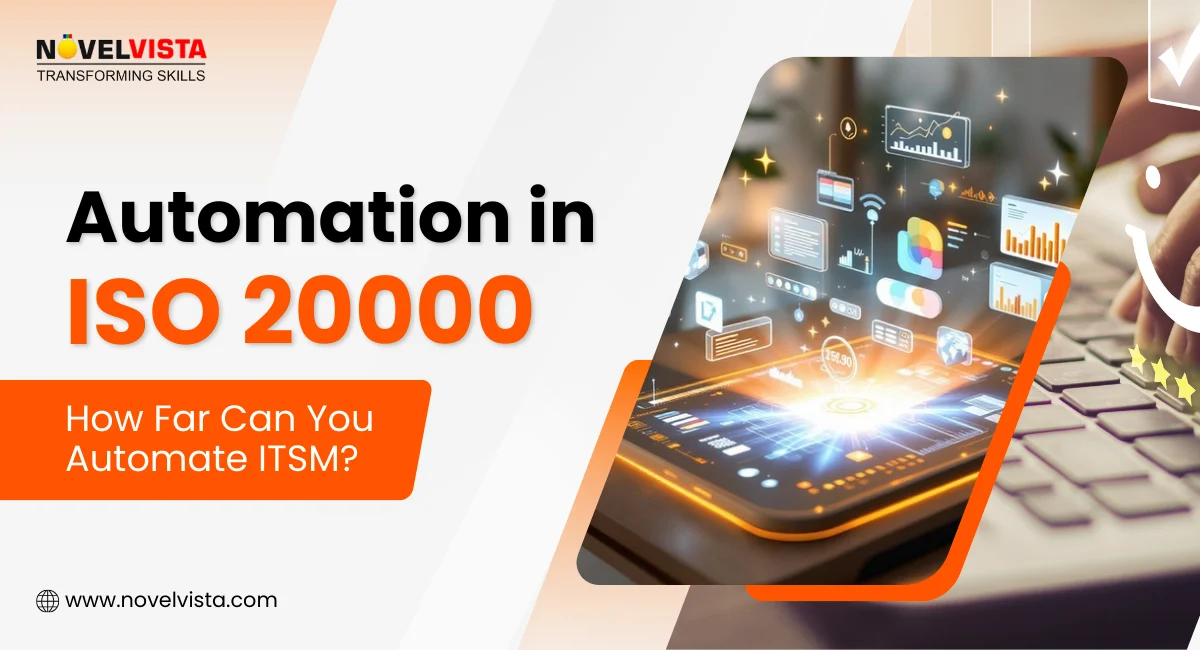
Before jumping straight into tools and workflows, it’s important to understand what ISO 20000 automation really means. Automation in ISO 20000 is not about removing people or replacing governance. Instead, it is about using smart workflows, AI-driven insights, and automated actions to make the Service Management System stronger, faster, and more reliable.
Automation fits into multiple ITSM automation areas like incident handling, change approvals, reporting, monitoring, service requests, capacity tracking, and continual improvement. But it always works under a defined policy, documented controls, and responsible oversight. When done right, automation helps organizations balance technology efficiency with human decision-making, which is crucial for Automation in ISO 20000 Compliance.
A strong ITSMS becomes powerful when automation supports everyday service delivery. Here’s where Automation in ISO 20000 adds real value:
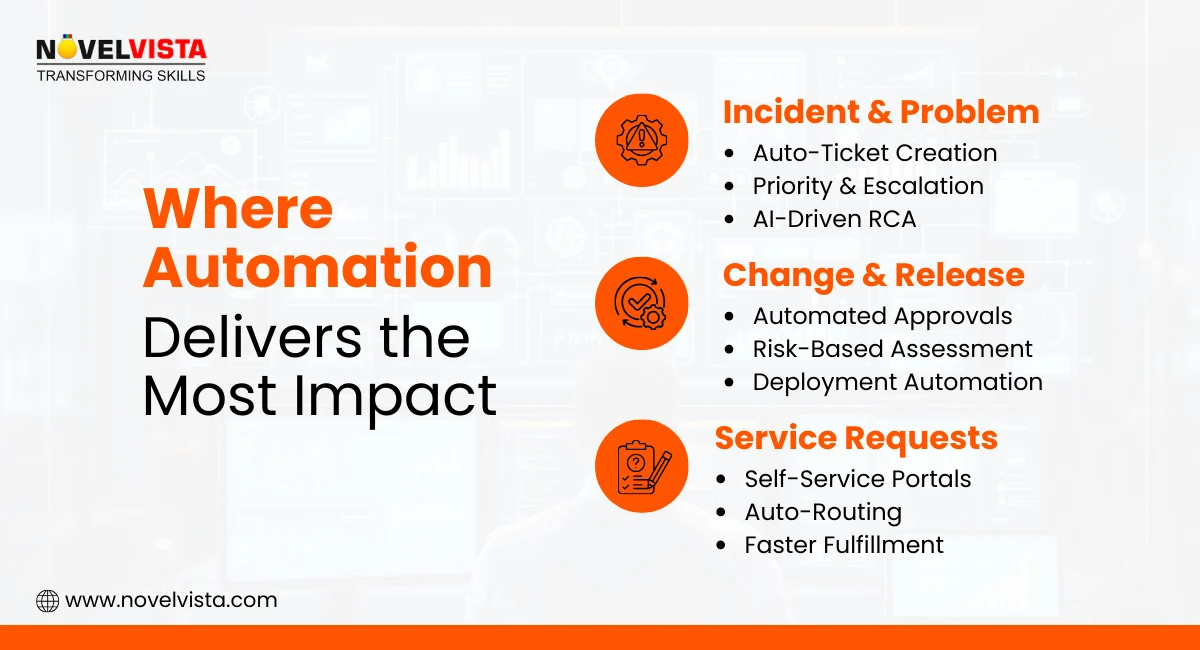 Incident & Problem Management
Automation supports auto-ticket creation, automatic categorization, and prioritization based on SLA rules. Escalation workflows trigger instantly when breaches are at risk. AI-assisted analytics help identify root causes faster, reducing MTTR and helping teams resolve recurring incidents more effectively. This level of ITSM automation improves speed, consistency, and traceability.
Automated approval routing ensures the right stakeholders are always involved without slowing processes. Impact assessments can be system-driven using CMDB and analytics data. Deployment automation reduces manual effort, prevents human error, and improves release stability. This strongly supports ISO 20000 automation objectives.
Self-service portals allow users to raise requests easily, while automation takes care of routing, approvals, fulfillment steps, and communication updates. This accelerates delivery while maintaining accountability and compliance, perfect alignment with the Role of Automation in ISO 20000 Compliance.
Many of these automation practices come directly from real project learning. Teams that successfully automated incident, change, and request workflows reported faster turnaround time, fewer manual errors, stronger SLA control, and higher confidence during certification audits. These results are based on actual implementation outcomes rather than assumptions.
Clause 9 of ISO 20000 focuses heavily on performance evaluation. This is where automation delivers a serious advantage.
With Automation in ISO 20000, organizations get:
Instead of manual data collection, automation ensures consistent visibility, accuracy, and faster decision-making, making Automation in ISO 20000 Compliance stronger and easier to prove.
Auditors don’t want to see assumptions. They want verifiable records, logs, and traceability. This is where the Role of Automation in ISO 20000 Compliance becomes powerful.
Automation helps organizations:
This strengthens Automation in ISO 20000 Compliance, supports transparency, and reduces the risk of audit surprises.
To make ITSM automation real and practical, the right platforms matter. Some of the most widely used solutions powering Automation in ISO 20000 include:
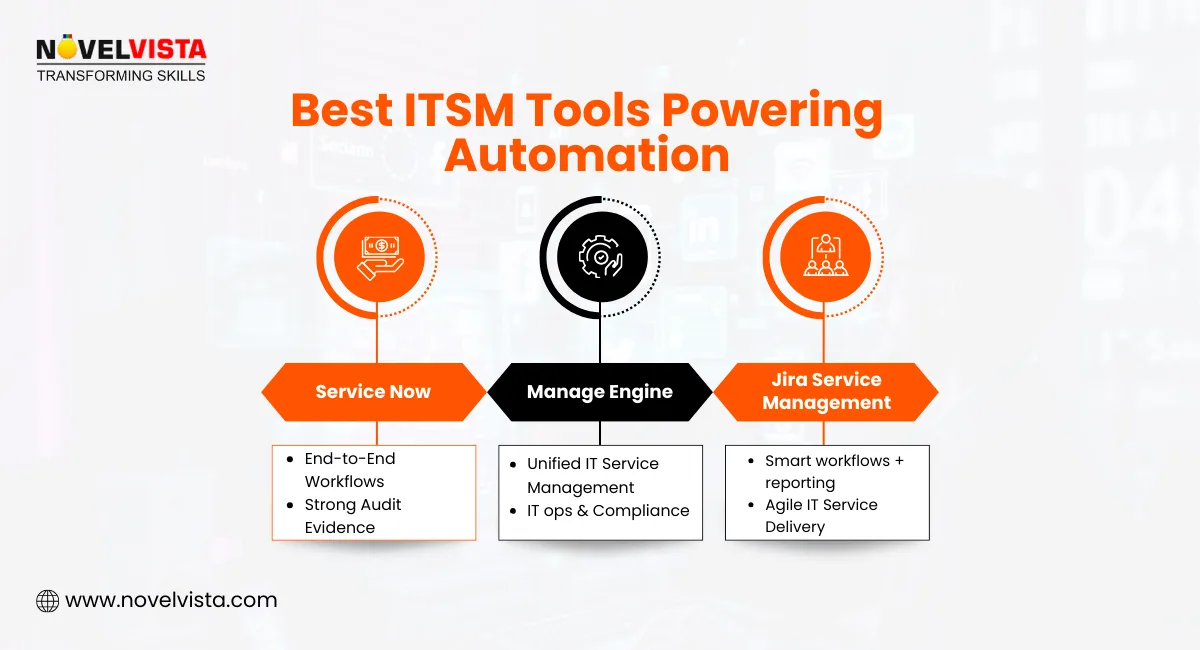
These tools accelerate automation, improve process maturity, and support organizations in strengthening Automation in ISO 20000 Compliance.
When auditors review Automation in ISO 20000, they look beyond tools and dashboards. They focus on how automation actually supports governance, consistency, and compliance.
This section is based on real lead auditor perspectives, audit workshops, and automation-based audit simulations. Organizations often ask, “How do auditors see automation?” — so the points shared here come from actual audit expectations and assessment practices used by experienced ISO 20000 auditors.
Learn what to automate first and what to keep manual
without creating audit risk. Follow a clear, ISO 20000
aligned plan to move from manual ITSM to controlled,
audit-ready automation.
Automation not only helps IT teams; it also makes audits stronger and more meaningful. Here’s how:
Automation in ISO 20000 is not just about technology; it directly improves business outcomes and service reliability.
If you want automation to genuinely support Automation in ISO 20000 Compliance, it should
1. Identify processes with heavy manual effort
2. Assess readiness and define a realistic automation scope
3. Deploy the right ITSM platform aligned with ISO needs
4. Start with high-impact workflows like incident, change, and request
5. Measure ROI, performance improvements, and audit value
6. Expand automation gradually with strong governance
This keeps control and value aligned.
Automation in ISO 20000 is powerful, but it needs thoughtful execution. Some real-world challenges include:
Balanced ITSM automation keeps both performance and compliance safe.
Automation in ISO 20000 is only getting stronger ahead. Organizations are already moving towards:
This evolution makes the Role of Automation in ISO 20000 Compliance even more strategic for long-term success.
Automation in ISO 20000 has moved from “nice to have” to “essential.” It helps organizations handle nearly 70–80% of ITSM activities with greater speed, control, and accuracy. More importantly, it supports stronger governance, faster response, better audit readiness, and real business reliability. With the right balance of automation and oversight, organizations can build a service management system that is scalable, transparent, and truly aligned with ISO expectations.
Everything discussed in this blog is backed by recognized ISO 20000 guidance, proven ITSM automation experience, and insights from real certification and surveillance audits. The objective is to provide practical, trustworthy information that organizations can confidently apply while strengthening automation and compliance together.
If you want to assess automation confidently, lead smarter audits, and understand how automation aligns with compliance, NovelVista’s ISO 20000 Lead Auditor Certification is a great next move. It helps you master audit techniques, evidence evaluation, and real-world ITSM governance, so you can guide organizations in building powerful, automation-enabled service management systems.
Author Details

Course Related To This blog
ISO 20000:2018 Lead Auditor
Confused About Certification?
Get Free Consultation Call
Stay ahead of the curve by tapping into the latest emerging trends and transforming your subscription into a powerful resource. Maximize every feature, unlock exclusive benefits, and ensure you're always one step ahead in your journey to success.