Category | Quality Management
Last Updated On 26/09/2026
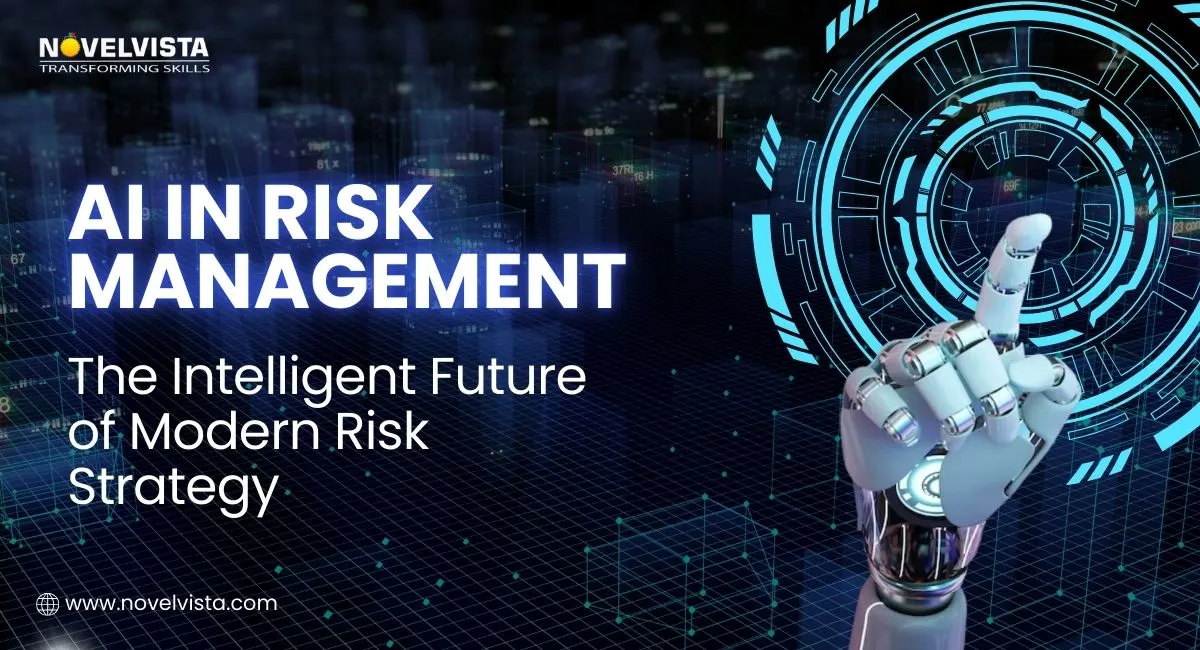
In a world where cyberattacks have increased by over 300%, supply chain disruptions keep rising, and regulatory requirements change faster than ever, businesses are facing unprecedented uncertainty. Global surveys reveal that 70% of organizations struggle to identify and assess emerging risks, while more than 60% still rely on manual spreadsheets or outdated systems. Clearly, the traditional approach is no longer enough—and this is exactly why AI in risk management is becoming a major turning point.
But what does this mean for companies that follow ISO 31000, the world’s most widely used risk management standard?
Is AI in risk management only for large enterprises?
Can small and mid-sized companies also adopt intelligent tools to strengthen decision-making?
And most importantly—can AI make ISO 31000 easier to implement?
AI in risk management uses technologies like machine learning, predictive analytics, natural language processing, and automation to identify, analyze, evaluate, and monitor risks more intelligently. ISO 31000 emphasizes integration, structure, inclusiveness, dynamic response, continuous improvement, and data-driven decisions—principles supported by AI through automated data collection, pattern detection, bias reduction, predictive insights, standardized assessments, and continuous monitoring. By enhancing ISO 31000 steps such as risk identification, analysis, evaluation, treatment, and monitoring, AI strengthens decision-making while maintaining human oversight. At the center of this evolution is the modern AI risk assessment tool, enabling faster and more accurate evaluations than manual reviews.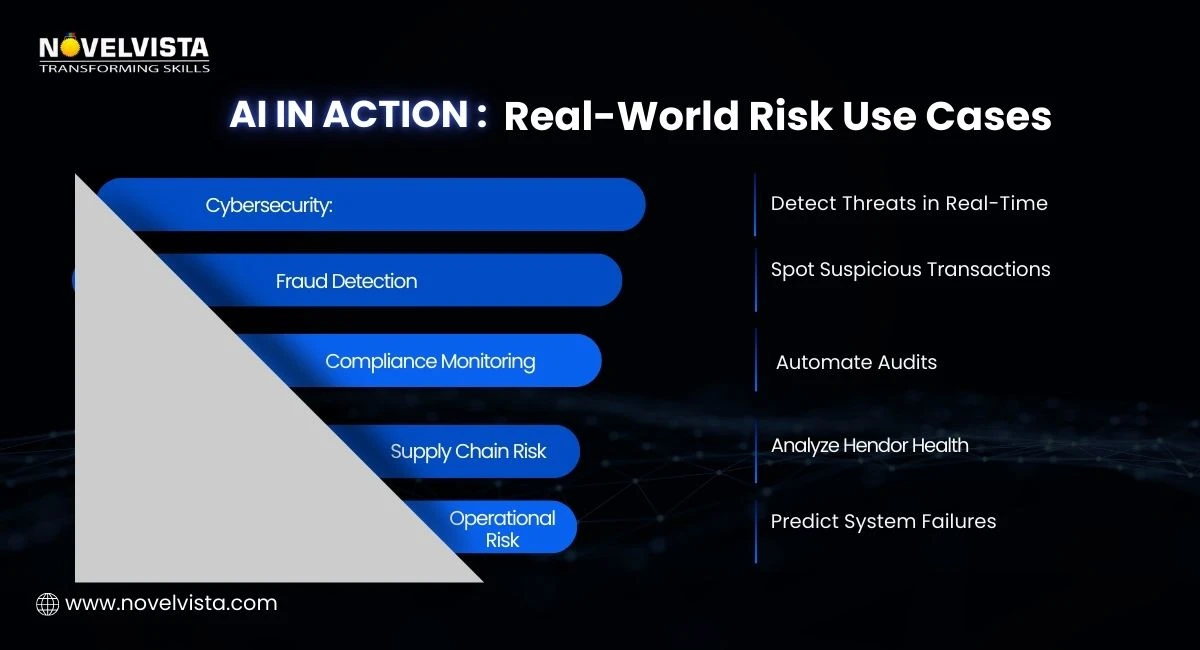
Today’s business environment is interconnected, fast-moving, and unpredictable. ISO 31000 already encourages organizations to adopt dynamic, proactive, and integrated approaches—however, human-driven processes alone are often too slow or too narrow to meet modern risk expectations.
Here’s why AI is essential:
Risks today are interconnected, spanning cyber, compliance, finance, operations, and global supply chains all at once. This makes traditional methods insufficient for capturing fast-moving threats. AI in risk management helps organizations understand these complex patterns with deeper, data-driven insights.
Traditional assessments rely heavily on subjective judgment and limited data. In contrast, AI risk assessment provides real-time, evidence-based analysis that removes guesswork. This allows companies to identify emerging risks early and respond with more confidence.
With AI in risk management, organizations can evaluate risks in minutes instead of weeks. Algorithms process millions of data points to uncover hidden patterns and trends. This leads to quicker, more informed decision-making supported by reliable intelligence.
ISO 31000 requires risk management to be continuous—not periodic. AI enables this through automated scanning, anomaly detection, real-time alerts, and continuous scenario analysis. Using an AI risk assessment tool, companies gain 24/7 visibility and can react instantly to changes in the risk landscape.
This combination of speed, accuracy, and consistency explains why AI in risk management is now essential for modern ISO 31000 implementation.
AI is transforming multiple domains of risk. Here are the most impactful AI use cases in risk management:
1. Cybersecurity Risk Detection
AI monitors network traffic and detects threats faster than manual teams.
Machine learning identifies unusual behavior and stops attacks in real time.
2. Fraud and Financial Risk Management
Banks and financial institutions use AI to:
3. Compliance and Regulatory Risk
AI helps organizations keep up with changing laws by:
4. Operational Risk Monitoring
AI predicts operational failures such as:
This enables preventive action before disruptions occur.
5. Third-Party and Supply Chain Risk
AI analyzes supplier behavior, financial health, and geopolitical indicators to detect vulnerabilities.
6. Scenario Modeling & Stress Testing
AI runs simulations on:
This supports ISO 31000’s requirement for proactive, data-driven risk management.
This combination of speed, accuracy, and consistency explains why AI in risk management is now essential for modern ISO 31000 implementation. As organizations increasingly rely on AI-driven systems, ensuring the reliability, accuracy, and responsible performance of these systems is equally important. Professionals looking to build practical expertise in validating and testing AI systems can explore the ai testing Certification to develop skills relevant to modern AI-powered environments.
Practical methods to modernize your entire risk process
AI-powered workflows mapped to ISO 31000
Templates + quick-start guidance you can
apply immediately
Integrating AI into risk management framework is not just a technical change—it’s a strategic upgrade. Here are the key steps:
Before implementing AI in risk management, evaluate current processes, technology, and data maturity. Understanding existing gaps ensures that AI adoption supports ISO 31000 principles effectively and delivers meaningful risk insights.
Select tools that offer predictive modeling, automated scoring, risk dashboards, integration flexibility, and explainable AI. The right AI risk assessment tool ensures accurate analysis, real-time monitoring, and alignment with ISO 31000 risk management requirements.
ISO 31000 emphasizes governance and accountability in risk management. AI initiatives must include clear roles, transparent decision-making, and documented risk criteria to maintain compliance and support structured, responsible risk practices.
Begin by applying AI in risk management to a focused area such as cyber, compliance, or operational risk. Pilots help validate AI models, demonstrate value, and build confidence before scaling across the organization.
Ensure AI outputs are integrated into existing risk registers, dashboards, and ISO 31000 documentation. This alignment allows decision-makers to use AI insights seamlessly within established governance and reporting structures.
Risk managers and staff must understand how AI risk assessment tools work and how to interpret results. Proper training ensures AI complements human expertise and enhances ISO 31000-compliant decision-making.
AI models evolve continuously, and ISO 31000 promotes ongoing improvement. Regularly update data, refine models, and review outcomes to maintain accuracy, relevance, and resilience in risk management practices.
Even with its benefits, AI brings challenges—most of which ISO 31000 helps address.
AI may unintentionally learn biased patterns from historical or incomplete data. In AI risk assessment, it’s critical to detect and mitigate bias, ensuring decisions remain fair, transparent, and aligned with ISO 31000 principles of inclusiveness and integrity.
Poor or inconsistent data can lead to inaccurate predictions and flawed risk insights. ISO 31000 stresses the importance of structured, reliable information, and using high-quality data ensures AI in risk management delivers trustworthy results.
Some AI models are difficult to interpret, making it challenging to justify decisions. ISO 31000 emphasizes clarity and effective communication, so AI risk assessment tools should provide explainable outputs that risk managers can understand and act upon.
AI is a powerful support tool but should not replace human judgment. ISO 31000 reminds organizations that decision-making must remain accountable, and combining AI in risk management with human expertise ensures balanced, responsible risk strategies.
By aligning AI adoption with ISO 31000 principles, companies can mitigate these challenges effectively.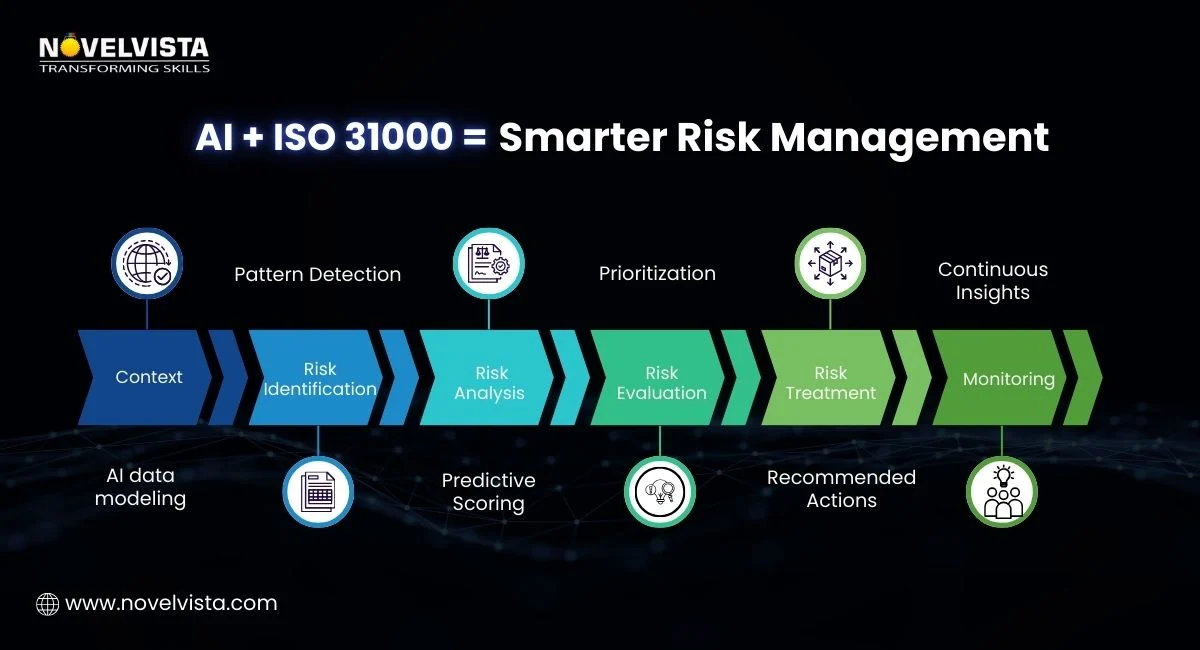
The next decade will transform ISO 31000-based risk management through:
1. Autonomous Risk Engines: AI that dynamically updates risk ratings in real time.
2. Intelligent Risk Dashboards: Unified dashboards integrating enterprise, cyber, financial, and operational risks.
3. AI-Powered Predictive Resilience: Organizations will anticipate disruptions weeks or months before they occur.
4. Cross-Platform Risk Ecosystems: AI connecting suppliers, regulators, partners, and business units.
5. Self-Learning Algorithms: Systems that continuously improve based on new data.
The future is not about replacing ISO 31000—it’s about empowering it with smarter, faster, and more adaptive tools. If you’re ready to put these principles into practice and validate your expertise, preparing for the ISO 31000 Certification Exam is the perfect next step in your professional growth.
In today’s fast-paced and interconnected world, traditional risk management methods are no longer sufficient. AI in risk management strengthens the ISO 31000 framework by enabling automation, predictive insights, and continuous monitoring across all risk processes. Using the right AI risk assessment tool, organizations can identify risks early, analyze them more accurately, prioritize effectively, make informed decisions, and build long-term resilience. From small businesses to large enterprises, adopting AI now ensures a proactive, future-ready risk strategy—positioning organizations to lead in intelligent, data-driven risk management.
Ready to elevate your risk management capabilities and lead with confidence?
Author Details

Course Related To This blog
Certified ISO 31000:2018 Risk Manager
Confused About Certification?
Get Free Consultation Call
Stay ahead of the curve by tapping into the latest emerging trends and transforming your subscription into a powerful resource. Maximize every feature, unlock exclusive benefits, and ensure you're always one step ahead in your journey to success.